Why Saskatchewan Needs Package Wastewater Treatment Plants
Saskatchewan's wastewater infrastructure must withstand a temperature differential of 70°C while meeting stringent environmental protections for sensitive watersheds. A 2023 spill from an unpermitted industrial camp near La Ronge resulted in a $250,000 fine from the Saskatchewan Water Security Agency (WSA), highlighting the legal and financial risks of inadequate decentralized treatment. Approximately 30% of First Nations communities in the province lack centralized wastewater treatment, according to Indigenous Services Canada data, leaving a significant infrastructure gap that traditional lagoon systems cannot always fill. The Saskatchewan Mining Association reports over 120 active mining and energy sites with transient populations ranging from 20 to 2,000 person equivalents (PE). These sites often operate in remote northern regions where the -40°C winters freeze conventional lagoons, rendering them biologically inactive for months. Buried A/O systems for remote sites provide a solution by utilizing ground insulation to maintain the thermal energy required for microbial digestion.
Package wastewater treatment plants serve three primary use cases in Saskatchewan. First, First Nations infrastructure managers utilize these systems to replace failing lagoons or to support new housing developments where federal funding is available. Second, remote industrial camps in the Athabasca Basin require modular, "plug-and-play" units that can be hauled in by ice road and commissioned within weeks. Third, edge-of-city private developments use package plants to bypass the multi-year wait times and high capital costs associated with connecting to municipal trunk lines. These systems offer a footprint up to 10 times smaller than a lagoon, making them ideal for the variable flow rates typical of seasonal work camps and growing rural municipalities.
Saskatchewan Water Security Agency Compliance: Effluent Standards and Permitting
The Saskatchewan Water Security Agency (WSA) enforces effluent standards that typically require BOD&sub5; levels below 25 mg/L and Total Suspended Solids (TSS) below 30 mg/L for all new decentralized discharges. For systems discharging into sensitive water bodies or those intended for global best practices for decentralized wastewater systems, nutrient removal (Nitrogen and Phosphorus) and high-level disinfection are mandatory. The permitting timeline for a new package plant in Saskatchewan generally spans 6 to 12 months, though expedited 3-to-6-month processes exist for temporary industrial camps. First Nations projects often follow a parallel track, requiring coordination with Indigenous Services Canada’s Capital Facilities and Maintenance Program for both funding and technical review. This process ensures that all package plants meet the necessary standards.
| Parameter | Standard Discharge Limit | Reuse/Sensitive Area Limit | Sampling Frequency |
|---|---|---|---|
| BOD&sub5; (Biological Oxygen Demand) | < 25 mg/L | < 10 mg/L | Weekly |
| TSS (Total Suspended Solids) | < 30 mg/L | < 5 mg/L | Weekly |
| Ammonia (as N) | < 1.0 mg/L (Summer) | < 0.5 mg/L | Monthly |
| E. coli | < 200 CFU/100 mL | < 10 CFU/100 mL | Monthly |
| UV Transmittance (Disinfection) | N/A | > 65% @ 254nm | Continuous (Sensor) |
The permitting process begins with a pre-application meeting with the WSA to determine site-specific effluent requirements. Following this, an engineering report must be submitted, detailing the chosen technology, hydraulic loading, and climate adaptation strategies. For First Nations communities, public consultation is a critical step in the approval process. Once the "Permit to Construct" is issued, installation can proceed, followed by a "Permit to Operate" after commissioning. To ensure ongoing compliance, operators must implement on-site disinfection for package plants, ensuring a chlorine residual of ≥0.5 mg/L or a UV dose of ≥40 mJ/cm² as per 2025 standards.
Technology Options: MBR vs. A/O vs. DAF for Saskatchewan’s Climate
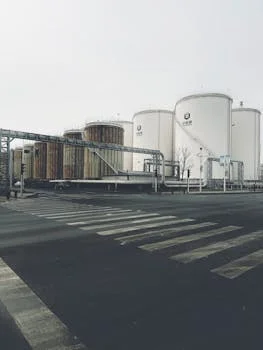
Membrane Bioreactor (MBR) technology achieves the highest effluent quality in Saskatchewan, often producing water with BOD&sub5; and TSS levels below 1 mg/L, which is suitable for immediate reuse in non-potable applications. While MBR systems have a higher CAPEX—ranging from $1.2M to $1.8M for a 350 m³/day system—their 60% smaller footprint compared to traditional Anoxic/Oxic (A/O) plants makes them the preferred choice for sites with limited space or high environmental sensitivity. In contrast, A/O systems are the "workhorse" of remote camps, offering lower capital costs and simpler sludge handling requirements. However, A/O systems typically require larger tankage to achieve the same nutrient removal targets as MBR.
| Feature | MBR (Membrane Bioreactor) | A/O (Anoxic/Oxic) | DAF (Dissolved Air Flotation) |
|---|---|---|---|
| Effluent Quality | Ultra-high (Reuse ready) | Secondary (Discharge ready) | Pre-treatment only |
| Energy Use | 0.8–1.2 kWh/m³ | 0.4–0.6 kWh/m³ | 0.3–0.5 kWh/m³ |
| Footprint | Minimal (Containerized) | Moderate | Small |
| Cold Weather Suitability | High (with heated enclosure) | High (if buried) | Low (indoors only) |
| Primary Use | Communities, Reuse | Industrial Camps, Mining | High FOG/Industrial Pre-treat |
Climate adaptation is the most critical engineering factor for Saskatchewan installations. To prevent membrane fouling and biological dormancy in -40°C conditions, MBR membrane bioreactor systems for Saskatchewan’s climate must be housed in R-30 insulated containers or installed within heated permanent structures. Dissolved Air Flotation (DAF) is rarely used as a standalone solution for domestic sewage but is essential for industrial sites with high Fats, Oils, and Grease (FOG), such as food processing or heavy equipment wash-bays. A 2024 MBR installation at a northern Saskatchewan mine demonstrated the efficacy of these adaptations, successfully reducing raw influent BOD&sub5; from 350 mg/L to less than 5 mg/L despite ambient winter temperatures averaging -28°C (HydropureWater field data, 2025).
Cost Breakdown: CAPEX, OPEX, and ROI for Saskatchewan Projects
Capital expenditure for a package wastewater treatment plant in Saskatchewan starts at approximately $120,000 for a 22 m³/day unit, scaling to $1.8M for a high-capacity 350 m³/day MBR system. These figures include the core equipment, control systems, and basic permitting support, though site-specific civil works (e.g., excavation, concrete pads) and long-distance freight can add 15–25% to the total project cost. For First Nations communities, the financial burden is often mitigated by federal programs; Indigenous Services Canada’s 2025–2026 budget allocates $2.1 billion for water and wastewater infrastructure, covering 80% to 100% of CAPEX for eligible projects.
| Plant Capacity (m³/day) | Approx. PE (Population) | Estimated CAPEX (CAD) | Estimated OPEX (per m³) |
|---|---|---|---|
| 22 m³/day | ~100 PE | $120,000 – $180,000 | $0.40 – $0.65 |
| 50 m³/day | ~225 PE | $250,000 – $380,000 | $0.35 – $0.60 |
| 200 m³/day | ~900 PE | $800,000 – $1,100,000 | $0.30 – $0.55 |
| 350 m³/day | ~1,500 PE | $1,400,000 – $1,800,000 | $0.25 – $0.50 |
The Return on Investment (ROI) for remote sites is primarily driven by the elimination of sewage hauling costs. In northern Saskatchewan, vacuum truck services can cost upwards of $2.00/m³ when accounting for fuel and disposal fees at municipal lagoons. A 200 m³/day on-site treatment system with an OPEX of $0.50/m³ saves $1.50 per cubic meter, resulting in daily savings of $300. Over a standard 350-day operational year, this generates $105,000 in savings, leading to a 5-to-7-year payback period on a $800,000 A/O system. This calculation does not include the avoidance of compliance fines, which can exceed $250,000 per incident. For medical or high-risk facilities, integrating disinfection technologies for sensitive applications further protects the ROI by preventing costly health-related shutdowns.
Supplier Checklist: How to Evaluate Package Plant Vendors in Saskatchewan
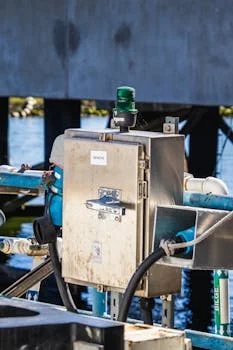
Evaluating a wastewater equipment supplier requires a balance between local support capabilities and the technical depth of international manufacturers. While Saskatchewan-based vendors offer the advantage of proximity for permitting and site visits, international suppliers often provide more advanced membrane technologies at a lower CAPEX due to economies of scale. However, international units must be scrutinized for their ability to perform in sub-arctic conditions. A critical distinction should be made between suppliers who provide generic equipment and those who offer performance in cold climates like New Mexico’s high desert or the Canadian prairies.
Use the following 10-question checklist to vet potential vendors for your Saskatchewan project:
- Can you provide three references for operational sites in Saskatchewan or Northern Alberta?
- Does your system include R-30 or higher insulation and integrated heating for all external components?
- What is the design membrane flux (LMH) at a water temperature of 5°C?
- Are your control systems SCADA-compatible for remote monitoring from Regina or Saskatoon?
- Do you provide a written performance guarantee that effluent will meet WSA standards for BOD&sub5; and TSS?
- Is your equipment certified to NSF/ANSI 40 or California Title 22 standards?
- What is the lead time from down payment to delivery at a Saskatchewan site? (Typical is 12–16 weeks).
- Do you maintain a local inventory of critical spare parts (pumps, blowers, sensors) in Western Canada?