Why New Mexico Needs Package Wastewater Treatment Plants in 2025
New Mexico's wastewater infrastructure faces a critical juncture in 2025. A significant portion of the state's rural communities, approximately 47% according to the New Mexico Environment Department's 2023 report, still rely on outdated lagoons or septic systems. These systems often struggle to meet stringent NMED discharge limits, with over 30% of them exceeding permitted levels for BOD and TSS. Compounding this challenge is New Mexico's pervasive water scarcity. The arid climate, averaging only 14 inches of rainfall annually, makes land-intensive conventional wastewater treatment solutions increasingly impractical. Package plants offer a vital alternative, reducing land use by 60–80% compared to traditional facilities, as noted by EPA benchmarks in 2024. The pressure to comply is intensifying; the NMED's 2025 enforcement priorities specifically target violations in Class 1 waters, carrying potential fines of up to $25,000 per day, as detailed in the NMED 2024 Permit Guide. New Mexico's growing industrial sectors, particularly oil/gas and food processing, require robust pre-treatment systems to meet NMED's specific categorical limits, such as the 10 mg/L oil and grease standard for petroleum refineries. Consider three pressing scenarios: A rural community grappling with the imminent failure of its aging lagoon system, an industrial facility needing to upgrade its wastewater pre-treatment to meet NMED compliance and avoid penalties, or a growing municipality looking to expand its treatment capacity without the prohibitive cost and land acquisition challenges of a conventional plant.
Package Wastewater Treatment Technologies: How They Work and Which to Choose for New Mexico
Selecting the right package wastewater treatment technology is paramount for achieving compliance and operational efficiency in New Mexico's unique environment. Membrane Bioreactor (MBR) systems, for instance, employ submerged Polyvinylidene fluoride (PVDF) membranes with a pore size of 0.1 μm, capable of achieving an impressive 99% removal of BOD and TSS. This high-quality effluent makes MBR ideal for water reuse applications, such as irrigation or cooling tower makeup water. However, these systems require regular chemical cleaning, typically with citric acid or sodium hypochlorite, every three to six months. Energy consumption for MBRs can range from 0.8 to 1.2 kWh/m³, based on data from the Top 1 Los Lunas MBR facility. Dissolved Air Flotation (DAF) systems are particularly effective for industrial pre-treatment, utilizing micro-bubbles (30–50 μm) to remove fats, oils, grease (FOG), and colloidal matter. They are well-suited for industries like food processing and oil/gas. DAF systems typically achieve 90–95% TSS removal and 85–90% FOG removal, according to HydropureWater DAF system specifications, though achieving over 95% efficiency often necessitates chemical dosing with polyaluminum chloride (PAC) and polymers. Anoxic/Oxic (A/O) systems represent a more traditional biological contact oxidation process followed by sedimentation. These are cost-effective solutions for municipal sewage, with flow rates typically ranging from 1 to 80 m³/h. A/O systems offer removal rates of 85–92% BOD and 80–90% TSS, as per WSZ Series specifications, and do not require chemical dosing, though they generally have a larger footprint than MBR or DAF systems. Rotating Biological Contactors (RBCs) are a fixed-film process using rotating discs; they are energy-efficient at 0.3–0.5 kWh/m³ but are typically limited to flows under 50,000 gallons per day (GPD). The Advanced Waste Water Treatment Plant (AWWT) in Red River, NM, has utilized RBCs since 1983, demonstrating their longevity. When considering New Mexico's specific conditions, high total dissolved solids (TDS), which can reach up to 2,000 mg/L in the Permian Basin, pose a fouling risk to MBR membranes. The state's significant temperature swings, often from 20°F to 100°F, impact biological treatment kinetics. high altitudes, common across New Mexico (over 5,000 ft), can reduce the oxygen transfer efficiency in conventional aeration systems.
| Technology | Typical Flow Range | BOD Removal (%) | TSS Removal (%) | FOG Removal (%) | Typical Footprint (per 10,000 GPD) | Energy Use (kWh/m³) | Chemical Dosing | O&M Complexity |
|---|---|---|---|---|---|---|---|---|
| MBR (Membrane Bioreactor) | 10,000 - 1,000,000+ GPD | 95-99 | 95-99 | N/A (primarily biological) | 200-500 sq ft | 0.8 - 1.2 | Membrane cleaning chemicals (citric acid, NaOCl) | High (membrane maintenance) |
| DAF (Dissolved Air Flotation) | 10,000 - 500,000+ GPD | 70-85 | 90-95 | 85-90 | 300-600 sq ft | 0.3 - 0.5 | Coagulants (PAC), Flocculants (polymers) | Medium (chemical management, sludge removal) |
| A/O (Anoxic/Oxic) | 1,000 - 500,000+ GPD | 85-92 | 80-90 | N/A (primarily biological) | 800-1,200 sq ft | 0.3 - 0.4 | None | Low to Medium (biological process control) |
MBR vs DAF vs A/O: Removal Efficiencies, Footprint, and Energy Use for New Mexico Applications
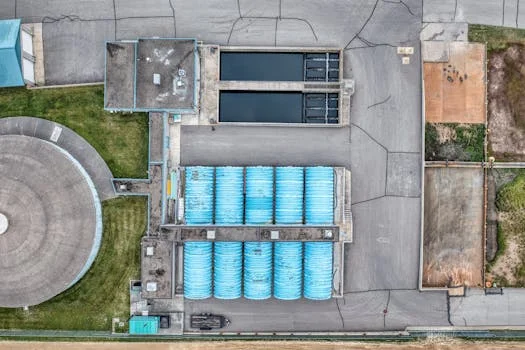
For New Mexico municipalities and industries evaluating package wastewater treatment plants, understanding the trade-offs between Membrane Bioreactor (MBR), Dissolved Air Flotation (DAF), and Anoxic/Oxic (A/O) systems is crucial for making an informed decision. MBR systems excel in effluent quality, consistently achieving over 99% BOD and TSS removal, making them ideal for water reuse applications. Their compact footprint, approximately 200-500 sq ft per 10,000 GPD, is a significant advantage in land-scarce areas. However, MBRs have higher energy consumption (0.8-1.2 kWh/m³) and require specialized membrane maintenance. DAF systems are the preferred choice for industrial pre-treatment, particularly for removing fats, oils, and grease (FOG), with removal rates around 90% for TSS and 85% for FOG. Their footprint is moderate (300-600 sq ft per 10,000 GPD), and energy use is lower (0.3-0.5 kWh/m³). DAF systems necessitate chemical dosing, which adds to operational costs and complexity. A/O systems offer the most cost-effective solution for municipal wastewater, with BOD removal typically between 85-92% and TSS removal at 80-90%. They boast the lowest energy consumption (0.3-0.4 kWh/m³) and require no chemical additives, but their larger footprint (800-1,200 sq ft per 10,000 GPD) can be a limiting factor. For a 50,000 GPD plant operating 365 days a year, annual energy costs would be approximately $12,000 for an MBR, $7,500 for a DAF, and $6,000 for an A/O system, assuming a rate of $0.12/kWh. In New Mexico, MBRs are best suited for facilities prioritizing water reuse, such as golf course irrigation. DAF systems are highly effective for industries like dairy processing that generate significant FOG. A/O systems are a strong contender for cost-sensitive municipal projects where space is less of a constraint and high-quality effluent for reuse is not the primary driver.
| Technology | Flow Range | BOD Removal | TSS Removal | FOG Removal | Footprint (per 10,000 GPD) | Energy Use (kWh/m³) | Chemical Use | O&M Complexity | Capital Cost Range (per 10,000 GPD) |
|---|---|---|---|---|---|---|---|---|---|
| MBR | 10k - 1M+ GPD | 99% | 99% | N/A | 200-500 sq ft | 0.8 - 1.2 | Membrane cleaning chemicals | High | $160K - $280K |
| DAF | 10k - 500k+ GPD | 70-85% | 90-95% | 85-90% | 300-600 sq ft | 0.3 - 0.5 | Coagulants, Flocculants | Medium | $120K - $220K |
| A/O | 1k - 500k+ GPD | 85-92% | 80-90% | N/A | 800-1,200 sq ft | 0.3 - 0.4 | None | Low to Medium | $60K - $120K |
New Mexico Wastewater Treatment Costs: 2025 Capital and O&M Benchmarks
Budgeting for package wastewater treatment plants in New Mexico requires understanding a range of costs, from initial capital investment to ongoing operational expenses. Capital costs for a small A/O plant designed for 10,000 GPD can range from $120,000 to $250,000. For a medium-sized MBR plant capable of treating 50,000 GPD, expect capital outlays between $800,000 and $1.2 million. Larger DAF systems, such as those for 200,000 GPD, can cost between $1.5 million and $2.8 million. These estimates are based on HydropureWater's 2025 pricing and recent New Mexico contractor bids. Installation costs in New Mexico are influenced by local labor rates, which typically range from $65 to $95 per hour for certified operators, potentially adding 15–25% to national average installation expenses. Remote site installations may also incur additional costs for temporary housing for construction crews. Operational and maintenance (O&M) costs vary significantly by technology. MBR systems can incur O&M costs of $1.50–$2.50 per 1,000 gallons treated, largely due to membrane replacement every five to seven years, which can be a substantial expense. DAF systems typically range from $0.80 to $1.50 per 1,000 gallons, primarily driven by chemical dosing. A/O systems are the most economical to operate, costing $0.50–$1.00 per 1,000 gallons, as they do not require chemical additives. New Mexico's permitting fees add another layer to the budgeting process. NMED application fees can range from $500 to $5,000, with annual monitoring fees varying from $1,000 to $10,000, depending on the plant's flow rate and discharge type, as per the NMED 2024 Fee Schedule. To calculate the return on investment (ROI), consider comparing package plant costs against expensive sewer tie-in fees, which can range from $50 to $150 per linear foot in New Mexico. factor in the cost of avoided fines, which can reach up to $25,000 per day for NMED violations, and potential revenue from water reuse, which can save $3–$8 per 1,000 gallons for irrigation or industrial applications.
| Cost Component | A/O Plant (10,000 GPD) | MBR Plant (50,000 GPD) | DAF System (200,000 GPD) |
|---|---|---|---|
| Capital Cost | $120K - $250K | $800K - $1.2M | $1.5M - $2.8M |
| Installation (NM Rates) | +$15K - $30K | +$100K - $200K | +$200K - $400K |
| O&M Cost per 1,000 Gallons | $0.50 - $1.00 | $1.50 - $2.50 | $0.80 - $1.50 |
| NMED Annual Monitoring Fees | $1,000 - $3,000 | $3,000 - $7,000 | $5,000 - $10,000 |
| Estimated Lifespan | 20+ Years | 15-20 Years (excluding membranes) | 10-15 Years |
NMED Compliance Checklist: Permitting, Discharge Limits, and Monitoring for Package Plants

Navigating New Mexico Environment Department (NMED) compliance for package wastewater treatment plants involves understanding permit requirements, adhering to specific discharge limits, and implementing robust monitoring protocols. The primary permit types include the National Pollutant Discharge Elimination System (NPDES) permit for surface water discharge, a Groundwater Discharge Permit for systems that apply treated effluent to land, and Industrial Pretreatment Permits for categorical industries like oil/gas and food processing. NMED's 2025 discharge limits for Class 1 Waters are stringent, requiring 30 mg/L BOD₅, 30 mg/L TSS, 10 mg/L NH₃-N, and 1 mg/L TP. For Class 2 Waters, limits are slightly relaxed to 45 mg/L BOD₅ and 45 mg/L TSS. Groundwater discharge limits include 10 mg/L nitrate and 0.05 mg/L arsenic, as outlined in the NMED Water Quality Standards 2024. Essential monitoring requirements typically include continuous flow measurement, weekly sampling for BOD and TSS (monthly for plants under 10,000 GPD), quarterly sampling for metals and total organic carbon (TOC), and annual whole effluent toxicity (WET) testing. Common compliance pitfalls in New Mexico include MBR membrane fouling due to high TDS from sources like the Permian Basin, DAF chemical overdosing which unnecessarily inflates O&M costs, and A/O system upsets caused by the wide temperature fluctuations experienced across the state (20–100°F). The NMED permitting timeline can vary; NPDES permits generally take 6–12 months, while groundwater permits typically range from 4–8 months, based on NMED 2024 processing times. For facilities that require advanced treatment or reuse capabilities, understanding when to upgrade from secondary to tertiary treatment is also a critical compliance consideration.
NMED Discharge Limits (2025)
- Class 1 Waters: BOD₅ (30 mg/L), TSS (30 mg/L), NH₃-N (10 mg/L), TP (1 mg/L)
- Class 2 Waters: BOD₅ (45 mg/L), TSS (45 mg/L)
- Groundwater Discharge: Nitrate (10 mg/L), Arsenic (0.05 mg/L)
Key Monitoring Requirements:
- Continuous flow measurement
- Weekly BOD/TSS sampling (monthly for <10,000 GPD)
- Quarterly metals/TOC sampling
- Annual WET testing
How to Select a Package Wastewater Treatment Supplier for New Mexico: 5 Critical Questions to Ask
Choosing the right package wastewater treatment supplier is as critical as selecting the technology itself, especially for New Mexico's specific regulatory and environmental landscape. When evaluating potential suppliers, asking the right questions can uncover vital information about their experience, reliability, and suitability for your project. First, inquire about their experience with NMED permitting: A reputable supplier should have completed at least three projects within New Mexico and be able to provide specific permit numbers. Second, request New Mexico-specific references; contacting two to three clients operating in similar industries or climates will offer insights into actual O&M costs and compliance history. Third, assess their local support network. Given New Mexico's limited pool of certified wastewater operators, suppliers should offer robust 24/7 remote monitoring capabilities or readily available local service contracts. Fourth, probe how they handle challenging conditions like high TDS or significant temperature swings. For MBRs, this means offering TDS-resistant membranes, while A/O suppliers should have established kinetic adjustment protocols. Finally, understand their warranty and expected component lifespans. MBR membranes typically last 5–7 years, DAF systems 10–15 years, and A/O systems can exceed 20 years with proper maintenance. Red flags include a lack of New Mexico references, vague O&M cost estimates, no guarantees regarding compliance, or an absence of local service partnerships. By systematically asking these questions, you can ensure you partner with a supplier equipped to meet New Mexico's unique demands.
| Critical Question | What to Look For | Red Flags |
|---|---|---|
| NMED Permitting Experience? | ≥3 NM Projects, provided permit numbers | No NM project history, vague answers |
| NM-Specific References? | 2-3 references in similar industries/climates, available for contact | No references, only national contacts |
| Local Support Network? | 24/7 remote monitoring, local service contracts available | No local presence, reliance on distant technicians |
| Handling High TDS/Temp Swings? | TDS-resistant membranes (MBR), kinetic adjustment protocols (A/O) | No specific strategies for NM conditions |
| Warranty & Lifespan? | Clear warranty terms, realistic lifespan estimates (e.g., MBR membranes 5-7 yrs) | Unrealistic lifespan claims, vague warranty details |
Frequently Asked Questions
Q: What’s the smallest package wastewater treatment plant available for New Mexico?
A: The smallest commercial package plants typically start at 1,000 GPD, such as the HydropureWater WSZ Series A/O plants. For individual rural homes, standard septic systems are common, but for flows exceeding 5,000 GPD, cluster systems or other package plant solutions require NMED permits.
Q: How much does a 50,000 GPD MBR plant cost in New Mexico?
A: Capital costs for a 50,000 GPD MBR plant in New Mexico generally range from $800,000 to $1.2 million, including installation. Annual O&M costs average around $1.80 per 1,000 gallons treated, with significant costs associated with membrane replacement every 5–7 years, which can be $50,000–$100,000.
Q: Do I need an operator for a package wastewater treatment plant in NM?
A: Yes, New Mexico Environment Department (NMED) regulations require certified operators for wastewater treatment plants with flows exceeding 10,000 GPD, as per the NM Operator Certification Program. Smaller plants may qualify for 'unmanned' operation with advanced remote monitoring, provided this is approved in the NMED permit conditions.
Q: Can package plants handle oil/gas produced water in New Mexico?
A: Standard package wastewater treatment plants like MBR, DAF, and A/O are generally not designed to handle raw oil and gas produced water due to its extremely high TDS and hydrocarbon content. Pre-treatment processes, such as oil/water separators or chemical oxidation, are typically required before the water can be sent to a biological package plant.
Q: What’s the lead time for a package wastewater treatment plant in New Mexico?
A: The total lead time involves permitting and manufacturing/installation. Expect 6–12 months for NMED permitting, followed by 3–6 months for plant fabrication and site installation. MBR systems, particularly those with specialized membranes, may have longer lead times of 4–6 months for manufacturing alone.
Related Equipment
- MBR membrane bioreactor systems for New Mexico’s reuse applications — view specifications, capacity range, and technical data
- DAF systems for industrial pre-treatment in NM’s oil/gas and food processing sectors — view specifications, capacity range, and technical data
- cost-effective A/O package plants for NM municipalities and rural communities — view specifications, capacity range, and technical data
Need a customized solution? Request a free quote with your specific flow rate and pollutant parameters.