Sweden’s Municipal Sewage Treatment Infrastructure: 2025 Data Snapshot
Over 1,000 municipal wastewater treatment plants (WWTPs) operate across Sweden, serving approximately 95% of the nation's population, according to Naturvårdsverket's 2020 report. The remaining 5% of the population relies on decentralized, on-site systems, typically comprising septic tanks followed by soil infiltration or compact treatment units, designed for populations under 50 PE. The `sweden wastewater infrastructure 2025` is characterized by a significant number of smaller facilities, with 80% of plants serving populations less than 10,000 PE, while larger urban centers are served by the 20% of plants catering to over 50,000 PE.Key drivers for ongoing upgrades and new `sweden wastewater treatment plant design` include the EU Urban Waste Water Directive 91/271/EEC, the overarching Swedish Environmental Code (Miljöbalken), and ambitious national targets for `phosphorus recovery` from wastewater, aiming for 60% recovery by 2025. These regulations shape the technical specifications and operational demands on facilities.
Average influent characteristics for Swedish municipal WWTPs are typically within the following ranges (Naturvårdsverket 2020):
- BOD: 200–400 mg/L
- COD: 400–800 mg/L
- TSS: 250–500 mg/L
- Total Phosphorus (P): 5–10 mg/L
- Total Nitrogen (N): 30–60 mg/L
The distribution of plants by capacity tier underscores the diverse needs across the country:
| Capacity Tier (Population Equivalents, PE) | Number of Plants (Approximate) | Percentage of Total Plants |
|---|---|---|
| < 2,000 | ~400 | 40% |
| 2,000 – 10,000 | ~400 | 40% |
| 10,000 – 50,000 | ~150 | 15% |
| > 50,000 | ~50 | 5% |
Circular Economy Models in Swedish Municipal Plants: RecoLab vs. 3-Pipe vs. Conventional
RecoLab, the world's largest `source-separated sanitation engineering` plant in Helsingborg, processes an equivalent of 500,000 population equivalents (PE), demonstrating a robust `circular economy in wastewater` model. Its process flow meticulously separates waste streams: blackwater is directed to anaerobic digestion for biogas production, greywater undergoes advanced treatment via MBR systems for greywater reuse and tight footprint applications, and food waste is co-digested with blackwater sludge. This integrated approach maximizes resource recovery.The 3-Pipe System, also implemented in Helsingborg, represents a household-level `source-separated sanitation engineering` infrastructure, with approximately 90% of households connected (EU Environment). This system utilizes separate pipelines for blackwater (directed to a central WWTP), greywater (treated locally, often for irrigation or infiltration), and stormwater (managed for infiltration or direct discharge). Unlike conventional combined sewers, this separation prevents dilution of concentrated blackwater, improving the efficiency of nutrient and energy recovery.
Conventional Activated Sludge (CAS) plants, which constitute about 70% of Swedish WWTPs, typically follow a sequence of screening, primary sedimentation, anoxic/aerobic (A/O) biological treatment for nutrient removal, secondary sedimentation, and often tertiary filtration (e.g., sand filtration) or UV disinfection. While effective in meeting `municipal effluent standards sweden`, CAS systems are generally less focused on resource recovery compared to circular models.
| Feature | RecoLab (Source-Separated) | 3-Pipe System (Source-Separated) | Conventional Activated Sludge (CAS) |
|---|---|---|---|
| Process Flow | Blackwater AD, Greywater MBR, Food Waste Co-digestion | Blackwater to WWTP, Greywater local treatment, Stormwater infiltration | Screening, Primary Sed., A/O Bio. Treatment, Secondary Sed., Tertiary Filter |
| Influent/Effluent Specs (Greywater/Blackwater) | Greywater: BOD 100-200 / <5 mg/L; Blackwater: BOD 1000-2000 / N/A (digested) | Blackwater: BOD 1000-2000 / <15 mg/L; Greywater: BOD 100-200 / <15 mg/L | BOD 200-400 / <15 mg/L; P 5-10 / <0.3 mg/L; N 30-60 / <10 mg/L |
| Energy Recovery | ~50-70 kWh/PE/year (biogas) | Varies (less direct recovery at household) | ~15-25 kWh/PE/year (biogas from sludge) |
| Nutrient Recovery (P) | ~0.8-1.2 kg P/PE/year (from blackwater) | ~0.8-1.2 kg P/PE/year (from blackwater) | ~0.5-0.7 kg P/PE/year (from sludge) |
| Footprint (m²/PE) | 0.05 - 0.1 (compact for greywater MBR) | Varies (reduced central WWTP footprint) | 0.15 - 0.25 (larger for clarifiers, aeration tanks) |
| Energy Use (kWh/m³) | 0.5 - 0.8 (overall, including pumping) | 0.3 - 0.6 (central WWTP) | 0.3 - 0.5 (typical) |
| Sludge Production (kg/PE/year) | Reduced (blackwater digested) | Reduced (blackwater digested) | 20-30 kg DS/PE/year |
| CAPEX (€/PE) | ~20% higher than CAS (Helsingborg data) | Higher initial household infrastructure | Baseline |
| OPEX (€/m³) | ~15% lower than CAS (due to biogas revenue) | Varies (local treatment costs) | Baseline |
2025 Effluent Standards and Compliance Benchmarks for Swedish Municipal Plants
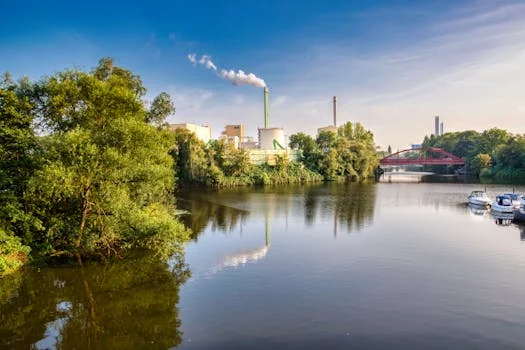
For sensitive areas, typical `municipal effluent standards sweden` are: BOD < 15 mg/L, Total Phosphorus (P) < 0.3 mg/L, and Total Nitrogen (N) < 10 mg/L. Achieving these limits necessitates advanced treatment processes, often involving chemical precipitation for phosphorus and biological nitrogen removal. For effective disinfection, especially when effluent is discharged into recreational waters or reused, chlorine dioxide generators for effluent disinfection in Swedish WWTPs are a common choice due to their efficacy against a broad spectrum of pathogens and reduced formation of disinfection byproducts.
| Parameter | EU UWWTD Limit (>2,000 PE) | Swedish Environmental Code Limit (Sensitive Areas) | Typical Removal Efficiency Required |
|---|---|---|---|
| BOD₅ | < 25 mg/L | < 15 mg/L | > 90% |
| COD | < 125 mg/L | < 75 mg/L | > 80% |
| TSS | < 35 mg/L | < 20 mg/L | > 90% |
| Total Phosphorus (P) | 1-2 mg/L (depending on size/area) | < 0.3 mg/L | 90-95% (chemical precipitation + tertiary filtration) |
| Total Nitrogen (N) | 10-15 mg/L (depending on size/area) | < 10 mg/L | 70-80% (biological N removal) |
A significant mandate is the `phosphorus recovery` requirement, stipulating that 60% of WWTPs must implement P recovery by 2025. Common methods include struvite precipitation from digester supernatant or extraction from sludge incineration ash. Additionally, monitoring for emerging contaminants like PFAS is now required, with Swedish EPA’s 2024 guidelines setting limits such as <90 ng/L for PFOA and <2,000 ng/L for total PFAS.
Equipment Selection Guide for Swedish Municipal WWTPs: MBR vs. Conventional vs. DAF
Membrane Bioreactor (MBR) systems demonstrate a 99% pathogen removal efficiency and effluent turbidity below 0.2 NTU, making them highly suitable for greywater reuse applications in Swedish municipal plants, as exemplified by the RecoLab facility. MBR technology is particularly advantageous for `sweden wastewater treatment plant design` where space is limited, offering a compact footprint compared to conventional systems. For detailed technical specifications, engineers can refer to a detailed guide to MBR system specifications and selection criteria for municipal applications.Conventional Activated Sludge (CAS) systems remain a cost-effective choice for larger plants, particularly those exceeding 50,000 PE, where the land availability is not a primary constraint. These systems are well-understood and robust, providing reliable treatment to meet `municipal effluent standards sweden` for BOD, TSS, and nutrient removal.
DAF systems for tertiary phosphorus removal and industrial pre-treatment play a crucial role in achieving stringent phosphorus limits and can be used for primary clarification or tertiary polishing. For instance, the Koholmen WWTP achieved 92% TSS removal with DAF followed by sand filtration, demonstrating its effectiveness in enhancing effluent quality. DAF systems are also valuable for industrial `sweden wastewater treatment plant design` as pre-treatment units to remove fats, oils, and greases (FOG) and suspended solids.
| Criteria | MBR Systems | Conventional Activated Sludge (CAS) | DAF Systems |
|---|---|---|---|
| Footprint | Very compact (0.05-0.1 m²/PE) | Large (0.15-0.25 m²/PE) | Compact (0.02-0.05 m²/PE for tertiary) |
| Energy Use (kWh/m³) | 0.8-1.2 (for aeration & membrane scouring) | 0.3-0.5 (for aeration) | 0.05-0.15 (for pump & compressor) |
| CAPEX (€/PE) | High | Moderate | Moderate (for tertiary) |
| OPEX (€/m³) | Moderate (membrane cleaning, replacement) | Low-Moderate (sludge handling, chemicals) | Low-Moderate (chemical, sludge handling) |
| Nutrient Recovery Potential | High (concentrated sludge, potential for `MBR for greywater reuse`) | Moderate (digestion for biogas, `phosphorus recovery from sludge`) | Low (focus on solids removal) |
| PFAS Removal | Moderate (some adsorption on membranes/sludge) | Low-Moderate (adsorption on sludge) | Low (primarily physical separation) |
| Effluent Quality | Excellent (turbidity <0.2 NTU, 99% pathogen removal) | Good (meets EU/Swedish standards) | Excellent (TSS >90% removal, P removal with chemicals) |
| Hydraulic Loading Rate | 15-25 LMH (liters/m²/hour) | 6-12 hours HRT | 5-15 m/h (surface loading rate) |
| Sludge Age | 15-40 days | 10-30 days | N/A (for tertiary) |
| Membrane Lifespan | 5-8 years | N/A | N/A |
Sludge Management in Swedish Municipal Plants: Dewatering, Digestion, and Phosphorus Recovery
Common dewatering methods in Sweden include belt presses, centrifuges, and screw presses. According to Swedish EPA data, approximately 70% of plants utilize centrifuges due to their efficiency and compact design. For a more detailed guide to sludge dewatering equipment for Swedish projects, engineers can explore specific performance metrics and cost comparisons. HydropureWater offers sludge dewatering equipment for Swedish phosphorus recovery projects, including plate and frame filter presses, which are highly effective for achieving high dry solids content.
| Dewatering Method | Typical Dry Solids (DS) Content | Energy Use (kWh/ton DS) | Polymer Dosage (g/kg DS) | CAPEX (€/PE) |
|---|---|---|---|---|
| Belt Press | 20–25% | 10–20 | 5–10 | 20–40 |
| Centrifuge | 25–30% | 25–40 | 8–15 | 30–60 |
| Screw Press | 25–35% | 15–30 | 7–12 | 25–50 |
Anaerobic digestion is widely employed for sludge stabilization and energy recovery, producing 0.3–0.5 m³ of biogas per kg of volatile solids (VS) destroyed. This biogas can be used to generate 1.5–2.5 kWh/m³ of electricity or heat, contributing to the `circular economy in wastewater`. Digester design typically involves hydraulic retention times (HRT) of 15–30 days and maintains temperatures of 35–40°C for optimal mesophilic digestion, achieving 40–60% VS reduction.
For `phosphorus recovery from sludge`, two primary methods are prevalent: struvite precipitation and sludge incineration ash extraction. Struvite precipitation typically recovers 20–30% of phosphorus from digester supernatant at a CAPEX of €500–800 per ton of P. Sludge incineration followed by ash extraction offers a higher recovery rate of 80–90% P but comes with a higher CAPEX of €1,200–1,500 per ton of P, reflecting the additional complexity of the incineration process.
Procurement Checklist for Swedish Municipal WWTP Projects: 2025 Edition
A comprehensive procurement checklist for Swedish municipal wastewater treatment plant projects must prioritize regulatory compliance, with equipment verifying adherence to the EU Machinery Directive 2006/42/EC and CE marking. Vendors must provide complete documentation, including type approvals, emission certificates, and proof of conformity with the Swedish Environmental Code requirements. This ensures that all installed equipment meets the stringent safety and environmental standards applicable in Sweden.Performance guarantees are crucial. Contracts should explicitly specify influent and effluent parameters (e.g., BOD < 15 mg/L, P < 0.3 mg/L) that the equipment must consistently achieve. Penalty clauses for non-compliance, typically 1–3% of the contract value per month of deviation, should be included to incentivize reliable operation and adherence to `municipal effluent standards sweden`.
Energy efficiency is a key consideration for `sweden wastewater treatment plant design`. Procurement specifications should require vendors to provide evidence of energy management systems, such as ISO 50001 certification. Explicit energy use targets, for instance, less than 0.5 kWh/m³ for Conventional Activated Sludge (CAS) systems or less than 1.0 kWh/m³ for MBR systems, should be defined and verifiable through factory acceptance tests (FAT) and site acceptance tests (SAT).
To align with the `circular economy in wastewater` goals, the checklist must include specific requirements for resource recovery. This involves stipulating `phosphorus recovery` rates (e.g., 60% P recovery for plants exceeding 50,000 PE) and biogas production targets (e.g., 0.3 m³/kg VS for anaerobic digesters). Vendor proposals should detail how these targets will be met and verified.
Finally, thorough vendor qualifications are essential. Procurement teams should check references for similar projects implemented in Sweden or other Nordic countries, conducting due diligence through site visits and performance audits to assess previous project success and ongoing operational reliability. This due diligence helps mitigate risks associated with equipment performance and supplier reliability in the specific Swedish context.
Frequently Asked Questions
What are Sweden’s effluent standards for municipal WWTPs?
Sweden’s `municipal effluent standards sweden` are among the world's strictest. For sensitive areas, the Swedish Environmental Code mandates limits of BOD < 15 mg/L, P < 0.3 mg/L, and N < 10 mg/L. The EU Urban Waste Water Directive 91/271/EEC sets slightly higher limits (e.g., BOD < 25 mg/L) for plants larger than 2,000 PE, but Swedish national regulations often supersede these with more stringent requirements.
How does RecoLab’s source-separated sanitation work?
RecoLab's `source-separated sanitation engineering` system, located in Helsingborg, involves collecting blackwater, greywater, and food waste separately. Blackwater is anaerobically digested to produce biogas, greywater is treated using advanced MBR systems for greywater reuse and tight footprint applications for water reuse, and food waste is co-digested with blackwater sludge. This system is highly efficient, recovering approximately 70% of phosphorus and 80% of nitrogen (NX Filtration), embodying a strong `circular economy in wastewater` approach.
What is the 3-Pipe wastewater system in Helsingborg?
The 3-Pipe system in Helsingborg is an innovative household-level wastewater separation infrastructure. It uses three distinct pipelines: one for blackwater (directed to a central WWTP for treatment and resource recovery), one for greywater (often treated locally for reuse or infiltration), and one for stormwater (managed for infiltration or direct discharge). Approximately 90% of Helsingborg households are connected to this system (EU Environment).
What equipment is best for phosphorus removal in Swedish WWTPs?
For `phosphorus recovery from sludge` and effective phosphorus removal in Swedish WWTPs, chemical precipitation using coagulants like ferric chloride (FeCl₃) or aluminum sulfate (Al₂(SO₄)₃) is highly effective, achieving 90–95% P removal. DAF systems for tertiary phosphorus removal and industrial pre-treatment can further enhance this, removing up to 92% of TSS and associated phosphorus (Koholmen WWTP data). For active P recovery, struvite precipitation from digester supernatant or extraction from sludge incineration ash are the primary methods employed, aligning with national `phosphorus recovery` mandates.