Why Plants Choose Dissolved Air Flotation for Solids and FOG
Dissolved air flotation (DAF) systems dissolve air into a recycle stream at about 40–70 psi (2.8–4.8 bar), then release it as 20–100 μm microbubbles. Bubbles attach to coagulated TSS, FOG, and precipitated metals and lift them for skimming. Typical industrial pretreatment reaches about 92–97% TSS and 85–95% FOG removal, with float solids near 3–5%.
Food processing and pulp and paper plants often face FOG and light-fiber loads that settle poorly. Traditional gravity separation needs large surface area and may miss 90%+ removal targets required by many discharge permits. Chemical-only treatment can raise sludge volume and operating cost without fixing separation. Flotation reverses sedimentation logic: particles float instead of sinking, which suits low-density contaminants with specific gravity near water.
One meat-processing example in the original plant notes reported influent TSS near 800 mg/L—well above common sewer limits—driving surcharge risk. Earlier plant references often cited GB 8978-1996 for integrated limits; that standard is now listed as superseded, and many sectors follow dedicated industry discharge standards instead. Where limits remain tight on TSS and FOG, flotation pretreatment is a common engineering response.
How Dissolved Air Flotation (DAF) Systems Work Step by Step
The DAF process follows Henry’s Law: air solubility rises under pressure in a recycle stream, then microbubbles form when pressure drops. Think of opening a pressurized soda bottle, but controlled across four stages so bubbles meet floc at the right size and dose.
Step 1: Air Dissolution and Saturation
Operators divert clarified effluent, typically 10–30% of influent flow, into a recycle pump and saturator. At 40–70 psi, dissolved air capacity rises sharply versus atmospheric conditions. Published design summaries list recycle pressures spanning about 15–75 psig depending on the whitewater scheme; many industrial packages still target the mid-range near 40–70 psi. This pressurized “whitewater” supplies the flotation tank.
Step 2: Microbubble Formation
Pressure-reduction valves return the recycle to the flotation tank. Supersaturated water releases a cloud of 20–100 μm bubbles. Smaller bubbles raise surface-area-to-volume ratio and raise collision odds with suspended particles.
Step 3: Particle-Bubble Attachment
In the contact zone, bubbles meet particles already conditioned with coagulant and flocculant. Attachment occurs by interception, diffusion, and inertial impaction. Operators watch zeta potential so charge is neutralized enough for hydrophobic bubbles to stick. The air-to-solids (A/S) ratio is held near 0.02–0.06 lb air/lb solids for many clarification duties; too little air leaves heavy floc, while excess air can tear flocs apart.
Step 4: Flotation and Skimming
Bubble-particle aggregates rise under Stokes’ Law because combined density falls below water. A float layer forms, often at 3–5% solids. Chain-and-flight or spiral skimmers remove sludge while clarified water exits near the tank bottom. For packaged industrial units, plants often specify a Dissolved Air Flotation (DAF) System that integrates saturator, contact zone, and skimmer on one skid.
| Process Stage | Key Parameter | Engineering Value/Range | Impact on Efficiency |
|---|---|---|---|
| Recycle Stream | Recycle Ratio | 10% – 30% | Determines bubble density and volume |
| Saturation | Operating Pressure | 40 – 70 psi (2.8 – 4.8 bar) | Directly affects air solubility (Henry’s Law) |
| Contact Zone | Bubble Size | 20 – 100 μm | Smaller bubbles increase attachment surface area |
| Separation Zone | Air-to-Solids (A/S) | 0.02 – 0.06 (lb air / lb solids) | Ensures sufficient buoyancy for the floc layer |
DAF Efficiency Benchmarks by Contaminant and Industry
Dissolved air flotation reaches about 92–97% TSS removal and 85–95% FOG removal across many high-load industrial applications when chemistry and A/S are matched to the feed. Gravity settlers struggle more with emulsified oils and light organics. A textile example in the original notes cut TSS from about 1,200 mg/L to 40 mg/L and removed roughly 70% of particulate-linked COD under plant conditions.
Industry feed quality sets the ceiling. Food plants with FOG above 1,000 mg/L use DAF to protect downstream biology. Pulp and paper units recover fiber while targeting about 96% TSS removal in favorable cases. The table below keeps the same industry ranges used in the prior engineering brief for HydropureWater field-aligned benchmarks.
| Industry Sector | Primary Contaminant | Typical Influent (mg/L) | DAF Removal Efficiency |
|---|---|---|---|
| Food Processing (Meat/Dairy) | FOG & TSS | 1,000 – 3,000 (TSS) | 95% – 98% |
| Pulp & Paper | Fine Fibers | 500 – 2,000 (TSS) | 94% – 97% |
| Textile & Dyeing | Particulate Color/COD | 800 – 1,500 (TSS) | 90% – 95% |
| Oil & Gas (Refineries) | Free & Emulsified Oil | 100 – 500 (Oil) | 85% – 95% |
| Metalworking/Plating | Precipitated Metals | 50 – 200 (Metals) | 70% – 90% (w/ pH adjustment) |
Versus sedimentation or membrane bioreactors (MBR), the choice is effluent quality versus budget. MBR can reach reuse-grade water but fouls quickly on high FOG. DAF offers lower CAPEX for sewer pretreatment and produces denser float sludge (about 3–5% solids versus near 1% in many settlers), which cuts dewatering cost.
Which Systems Raise Industrial Water Treatment Efficiency?
Industrial water treatment systems raise operational efficiency when they cut surcharge risk, sludge haulage, and downstream fouling for a given effluent target. For FOG- and TSS-dominated wastewater, DAF usually beats plain sedimentation on footprint and float dryness, while MBR or reverse osmosis belongs later if reuse is required.
Design work balances hydraulic loading at about 3–8 m³/m²/h with A/S ratio and residence time of 20–60 minutes so bubbles attach and rise without carryover. Tanks shallower than about 1.5 m risk solids exiting with effluent. Chemistry is the usual lever: PAC at 50–200 mg/L plus PAM at 1–5 mg/L after jar tests. Plants that need stable dosing often optimize DAF performance with automatic chemical dosing tied to flow and turbidity.
| Design Parameter | Standard Range | Optimization Strategy |
|---|---|---|
| Hydraulic Loading Rate | 3 – 8 m³/m²/h | Lower the rate for high-TSS influent to prevent carryover. |
| Retention Time | 20 – 60 minutes | Ensure at least 30 mins for complex FOG emulsions. |
| Tank Depth | 1.5 – 3.0 meters | Deeper tanks improve separation in high-flow systems. |
| Coagulant Dose (PAC) | 50 – 200 mg/L | Jar testing is required to find the "isoelectric point." |
Do Data Centres Need High-Purity Cooling Water?
Data centres that use evaporative or hybrid cooling often need controlled makeup quality, but high-purity process water for semiconductor-style UPW loops is a different duty from DAF. Cooling-tower makeup may need softening, filtration, or RO; blowdown and oily utility wastewater are where flotation can help as pretreatment before discharge or reuse polishing.
In England, a full Environment Agency abstraction licence is required for most abstractions over 20 cubic metres a day, so water-efficiency and alternative sources matter in stressed catchments. DAF does not replace an abstraction licence or a UPW train. It can, however, clarify reclaim streams so less fresh water is wasted and sewer FOG/TSS limits are met before biological or membrane steps.
DAF vs. Sedimentation vs. MBR: Selection Matrix
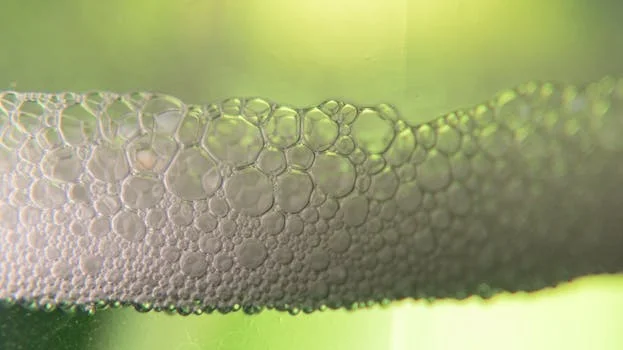
DAF systems need about 50% less footprint than conventional sedimentation tanks while producing sludge with 3–5% higher solids concentration in typical industrial comparisons. That favors sites with limited land or high haulage fees. If the goal is municipal sewer pretreatment, DAF is usually the cost-effective primary solids/FOG step. If the goal is internal reuse, MBR or membranes often follow DAF rather than replace it.
For cost trade-offs between flotation and gravity thickening, engineers can compare DAF vs. gravity thickener costs in 2025. High-strength organic plants often pair DAF with MBR to shield membranes from FOG; teams can learn more about MBR integrated wastewater treatment layouts to see how the stages complement each other.
| Criteria | DAF System | Sedimentation | MBR System |
|---|---|---|---|
| TSS Removal | 92% – 97% | 70% – 85% | 99%+ |
| FOG Handling | Excellent | Poor (FOG floats) | Poor (Membrane fouling) |
| Footprint | Small | Very Large | Medium |
| CAPEX | Moderate | Low | High |
| Sludge Solids % | 3% – 5% | 0.5% – 1.5% | 0.8% – 1.2% |
DAF CAPEX, OPEX, and Payback Ranges for Industrial Plants
Earlier planning briefs used 2025 CAPEX of about $1,500 to $3,000 per m³/h of treatment capacity for medium-scale packages. For a 50 m³/h skid, budgets of $80,000–$120,000 were typical depending on 304 versus 316 stainless steel and PLC depth. A 200 m³/h train was often estimated at $250,000–$400,000 including chemical storage and sludge holding.
OPEX is driven by chemicals and recycle-pump energy. Energy often falls near $5–$15 per 1,000 m³ treated, with chemicals about $2–$8 per 1,000 m³ depending on load. Payback under three years is common when surcharges and haulage drop. A 100 m³/h meat plant example in the prior brief saved about $80,000 per year on TSS/FOG surcharges for a 2.2-year payback. Plants that reduce DAF sludge disposal costs with plate and frame filter presses can raise solids from about 4% to 25% and cut haulage volume by over 80%.
| Capacity (m³/h) | Estimated CAPEX (2025) | Annual OPEX (Est.) | Typical Payback (Years) |
|---|---|---|---|
| 10 m³/h | $35,000 – $55,000 | $5,000 – $8,000 | 3.5 – 4.5 |
| 50 m³/h | $80,000 – $120,000 | $20,000 – $35,000 | 2.5 – 3.5 |
| 100 m³/h | $150,000 – $220,000 | $40,000 – $65,000 | 2.0 – 3.0 |
| 250 m³/h | $300,000 – $450,000 | $90,000 – $140,000 | 1.8 – 2.5 |
Selection checklist (before you buy):
- Measure influent TSS, FOG, and temperature across peak shifts.
- Confirm sewer or reuse limits and surcharge triggers.
- Jar-test coagulant/flocculant and record the isoelectric window.
- Size for hydraulic loading 3–8 m³/m²/h and A/S 0.02–0.06 under peak solids.
- Decide stainless grade, recycle scheme, and skimmer type for FOG load.
- Budget sludge thickening or filter-press dewatering with the DAF skid.
- Plan instrumentation for saturator pressure, turbidity, and chemical dose.
Common DAF Problems and Practical Fixes
Poor flotation most often traces to saturator pressure below about 40 psi or a low A/S ratio. If solids will not rise or whitewater looks gray rather than bright, check saturator pressure and recycle-pump seals first. Air leaks on the suction side can block the target near 60 psi and yield oversized bubbles.
Pin floc usually means overdosed flocculant or pH outside the coagulant window. Weekly jar tests keep dose honest. Excess sludge volume often means heavy grit is entering the DAF; a grit chamber or pre-settler lets flotation focus on light solids. Preventive checks include weekly saturator pressure, monthly skimmer cleaning, and quarterly recycle-impeller inspection. When specifying hardware, compare a packaged explore DAF systems for industrial wastewater against site-built tanks using the same A/S and loading criteria.
Who This Is For / Who Should Look Elsewhere / Next Step
This guide is for plant engineers, EPC designers, and procurement teams sizing FOG/TSS pretreatment for food, pulp, textile, oily water, or metal-precipitation streams. Look elsewhere if you need semiconductor UPW, closed-loop chip cooling purity, or final reuse without a biological or membrane polish—DAF alone will not meet those specs. Next step: send influent analyses and discharge limits so a duty-sized DAF and chemical package can be quoted against your surcharge and sludge costs.
Frequently Asked Questions
Q: How small are the bubbles in a DAF system?
A: DAF systems produce 20–100 μm microbubbles under normal industrial whitewater design. That size range supplies high surface area for particle attachment compared with larger induced-air bubbles. Operators who keep saturator pressure and nozzles healthy stay inside this band and protect removal efficiency on fine TSS and emulsified FOG.
Q: What’s the difference between DAF and IAF (Induced Air Flotation)?
A: DAF dissolves air at about 40–70 psi to make 20–100 μm bubbles; IAF uses agitation or venturi devices that make larger bubbles near 500–1,000 μm. IAF can cost less to run on free oil, but DAF is preferred for fine industrial solids when 90%+ TSS capture is required. Choose IAF only when particles are coarse and chemistry demand is low.
Q: Can DAF remove heavy metals from wastewater?
A: Yes, after metals are precipitated as hydroxides or sulfides at the pH of minimum solubility, often near 8.5–9.5 with coagulant. Under those conditions DAF commonly removes about 70–90% of chromium, copper, and nickel solids. For 99%+ metals polishing, add filtration after flotation rather than relying on DAF alone.
Q: How much does a DAF system cost per m³/h?
A: Planning figures from the 2025 brief put CAPEX near $1,500–$3,000 per m³/h for many package units. A 100 m³/h system often landed between $150,000 and $300,000 with materials and dosing options. Final price still hinges on stainless grade, automation, and balance-of-plant tanks.
Q: What’s the typical payback period for a DAF system?
A: High-FOG food and pulp plants often see payback in about 2–4 years when surcharges and sludge haulage fall. Drier float at 3–5% solids is a major driver versus watery settler sludge. Exact ROI depends on local sewer fees, chemical cost, and whether a filter press follows the DAF.