For industrial wastewater treatment, DAF systems typically cost $80,000–$500,000+ (capacity-dependent) with annual operational costs of $20,000–$150,000, while oil water separators range from $15,000–$120,000 with $5,000–$40,000 in yearly expenses. A DAF vs oil water separator cost comparison weighs those bands against emulsion risk, permit limits, flow rate, and 10-year total cost of ownership. When teams weigh daf vs coalescence separator for oil removal, DAF usually delivers 92–97% TSS removal with higher energy and chemical use, while coalescing separators remove 80–90% free oil at lower OpEx.
Process differences beyond cost are set out in DAF vs Oil Water Separator: Key Differences, Efficiency & Use Cases.
DAF vs Oil Water Separator Cost Comparison
DAF systems typically cost $80,000–$500,000+ with $20,000–$150,000 yearly OpEx, while oil water separators cost $15,000–$120,000 with $5,000–$40,000 OpEx. At equal flow, DAF CapEx is often 2–3× higher and energy is 5–8× higher. DAF still removes 92–98% TSS plus emulsified oil that a separator misses. Ten-year ROI favors the unit that matches droplet size and permit limits.
Wrong primary treatment creates a decade of chemical burn, energy waste, and permit risk. Food plants often see wastewater as 5–15% of operating cost, so CapEx versus OpEx trade-offs hit the P&L directly. Over-sizing a DAF for simple free-oil recovery burns energy that never returns as compliance value.
A 50 m³/h Midwest dairy case shows the pattern. FOG was high, but most of it was non-emulsified free oil. The plant replaced a proposed full-scale DAF with a coalescing separator plus a smaller polishing DAF and cut about $42,000 per year in operating cost. That hybrid logic is how most plants we size for mixed FOG streams protect ROI without gambling on one unit.
DAF vs Coalescence Separator for Oil Removal
DAF systems generate 3–5 µm micro-bubbles at about 4–6 bar recycle pressure and routinely remove 92–97% TSS when chemistry and air-to-solids ratio are tuned. A recycle stream is saturated, released as white water, and attaches to solids and oil so a skimmer can lift the float. Coalescence separators rely on Stokes' Law: oil near 0.90 specific gravity rises while water stays near 1.00, and plate packs grow droplet size until free oil can be skimmed. Most plants we size for free-oil pits never need that bubble step.
Capital for a packaged DAF often lands near $1,200–$2,500 per m³/h of capacity, covering tank, recycle pump, saturator, and skimmer. Energy is typically 0.3–0.8 kWh/m³, driven by high-pressure recycle. Coagulants and flocculants usually add $0.05–$0.20 per m³ treated. Many plants optimize chemical usage with our PLC-controlled dosing systems that trim dose against flow and turbidity instead of fixed recipes.
| DAF Cost Component | Estimated Range (2025) | Engineering Impact |
|---|---|---|
| Capital Cost (CapEx) | $80,000 – $500,000+ | Dependent on metallurgy (SUS304 vs SUS316) and automation. |
| Energy Consumption | 0.3 – 0.8 kWh/m³ | High-pressure recycle pumps and compressors are primary draws. |
| Chemical Dosing | $0.05 – $0.20/m³ | Necessary for emulsified oil and TSS < 50 µm. |
| Sludge Disposal | $150 – $400/ton | DAF produces a thicker sludge (3–5% solids) than gravity systems. |
| Maintenance | $8,000 – $25,000/year | Includes compressor servicing and annual membrane/seal replacement. |
High-volume sites can review a Dissolved Air Flotation (DAF) System in the 4–300 m³/h range to see how saturator design affects recycle power and float dryness.
daf system capital cost per cubic meter
DAF system capital cost per cubic meter of hourly capacity often lands near $1,200–$2,500 per m³/h for a packaged unit. That band covers the tank, recycle pump, saturator, and skimmer, not civil works or a building. Most plants we size for food wastewater sit toward the upper half when SUS316 and automation are specified. A carbon-steel tank quote at the low end still has to survive the same chloride and hot-wash duty as the rest of the line.
What is DAF capital cost per cubic meter?
DAF capital cost per cubic meter of rated flow is the packaged equipment price divided by design m³/h, and it usually sits near $1,200–$2,500 per m³/h. Civil pads, chemical buildings, and sludge tanks sit outside that unit rate. Ask which metals and which instruments sit inside the number before two bids are treated as equal.
daf operating cost for emulsion removal
DAF operating cost for emulsion removal typically combines 0.3–0.8 kWh/m³ of high-pressure recycle with $0.05–$0.20 per m³ of coagulant and flocculant. Those chemicals break droplets below about 20–30 µm so 3–5 µm bubbles can lift them. Gravity plates skip that spend, and they also miss the same emulsified fraction. Most plants we size for detergent-rich washes see chemical cost, not power, set the monthly bill.
What is DAF operating cost for emulsions?
DAF operating cost for emulsions is usually $0.10–$0.35/m³ once power and chemicals are added, against under $0.05/m³ for a gravity separator at the same plant. The 100 m³/h table prices energy at $0.08 - $0.15 per m³ on a $0.12/kWh rate and chemicals at $0.12 - $0.25 per m³. If the emulsion fraction is small, do not pay the DAF chemical bill for oil a plate pack can already skim.
Oil Water Separator Cost Structure and Limits
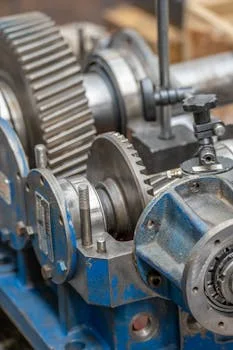
Industrial oil water separators sized on gravity or coalescing plates typically cost $300–$1,500 per m³/h. Common layouts include API gravity separators, coalescing plate interceptors (CPI), and centrifugal units for heavier oils. EPA petroleum-refining development work treated API separators as a core primary step before biology. Pretreatment oil-and-grease limits were framed near 100 mg/L maximum for any one day to POTWs (EPA Development Document, 1979).
That national rule is not a single numeric oil-and-grease cap for every plant. According to US EPA, POTWs set site-specific numeric or narrative local limits under 40 CFR 403.5(c) and apply them at the industrial user's end of pipe. According to US EPA, categorical users follow PSES or PSNS, and EPA implements those standards for 35 of 58 industrial categories.
OpEx stays low because separation is passive. Pumping energy is often 0.05–0.2 kWh/m³. Chemicals are usually $0.00–$0.05/m³, mostly for pH trim. Media cleaning or replacement runs about $2,000–$8,000 per year. Recovered oil is often dry enough to recycle or sell, with disposal or credit near $50–$150 per ton—well below chemical-laden DAF sludge.
| OWS Cost Component | Estimated Range (2025) | Technical Constraint |
|---|---|---|
| Capital Cost (CapEx) | $15,000 – $120,000 | Scales with retention time and plate surface area. |
| Energy Consumption | 0.05 – 0.2 kWh/m³ | Primarily influent/effluent pumping. |
| Chemical Usage | $0.00 – $0.05/m³ | Usually requires no polymer or coagulant. |
| Media Replacement | $2,000 – $8,000/year | Coalescing plates require cleaning or replacement every 12-24 months. |
| Oil Disposal/Credit | $50 – $150/ton | Recovered oil may have resale value if purity is high. |
Efficiency collapses when droplets fall below about 20–30 µm or surfactants stabilize emulsions. In those loads, a separator may remove only about 40% of oil and push the problem into the biological stage. Most plants we size for wash bays see removal fall near that 40% once detergent is in the pit.
Where a plain separator cannot hold the local limit, compare a daf oil separator layout with membranes and other primaries before the flow sheet is locked.
Side-by-Side Cost Comparison for a 100 m³/h Plant
A 100 m³/h plant shows DAF CapEx of $180,000–$250,000 versus $60,000–$90,000 for an oil water separator. Most plants we size for steady free oil never earn back the DAF premium on power alone.
What drives traditional versus DAF process cost?
Traditional gravity or coalescing trains cost less to buy and run, while DAF spends more on recycle power and chemistry to hit tighter TSS and emulsified-oil limits. For a 100 m³/h plant, DAF CapEx is typically $180,000–$250,000 versus $60,000–$90,000 for an oil water separator at the same flow.
Operational cost, not sticker price, creates the widest gap: DAF often runs $0.10–$0.35/m³ while gravity separators stay under $0.05/m³. Over a 10-year life, DAF CapEx is higher, yet 95–99% emulsified-oil removal can be the only path that keeps a strict municipal permit. The table below keeps the same engineering ranges used for 2025 budgeting.
| Parameter | DAF System | Oil Water Separator | Cost Difference | Notes |
|---|---|---|---|---|
| CapEx (100 m³/h) | $180,000 - $250,000 | $60,000 - $90,000 | DAF is 2-3x higher | DAF includes saturation tanks & automation. |
| Energy Cost ($/m³) | $0.08 - $0.15 | $0.01 - $0.03 | DAF is 5-8x higher | Based on $0.12/kWh electricity rate. |
| Chemical Cost ($/m³) | $0.12 - $0.25 | $0.00 - $0.02 | Significant OpEx gap | DAF requires polymer/coagulant for efficiency. |
| Sludge/Oil Disposal | $250/ton (sludge) | $100/ton (oil) | DAF is 2.5x higher | DAF sludge has higher water/chemical content. |
| Footprint (m²) | 25 - 40 m² | 15 - 25 m² | OWS is ~40% smaller | DAF requires space for chemical tanks. |
| TSS Removal (%) | 92% - 98% | 20% - 40% | DAF is vastly superior | OWS is not designed for TSS removal. |
| Oil Removal (%) | 95% - 99% (Emulsified) | 80% - 95% (Free Oil) | DAF handles emulsions | OWS fails with emulsified oils. |
Hidden labor also differs. A DAF usually needs 5–10 operator hours per week for chemistry and skimmer checks. A coalescing separator may need only 1–2 hours. DAF still wins when influent spikes are common, because dose and recycle can be adjusted; a passive separator cannot.
How Much Does a DAF Unit Cost?
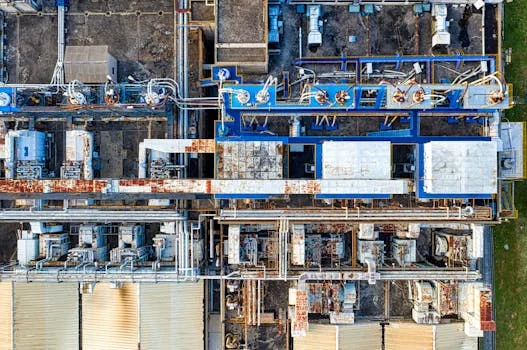
A small industrial DAF at 5–10 m³/h typically costs $45,000–$85,000 installed-equipment class, with yearly OpEx near $5,000–$12,000 depending on chemistry. At mid-scale, CapEx of $80,000–$500,000+ tracks metallurgy, automation, and peak flow. Food plants with TSS above 500 mg/L or FOG above 300 mg/L usually need flotation because emulsions and proteins defeat gravity plates. Dairy, meat, and beverage lines are the usual examples.
Pulp and paper mills with COD above about 1,500 mg/L often use DAF for fiber recovery and load cut before biology. Textile plants use flotation for color polish toward levels near 50 Pt-Co that separators cannot reach. Field performance context for food-industry FOG is covered in our DAF system engineering specs and cost notes. Compliance-driven plant layouts are also discussed in the industrial wastewater treatment compliance guide.
A 100 m³/h dairy DAF often shows about a 5-year payback when municipal surcharges fall by roughly $75,000 per year against a 15-year mechanical life. Regional food-plant cost framing appears in our food processing wastewater treatment cost benchmarks. Most plants we size for dairies only see that payback when the surcharge line is real, not a guess.
When an Oil Water Separator Is the Cheaper Right Answer
Metalworking and vehicle-wash plants can hit 80–95% free-oil removal with coalescing plates at about 60% lower lifecycle cost than DAF when oil is free and TSS stays below about 200 mg/L. Putting flotation on a simple truck wash is classic over-design: chemical and power cost erase payback before the skimmer wears out. Most plants we size for truck washes stay with plates when jar tests show free oil.
Petroleum terminals also favor separators for bulk free oil ahead of secondary treatment. Intermittent stormwater and high peak flows favor modular, passive tanks. A 50 m³/h truck-wash separator often pays back in about 3 years via recovered oil and avoided basic discharge fees. If detergents later emulsify the oil, plan a DAF retrofit rather than forcing the same media pack to meet a tighter permit.
daf vs oil water separator payback calculation
DAF vs oil water separator payback calculation divides initial investment by net annual cash flow. On the 80 m³/h case, DAF at $300,000 CapEx and $120,000 net cash flow pays back in 2.5 years. The oil water separator at $85,000 and $33,000 net cash flow pays back in 2.6 years. Most plants we size for surcharge-driven dairies land near the 5-year mark in the 100 m³/h example, while a stormwater yard does not.
How do you calculate separator payback?
Separator payback equals CapEx divided by yearly savings minus yearly OpEx. In the worked 80 m³/h rows, DAF savings of $180,000 minus $60,000 OpEx leave $120,000, and $300,000 divided by $120,000 is 2.5 years. OWS savings of $45,000 minus $12,000 OpEx leave $33,000, and $85,000 divided by $33,000 is about 2.6 years. Use your own surcharge and power rate before those years are treated as a bid result.
ROI Checklist: Estimate Payback Before You Buy
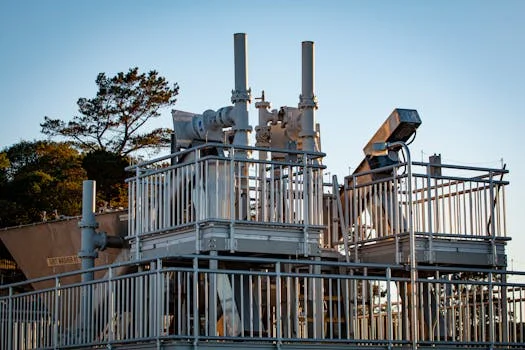
An 80 m³/h DAF at about $300,000 CapEx and $60,000 yearly O&M can show a 2.5-year payback when avoided non-compliance exposure is near $120,000 per year. Build the DAF vs oil water separator cost comparison on total cost of ownership, not equipment price alone.
- CapEx scope: equipment, freight, install, and first chemical fill.
- Annual O&M: power, chemicals, wear parts, and operator hours.
- Compliance savings: avoided fines, lower POTW surcharges, recovered oil or fiber.
- Hauling alternative: off-site disposal often runs $0.10–$0.50 per gallon.
- Influent risk: surfactants, TSS spikes, and emulsion fraction.
- Footprint and utilities: chemical day tanks, air, and sludge handling.
- 10-year NPV: compare net cash flow after year-2 maintenance cycles.
| ROI Variable | DAF Scenario (80 m³/h) | OWS Scenario (80 m³/h) |
|---|---|---|
| Initial Investment | $300,000 | $85,000 |
| Annual OpEx | $60,000 | $12,000 |
| Annual Savings/Avoided Fines | $180,000 | $45,000 |
| Net Annual Cash Flow | $120,000 | $33,000 |
| Payback Period | 2.5 Years | 2.6 Years |
Payback years can look similar while 10-year NPV diverges. DAF usually protects a larger compliance problem; an OWS wins when free oil is stable and emulsion risk stays low. Most plants we size for stable free oil stop at the separator once the lab confirms the emulsion fraction is small.
Who This Is For / Next Step
Plant engineers, EPC designers, and procurement teams use this cost split when they choose primary oil and solids removal before biological treatment or sewer discharge. Look elsewhere if you only need stormwater sheen control with proven free oil and no detergents. If your lab data show emulsified oil or TSS above separator limits, request a sized quote via our project inquiry form with flow, FOG, TSS, and permit targets. Most plants we size for mixed FOG attach flow, FOG, TSS, and the permit number to that request.
Frequently Asked Questions
How much does a DAF system cost for a small plant?
For 5–10 m³/h industrial duty, packaged DAF equipment commonly falls between $45,000 and $85,000. Annual operating cost is usually $5,000–$12,000, driven mainly by coagulant and flocculant dose. Automated control often pays back faster than a cheaper manual skid because it cuts full-time operator hours on small shifts. Most plants we size for this band still need a jar test before the chemical budget is locked.
How often do oil water separators need cleaning?
Most coalescing plate packs need a full pump-out and plate wash every 3–6 months at moderate oil loads. High-solids streams can force monthly cleaning to stop media blinding. That labor can erase part of the CapEx advantage versus a DAF with continuous float removal. Budget the same labor on the OpEx sheet you already use for power and media.
Can an oil water separator remove emulsified oil?
Standard gravity and coalescing separators do not reliably remove emulsified oil below about 20 µm droplet size. Treat emulsions with DAF plus chemical de-emulsifiers, or with ultrafiltration where dissolved or stable fractions dominate. Using a plain OWS on surfactant-stabilized oil usually fails common FOG permit limits. A droplet-size check on the influent tells you which path applies.
What is the lifespan of a DAF versus an oil water separator?
Both SUS304 or SUS316 builds commonly last 15–20 years mechanically when maintained. DAF has more wear items—recycle pumps, compressors, and skimmers—so spare parts spend is higher. An OWS is more passive and durable, but it becomes obsolete faster if permits tighten on emulsified oil or TSS. Plan spare pumps on the DAF and plan plate pulls on the separator.
Is DAF always worth the higher operating cost?
No. DAF is worth the OpEx when emulsified oil, fine TSS, or surcharge exposure exceeds separator capability. If oil is free, TSS is low, and the permit only targets free-oil sheen, a coalescing separator usually delivers lower 10-year cost. Match the unit to the droplet physics, not the brochure CapEx.