Multi Media Filter for RO Pretreatment: How Depth Filtration Works
A multi media filter for RO pretreatment traps suspended solids in anthracite, sand, and garnet before water reaches RO membranes. Industrial units hold flux at 5–15 m/h, run 6–8 hours, and backwash at 20–30 m/h near 0.8–1.0 bar ΔP. Feed SDI falls below 3.
How multi-media filters work is depth filtration through anthracite, sand, and garnet beds that trap progressively finer solids through the full bed depth. Industrial units typically run at 5–15 m/h for 6–8 hour cycles, then backwash at 20–30 m/h when ΔP rises from 0.2–0.5 bar toward 0.8–1.0 bar. RO pretreatment usually targets SDI below 3 from influent values above 5.
Industrial wastewater often carries enough suspended solids to foul reverse osmosis (RO) membranes when SDI stays above 3 or turbidity exceeds 0.2 NTU. A semiconductor fab in Taiwan saw RO membrane replacement frequency rise about 60% under that fouling load. Membrane swaps in that class of duty can cost $50,000–$200,000 per train and idle production for 2–4 days. Understanding how multi-media filters work in that duty is a sizing decision before RO, not an optional polish step.
Most plants we size on electronics rinse water run nearer 5–8 m/h when TSS sits in the mid hundreds of mg/L. Clean-bed ΔP on those units is usually 0.2–0.5 bar, and operators trust that reading before they quote nameplate flow.
Multi Media Filter Anthracite Sand Garnet Sizing
Multi media filter anthracite sand garnet sizing stacks coarse, light grains above fine, dense grains so solids load through the full bed instead of forming a surface mat. Anthracite at 1.5–2.0 mm and 1.4–1.6 g/cm³ forms the top layer at 400–600 mm. Sand at 0.5–1.0 mm and 2.6 g/cm³ follows at 200–300 mm. Garnet at 0.2–0.4 mm and 3.8–4.2 g/cm³ takes the fine cut in 100–150 mm, over 100–150 mm of 2–5 mm gravel near 2.65 g/cm³.
The efficacy of a multi-media filter lies in its stratified bed of granular media, carefully chosen for their distinct densities and particle sizes. This design allows for depth filtration, capturing progressively finer particles as water flows downwards. The typical configuration includes:
| Media Layer | Particle Size (mm) | Density (g/cm³) | Bed Depth (mm) | Primary Function |
|---|---|---|---|---|
| Anthracite | 1.5–2.0 | 1.4–1.6 | 400–600 | Traps larger suspended solids and some colloidal matter. |
| Sand (Fine) | 0.5–1.0 | 2.6 | 200–300 | Captures medium-sized particles that pass through the anthracite layer. |
| Garnet | 0.2–0.4 | 3.8–4.2 | 100–150 | Removes fine suspended solids and smaller colloidal particles. |
| Gravel (Support) | 2–5 | ~2.65 | 100–150 | Supports the filter media and ensures uniform flow distribution during filtration and backwashing. |
Industrial multi-media filters typically operate at flow rates ranging from 5 to 15 meters per hour (m/h). University of Memphis filtration notes place common dual- and mixed-media design rates near 3–6 gal/min·ft² (about 7–15 m/h), which matches the lower half of that band for most plants we size. Larger particles lodge in anthracite; sand and garnet take the finer cut. Filter runs of 6–8 hours are typical before backwash.
Backwash reverses flow at 20–30 m/h, expands the bed 30–50%, and clears stored solids. Clean-bed ΔP is usually 0.2–0.5 bar; initiate wash near 0.8–1.0 bar to limit channeling. For RO feed polishing, a Multi-Media Filter for Water Treatment is sized to those hydraulic and ΔP limits.
How Do Multi Media Filter Design Calculations Start?
Multi-media filter design calculations begin with service flux (m³/h ÷ bed area) held inside 5–15 m/h at average flow, then check peak flow against the same limit with standby vessels online. Vessel count = design flow ÷ (area × selected flux). Backwash pump capacity must deliver 20–30 m/h across the same area, plus freeboard for 30–50% bed expansion.
Empty-bed contact and media L/d ratios matter when you change effective sizes; keep anthracite coarser and lighter than sand, and garnet finest and densest so the stack re-stratifies after wash. Most plants we size for metal finishing and electronics rinse water run nearer 5–8 m/h when influent TSS sits in the mid hundreds of mg/L.
Multi Media Filter Backwash Design Calculation
A multi media filter backwash design calculation sizes the wash pump from bed area at 20–30 m/h, not from the service-pump curve. Service flux stays at 5–15 m/h, so the wash rate is the higher duty on that same area. Most plants we size stop the wash test once the bed expands 30–50% and anthracite stays in the vessel. Freeboard has to cover that expansion or the top layer leaves with the wash water.
Trigger wash near 0.8–1.0 bar ΔP, and treat a 6–8 hour run as typical only when TSS is 50–500 mg/L. Clean-bed ΔP of 0.2–0.5 bar is the baseline you compare against. Healthy multi-media beds often use 2–5% of treated water for backwash, versus 5–10% on many single-media sand filters. Under-washing is what shortens the next run and raises breakthrough risk.
One regulatory note applies to potable service only. According to US EPA Surface Water Treatment Rules guidance, the Filter Backwash Recycling Rule directs public water systems to review their backwash recycling practices and to return recycled backwash through all processes of a conventional or direct filtration train. An industrial RO wash rate of 20–30 m/h is not reset by that drinking-water rule. Where a vessel serves a public water supply, the Great Lakes – Upper Mississippi River Board 10 States Standards, hosted by Minnesota Department of Health, remain the design guide; industrial wastewater vessels sit outside them.
Multi Media Filter SDI Reduction Efficiency
Multi media filter SDI reduction efficiency in RO feed service is commonly a fall from above 5 to below 3, with TSS removal of 92–97% at 50–500 mg/L influent. Removal still depends on influent quality and on whether a coagulant is dosed ahead of the bed. Colloidal matter around 0.1–1 micron is listed at 80–95% in the benchmark table below. Dissolved salts sit outside that removal.
Multi-media filters remove particulate matter at rates that depend on influent quality and coagulant practice. For Total Suspended Solids (TSS), typical removal is 92–97% when influent is 50–500 mg/L. Silt Density Index (SDI) commonly falls from greater than 5 to below 3, which is the practical RO feed target many plants write into specs. According to DuPont FilmTec colloidal-fouling guidance, RO feed SDI should be held at ≤5; membrane makers and field practice often push further toward <3 for stable spiral-wound duty (ASTM D4189 test method).
The ASTM D4189 method is written for clean feeds. Its scope states the test is applicable to relatively low (1.0 NTU) turbidity waters such as well water, filtered water, or clarified effluent samples, and that SDI has been empirically correlated with the fouling tendency of reverse osmosis devices. Treat SDI as an index of filterability, not an absolute particle count. Most plants we size keep the membrane spec and any drinking-water turbidity spec on separate lines of the same data sheet.
| Contaminant Type | Typical Removal Efficiency | Particle Size Range Captured (Microns) | Notes |
|---|---|---|---|
| Total Suspended Solids (TSS) | 92–97% (at 50–500 mg/L influent) | 15–20+ | Highly effective for general particulate removal. |
| Silt Density Index (SDI) | From >5 to <3 | N/A (Index of filterability) | Crucial for RO membrane protection. |
| Colloidal Matter | 80–95% | 0.1–1 | Anthracite layer is key for smaller colloidal particles. |
| Emulsified Fats, Oils, and Grease (FOG) | 60–80% | N/A (Emulsified droplets) | Less effective for free-floating FOG; DAF is preferred for high FOG loads. |
| Colloidal Heavy Metals (e.g., Cr, Ni) | 70–90% | 0.1–1 | Requires some degree of particle suspension; dissolved metals are not removed. |
| Microorganisms (Algae, Bacteria) | 90–99% | >1 | Viruses and smaller pathogens may pass through; disinfection is required. |
Multi-media filters do not remove dissolved salts, ammonia, or cyanide. Colloids finer than about 0.1 µm often pass. Dissolved metals need chemical precipitation first so flocs exist for the bed to catch. Plants that miss that step usually see breakthrough even when automated coagulant dosing to enhance multi-media filter performance is later added.
Multi Media Filter vs DAF for Wastewater: Which Process Leads?
Choosing a multi media filter vs DAF for wastewater follows FOG and TSS, not a single removal percentage. Multi-media filtration removes 92–97% of TSS at 50–500 mg/L influent, while DAF is listed at 85–95% TSS and 90–98% FOG. Free FOG removal on a multi-media bed stays under 50%, and emulsified FOG removal runs about 60–80%. Most plants we size send food and metalworking waste to DAF when FOG exceeds about 100 mg/L.
Pretreatment choice follows influent solids, FOG, and the downstream limit—RO SDI, discharge TSS, or process-water clarity. Multi-media filters, Dissolved Air Flotation (DAF), clarifiers, and cartridges cover different corners of that map.
| Parameter | Multi-Media Filter | Dissolved Air Flotation (DAF) | Clarifier (Primary/Lamella) | Cartridge Filter |
|---|---|---|---|---|
| TSS Removal (%) | 92–97% (50–500 mg/L influent) | 85–95% (variable influent) | 60–80% (for high TSS >1000 mg/L) | 95–99% (for low TSS <50 mg/L) |
| FOG Removal (%) | <50% (free); 60–80% (emulsified) | 90–98% (free & emulsified) | 30–50% | Minimal |
| Flow Rate Range (m³/h) | 50–1000+ | 50–1000+ | 100–5000+ | 1–50 |
| CAPEX | Moderate | High | Moderate to High | Low to Moderate |
| OPEX | Low (backwash water) | Moderate (air, chemicals, sludge disposal) | Low (sludge disposal) | Moderate (element replacement) |
| Footprint | Moderate | Large | Large to Very Large | Small |
| Maintenance Complexity | Moderate (backwash, media checks) | High (air saturation, skimmer, sludge removal) | Moderate (sludge removal) | Low (element replacement) |
What Are Industrial Wastewater Clarifier Selection Criteria?
Industrial wastewater clarifier selection criteria favor primary or lamella clarifiers when influent TSS exceeds about 1,000 mg/L or when coagulation and flocculation are already planned as the first solids cut. Clarifiers handle bulk settleable load; multi-media filters then polish to RO-grade SDI when FOG stays low (<50 mg/L) and TSS after clarification sits nearer 50–500 mg/L. Primary clarifiers for high-TSS influent pretreatment belong upstream in that train.
DAF wins when FOG exceeds roughly 100 mg/L, as in food and metalworking streams; How Cavitation Air Flotation (CAF) Systems Remove FOG and TSS covers that path. Cartridge filters suit low-flow polishing after media filtration, not high-solids headworks.
Industrial Multi Media Filter Selection Guide: The 5-Step Framework
An industrial multi media filter selection guide starts from a measured influent, not a catalog diameter. TSS, FOG, SDI, turbidity, pH, and metals have to be known before the vessel count is real. For a multi media filter for RO pretreatment, the effluent bar is SDI below 3 and turbidity below 0.2 NTU. Peak flow still has to stay inside 5–15 m/h with standby vessels online.
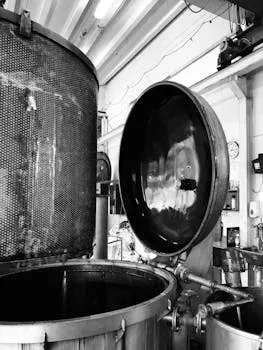
Choosing the correct multi-media filter system requires a systematic approach to ensure it meets the specific treatment objectives and operational constraints. This framework guides engineers and procurement specialists through the essential evaluation steps:
- Characterize Influent Water Quality: Conduct thorough laboratory analysis or pilot studies to determine key parameters such as TSS concentration, FOG levels, SDI, turbidity, pH, and the presence of specific contaminants like heavy metals. This baseline data is critical for sizing the filter and selecting appropriate media.
- Define Required Effluent Quality: Clearly establish the target effluent standards. For RO pretreatment, this typically means achieving an SDI below 3 and turbidity below 0.2 NTU. For discharge, specific regulatory limits for TSS and other parameters must be met.
- Calculate Flow Rate and Peak Demand: Determine the average and peak flow rates of the wastewater stream. Multi-media filters are commonly sized for operational flow rates between 5 and 15 m/h. Ensure the selected system can handle peak demands without compromising performance, considering the need for multiple vessels for redundancy or higher flow capacity.
- Evaluate Media Options: While standard anthracite, sand, and garnet are effective for general TSS removal, consider specialized media if specific contaminants are present. For instance, certain media can enhance heavy metal adsorption or improve FOG removal, although for significant FOG loads, DAF is usually a prerequisite.
- Assess Automation and Control Needs: Decide on the level of automation required for filter operation and backwashing. Options range from manual control to fully automated PLC-controlled systems with remote monitoring capabilities. Automated systems can optimize backwash frequency, improve consistency, and reduce operator intervention.
Before purchase, require media certificates, ΔP-versus-flow curves, backwash water volume as a percent of filtrate, and vessel warranty terms. Operators who skip those documents usually rediscover them during the first channeling event. Pair the mechanical package with a written Multi Media Filter Maintenance Guide: 7-Step Industrial Protocol 2026 so ΔP and media sampling stay on a fixed calendar.
Common Multi-Media Filter Problems and How to Fix Them
Channeling, breakthrough, and a pressure drop above 1.0 bar are the three faults that most often shorten a multi-media filter run. Each shows a signature on the ΔP trend, and each has a fix that does not begin with new media.
- Media Channeling: This occurs when water bypasses sections of the media bed, leading to reduced filtration efficiency and a sudden increase in effluent turbidity. Symptoms include uneven pressure drop across the vessel and poor removal rates. Causes can include improper backwash flow rates, media compaction over time, or poor influent distribution. Fixing channeling means a 20–30 m/h wash for full bed expansion, an underdrain inspection and cleaning, or new media when the old bed is irreversibly fouled or compacted.
- Breakthrough: Breakthrough is indicated by effluent TSS exceeding acceptable limits or SDI values rising above the required threshold. This typically happens when the filter bed is saturated, the media is exhausted, backwashing is inadequate, or there's a significant, sudden change in influent quality. Solutions include increasing backwash frequency, implementing or optimizing coagulant dosing prior to filtration (as aided by automated coagulant dosing to enhance multi-media filter performance), or replacing the filter media if its capacity is depleted.
- High Pressure Drop: A pressure drop exceeding 1.0 bar typically signals a clogged filter bed. This can result from media fouling due to excessive solids loading, biological growth within the media, or scaling from dissolved minerals. The consequences are reduced flow rates and increased strain on pumps. Remedial actions include chemical cleaning of the media bed using agents like citric acid for scaling or chlorine for biological fouling, or, if these methods are ineffective, media replacement.
For deeper notes on multi media filter work pressure across a run cycle, use that sibling page rather than stretching this guide.
Proactive preventive maintenance matters more than any single repair. This includes monthly media sampling to assess its condition, annual vessel inspections to check for structural integrity and corrosion, and quarterly analysis of backwash water to monitor solids removal efficiency. If the water level is lost, read what happens if a multi media water filter runs dry before anyone restarts the feed pump on a drained bed. Most plants we size add a level interlock after that mistake happens once.
Who This Is For / Next Step
This guide is for plant engineers and EPC teams sizing RO pretreatment or process-water clarification at 50–1,000+ m³/h with moderate TSS and low FOG. Look elsewhere first if free FOG stays above 50–100 mg/L or raw TSS routinely exceeds 1,000 mg/L—DAF or clarification should lead. When you have influent TSS, SDI, and peak flow, request a multi-media filter sizing review with those three numbers attached.
Frequently Asked Questions
What's the difference between a multi-media filter and a sand filter?
Multi-media filters use three or more layers—typically anthracite, sand, and garnet—to capture particles down to about 15–20 microns. Single-media sand filters usually stop nearer 20–50 microns. Depth loading gives multi-media beds longer runs (about 6–8 h versus 2–4 h for many sand filters) and lower backwash use (often 2–5% of treated water versus 5–10%).
Can multi-media filters remove heavy metals?
Multi-media filters remove colloidal chromium and nickel in the 70–90% range when those metals are already particulate. Dissolved metals usually see less than 30% removal. Hydroxide or sulfide precipitation must come first. One metal-plating train cut nickel from 120 mg/L to 12 mg/L by dosing coagulants ahead of the filter bed.
How often should multi-media filters be backwashed?
Industrial multi-media filters are typically backwashed every 6–8 hours, or when ΔP reaches 0.8–1.0 bar. Hold backwash velocity at 20–30 m/h so the bed expands 30–50%. Over-washing wastes water and energy; under-washing shortens the next run and raises breakthrough risk. Most plants we size trip the wash on ΔP before they trust the clock.
What's the lifespan of multi-media filter media?
At pH 6–9 without abrasive grit, anthracite often lasts 3–5 years, sand 5–7 years, and garnet 7–10 years. Aggressive backwash, high TSS, or chemical fouling shorten those windows. Plan replacement when removal efficiency falls more than 10% or operating ΔP stays above 1.2 bar after a proper wash.
Are multi-media filters suitable for high-FOG wastewater?
No. Multi-media filters remove less than 50% of free FOG and only about 60–80% of emulsified FOG. Streams above about 50 mg/L FOG need DAF (or equivalent) first. A dairy plant cut FOG from 300 mg/L to 20 mg/L with DAF followed by multi-media polishing.