Industrial primary clarifier design specifications start at a gravity tank that removes 50–65% of TSS and 20–35% of BOD. Design hinges on surface loading of 32–49 m³/m²/day, detention of 1.5–2.5 hours, and sludge at 3–6% solids.
Industrial Primary Clarifier Design Specifications
Industrial primary clarifier design specifications set surface loading, detention time, and weir rate before the tank shape is chosen. At 32–49 m³/m²/day, a gravity tank commonly removes 50–65% of TSS and 20–35% of BOD in 1.5–2.5 hours. Sludge leaving the hopper is usually 3–6% solids when the blanket is kept thin and withdrawal is steady.
A practical primary clarifier definition is a gravity tank that settles solids after screening and grit removal and before biological treatment. By cutting secondary clarifier load by 50–70%, the tank lowers aeration energy and steadies plant performance. Buyers who ask what percentage of constituents do primary clarifiers typically remove in wastewater treatment should use 50–65% of total suspended solids (TSS) and 20–35% of biochemical oxygen demand (BOD) as the unaided gravity band. Teams that look up how to design a primary clarifiers should lock surface loading, detention, and weir rate before they pick a circular or rectangular shell.
According to the US EPA reprint of EM 1110-2-501 (1978), an efficient primary clarifier removes 50 to 65 percent of suspended solids and 25 to 35 percent of 5-day BOD. That manual recommends detention of 2 to 3 hours on average flow, beside the 1.5–2.5 hours band used above. Its Table 2-2 lists average domestic suspended solids at 200 mg/L, so 50–65% removal leaves about 70–100 mg/L.
Primary Clarifier Mechanics and Settling Zones
A primary clarifier settles settleable solids before biological treatment. Typical performance is 50–65% TSS and 20–35% BOD removal at surface loading rates of 32–49 m³/m²/day. Four zones—inlet, settling, sludge, and outlet—create quiescent flow so particles follow Stokes' Law settling velocities without short-circuiting.
Settling velocity follows Stokes' Law: particle diameter, density difference, and fluid viscosity set how fast a solid drops. In industrial pretreatment the tank must stay quiet enough that gravity beats buoyancy and drag. The terminal velocity equation is v = (g * (ρ_p - ρ_f) * d²) / (18 * μ), with g as gravity, ρ_p particle density, ρ_f fluid density, d diameter, and μ dynamic viscosity.
Industrial wastewater usually shows discrete or flocculent settling. Discrete settling keeps particle size fixed and is common in grit chambers. Flocculent settling dominates here: particles collide, grow, and fall faster as mass rises. Coagulant dosing enlarges diameter d and raises settling rate under Stokes' Law.
Teams that want a full mechanics walkthrough of how primary clarifiers work can use that guide beside the zone layout below.
A standard tank uses four functional zones:
- Inlet Zone: Dissipates influent energy and distributes flow evenly across the tank cross-section to prevent short-circuiting.
- Settling Zone: The largest volume of the tank where quiescent conditions allow solids to descend.
- Sludge Zone: Located at the bottom, where settled solids are collected and compacted by mechanical scrapers.
- Outlet Zone: Uses weirs and baffles to collect clarified effluent while retaining floatable materials (scum).
Per EPA 2023 data, sound designs hit 50–65% TSS and 20–35% BOD removal at 32–49 m³/m²/day surface loading. Dense inorganic solids can exceed those rates when retention stays calm and turbulence stays low. EM 1110-2-501 sets horizontal grit chambers at 0.75–1.25 fps so 65-mesh grit drops before the clarifier. Most plants we size for abrasive industrial grit keep that velocity at the lower end.
Design Parameters and Loading Specs for Industrial Plants
Surface loading rate (SLR), or overflow rate, is the main efficiency driver for a primary clarifier. It is wastewater volume per square meter of surface per day. Municipal guidance often cites 32–49 m³/m²/day. Food processing and mining plants often run 20–40 m³/m²/day because solids load and particle density vary.
If SLR runs too high, upward velocity exceeds settling velocity and solids carry over. US EPA fact sheet EPA 832-F-07-016 (2007) lists primary hydraulic capacity at 600–3,000 gpd/ft², about 24–122 m³/m²/day, citing Metcalf and Eddy (1991), NEIWPCC (1998), and WEF (1996). Most plants we size for slaughter or pulp waste stay inside 20–40 m³/m²/day.
Detention time, or hydraulic retention time (HRT), is usually 1.5–2.5 hours. Streams with emulsified oils or slow fibers often need longer holds. Holds beyond 3 hours can turn anaerobic; gas then bulks or floats sludge and hurts effluent quality. Geometry checks, including the diamter inside primary clarifier limits in the 2025 specs guide, also set weir length and scraper reach.
| Parameter | Municipal Standard (EPA) | Industrial Standard (Heavy Load) | Impact on Performance |
|---|---|---|---|
| Surface Loading Rate | 32–49 m³/m²/day | 20–40 m³/m²/day | Determines smallest particle size removed |
| Detention Time (HRT) | 1.5–2.5 Hours | 2.0–4.0 Hours | Allows for flocculation and settling |
| Weir Loading Rate | 125–250 m³/m/day | <180 m³/m/day | Prevents high-velocity "pull" near exit |
| Sludge Compaction | 2–4% Solids | 3–6% Solids | Reduces volume for dewatering/disposal |
| TSS Removal Target | 50–65% | 60–85% (w/ chemicals) | Reduces load on biological stages |
Influent character drives sedimentation layout. Food plants with high FOG need strong skimming. Pulp and paper fiber loads need robust scrapers and higher torque to move a dense blanket. Weir loading above 250 m³/m/day can short-circuit solids over the weir before they settle.
EM 1110-2-501 cites a Ten States cap of 600 gpd/ft², about 24 m³/m²/day, for plants of 1 mgd or less. Weir limits in that citation are 10,000 gpd/ft, about 124 m³/m/day, for small plants and 15,000 gpd/ft, about 186 m³/m/day, for larger ones.
Circular Versus Rectangular Tanks for Industrial Duty
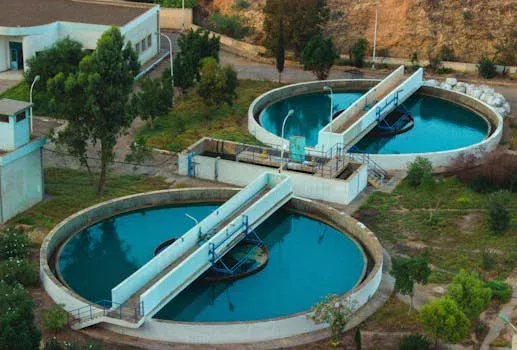
Circular tanks suit many medium-scale plants because capital cost is lower and drives are simpler. Center-feed or peripheral-feed layouts use a rotating scraper that pushes sludge to a central hopper. Radial flow works well for textile and general manufacturing TSS control. The circular footprint is large, which can block tight urban sites.

Rectangular tanks often cost more to build yet handle high-flow, high-solids streams such as mining or pulp and paper. Plug-flow hydraulics cut turbulence. Shared walls make nested trains 20–30% more space-efficient than multiple circular units. Per WEF 2022 case studies, rectangular units can reach 5–10% higher TSS removal in high-solids duty because the longer path raises collision and settling chances.
| Feature | Circular Clarifier | Rectangular Clarifier | Industrial Best Fit |
|---|---|---|---|
| Footprint | High (Circular area) | Low (Common-wall design) | Rectangular for space-limited sites |
| Capital Cost | Lower (Prefabricated) | Higher (Civil works) | Circular for budget-conscious SMEs |
| O&M Cost | Low (Simple drive) | Moderate (Chain/flight wear) | Circular for lower maintenance labor |
| TSS Removal | 50–65% | 60–75% | Rectangular for high-solids loads |
| Odor Control | Difficult (Large surface) | Easy (Simple covers) | Rectangular for food/rendering plants |
Rendering plants and breweries that need odor control cover rectangular tanks more easily. Circular domes cost more and slow maintenance access. For routine manufacturing, circular units remain a reliable baseline for sludge withdrawal. Most plants we cover for rendering pick the rectangular shell because a flat cover seals faster than a dome.
How to Raise TSS and BOD Removal at the Primary Stage
BOD removal at the primary stage is the cheapest way to shrink aeration power downstream. Chemical conditioning is the strongest lever. Ferric chloride or polymers can lift TSS removal from about 60% to over 85%. Chemically enhanced primary treatment helps plants ride hydraulic surges without permit breaches.
According to US EPA (2007), chemically enhanced primary treatment can raise TSS removal from 55 to 65 percent to 75 to 85 percent, and a similar lift is available for BOD. It places CEPT overflow near 3,000 to 3,500 gpd/ft², about 122–143 m³/m²/day, which is a high-rate band rather than the 32–49 m³/m²/day average. Most plants we dose should not use that high-rate figure without a settling test.
Keep the sludge blanket near 0.3–0.6 meters. A thin blanket yields dilute sludge and raises dewatering cost. A thick blanket risks carryover and septicity as gas lifts solids. automated chemical dosing for enhanced TSS removal trims coagulant dose to real-time influent swings and steadies the blanket.
Flow distribution must limit short-circuiting. Energy-dissipating inlets or flocculating wells slow influent so the settling zone stays laminar. Food plants should skim 90%+ of floatables so FOG does not foul secondary membranes. At a pulp and paper plant in Indonesia, more frequent sludge withdrawal plus polymer dosing raised TSS removal from 55% to 78% and eased load on the activated sludge train.
How to Select a Clarifier System for Industrial Wastewater?
Clarifier selection starts with peak flow, average flow, and solids specific gravity. Light or fatty solids often defeat plain gravity tanks. In that case a DAF system for high-FOG or low-density solids removal is the better primary step.
Surface area comes next. At 500 m³/h and a 30 m³/m²/day SLR target, required area is (500 * 24) / 30 = 400 m². EM 1110-2-501 cites a residential maximum hourly ratio of 3.00 times average flow, so test that area at the measured peak. Most plants we size for batch kitchens see the peak inside one shift.
Primary, Secondary, Lamella, and DAF Design Criteria
Geometry follows site shape. Narrow plots favor rectangular trains or a High-Efficiency Sedimentation Tank (Lamella Clarifier). Lamella plates can raise effective settling area by up to 10 times inside the same footprint. Ancillary checks cover pH control and abrasive sludge that needs hardened pump internals.
A short decision frame helps:
- High FOG content? Integrate a heavy-duty skimming system or DAF.
- Limited land area? Use a lamella clarifier or rectangular tanks.
- Heavy inorganic solids (Mining)? Use a circular thickener-style clarifier with high-torque drives.
- Variable flow rates? Implement flow equalization and automated dosing.
Downstream health still matters. Reading how secondary clarifiers work and how to optimize them keeps primary effluent inside the band biology needs. For a principle-led companion with design checks, see Primary Clarifier Working Principle: 2026 Engineering Specs.
Industrial Wastewater Clarifier System Selection: Cost and ROI
Capital cost for industrial gravity units typically runs from $50,000 for small prefabricated steel tanks to over $500,000 for large concrete rectangular systems with advanced scrapers. Material choice between 304 and 316 stainless steel, drive complexity, and cover needs all move that range. Pair those capital figures with aeration savings from higher primary TSS and BOD cuts when you rank options.
Primary removal alone is not the municipal secondary permit. 40 CFR 133.102 sets a 30-day average of 30 mg/L for BOD5 and for suspended solids, with a 7-day average of 45 mg/L, minimum 30-day removal of 85 percent, and pH from 6.0 to 9.0. The printed source credits on that section are two 1984 Federal Register entries, and many industrial permits use other limits.
Who This Is For / Who Should Look Elsewhere / Next Step
Plant engineers and EPCs use this guide when they size gravity primary tanks for food, textile, pulp and paper, mining, or general manufacturing flows. Teams chasing only FOG-rich or very light solids should start with DAF instead of a deep sedimentation basin. If you already have flows, solids data, and footprint limits, send them for a sizing check against SLR, HRT, and scraper torque before you freeze civil drawings. Most plants we review still lock the civil outline before scraper torque is known.
Frequently Asked Questions
What is the primary clarifier detention time for bod removal?
Primary clarifier detention for BOD removal is usually 1.5–2.5 hours on municipal surface loading, and the heavy-industrial column uses 2.0–4.0 hours. Holds beyond 3 hours can turn sludge anaerobic, and gas then lifts solids so BOD removal falls. Most plants we size for food or fiber waste sit near 2 hours unless jar tests show slow-settling solids.
What is the chemically enhanced primary treatment tss removal rate?
The chemically enhanced primary treatment TSS removal rate rises from 55 to 65 percent to 75 to 85 percent, according to US EPA fact sheet EPA 832-F-07-016 (2007). Earlier plant notes used a lift from about 60% to over 85%, which sits at the top of that EPA band. The same fact sheet lists chemical flocculation at 60–90% TSS and 40–80% BOD when metal salts and polymer are dosed. A late coagulant pump will miss that band.
Which surface loading rate should an industrial primary tank use?
Use 20–40 m³/m²/day for heavy industrial solids and 32–49 m³/m²/day for a municipal-type suspension. EM 1110-2-501 lists untreated wastewater at 600 to 1,200 gpd/ft², about 24–49 m³/m²/day, and caps small plants at 600 gpd/ft² under the Ten States Standards it cites. EPA's 2007 fact sheet gives a wider hydraulic capacity of 600–3,000 gpd/ft² for primary clarification. Most plants we size for food waste run at the lower end of 20–40 m³/m²/day.
When should a plant pick DAF instead of a primary clarifier?
Pick dissolved air flotation when solids are light, fatty, or emulsified and plain gravity cannot reach 50–65% TSS. A primary clarifier still fits dense inorganic solids in mining and fiber loads in pulp and paper. Food plants with high FOG need either strong skimming or DAF before biology. Most plants we review with floating grease switch to DAF after a gravity tank misses the TSS target at a calm surface loading.
Does primary treatment alone meet a secondary permit?
No, primary treatment alone does not meet the secondary minimum in 40 CFR 133.102. The 30-day average must not exceed 30 mg/L for BOD5 or suspended solids, and the 7-day average must not exceed 45 mg/L. The 30-day average removal must be at least 85 percent, and pH must stay between 6.0 and 9.0. Many industrial permits use other limits, so read your own permit before you lean on these numbers.