PCB electroplating wastewater is one of the most chemically complex industrial streams, containing heavy metals (Cu²⁺ ≤ 500 mg/L, Ni²⁺ ≤ 200 mg/L), cyanide (≤ 50 mg/L), fluoride (≤ 100 mg/L), and organic complexes that resist traditional treatment. In 2024, 68% of PCB facilities failed compliance for copper or nickel (EPA NPDES data), forcing costly wastewater hauling. Modern systems combine micro-electrolysis (COD removal ≥ 70%), dissolved air flotation (TSS removal ≥ 95%), and reverse osmosis (heavy metal rejection ≥ 99.9% ) to achieve ZLD and meet EPA limits (Cu ≤ 0.5 mg/L, Ni ≤ 1.0 mg/L).
Why PCB Electroplating Wastewater Treatment Fails: Compliance Risks and Costly Hauling
According to 2024 EPA NPDES data, 68% of PCB manufacturing facilities failed to meet discharge limits for copper or nickel, resulting in regulatory fines averaging between $12,000 and $50,000 per violation. These compliance failures are often driven by the presence of complexing agents like EDTA and ammonia, which prevent heavy metals from precipitating during standard chemical treatment. When onsite systems fail, facilities are forced into wastewater hauling, which carries costs ranging from $0.25 to $0.60 per gallon ($250–$600/m³). For a medium-sized plant processing 100 m³/h, annual hauling expenses can escalate to between $500,000 and $2 million, severely impacting operational margins.
Internal data from a Shenzhen-based PCB facility illustrates the financial impact of upgrading to advanced onsite treatment. The plant previously relied on chemical precipitation and partial hauling for its complexed copper streams. After installing an integrated Zero Liquid Discharge (ZLD) system consisting of high-efficiency RO and a vacuum evaporator, the facility reduced hauling costs by 62%. The capital expenditure (CAPEX) was recovered in 2.3 years through operational savings and water reuse. Common failure points identified in such facilities include inadequate pretreatment of Cu-EDTA complexes, rapid membrane fouling due to organic surfactants, and pH instability in the reaction tanks which leads to metal re-solubilization.
To avoid these risks, engineers must move beyond basic precipitation. Achieving stable compliance requires a multi-stage approach that addresses the specific chemical bonds of the pollutants. Utilizing detailed engineering specs for PCB copper wastewater treatment allows plants to design systems that handle peak pollutant loads without breaking discharge permits.
PCB Electroplating Wastewater Characteristics: Pollutant Profiles by Production Stage
PCB production involves dozens of distinct chemical processes, each generating wastewater with unique pollutant profiles that require segregated treatment streams. Inner layer treatment typically produces wastewater with high copper concentrations (200–500 mg/L) but relatively low organic loads (COD 300–800 mg/L) and an acidic pH of 2–4. In contrast, the electroplating stage introduces nickel (50–200 mg/L) and cyanide (10–50 mg/L) at an alkaline pH of 8–10. The outer layer treatment and developing stages contribute the highest organic loads, with COD levels reaching 1,000–3,000 mg/L and high concentrations of suspended solids (TSS) and fluoride.
The most significant challenge for environmental engineers is the presence of complexed metals such as Cu-EDTA and Ni-NH₃. These molecules are chemically stable and will not precipitate with standard hydroxides. Breaking these complexes requires a redox reaction, typically achieved through iron-carbon micro-electrolysis or advanced oxidation (AOP). In micro-electrolysis, the galvanic cell effect between iron and carbon creates nascent hydrogen and Fe²⁺, which reduces the complexing agent's affinity for the metal ion, allowing for subsequent precipitation.
| Wastewater Source | Cu²⁺ (mg/L) | Ni²⁺ (mg/L) | COD (mg/L) | CN⁻ (mg/L) | F⁻ (mg/L) | pH |
|---|---|---|---|---|---|---|
| Inner Layer Treatment | 200–500 | <5 | 300–800 | ND | <10 | 2–4 |
| Electroplating Line | 100–300 | 50–200 | 200–500 | 10–50 | <5 | 8–10 |
| Outer Layer / Developing | 50–150 | <5 | 1,000–3,000 | ND | 50–100 | 10–12 |
| Complexed (EDTA/Ammonia) | 100–400 | 20–100 | 500–1,200 | <5 | <10 | 3–9 |
Treatment Process Design: Engineering Specs for Each Stage
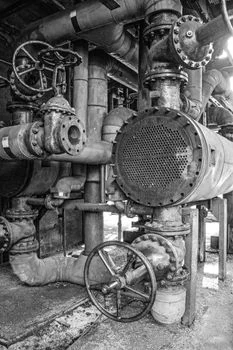
Effective treatment design for PCB wastewater necessitates a modular approach, where each stage is optimized for specific hydraulic and chemical parameters. Pretreatment using iron-carbon micro-electrolysis is the industry standard for breaking metal complexes, operating most efficiently at a pH of 3–4 with a hydraulic retention time (HRT) of 30–60 minutes. Engineering data suggests an iron dosage of 50–100 g/m³ is sufficient to achieve 80–90% efficiency in complex destruction. Following this, DAF systems for PCB wastewater pretreatment are utilized to remove 95–98% of TSS and insoluble metal hydroxides at a surface loading rate of 4–6 m/h, using cationic PAM at dosages of 2–5 mg/L.
For secondary treatment, MBR systems for low-COD effluent in PCB wastewater treatment provide a footprint-efficient solution for removing organic additives and residual COD. MBRs typically operate at a membrane flux of 15–25 LMH with a sludge retention time (SRT) of 15–30 days, consistently producing effluent with COD ≤ 50 mg/L. Tertiary treatment involves RO systems for heavy metal rejection in PCB wastewater, which achieve ≥ 99.9% rejection of divalent ions. To maintain membrane longevity, permeate flux is kept between 10–15 LMH with a recovery rate of 70–85%.
| Process Stage | Equipment / Method | Key Engineering Parameter | Expected Efficiency |
|---|---|---|---|
| Complex Breaking | Micro-electrolysis | HRT: 30–60 min; pH: 3–4 | 80–90% Complex Destruction |
| Primary Clarification | DAF | Surface Loading: 4–6 m/h | 95–98% TSS Removal |
| Biological Polishing | MBR | Flux: 15–25 LMH; SRT: 15–30d | COD < 50 mg/L |
| Desalination / Metal Removal | Reverse Osmosis | Flux: 10–15 LMH; Recovery: 75% | 99.9% Metal Rejection |
| Zero Liquid Discharge | MVR Evaporator | Volume Reduction: 90–95% | Distillate TDS < 100 mg/L |
Compliance Benchmarks: EPA, EU, and Chinese Discharge Limits for PCB Wastewater
Global regulatory frameworks for PCB wastewater are converging toward stricter limits, particularly for persistent heavy metals like nickel and copper. The EPA's NPDES 2024 guidelines set the standard for American facilities at Cu ≤ 0.5 mg/L and Ni ≤ 1.0 mg/L, with even tighter local limits in water-stressed regions. The EU's Industrial Emissions Directive (2010/75/EU) updated in 2023 is even more stringent, requiring copper levels to remain below 0.2 mg/L for direct discharge into surface waters. Chinese GB 21900-2008 standards (Table 3 limits) align closely with international benchmarks, mandating Ni ≤ 1.0 mg/L and CN⁻ ≤ 0.5 mg/L.
Failing to meet these benchmarks often results from "metal breakthrough" where trace amounts of complexed metals bypass traditional clarifiers. A case study of a German PCB plant demonstrates that achieving EU-level compliance requires the integration of ion exchange (IX) or RO as a final polishing step. By implementing a dual-pass RO system followed by selective ion exchange resins, the plant reduced its copper discharge from 120 mg/L in the raw influent to a consistent 0.1 mg/L in the final effluent, well below the 0.2 mg/L EU threshold. For further technical depth, engineers should consult engineering solutions for PCB nickel wastewater treatment to ensure compliance with these global standards.
| Pollutant | EPA NPDES (USA) | EU Directive (2023) | GB 21900 (China) |
|---|---|---|---|
| Copper (Cu) | ≤ 0.5 mg/L | ≤ 0.2 mg/L | ≤ 0.5 mg/L |
| Nickel (Ni) | ≤ 1.0 mg/L | ≤ 0.5 mg/L | ≤ 1.0 mg/L |
| Cyanide (CN⁻) | ≤ 0.2 mg/L | ≤ 0.1 mg/L | ≤ 0.5 mg/L |
| Fluoride (F⁻) | ≤ 4.0 mg/L | ≤ 2.0 mg/L | ≤ 10 mg/L |
| COD | ≤ 120 mg/L | ≤ 100 mg/L | ≤ 80 mg/L |
Cost Analysis: Hauling vs. On-Site Treatment for PCB Wastewater
The financial decision to implement on-site ZLD systems versus continuing wastewater hauling is driven by the volume of waste and the stringency of local discharge permits. Hauling costs for PCB wastewater currently range from $250 to $600 per cubic meter, which can represent up to 15% of total manufacturing costs for high-volume facilities. In contrast, the operational expenditure (OPEX) for an onsite ZLD system—including membrane replacement ($0.80–$1.50/m³), chemical dosing ($0.30–$0.70/m³), and energy consumption ($0.10–$0.20/m³)—is significantly lower, typically totaling less than $3.00 per cubic meter.
While the CAPEX for a 100 m³/h ZLD system (RO plus evaporator) can range from $1.2 million to $3.5 million, the return on investment (ROI) is generally achieved within 2 to 4 years for any plant processing more than 50 m³/day. This calculation accounts for the reduction in hauling fees, the value of recovered water for reuse in plating baths, and the avoidance of regulatory fines. For comprehensive planning, facilities should evaluate ZLD systems for electronics wastewater recycling to maximize water recovery rates up to 95%.
| Capacity (m³/h) | Annual Hauling Cost (Est.) | On-site CAPEX (ZLD) | On-site OPEX (Annual) | Estimated ROI |
|---|---|---|---|---|
| 50 | $1.1M – $2.5M | $1.2M – $1.8M | $150K – $220K | 1.2 – 1.8 Years |
| 100 | $2.2M – $5.0M | $2.0M – $2.8M | $280K – $400K | 0.8 – 1.4 Years |
| 200 | $4.4M – $10.0M | $3.0M – $4.5M | $500K – $750K | 0.7 – 1.2 Years |
Equipment Selection Guide: Matching Treatment Systems to PCB Wastewater Streams
Selecting the appropriate equipment depends on the specific contaminant profile and the desired final water quality. For outer layer treatment wastewater, which is characterized by high suspended solids and organic surfactants, DAF systems for PCB wastewater pretreatment are the most effective at removing 95–98% of TSS. If the primary concern is meeting low-COD limits for sewer discharge, an MBR system is preferred over traditional activated sludge due to its higher biomass concentration and superior effluent clarity.
The decision framework for ZLD involves a combination of RO and thermal evaporation. RO systems are used to concentrate the wastewater from roughly 500 mg/L TDS to 40,000 mg/L TDS, recovering 75-80% of the water as high-quality permeate. The remaining brine is then sent to a vacuum evaporator or crystallizer to achieve zero liquid discharge. For plants dealing with high fluctuations in influent pH—a common issue in PCB shops—implementing PLC-controlled chemical dosing for pH adjustment and coagulation is critical to prevent metal re-solubilization and membrane damage.
Decision Tree for Equipment Selection:
- Is TSS > 200 mg/L? Use DAF for primary clarification.
- Are complexed metals (Cu-EDTA) present? Use Micro-electrolysis at pH 3.5 before precipitation.
- Is the goal ZLD or water reuse? Implement RO followed by a Vacuum Evaporator.
- Is COD > 500 mg/L? Use MBR for biological oxidation.
Troubleshooting Common Issues in PCB Wastewater Treatment Systems
Membrane fouling is the most frequent operational challenge in PCB wastewater treatment, typically caused by organic additives or mineral scaling (CaSO₄). To maintain flux, RO and MBR membranes should undergo a Clean-In-Place (CIP) procedure every 3–6 months. Acidic cleaning with citric acid (pH 2) targets mineral scale, while alkaline cleaning with NaOH (pH 12) removes organic bio-fouling and surfactants. If flux does not recover after CIP, it often indicates irreversible fouling from polymer overdose in the pretreatment stage.
Another common issue is "complexed metal breakthrough," where copper or nickel levels in the effluent suddenly spike. This is usually caused by a failure in the pretreatment redox stage. Operators should check the iron-carbon media for "passivation" (coating) and ensure the influent pH is maintained strictly between 3.0 and 4.0. Additionally, PLC-controlled chemical dosing for pH adjustment and coagulation can solve instability issues by using PID loops to respond in real-time to influent swings. If TSS remains high in the DAF effluent, reducing the surface loading rate to 4 m/h and verifying the air-to-solids ratio usually restores performance.
Frequently Asked Questions
What are the EPA discharge limits for copper and nickel in PCB wastewater?
EPA NPDES limits for PCB facilities are generally Cu ≤ 0.5 mg/L and Ni ≤ 1.0 mg/L (EPA 2024). Local limits may be stricter depending on the sensitivity of the receiving water body.
How much does it cost to treat 1 m³ of PCB electroplating wastewater?
On-site treatment OPEX typically ranges from $0.80 to $1.50/m³. In contrast, hauling costs are significantly higher, ranging from $250 to $600/m³ ($0.25–$0.60/gallon).
What is the best pretreatment method for complexed metals in PCB wastewater?
Iron-carbon micro-electrolysis is the most effective method, breaking Cu-EDTA and Ni-NH₃ complexes with 80–90% efficiency when operated at a pH of 3–4 with an HRT of 30–60 minutes.
Can RO systems achieve ZLD for PCB wastewater?
RO alone can recover 70–85% of the water. To achieve true Zero Liquid Discharge (ZLD), the RO concentrate must be further processed by an evaporator and crystallizer to recover the remaining 15–30% as solids.
How often should MBR membranes be cleaned in PCB wastewater treatment?
MBR membranes should undergo chemical cleaning every 3–6 months using citric acid for inorganic scaling and NaOH for organic fouling, depending on the influent COD and flux rates.