Industrial Reverse Osmosis (RO) and Ultrafiltration (UF) are both membrane filtration technologies, but they differ significantly in pore size, operating pressure, and the types of contaminants they remove. UF typically operates at lower pressures, removing suspended solids, bacteria, and viruses with a pore size range of 0.01-0.1 microns, while RO requires high pressure to remove dissolved solids, salts, and even ions, with pore sizes around 0.0001 microns, producing highly purified water.
Understanding Industrial Reverse Osmosis (RO) Technology
Reverse Osmosis is a pressure-driven membrane separation process that forces water through a semi-permeable membrane, leaving dissolved solids behind. While natural osmosis involves the movement of solvent from a low-solute concentration to a high-solute concentration, RO applies external hydraulic pressure to overcome the natural osmotic pressure of the feed water. This allows the system to reverse the flow, pushing pure water molecules through the dense polymer matrix of the membrane while rejecting over 99% of dissolved salts, minerals, and organic compounds.
The core mechanism of HydropureWater industrial RO systems relies on solution-diffusion. Unlike physical sieving, RO membranes operate by dissolving the water molecules into the membrane structure and diffusing them through. Typical rejection rates for monovalent ions like Sodium (Na+) range from 95% to 98%, while divalent ions like Calcium (Ca2+) or Magnesium (Mg2+) often see rejection rates exceeding 99% (HydropureWater technical data, 2025).
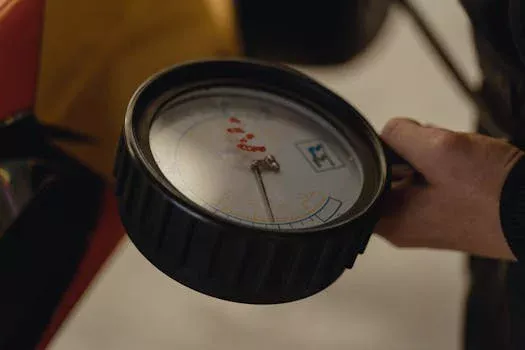
Key components of an industrial RO system include high-pressure pumps—which must be equipped with high-pressure gauges to monitor feed pressure against membrane resistance—pressure vessels, and thin-film composite (TFC) membranes, usually made of polyamide. Because RO membranes are highly sensitive to fouling and chemical degradation, robust pre-treatment stages are mandatory. This typically involves multi-media filters for pre-treatment or activated carbon to remove chlorine, which can oxidize and permanently damage polyamide membranes. Industrial applications for RO are diverse, ranging from boiler feed water demineralization and ultrapure water production for semiconductor manufacturing to large-scale desalination and industrial wastewater reuse where low conductivity is required.
Understanding Industrial Ultrafiltration (UF) Technology
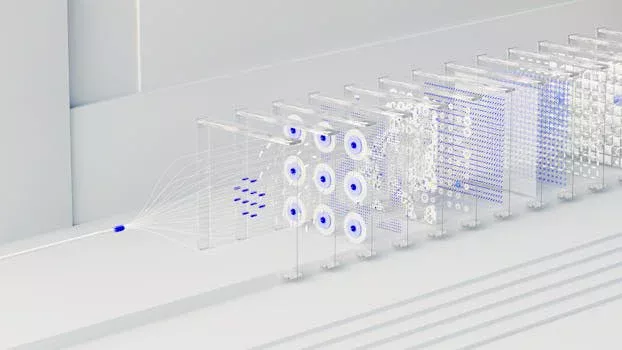
Ultrafiltration membranes utilize physical sieving to remove particles in the 0.01 to 0.1-micron range while allowing dissolved salts and small molecules to pass through the membrane structure. UF is designed to target suspended solids, colloids, and microbiological contaminants. The process is defined by its Molecular Weight Cut-Off (MWCO), which typically ranges from 10,000 to 500,000 Daltons in industrial applications.
The mechanism of UF is strictly mechanical. The membrane acts as a barrier where any particle larger than the pore size is retained on the surface or within the membrane structure. This makes UF exceptionally effective at achieving high turbidity reduction, often producing effluent with turbidity levels below 0.1 NTU. In many modern facilities, Integrated MBR membrane bioreactor systems utilize UF membranes to separate treated effluent from biological sludge, replacing traditional secondary clarifiers with a much smaller footprint and higher effluent quality.
UF systems consist of membrane modules—often hollow fiber or flat sheet configurations—low-pressure pumps, and automated backwash systems. Because UF operates at significantly lower pressures (10-100 psi) compared to RO, it requires low-pressure gauges for monitoring. Common materials include Polyvinylidene Fluoride (PVDF) or Polyethersulfone (PES), chosen for their chemical resistance and mechanical strength. In industrial settings, UF serves as a primary clarification tool for surface water, a recovery system for process water, or a critical pre-treatment step for RO to prevent colloidal fouling. For specific biological treatment needs, MBR membrane bioreactor modules are integrated directly into the treatment train to handle high-strength industrial wastewater.
Direct Comparison: Key Technical Differences Between Industrial RO and UF
The main differences between RO and UF lie in their applications, operating conditions, and effectiveness.The primary differentiator between RO and UF is the molecular weight cut-off (MWCO), with RO rejecting molecules as small as 100 Daltons while UF targets macromolecules and particulates above 10,000 Daltons. This fundamental difference dictates the operating pressure, energy consumption, and the specific contaminants each technology can address. While RO provides "total" purification by removing ions, UF provides "selective" purification by removing solids and pathogens.
| Parameter | Industrial Ultrafiltration (UF) | Industrial Reverse Osmosis (RO) |
|---|---|---|
| Pore Size | 0.01 - 0.1 microns | ~0.0001 microns (non-porous) |
| Operating Pressure | 10 - 100 psi (Low) | 100 - 1000 psi (High) |
| Primary Target | Suspended solids, bacteria, viruses | Dissolved salts, ions, heavy metals |
| Permeate Quality | Clarified, particulate-free | Demineralized, ultrapure |
| TDS Removal | Negligible (0-5%) | High (95-99.8%) |
| Energy Demand | Low (0.1 - 0.4 kWh/m³) | High (1.5 - 4.0 kWh/m³) |
| Waste Stream | Backwash/Concentrate | Concentrated Brine (Reject) |
Fouling susceptibility differs significantly between the two. RO systems are prone to scaling—the precipitation of mineral salts like calcium carbonate—which requires the use of antiscalants. UF systems, conversely, are more susceptible to organic and colloidal fouling. To manage this, UF systems utilize frequent backwashing and Chemical Enhanced Backwash (CEB) to maintain flux. RO systems cannot be backwashed and rely solely on Chemical-In-Place (CIP) cycles once the normalized permeate flow drops by 10-15%.
Pre-treatment requirements are another major point of divergence. RO requires extensive upstream protection to prevent the delicate polyamide layers from fouling. This often includes multi-media filters for pre-treatment, cartridge filters, and often a UF system itself. UF systems are more robust but may still require high-efficiency sedimentation tanks if the feed water contains very high levels of large grit or heavy solids that could mechanically damage the hollow fibers.
Industrial Use Cases: Selecting the Right Membrane for Your Application
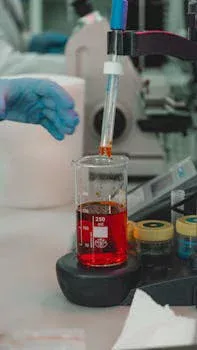
If the objective is to reduce the conductivity of water for high-pressure boilers or to meet strict pharmaceutical standards, RO is the only viable option. However, if the goal is to remove turbidity and pathogens for cooling tower make-up or to discharge water that meets environmental TSS (Total Suspended Solids) limits, UF is the more cost-effective choice.
When to choose RO:
- Applications requiring demineralized water (conductivity < 10 µS/cm).
- Removal of heavy metals (Lead, Arsenic, Chromium) from process wastewater.
- Concentrating valuable salts or minerals for recovery.
- Wastewater reuse where high-purity water is needed for sensitive manufacturing processes.
When to choose UF:
- Clarification of surface water or well water for general industrial use.
- Pre-treatment for RO systems to lower the Silt Density Index (SDI).
- Tertiary treatment of municipal or industrial wastewater for non-potable reuse.
- Direct treatment of high-solids streams using HydropureWater integrated water purification systems.
The "UF + RO" configuration is increasingly common in industrial wastewater reuse. In this integrated approach, the UF system removes all suspended matter and biological contaminants, providing a consistent, low-SDI feed to the RO system. This synergy drastically extends the RO membrane lifespan and reduces the frequency of expensive CIP cycles. From a cost perspective, UF has a lower CAPEX and OPEX due to simpler pump requirements and lower energy consumption. RO systems involve higher capital costs for high-pressure components and higher operational costs due to energy and the management of a concentrated brine stream that may require specialized disposal.
Operational Factors and Maintenance for Industrial Membrane Systems
Industrial membrane lifespan is dictated by the effectiveness of Chemical-In-Place (CIP) protocols and the management of Flux Decline over operational cycles.Industrial membrane lifespan is dictated by the effectiveness of Chemical-In-Place (CIP) protocols and the management of Flux Decline over operational cycles. In an industrial environment, membranes are subjected to varying feed qualities, making real-time monitoring of Trans-Membrane Pressure (TMP) and flux essential. A sudden increase in TMP usually indicates the onset of fouling, which, if not addressed immediately, can lead to irreversible membrane compaction or "telescoping" in RO elements.
Maintenance for UF systems focuses on the backwash cycle. Automated systems typically trigger a backwash every 20-60 minutes, using a portion of the treated permeate to push contaminants off the membrane surface. For persistent organic fouling, Chemical Enhanced Backwash (CEB) uses low concentrations of sodium hypochlorite or citric acid. In contrast, industrial RO system maintenance requires a more complex 12-step protocol involving high and low pH cleanings to remove organic slime and mineral scales respectively.
Typical membrane lifespans in industrial settings are 3-5 years for RO and 5-7 years for UF, though this varies based on the aggressiveness of the feed water and the quality of pre-treatment. Monitoring MBR effluent quality maintenance is particularly critical for systems using UF in biological environments, as extracellular polymeric substances (EPS) from bacteria can cause rapid biofouling. Most modern industrial systems utilize Programmable Logic Controllers (PLCs) to automate these sequences, ensuring that cleaning occurs based on data-driven triggers rather than simple timers.
Frequently Asked Questions about RO and UF
Do we need UF if we have RO for industrial water treatment?
In many industrial scenarios, yes. While RO can technically remove what UF removes, using RO as a primary filter for suspended solids will lead to rapid fouling and membrane failure. UF serves as a sacrificial barrier that protects the more expensive RO membranes, ensuring stable operation and lower long-term maintenance costs.
What are the main cost differences for industrial RO vs. UF?
RO generally has a higher Total Cost of Ownership (TCO). This is due to the high-pressure pumps required (increasing energy costs), the need for specialized chemical pre-treatment (antiscalants), and the costs associated with handling the brine reject stream. UF systems are simpler to operate and have significantly lower energy footprints.
Can UF remove dissolved salts like RO?
No. UF membranes have a pore size that is orders of magnitude larger than the hydrated radius of ions like Sodium or Chloride. Therefore, UF has 0% salt rejection. If your process requires a reduction in TDS or conductivity, RO or Nanofiltration (NF) must be used.
What pre-treatment is typically required for industrial RO and UF systems?
RO requires pre-treatment to reach an SDI < 3, which often includes media filtration, softening, and UF. UF systems typically only require a 100-200 micron self-cleaning strainer to protect the fibers from large debris that could cause mechanical abrasion.