
Sludge dewatering systems remove water from wastewater treatment sludge to cut volume by 70-90% and weight by up to 80% when feed solids are typically 1-3%. Mechanical units—filter presses, centrifuges, or screw presses—produce a semi-solid cake at 15-60% solids while capturing 90-98% of solids. Typical design ranges include hydraulic loading of 0.5-2.0 m³/m²/h for press equipment and energy use of 0.1-0.5 kWh/kg dry solids, supporting disposal or reuse under EPA 40 CFR Part 503 and ISO 14001 programs.
Why Sludge Dewatering Matters for Cost and Compliance
Sludge dewatering cuts disposal mass by 70-90% when raw sludge solids are typically 1-3%, producing cake at 15-60% solids with 90-98% solids capture. Energy use is commonly 0.1-0.5 kWh/kg dry solids at hydraulic loading of 0.5-2.0 m³/m²/h for press-type equipment. The cake can go to landfill, incineration, or land application once pathogen and vector-attraction limits are met.
Sludge disposal costs range from $50 to $300 per ton in 2025, according to EPA WARM tool data cited in plant planning studies, so volume reduction drives industrial wastewater ROI. Because facilities otherwise haul mostly water, a dewatering train often pays back within 18 to 36 months when tipping fees sit in that band.
Regulatory pressure is equally concrete. According to the eCFR (Title 40 current through September 2026), EPA 40 CFR Part 503 still governs biosolids use and disposal and distinguishes Class A and Class B pathogen and vector-attraction pathways. Non-compliance with Part 503 or local permits can trigger enforcement actions and fines exceeding $50,000 per violation, based on 2024 EPA enforcement data. According to EUR-Lex, Council Directive 1999/31/EC remains in force, with the consolidated text dated 4 August 2024. Article 5 bans landfill of liquid waste, and Article 6 requires treatment before landfill, so high-moisture sludge usually needs mechanical dewatering first. China’s GB 18599-2020 likewise restricts liquid sludge disposal at landfills.
Resource recovery can strengthen the business case. Dewatered sludge with high organic content often shows a calorific value of 8-12 MJ/kg and can serve as secondary fuel in cement kilns or power plants when contracts allow. In a HydropureWater case study, a 100 m³/day food processing plant cut annual disposal costs from $250,000 to $50,000 after installing a Plate and Frame Filter Press for Sludge Dewatering. The same plant moved cake toward Class A land-application quality under its ISO 14001 program once pathogen and vector steps were completed.
Sludge Dewatering Systems: Process Flow by Stage
A complete dewatering train reaches 90-98% solids capture through conditioning, thickening, mechanical separation, cake handling, and filtrate return. Conditioning doses cationic or anionic polymer at about 2-10 kg per ton of dry solids, matching volatile solids and charge demand. Overdosing can blind cloths and raise OPEX by up to 20% when polymer is wasted on already-charged flocs.
Thickening follows conditioning. Many plants use a DAF system for sludge thickening and pretreatment or a gravity thickener to raise solids from about 1% to about 5%. Lower hydraulic load lets the dewatering machine run smaller and steadier. Lamella surface loading in this stage typically sits at 20-40 m³/m²/day when clarifiers thicken secondary sludge.
Mechanical dewatering then applies vacuum, centrifugal force, or pressure. Filter presses commonly operate at 6-16 bar across the cloth stack, while decanter centrifuges often run at 2,000-4,000 G. Cake at 15-60% solids moves to silos or containers. Filtrate returns to headworks; to limit recycle shock, filtrate TSS should stay below 100 mg/L under EPA secondary-treatment planning targets used by many industrial plants.
| Dewatering Stage | Primary Mechanism | Key Parameter | Typical Outcome |
|---|---|---|---|
| Conditioning | Chemical Flocculation | Polymer Dose: 2-10 kg/t | Increased particle size (flocs) |
| Thickening | Gravity/Flotation | Loading: 20-40 m³/m²/d | 3-5% Solids concentration |
| Mechanical Press | Pressure/Centrifugation | Pressure: 6-16 bar | 15-60% Solids cake |
| Filtrate Return | Filtration | TSS: <100 mg/L | Recycled to secondary clarifiers |
Which Dewatering Systems Improve Plant Efficiency?
Dewatering technology choice improves plant efficiency when cake solids, capture rate, and energy per dry ton match the disposal route. Belt presses, filter presses, centrifuges, and screw presses span roughly 15-60% cake solids and about 0.1-1.2 kWh/ton dry solids, so no single machine fits every sludge. Continuous high-flow sites with tight footprints often favor centrifuges; chemical and mining cakes that must exceed about 35% solids usually favor plate-and-frame presses.
| Technology | Solids Content (%) | Solids Capture (%) | Energy Use (kWh/t) | CAPEX (Relative) | Best For |
|---|---|---|---|---|---|
| Filter Press | 25-50% | 95-98% | 0.2-0.4 | Medium | Chemical, Mining, High-Solids |
| Belt Press | 18-25% | 90-95% | 0.3-0.5 | Low-Medium | Municipal WWTP, Food Processing |
| Centrifuge | 20-30% | 90-97% | 0.8-1.2 | High | Paper Mills, High-Flow Industrial |
| Screw Press | 15-25% | 85-95% | 0.1-0.3 | Medium | Small-scale, Oily Sludge |
Filter presses remain the dryness benchmark and can reach about 50% solids when feed and cloths are well managed, which lowers incineration fuel demand. Screw presses gained share through 2025 because energy use stays near 0.1-0.3 kWh/t dry solids with light staffing; see the detailed guide to screw press dewatering technology for duty cycles and polymer tips. Electro-dewatering (ELODE) can approach 60% solids, yet higher CAPEX usually fits only sites with extreme tipping fees.
Key Engineering Parameters for System Design
Hydraulic loading rate (HLR) for dewatering design typically runs from 0.5 m³/m²/h on plate presses to 15 m³/m²/h on belt systems. Exceeding design HLR is the leading washout cause: solids capture can drop 10-20%, filtrate quality worsens, and headworks recycle load rises. Solids loading rate (SLR) for centrifuges often spans 100-300 kg/m²/h and sets bowl residence time and cake thickness.
Sludge pH and temperature control polymer performance. Most polymer conditioning works between pH 5 and 9; outside that band, chains can collapse and chemical use can rise about 30%. The VSS/TSS ratio flags organic “sliminess.” A VSS/TSS ratio above 0.7 usually needs stronger mixing and an automated polymer dosing system for sludge conditioning optimization to hold capture without chronic overdosing.
| Industry Sludge Type | Typical TSS (mg/L) | VSS/TSS Ratio | Dewaterability |
|---|---|---|---|
| Municipal Primary | 20,000-40,000 | 0.6-0.8 | High |
| Food Processing | 10,000-30,000 | 0.7-0.9 | Moderate (Oily) |
| Chemical/Mineral | 50,000-150,000 | 0.1-0.3 | Very High |
| Semiconductor | 5,000-15,000 | 0.2-0.4 | High (Inorganic) |
Cost Breakdown: CAPEX, OPEX, and ROI

Capital expenditure for a 30 m³/h sludge dewatering train averages about $200,000, with equipment at 60-70% of CAPEX. Installation usually takes 15-20%, civil works 10-15%, and automation 5-10%. A centrifuge may cost more than a belt press up front, yet a smaller footprint can cut civil cost by up to 30% in dense industrial sites.
Operating spend is polymer-heavy: chemicals often take 30-40% of annual OPEX, energy 20-30%, and labor plus maintenance the rest. For a plant processing 100 m³/day, annual OPEX often falls between $50,000 and $150,000. Predictive maintenance and high-efficiency motors can trim that band by 10-15%. ROI compares dewatered hauling against liquid disposal; most industrial projects show payback in 2 to 4 years when tipping fees remain in the $50-$300/ton range.
"Hidden costs in dewatering often stem from filtrate treatment. If your system produces filtrate with TSS >100 mg/L, the internal recycle load can increase aeration energy costs at the headworks by 5-10%." — HydropureWater Engineering Field Data, 2025.
How Do You Dewater Industrial Lagoon Sludge?
Industrial lagoon sludge is dewatered after dredging or pumping by conditioning the high-solids slurry, then pressing or centrifuging to a handleable cake. Lagoon sediments often arrive at 3-8% solids with grit, oil, and aged organics, so jar tests and CST/SRF checks come before full-scale runs. Many sites thicken with DAF or gravity, then finish on a high-efficiency plate and frame filter press for industrial sludge dewatering when landfill or incineration needs cake above about 25% solids.
Mobile screw presses suit smaller lagoon cleanouts and oily layers when continuous throughput matters more than maximum dryness. Plan for grit abrasion, spare cloths, and a polymer that tolerates variable pH as different lagoon zones are excavated.
How to Select the Right System
Equipment selection starts with Capillary Suction Time (CST) and Specific Resistance to Filtration (SRF) tests that predict pressure behavior. Disposal route then sets dryness: landfilling often accepts 20-25% solids cake, while incineration usually needs more than 30% solids for autogenous combustion.
- Characterize Sludge: Measure TSS, VSS, pH, and perform CST/SRF tests.
- Define Output Goals: Identify target moisture content and regulatory compliance guide for industrial wastewater treatment in NSW or your specific region.
- Evaluate Technologies: Shortlist based on flow rate and solids capture requirements. (e.g., Use filter press for >35% solids).
- Size the System: Calculate required capacity (m³/h) factoring in a 20% safety margin for peak loading.
- Budget and ROI: Compare lifecycle costs over a 10-year horizon, not just initial CAPEX.
- Vendor Selection: Prioritize vendors offering pilot testing and compliance with ISO 9001/14001.
When sludge volume exceeds 50 m³/day and feed solids exceed 5%, a plate-and-frame press is often the lowest lifecycle cost path to high solids. Smaller mobile duties or oily sludge streams may fit a screw press or a compact DAF-plus-press train instead.
Common Problems and Field Fixes
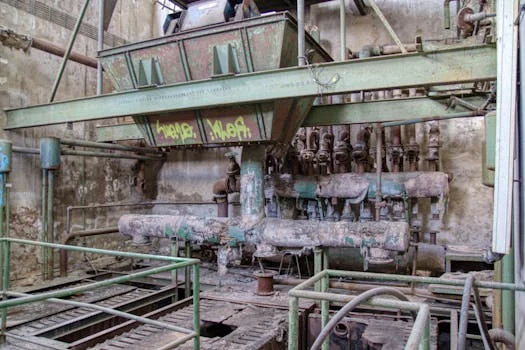
Poor cake release on filter presses usually traces to cloth blinding or wrong polymer dose, which can raise downtime by 15-25%. Blinded cloths raise filtration resistance and leave a wet core. An acid wash with 1-2% HCl removes mineral scale; then recalibrate polymer with a jar test so charge demand matches the sludge of the day.
- High Filtrate TSS (>100 mg/L): Often caused by torn filter media or insufficient conditioning. Check media integrity and increase polymer dose by 10%.
- Low Cake Solids (<20%): Usually indicates insufficient mechanical pressure. Increase feed pump pressure to 10-16 bar for filter presses or adjust the back-drive speed in centrifuges.
- Excessive Polymer Use: Result of poor mixing energy. Optimize the G-value (mixing energy) to between 500 and 1,000 s⁻¹ to ensure efficient floc formation.
- Equipment Corrosion: Common in acidic sludge (pH <5). Upgrade components to 316L stainless steel or use lime to neutralize the sludge to pH 7 before processing.
Who this is for: plant engineers, EPC designers, and procurement teams sizing industrial or municipal sludge trains. Who should look elsewhere: buyers needing only potable UPW piping or data-centre abstraction licensing without a solids stream. Next step: run CST/SRF and a pilot on your worst-case sludge before locking CAPEX.
Frequently Asked Questions
What’s the difference between sludge thickening and dewatering?
Thickening is pretreatment that cuts sludge volume by 50-70% by raising solids from about 1% to about 5% with gravity or DAF. Dewatering is the final mechanical step that makes a semi-solid cake at 15-60% solids for landfill, incineration, or beneficial use. Capture targets of 90-98% apply to the dewatering machine, not the thickener alone.
How much does a sludge dewatering system cost?
CAPEX typically starts near $30,000 for small screw presses and can exceed $500,000 for large industrial centrifuges. OPEX often runs $8 to $40 per ton of sludge processed when polymer and energy dominate. A 30 m³/h package averages about $200,000 CAPEX before civil and controls are added.
What’s the best dewatering technology for food processing sludge?
Belt presses and screw presses usually fit food-processing sludge because they tolerate high organic and oily fractions with less chronic cloth blinding than many plate presses. Target cake solids of 15-25% are common when landfill is the outlet. Pilot with site polymer grades before freezing the purchase order.
Can dewatered sludge be reused?
Yes. Cake that meets EPA 40 CFR Part 503 Class A pathogen and vector limits can be used as a soil amendment under the rule’s land-application pathway. Brick manufacture or kiln fuel is also used when calorific value near 8-12 MJ/kg and contracts allow. Always confirm local pollutant ceilings before shipping offsite.
How often should filter press cloths be replaced?
Under standard duty, filter cloths typically last 2,000 to 4,000 cycles before blinding or tears force replacement. Regular 1-2% acid washing and correct polymer conditioning can extend life by up to 30%. Track cycle counts and filtrate TSS trends to schedule changeouts before capture collapses.