A belt filter press is a continuous sludge dewatering system that removes 85-95% of the water in municipal or industrial biosolids, producing a transportable cake at 15-30% solids. Two porous belts and a series of rollers apply gravity, shear, and hydraulic pressure to conditioned sludge, reducing disposal costs by up to 70% (EPA 2024). Estimating belt filter press cost for municipal WWTP projects comes down to four variables: belt width (1-3.5m), throughput (1-50 m³/h), pressure-zone configuration, and polymer conditioning quality. Cake quality varies with sludge type and dosing control, so two identical presses can deliver very different solids content at different plants.
How Much Does a Belt Filter Press Cost for a Municipal WWTP?
A municipal belt filter press typically costs $80,000 to $300,000 for the unit and $125,000 to $410,000 fully installed, depending on belt width, automation, and ancillary equipment. Operating costs run $1.00 to $2.00 per ton of dry solids on a marginal basis. The US EPA historical baseline puts fully loaded operation and maintenance at $80 to $200 per dry ton.
Those bands have moved upward over time. According to the US EPA biosolids technology fact sheet on belt filter presses, vendor estimates once varied from $47,500 for a 0.5 meter belt to $115,000 for a 1.5 meter belt. Those EPA figures excluded installation and ancillary equipment and assumed a feed of 5 percent solids.
A fully automated 3.5 meter municipal machine with integrated polymer dosing and PLC control now reaches the top of the current range. Width, materials of construction, and instrumentation explain most of the spread.
Sizing decides whether the purchase makes sense at all. The same EPA fact sheet cautions that mechanical dewatering may not be the most cost effective alternative for plants operating at less than about 4 mgd. Below that scale, conditioning and hauling liquid sludge can compete on total cost.
The national stakes are large either way. EPA-reported facilities generated approximately four million dry metric tons of sewage sludge in the latest reporting cycle. Of that volume, approximately 2.39 million dry metric tons were land applied, so every point of cake solids moves real hauling tonnage.
One watch item is new. On July 1, 2026, the EPA released draft guidance for reducing risk from PFOA and PFOS in biosolids, and outlet rules could tighten before a 15-year asset retires. Spec writers should ask vendors how cake handling would change if land application restrictions arrived mid-life.
Why Municipal Plants Overspend on Sludge Disposal
Weak dewatering inflates wastewater treatment plant operating costs by more than 50% and invites regulatory penalties. Consider a municipal plant in Shandong, China, carrying an annual sludge disposal bill above $250,000. Its outdated dewatering line produced cake with over 90% water content, so most of that budget paid for hauling water.
The consequences compounded: escalating landfill surcharges, persistent odor complaints from nearby communities, and constant exposure to fines under standards such as GB 18918-2002 in China or EPA 40 CFR Part 503 in the United States. The plant manager had to cut costs and improve compliance without disrupting core operations. A modern 2.5m belt filter press with shear-intensive rollers delivered both.
The retrofit reduced sludge volume by 75% and turned watery sludge into a manageable cake. Annual disposal spending fell to approximately $80,000, freeing budget for other infrastructure upgrades. The sections below break down the specifications, costs, and selection steps behind that outcome.
Belt Filter Press Mechanics: How Gravity, Shear, and Pressure Dewater Sludge
A belt filter press extracts water in three sequential zones, combining gravity, shear, and hydraulic pressure to achieve up to 95% water removal from conditioned sludge. Feed enters as a flocculated slurry and leaves as a continuous cake. The progression through the zones, not brute force, determines final solids content.
- Gravity Drainage Zone: Free water drains through the porous belt much like a coffee filter, with the sludge spread thinly. Approximately 50-60% of the water leaves here, thickening the sludge significantly (per EPA 2024 data), and the EPA fact sheet expects a 5 to 10 percent increase in solids concentration across this zone. Polymer conditioning quality dominates the outcome.
- Wedge Zone: Two converging porous belts gently compress the thickened sludge, working like a wringer that ramps up pressure gradually. Another 20-30% of the water is removed. The wedge produces a firm cake that survives high-pressure squeezing without extruding through the belt weave.
- High-Pressure Zone: The sludge-laden belts pass over and under progressively smaller rollers, applying hydraulic pressure plus shear from belt flexing and roller design. This stage contributes the final 10-15% of water removal. Roller count and belt speed settings decide how dry the final cake runs.
Belt tension and tracking hold the process together. Belts run at 5-10 kN/m of tension to prevent slippage and keep pressure uniform, while automatic tracking systems hold alignment within ±2mm. Most tracking failures we diagnose trace back to uneven sludge distribution across the belt, not to the sensor itself.
The process flow is: Sludge → Polymer Conditioning → Gravity Drainage → Wedge Zone → High-Pressure Rollers → Cake Discharge → Filtrate Collection. For a focused walk-through of the two zones in a belt filter press that do most of the drainage work, see the companion page on two zones in a belt filter press.
Polymer conditioning decides whether any of this works. Anionic or cationic polymers dosed at 0.5-5 kg per ton of dry solids flocculate fine particles into larger, more permeable flocs, increasing dewatering efficiency by 20-30% (industry analysis). Precision dosing through automatic polymer dosing systems for belt presses protects both cake quality and chemical budget.
Belt Filter Press Throughput by Sludge Type
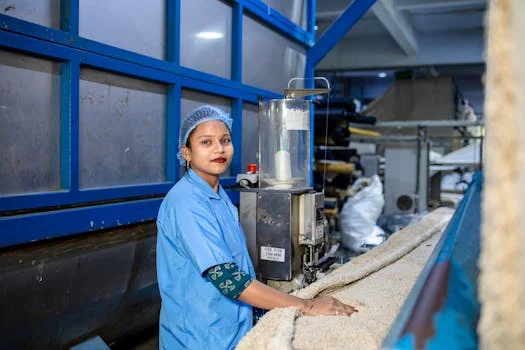
Belt filter press throughput by sludge type spans roughly 5 to 50 m³/h, because fiber, grease, and digested organics each drain differently at the same belt speed. Matching belt width, throughput target, and polymer dose to the actual sludge is what separates a workable cake from a wet one. The table below consolidates the design envelope by application.
| Sludge Type | Belt Width (m) | Throughput (m³/h) | Cake Solids (%) | Polymer Dosage (kg/ton dry solids) | Energy Consumption (kWh/ton dry solids) |
|---|---|---|---|---|---|
| Municipal (WAS/RAS) | 1.5 - 2.5 | 10 - 25 | 20 - 25 | 1.5 - 3.0 | 1.0 - 1.5 |
| Pulp & Paper | 2.0 - 3.5 | 20 - 40 | 25 - 35 | 0.8 - 2.0 | 1.5 - 2.0 |
| Food Processing (e.g., Dairy, Brewery) | 1.0 - 2.0 | 5 - 15 | 18 - 28 | 2.0 - 4.0 | 1.2 - 1.8 |
| Petrochemical / Chemical | 1.0 - 2.5 | 5 - 20 | 15 - 30 | 3.0 - 5.0 | 1.3 - 2.2 |
| Mining Tailings | 2.5 - 3.5 | 30 - 50 | 30 - 45 | 0.5 - 1.5 | 1.8 - 2.5 |
Throughput variability is a critical factor. High-fiber sludges, such as those from pulp and paper mills, can blind the belt and cut throughput by 30-40% compared to municipal sludges, which forces wider belts or lower feed rates to maintain efficiency. Highly organic sludges might require more aggressive shear and pressure to reach desired cake solids. Plants we size for municipal WAS typically plan around the middle of the table rows, not the optimistic end.
Cake solids carry trade-offs. Higher pressure zones can increase cake solids by 5-10%, but throughput can drop 15-20% because retention time inside the press lengthens. Engineers balance the desire for a drier cake against the hourly volume the plant must clear.
Regulatory context matters at the outlet. Earlier procurement guidance often tied a 20% cake-solids floor to EPA 40 CFR Part 503 Class A biosolids for unrestricted land application. The current rule text works differently.
Under 40 CFR § 503.33 (eCFR, current as of August 2026), vector attraction reduction options include a minimum 38 percent reduction in volatile solids. The solids-based options require 75 percent solids for sludge without unstabilized primary solids, or 90 percent where unstabilized primary solids are present. No belt press reaches 75 percent cake solids, so plants rely on upstream stabilization plus those options instead.
Treat 20% as an internal cake-quality target, which modern presses meet on most municipal sludges when paired with optimizing polymer dosing for sludge dewatering.
Belt Filter Press vs Centrifuge Cost Comparison: Which Dewatering Method Wins?
A belt filter press vs centrifuge cost comparison shows the belt press winning on CAPEX and marginal OPEX, the centrifuge winning on footprint, and neither winning everywhere. Selecting the appropriate technology reduces total operational costs by 15-30% compared to suboptimal choices. Procurement managers should weigh the criteria below before shortlisting.
| Criterion | Belt Filter Press | Plate Filter Press | Centrifuge |
|---|---|---|---|
| CAPEX ($) | $80K - $300K | $150K - $500K | $100K - $400K |
| OPEX ($/ton dry solids) | $1.00 - $2.00 | $1.50 - $3.00 | $1.50 - $2.50 |
| Cake Solids (%) | 18 - 30 | 30 - 45 | 20 - 35 |
| Throughput (m³/h) | 5 - 50 (continuous) | 2 - 20 (batch) | 10 - 70 (continuous) |
| Footprint (m²) | 15 - 40 | 25 - 70 | 10 - 30 |
| Maintenance (hours/week) | 3 - 6 | 6 - 10 | 4 - 8 |
| Polymer Use (kg/ton dry solids) | 1.5 - 4.0 | 1.0 - 2.5 | 2.0 - 5.0 |
| Best For (Application) | Municipal WWTPs, Pulp/Paper, moderate throughput, variable sludge | Industrial, high cake solids needed, batch processes, fine particles | High throughput, limited space, consistent sludge, oily sludges |
Each technology trades gains for pain. The Plate and Frame Filter Press for Sludge Dewatering typically achieves the highest cake solids (30-45%) and cuts disposal volume hardest. Its batch operation and manual cake removal can raise labor costs by up to 25% versus continuous systems.
Centrifuges suit tight spaces and high throughput, yet they are more sensitive to feed fluctuations and burn more energy at high rotation speed. The EPA fact sheet also notes that centrifuges need up to an hour to build up speed, while belt presses start and shut down quickly. For the plate-versus-belt economics in depth, see Plate vs Belt Filter Press Cost Difference: 2026 Total Cost of Ownership Breakdown.
Operational flexibility favors belts for municipal duty. Belt presses tolerate variable sludge loads and inconsistent feed rates, which is why they anchor most municipal wastewater treatment plants with fluctuating daily inputs. Centrifuges demand stable feed to avoid vibration, and their polymer doses run higher because high shear breaks flocs apart. Small plants face a separate sizing question; the dedicated page on the cost of belt filter press for a 0.5 mgp wwtp with 2 percent solids works through that scenario.
A simple decision tree guides initial selection. High-fiber or variable sludge points to a belt press. Severely limited space points to a centrifuge. Cake solids consistently above 30% as the absolute priority, especially for industrial sludges with fine particles, points to a plate filter press.
Belt Filter Press Capital Cost Breakdown
The belt filter press capital cost breakdown starts with the press unit ($80,000-$250,000 across 1-3.5m widths) and grows through polymer dosing, feed pumping, cake conveyance, installation, and controls to a typical installed total of $125,000-$410,000. Component-level ranges and notes are tabulated below.
Capital Expenditure (CAPEX)
Size, automation level, and ancillary equipment drive the spread. A smaller 1-meter press with basic manual controls starts around $80,000, while a 3.5-meter machine with fully automatic PLC control, integrated polymer dosing, advanced belt tracking, and industrial-grade construction can exceed $300,000. According to the US EPA fact sheet, automation generally increases capital costs by 10 percent, a premium most plants recover through lower labor and polymer spend.
| Component | Typical Cost Range ($) | Notes |
|---|---|---|
| Belt Press Unit (1-3.5m) | $80,000 - $250,000 | Includes basic frame, rollers, belts, motors. |
| Polymer Dosing System | $15,000 - $50,000 | Automated systems with mixers, tanks, pumps. |
| Sludge Feed Pump | $5,000 - $20,000 | Progressive cavity pump or similar. |
| Conveyor System (Cake) | $10,000 - $30,000 | For transporting dewatered cake. |
| Installation & Commissioning | $10,000 - $40,000 | Varies by complexity and location. |
| Control Panel (PLC) | $5,000 - $20,000 | Automation, HMI, safety features. |
| Total CAPEX (Typical) | $125,000 - $410,000 |
Operational Expenditure (OPEX)
OPEX is typically calculated per ton of dry solids processed and includes four key components:
- Polymer: $0.50-$1.00 per ton. This is often the largest variable cost, highly dependent on sludge type and polymer pricing.
- Energy: $0.20-$0.40 per ton. Includes power for motors, pumps, and wash water.
- Maintenance: $0.15-$0.25 per ton. Covers routine checks, minor repairs, and consumables like belts.
- Labor: $0.10-$0.30 per ton. Automated systems can reduce labor requirements by 40% compared to manual operations, requiring only periodic supervision.
Reconciling the scales matters for budgeting. The EPA fact sheet reports overall operation and maintenance costs of $80 per dry ton of solids to $200 per dry ton when labor, chemicals, and wash water are fully loaded. Typical polymer conditioning costs run $2.65 to $91.15 per million gallons, averaging $24.38 per million gallons. Treat the per-ton figures above as marginal press costs and the EPA figures as the plant-level planning basis.
Return on Investment (ROI)
Disposal savings drive ROI for belt filter presses. Consider a plant processing 10,000 tons of wet sludge annually at 95% water content: raising cake solids to 25% cuts sludge volume by approximately 80%. Against $50/ton disposal, savings reach roughly $350,000 per year (about 500 tons of dry solids), so a $250,000 system pays back in approximately 0.7 years. For broader plant budgeting, see wastewater treatment plant cost breakdowns, and for press-level pricing detail, the Belt Filter Press Cost Price: 2026 B2B Pricing, ROI & Specs Guide.
Hidden costs deserve their own line. Belt replacement runs $5,000-$15,000 every 2-3 years depending on operation intensity and sludge abrasiveness. The EPA fact sheet records belt life averaging about 2,700 running hours with a range of 400 to 12,000 hours, so heavy duty cycles can push annual belt spend higher.
Polymer waste from overdosing and unplanned downtime for tracking adjustments add quiet losses. Leasing programs can reduce initial costs by 30-50%, with monthly payments as low as $3,000 for a 2-meter belt press.
Selection Checklist: How to Choose the Right Belt Press for Your Plant
Choosing the right belt filter press means scoring more than ten technical and operational parameters, because the machine must match sludge, space, and staffing simultaneously. A structured evaluation also protects the purchase against underperforming vendors. For a data-driven companion, the belt filrer press selection gaude page maps each criterion to engineering data and standards.
- Sludge Type and Characteristics: Municipal sludges (e.g., WAS/RAS) respond well to shear-intensive rollers, while industrial sludges (e.g., metal hydroxides, pulp fiber) may require corrosion-resistant belts and more robust designs. Analyze solids content, particle size, abrasiveness, and organic/inorganic ratio.
- Required Throughput: Match belt width and design to peak and average sludge flow rates. A 2-meter belt press might handle 15 m³/h of municipal sludge, but high-fiber industrial sludge reduces this significantly, necessitating a wider belt or multiple units.
- Desired Cake Solids Content: Verify vendor performance commitments for achievable cake solids (e.g., 25% for municipal sludge). This directly impacts disposal costs and compliance with standards like EPA 40 CFR Part 503.
- Polymer Consumption: Request data on typical polymer dosage (kg/ton dry solids) for your specific sludge type. High polymer consumption can drastically increase OPEX.
- Footprint and Space Constraints: Measure available space. Belt presses require a larger footprint than centrifuges but less headroom than some other systems.
- Wash Water Requirements: Understand the volume and pressure of wash water needed for belt cleaning, as this impacts utility costs.
- Automation Level: Consider automatic belt tracking, tensioning, and polymer dosing systems. PLC control enhances operational stability, reduces labor, and optimizes performance.
- Material of Construction: For corrosive industrial sludges, stainless steel (e.g., SS304, SS316L) for all wetted parts is crucial for longevity.
- Energy Consumption: Compare kWh/ton dry solids data from different models to assess long-term energy costs.
- Maintenance and Serviceability: Evaluate ease of access for maintenance, availability of spare parts, and the vendor's local service support.
Vendor Evaluation Matrix
Create a scoring matrix for potential vendors and rate them on five axes:
- CAPEX and OPEX: Total installed cost and estimated operational costs per ton.
- Warranty: Comprehensive coverage of 2-5 years on major components.
- Local Service Availability: Proximity and responsiveness of technicians for installation, training, and troubleshooting.
- Compliance: Equipment meeting relevant local standards like GB 18918-2002 and international ones like EPA 40 CFR Part 503.
- References: Speak to other customers with similar applications.
Always conduct pilot testing. Running a 0.5m pilot press with your actual sludge for several days provides data on achievable cake solids, optimal polymer consumption, and throughput, validating vendor claims before a full-scale purchase. Red flags include vendors offering one-size-fits-all solutions, lacking robust PLC control for belt tracking, or having no local service technicians. A complete Request for Proposal (RFP) should state required specifications (belt width, throughput, cake solids), compliance certifications, and performance commitments.
Common Belt Press Problems and How to Fix Them
Common operational issues like belt tracking drift or polymer inefficiency account for most avoidable belt filter press downtime, and proactive maintenance can cut that downtime by up to 40%. Each symptom below has a specific mechanical or chemical cause. Fix the cause, not the symptom.
- Belt Tracking Issues:
- Symptom: Belt drifts off-center, rubbing against the frame, or folds.
- Cause: Uneven belt tension, misaligned rollers, malfunctioning tracking sensors, or uneven sludge feed.
- Fix: Adjust tracking sensors for proper alignment (±2mm tolerance). Check and adjust roller alignment. Ensure even sludge distribution across the belt width.
- Poor Cake Discharge / Low Cake Solids:
- Symptom: Sludge cake is too wet, sticky, or fails to release cleanly from the belt.
- Cause: Insufficient polymer conditioning, incorrect polymer type, inadequate belt tension, worn rollers, or excessive wash water.
- Fix: Optimize polymer dosage and type using jar tests (0.5-5 kg/ton). Adjust belt tension. Inspect rollers for wear and replace if necessary (every 12-18 months).
- Excessive Polymer Consumption:
- Symptom: High polymer usage with only marginal improvement in dewatering.
- Cause: Overdosing polymer, incorrect mixing, or poor sludge characteristics.
- Fix: Conduct jar tests to determine the precise optimal dosage. Ensure polymer solution is properly mixed and aged. This can reduce costs by 20-30%.
- Belt Blinding:
- Symptom: Filter belts become clogged with fine particles, reducing water drainage.
- Cause: Ineffective belt washing, high-fiber sludge, or insufficient polymer flocculation.
- Fix: Increase wash water pressure or flow rate. Clean belts weekly with high-pressure water. Review polymer dosage and type for better flocculation.
- Odor Issues:
- Symptom: Strong, unpleasant odors emanating from the dewatering area.
- Cause: Anaerobic conditions in sludge, insufficient dewatering, or poor housekeeping.
- Fix: Improve sludge aeration upstream. Ensure optimal dewatering to maximize cake solids. Implement regular cleaning schedules for belts and surrounding areas.
Text-based troubleshooting flowchart for low cake solids: Check polymer dosing first. If the dose is insufficient, optimize with a jar test. If the dose is optimal, check belt tension and roller condition. If those are poor, adjust or replace them; if they are good, review sludge feed rate and belt speed.
HydropureWater's experience with a pulp/paper plant demonstrated the payoff of advanced controls. By switching to a PLC-controlled belt press with automatic tracking and automatic chemical dosing systems, the plant reduced unscheduled downtime by 40% and achieved consistent cake solids despite variable feedstock.
Next Steps for Plant Engineers and Procurement Teams
A belt filter press fits plants that run continuous flows above roughly 4 mgd, have space for a 15-40 m² installation, and can staff daily attention to the dewatering building. Look elsewhere if cake solids above 30% is non-negotiable (plate press) or if floor area is the binding constraint (centrifuge). Gather thirty days of sludge data on feed solids, volumes, and polymer usage, then request sizing and pricing for your actual duty point through a belt filter press quotation for your municipal WWTP.
Frequently Asked Questions
What is the difference between a belt filter press and a plate filter press?
A belt filter press dewaters continuously and typically produces 18-30% cake solids, while a plate filter press batches sludge between rigid plates and filter cloths to reach 30-45%. Belt systems suit high-volume municipal duty with moderate solids targets. Plate presses cost more upfront and in labor but deliver a drier cake for landfill-minimizing or industrial programs.
How much polymer does a belt press need per ton of dry solids?
Typical belt press polymer demand runs 0.5-5 kg per ton of dry solids. Municipal WAS and RAS sludges usually land at 1.5-3.0 kg/ton, while complex industrial sludges push toward the upper end. Jar testing each quarter pins the optimal dose, because overdosing wastes chemical and can soften the cake.
What is the typical lifespan of a belt filter press?
Frames and structural components last 15-25 years with proper maintenance. Filter belts are consumables replaced every 2-3 years, and the EPA fact sheet records belt life averaging about 2,700 running hours with a range of 400 to 12,000 hours. Rollers typically need replacement every 5-10 years depending on sludge abrasiveness.
Can a belt press handle industrial sludges such as metal hydroxides?
Yes, belt presses dewater metal hydroxides, food processing waste, and pulp and paper sludges successfully. Acidic or caustic feeds call for SS316L stainless steel on wetted parts, and abrasive or high-fiber loads need specialized belt materials. Polymer selection tuned to the specific sludge remains the decisive factor for performance.
How do you calculate payback for a belt filter press?
Divide total installed CAPEX by annual savings to get the payback period in years. Annual savings equal avoided disposal cost from volume reduction, minus incremental OPEX. In the worked example above, $250,000 of CAPEX against roughly $350,000 of annual savings yields about 0.7 years. Add avoided fines and labor savings for the full picture.