Wastewater Treatment Plant Cost Rio de Janeiro in 2026
The wastewater treatment plant cost Rio de Janeiro buyers should carry in 2026 is a band, not one price. Package plants at 1–20 m³/h screen at BRL 120,000–500,000. MBR units at 10–50 m³/h screen at BRL 1,800,000–2,500,000. Operating cost on the same screens is about BRL 0.60–1.50 per m³ treated.
A 2023 planning figure still used for Guanabara Bay is 18,000 L/s of untreated sewage. A 2024 concession brief still puts centralized-network coverage at 65% of the population. State Decree 46.890/2019 is cited in older Rio budgets for 90% sewage collection and 80% treatment by 2033. Federal Law 14.026/2020 now sets the contract test buyers should use instead.
That statute amended Law 11.445/2007. New Article 11-B requires contracts to serve 99% of the population with drinking water and 90% with sewage collection and treatment by 31 December 2033, according to the text published by the Presidency. Article 11-B, paragraph 9, allows a longer date only when studies for a regionalized bid show that universalization by 31 December 2033 is not financially viable, even after grouping municipalities. The new date may not pass 1 January 2040, and it needs prior consent from the regulator, which must watch tariff moderation.
Land in the urban West Zone can add a 30–50% premium to the plant budget. Sewer construction stoppages can add 6–12 months. Import duty of 12–18% sits on imported skids. Água Carioca’s largest plant ran at only 10% of its capacity because the sewer connections were missing.
Price the pipe and the plant in one budget. Buyers who look up rio de janeiro water treatment plant components and their sizes and numbers are usually counting tanks, blowers, and membrane cassettes before they price concrete. A 10 m³/h duty is the unit used below. Civil works, duty, and the concessionaire’s file sit outside the equipment line.
Capital Cost by Technology and Plant Scale
Capital cost for a Rio plant in these 2026 screens is set by technology and by the capacity band, not by a citywide unit rate. Estimating the same plants in 2025 used approximate ranges per 10 m³/h of capacity. The bands below are unchanged. Replace them when a priced bill of quantities arrives.
| Technology | Capacity Range (m³/h) | Estimated CAPEX (BRL) |
|---|---|---|
| Package Plants (WSZ Series) | 1–20 | 120,000–500,000 |
| Package Plants (WSZ Series) | 20–80 | 500,000–1,200,000 |
| MBR Systems | 10–50 | 1,800,000–2,500,000 |
| MBR Systems | 50–200 | 2,500,000–4,000,000 |
| Conventional Activated Sludge | 10–50 | 1,000,000–1,600,000 |
| Conventional Activated Sludge | 50–200 | 1,600,000–2,800,000 |
| DAF Systems (Industrial Pre-treatment) | 4–50 | 80,000–300,000 |
Membrane replacement on an MBR is about 20–25% of the initial investment every 5–7 years. Conventional activated sludge often puts 40–50% of total CAPEX into civil works. A PLC package on a package plant adds about 15–20% to the CAPEX. Most plants we size for hotels land in the 1–20 m³/h package row, not the 50–200 m³/h row.
Hidden lines are easy to drop. Urban land in Rio de Janeiro is quoted in these notes at BRL 500 to BRL 1,500 per square meter. Municipal sewer connection fees are quoted at BRL 20,000 to BRL 100,000 per household. The Águas do Rio approval file is quoted at BRL 50,000 to BRL 200,000 for documentation and administrative fees.
A separate note on capex and opex uses Indian tariffs. Do not paste those figures into a Rio bid. Across the 10–50 m³/h rows, conventional activated sludge starts at BRL 1,000,000 and MBR ends at BRL 2,500,000. That envelope is the 2026 screen for a mid-size duty, before land.
Lock the equipment band for the real flow in m³/h before you compare vendors. If the process is conventional activated sludge, test civil works at 40–50% of CAPEX. Price land at BRL 500 to BRL 1,500 per square meter when the lot is urban. Price import duty at 12–18% when the skid is imported.
Price the approval file at BRL 50,000 to BRL 200,000. Price sewer connections at BRL 20,000 to BRL 100,000 per household where the concessionaire charges them. Then hold 10–15% of total CAPEX for compliance. Most plants we price for Rio run over on land and connections, not on the bioreactor.
What Is MBR Wastewater Treatment Plant CAPEX Brazil?
MBR wastewater treatment plant CAPEX in Brazil, on the Rio screen, is BRL 1,800,000–2,500,000 for 10–50 m³/h and BRL 2,500,000–4,000,000 for 50–200 m³/h. A single 10 m³/h skid often lands at the top of the smaller band, about BRL 2.5M, once membranes, blowers, and the clean-in-place set are in. That figure is equipment and local install. It is not land, and it is not the approval file.
MBR power is typically 30–40% higher than conventional activated sludge. The offset in a dense Rio lot is footprint, about a 60% reduction against a conventional plant. HydropureWater’s MBR systems for high-efficiency treatment in Rio’s urban areas are the skid quoted when TSS must stay below 1 mg/L and BOD below 5 mg/L. Most West Zone retrofits we size sit at the low end of 10–50 m³/h, because the basement, not the biology, sets the limit.
Operating Cost Benchmarks in Rio de Janeiro
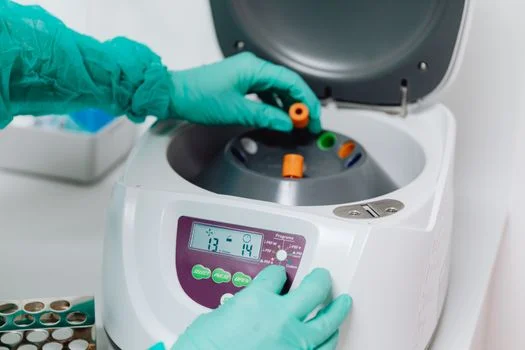
Operating cost on the 2026 Rio screen is about BRL 0.60 to BRL 1.50 per m³ treated. The four lines below are the 2025 component split, and they still add to that total. Energy is the largest share, at about 40–50% of the operating bill. Read the table as a split, then sum it for the duty you actually run.
| OPEX Component | Estimated Cost (BRL/m³) | Percentage of Total OPEX | Notes |
|---|---|---|---|
| Energy | 0.30–0.70 | 40–50% | MBR: 0.5–0.7 kWh/m³; Conventional: 0.3–0.5 kWh/m³ |
| Chemicals | 0.15–0.40 | 20–30% | Coagulants, flocculants, disinfectants |
| Labor | 0.10–0.25 | 10–20% | Package plants: ~0.5 FTE; Conventional: 2–3 FTE |
| Maintenance | 0.05–0.15 | 5–10% | MBR membranes: BRL 50K–100K/year for 100 m³/h |
MBR energy in the table is 0.5–0.7 kWh/m³, and conventional activated sludge is 0.3–0.5 kWh/m³. That gap is the 30–40% energy penalty named above, measured per cubic metre treated. pH adjustment is about BRL 0.05–0.10/m³, and polymer dosing is about BRL 0.03–0.08/m³. A tight dose can cut sludge disposal by 20–30% on plants dosed from a jar test rather than by habit.
A package plant often needs about 0.5 FTE, and some automated units need less than 0.5 FTE, while a conventional plant often needs 2–3 FTE. Membrane upkeep for a 100 m³/h MBR is listed at BRL 50K–100K/year. HydropureWater’s chemical dosing systems to optimize OPEX in Rio’s WWTPs are the usual way to hold chemicals inside BRL 0.15–0.40 per m³. Most plants we watch drift high on polymer, not on power, once the dose pump stays in manual.
MBR, Package Plants, and Conventional Activated Sludge
MBR, WSZ package plants, and conventional activated sludge in Rio trade land for effluent quality. The table below holds that comparison. Footprint and permit path decide the row more often than the brochure removal rate.
| Feature | MBR Systems | WSZ Package Plants | Conventional Activated Sludge |
|---|---|---|---|
| CAPEX | High | Low to Medium | Medium |
| OPEX | Medium to High (energy) | Low | Low to Medium |
| Footprint | Small (60% less than conventional) | Compact | Large |
| Effluent Quality | Near-reuse quality (TSS < 1 mg/L, BOD < 5 mg/L) | Meets CONAMA 430/2011 standards | Requires tertiary treatment for CONAMA 430/2011 |
| Compliance (CONAMA 430/2011) | Directly compliant | Directly compliant | Requires additional treatment (15–25% CAPEX increase) |
| Installation Time | Medium | Fast (60% faster than conventional) | Long |
| Ideal Application | High-density urban areas, limited space, high effluent quality requirements | Small communities, hotels, industrial pre-treatment, rapid deployment | Large municipal projects with ample land availability |
MBR effluent in this screen is near reuse quality, with TSS below 1 mg/L and BOD below 5 mg/L, so the federal sanitary standard can be met without a separate tertiary stage. WSZ package plants are treated as directly compliant in the same screen. They show about 40% lower CAPEX than an MBR and about 60% faster installation. They scale from 1–80 m³/h.
HydropureWater’s WSZ series for rapid-deployment, low-CAPEX solutions fit hotels, small communities, and industrial pretreatment when the clock is short. Conventional activated sludge needs sand filtration and UV, or a similar tertiary step, in this screen. That add is about 15–25% of CAPEX. Use it when land is available and flow sits in the 50–200 m³/h band.
Industrial pretreatment with DAF is a different line, at BRL 80,000 to BRL 300,000 for 4–50 m³/h. Metal and oil limits, not city sewage flow, set that price. The engineering scope for those discharges is set out in Industrial Wastewater Treatment in Rio de Janeiro: 2026 Engi. Most plants we size under 80 m³/h should not copy a municipal network layout.
Deodoro’s Nereda train, a granular-sludge process, treated 64,800 m³/day and reached 90% BOD removal with about 30% lower energy cost than conventional activated sludge. Municipal jobs in Rio carry the collection network. Industrial jobs more often pay for one metal limit or one oil limit on a 4–50 m³/h DAF or a package plant. Copy the footprint logic from Deodoro, not the Olympic pipe quantity, when the duty is a hotel or a factory.
Regulatory Compliance Costs for Rio Projects
Sanitary effluent limits for a direct discharge in Brazil are set by CONAMA Resolution 430/2011, Article 21, published in the Official Gazette on 16 May 2011. The wording here follows the consolidated English text of that resolution. The Diário Oficial remains the controlling copy. Article 21 sets pH between 5 and 9, temperature under 40°C, and a mixing-zone rise of no more than 3°C.
Settleable solids are capped at 1 mL/L in a one-hour Imhoff test. For lakes and lagoons with almost no circulation, those solids must be virtually absent. Article 21 sets BOD5 at 20°C at a maximum of 120 mg/L. That cap may be passed only if the plant removes at least 60% of BOD, or if a self-purification study shows the receiving-water class goals are met.
Hexane-soluble oils and greases are capped at 100 mg/L for sanitary effluent, and floating material must be absent. Earlier Rio buyer notes used BOD ≤ 60 mg/L, TSS ≤ 40 mg/L, and fecal coliforms ≤ 1,000 MPN/100 mL. Article 21, in the 2011 text fetched for this update, does not set those three numbers for sanitary sewage. Keep the tighter numbers only if the state license writes them in.
Article 16 can be applied to a sanitary plant at the state agency’s discretion, except total ammoniacal nitrogen, which Article 21 does not require. For an industrial discharge, Article 16 sets mineral oils at up to 20 mg/L and vegetable oils and animal fats at up to 50 mg/L. Table I of Article 16 sets total cadmium at 0.2 mg/L, total lead at 0.5 mg/L, and total mercury at 0.01 mg/L. Confirm the live list against the Diário Oficial before you freeze a guarantee.
The Águas do Rio file in these notes takes 3–6 months, and the pack includes hydraulic calculations, an environmental impact assessment, and proof against the access goals. Tertiary sand filtration and UV for 10–50 m³/h systems are quoted at BRL 150,000 to BRL 500,000. Online BOD and TSS meters are quoted at BRL 80,000 to BRL 200,000. Quarterly third-party tests are quoted at BRL 5,000 to BRL 15,000 per test.
A missed sewer connection, as at Água Carioca, can add 6–12 months and can void the first approval. Hold 10–15% of total CAPEX for regulatory compliance and contingency. A page on municipal wastewater treatment plant cost describes an Australian scope, so do not use it as the Rio municipal budget. Rio’s municipal adder is the collection network, not that tariff set.
How to Choose a Vendor for a Rio Plant
Vendor choice in Rio fails when the bid prices equipment and ignores the concessionaire’s file. Use the five steps below. The weights are an example, not a statute. Score the life-cycle file, not the cover price alone.
| Evaluation Step | Key Considerations | Weighting (Example) |
|---|---|---|
| 1. Define Requirements | Flow rate, effluent quality, footprint, budget, timeline, local regulations | N/A |
| 2. Vendor Identification | Seek 3–5 vendors with proven Rio-specific experience (Águas do Rio approvals, local labor cost understanding, import duty management) | N/A |
| 3. Proposal Evaluation | CAPEX, OPEX, compliance documentation, local support network, warranty terms, technology suitability | CAPEX: 30% OPEX: 25% Compliance: 20% Local Support: 15% Warranty: 10% |
| 4. Reference Visits | Visit existing installations in similar environments (e.g., Deodoro WWTP for Nereda, industrial pre-treatment sites for DAF) | N/A |
| 5. Contract Negotiation | Include penalties for delays (e.g., 1% of CAPEX per month) and performance guarantees (e.g., effluent quality bonds) | N/A |
Shortlist 3–5 vendors who have closed an Águas do Rio file, who can price local labor, and who can show the 12–18% import-duty path. Score CAPEX at 30%, operating cost at 25%, compliance at 20%, local support at 15%, and warranty at 10%. Visit a live plant, using Deodoro as the Nereda reference and a DAF site for industrial pretreatment. The useful visit is the plant that still runs near its design flow.
Put a delay penalty in the contract, such as 1% of CAPEX per month, and an effluent bond tied to the permitted limits. Red flags are no Rio case, a thin compliance file, and no local crew. Ask for life-cycle cost, not only the equipment price. Fitting an MBR or a WSZ package into that file is the differentiator.
Most bids we reject in Rio are low on the skid and silent on the BRL 50,000 to BRL 200,000 approval file. Ask who signs the hydraulic note. Ask who stands in the room when the concessionaire marks up the drawing. A vendor who cannot name that person is not ready for this city.
Deodoro WWTP: Nereda Cost, Performance, and Lessons
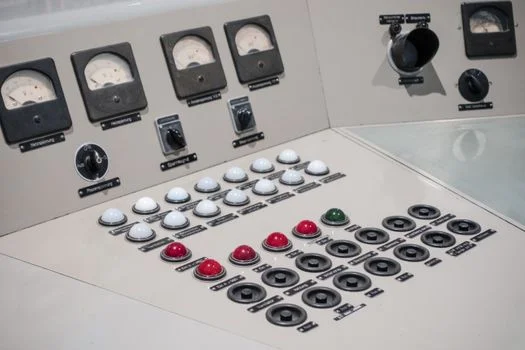
The Deodoro upgrade, at the Constantino Arruda Pessoa WWTP, was built for 432,000 Population Equivalents (PE), equal to 64,800 m³/day, and opened for the 2016 Olympic Games. It serves a significant portion of Rio’s West Zone. Melo and Ronconi (2020), in a case in the UN ECLAC Brazil repository, record the same works as an expansion to an average 750 L/s, which is 64,800 m³/day, for 430,000 people. The two population figures differ by 2,000 PE.
Use 432,000 PE when you match the older project note, and 750 L/s when you match the 2020 case. The authors work at BRK Ambiental, the Brazilian Nereda licensee named in that case, and the repository states that the views are theirs. CAPEX in the project note used here is about BRL 50 million, or about BRL 770 per PE. That sum included the Nereda system plus 200 km of new sewage networks and 11 pumping stations.
The 2020 case does not republish that BRL 50 million total. It reports a CAPEX saving of about R$ 7.4 million and an OPEX saving of about R$ 1.0 million per year against a UASB plus activated-sludge alternative, with that result reported across three years. The same case states operating cost about 30% lower, and investment about 25% lower, than conventional activated sludge, plus a footprint about 40% smaller. Those percentages describe the authors’ comparison, not a new city tariff.
OPEX in the project note is about BRL 0.60/m³, about 30% lower than conventional activated sludge, with 90% BOD removal and 95% TSS removal and no extra tertiary stage. The Deodoro table in the 2020 case lists process volume at 21,500 m³ for Nereda and 41,000 m³ for a UASB, aeration tank, and secondary clarifier, at 750 L/s. The same row prints a 90% volume cut and a 67% power cut. The volume cut from 41,000 m³ to 21,500 m³ is about 48%, not 90%, so use the volumes.
The modular Nereda layout reduced construction time by 50% in the project note, but the overall job still took an 8-month delay on sewer connections. Budget a 20% contingency for infrastructure risk on any Rio job that depends on new sewers. Most Olympic-era lessons we still use are about the pipe, not the reactor. A plant stuck at 10% of capacity is a collection failure, whatever the process is called.
Who Should Use These Rio Cost Screens
These screens are for industrial buyers, real-estate engineers, and EPC estimators who need a Rio band before a bid. Use this wastewater treatment plant cost Rio de Janeiro screen when the duty is about 1–200 m³/h and the discharge is to a sewer or a class-limited water body. Look elsewhere if you need a full city network price, a potable-water plant, or a tariff from another country. The 2025 bands are still the working 2026 screen until a named bid replaces them.
Next step: send flow, BOD, TSS, oils, and metals with the discharge point. Request a quote with those five numbers, not with a technology name alone. A quote without the receiving limit is only a skid price. Most files we can price in one pass already name the concessionaire and the lot area in square meters.
Frequently Asked Questions
What does a 1 m³/h package plant cost in Rio in 2026?
A 1 m³/h WSZ package plant is screened at BRL 120,000, and a 10 m³/h MBR is screened at BRL 2.5M, before land and permits. The wider package band is BRL 120K–1.2M for 1–80 m³/h, and the wider MBR band is BRL 1.8M–4M for 10–200 m³/h. Add import duty of 12–18% on imported equipment, plus BRL 50,000 to BRL 200,000 for the approval file. Treat the band as a screen until a bid prices the real influent.
How much is operating cost per cubic metre in Rio?
Operating cost on this Rio screen is BRL 0.60 to BRL 1.50 per m³ treated, with energy at BRL 0.30–0.70 per m³ and about 40–50% of the total. Chemicals are BRL 0.15–0.40 per m³, labor is BRL 0.10–0.25 per m³, and maintenance is BRL 0.05–0.15 per m³. MBR power is usually 0.5–0.7 kWh/m³, against 0.3–0.5 kWh/m³ for conventional activated sludge. The Deodoro Nereda figure in this note is about BRL 0.60/m³, which sits at the low end of that band.
What did CONAMA 430/2011 set for sanitary BOD?
CONAMA Resolution 430/2011, Article 21, sets sanitary BOD5 at 20°C at a maximum of 120 mg/L, and pH must stay between 5 and 9. The plant may exceed 120 mg/L only with at least 60% BOD removal, or with a self-purification study that meets the river-class goals. Settleable solids are capped at 1 mL/L in a one-hour Imhoff test, and hexane-soluble oils and greases are capped at 100 mg/L. A state license can still set a tighter cap.
How long does an Águas do Rio approval take?
The Águas do Rio approval in these notes takes 3–6 months for the document review, including hydraulics, an impact assessment, and the 2033 access goals. Online BOD and TSS meters add BRL 80,000 to BRL 200,000, and a quarterly lab test adds BRL 5,000 to BRL 15,000 per test. A missing sewer connection can stretch the same file by 6–12 months. Start that clock before you promise a handover date to the site owner.
How far apart are MBR and package-plant budgets in Rio?
MBR systems in this screen cost more up front than WSZ package plants and take less land. Package plants run from BRL 120,000–500,000 at 1–20 m³/h to BRL 500,000–1,200,000 at 20–80 m³/h. MBR systems run from BRL 1,800,000–2,500,000 at 10–50 m³/h to BRL 2,500,000–4,000,000 at 50–200 m³/h. DAF pretreatment for industry is BRL 80,000 to BRL 300,000 at 4–50 m³/h, so pick MBR only when the lot is tight and TSS must stay below 1 mg/L.