Why Arizona’s Wastewater Treatment Costs Differ from National Averages
Arizona’s arid climate increases evaporation losses by 5–15% of influent flow, necessitating larger clarifiers and higher chemical dosing for Total Dissolved Solids (TDS) control compared to national averages. In the Phoenix metropolitan area, 2024 unit cost data indicates that anti-scalants and specialized chemical treatments for high-TDS source water add approximately $0.15–$0.30 per 1,000 gallons to standard operating budgets. These environmental factors force engineers to over-size certain hydraulic components to maintain consistent SRT (Solids Retention Time) despite volumetric fluctuations caused by extreme heat.
Regulatory pressure from the Arizona Department of Environmental Quality (ADEQ) further drives costs. The 2026 NPDES permit limits, particularly for sensitive watersheds like Lake Pleasant, mandate tertiary treatment such as DAF systems for Arizona’s industrial pretreatment needs or advanced membrane filtration. For a 1 MGD (million gallons per day) facility, meeting a 1 mg/L Total Phosphorus (TP) limit typically adds $3M–$8M to the initial CAPEX. This is evidenced by the Patagonia WWTP upgrade, where compliance with tightening Total Nitrogen (TN) limits required significant process intensification.
Labor and material premiums in Arizona’s urban corridors also deviate from rural benchmarks. According to Arizona Department of Administration 2025 wage data, certified wastewater operators in Phoenix and Tucson command approximately $85/hour, a 20% premium over the $65/hour average found in Yuma or La Paz County. industrial land costs in Maricopa County, ranging from $5–$15 per square foot, increasingly favor compact technologies. While rural projects may utilize large-footprint lagoons or conventional activated sludge, urban facilities are often forced into underground or modular configurations to remain economically viable. For a broader perspective on how these regional factors compare, facility managers can review California vs. Arizona WWTP cost comparison data.
Arizona WWTP Cost Breakdown: CAPEX by Technology and Capacity
The capital expenditure (CAPEX) for Arizona wastewater treatment plants in 2026 is primarily dictated by technology selection and throughput capacity, with Membrane Bioreactor (MBR) systems averaging $25–$35 per gallon per day (gpd) of capacity. Conventional activated sludge remains the lowest CAPEX option at $10–$20/gpd, but it frequently requires additional secondary clarifiers and disinfection stages to meet ADEQ Class A+ reclaimed water standards, which can add $2M–$5M to a 1 MGD project budget according to Carollo Engineers 2024 data.
MBR technology, while higher in initial cost, offers a 60% reduction in physical footprint compared to conventional systems. This makes Arizona-optimized MBR systems for high-TDS wastewater highly attractive for industrial facilities with limited acreage. However, procurement teams must account for membrane replacement cycles; 2026 data suggests a membrane lifespan of 8–12 years, adding a deferred CAPEX hit of $80–$150 per square meter of membrane area. For high-strength industrial waste, such as food processing or semiconductor manufacturing, Dissolved Air Flotation (DAF) systems provide a cost-effective pretreatment layer at $15–$25/gpd, achieving 90–95% Total Suspended Solids (TSS) removal before the primary biological stage.
| Technology Type | 0.1 MGD CAPEX ($/gpd) | 1.0 MGD CAPEX ($/gpd) | 10 MGD CAPEX ($/gpd) | Typical Arizona Application |
|---|---|---|---|---|
| Conventional Activated Sludge | $18–$25 | $12–$18 | $8–$12 | Rural Municipalities |
| Membrane Bioreactor (MBR) | $35–$50 | $25–$35 | $20–$28 | Urban Reuse / Industrial |
| Dissolved Air Flotation (DAF) | $20–$30 | $15–$25 | $12–$18 | Food/Industrial Pretreatment |
| Sequencing Batch Reactor (SBR) | $22–$32 | $18–$26 | $14–$20 | Small-to-Mid Municipal |
| Reverse Osmosis (RO) | $50–$75 | $35–$55 | $30–$45 | Indirect Potable Reuse |
For projects requiring the highest level of purity, such as the Scottsdale Water Campus, Reverse Osmosis (RO) systems are essential. These facilities face a CAPEX range of $30–$50/gpd. While expensive, they are the only viable solution for Arizona’s high-TDS groundwater reuse initiatives, where influent salinity must be reduced from 1,200 mg/L to below 100 mg/L for sustainable aquifer recharge.
Operating Costs in Arizona: OPEX Drivers and Regional Variations
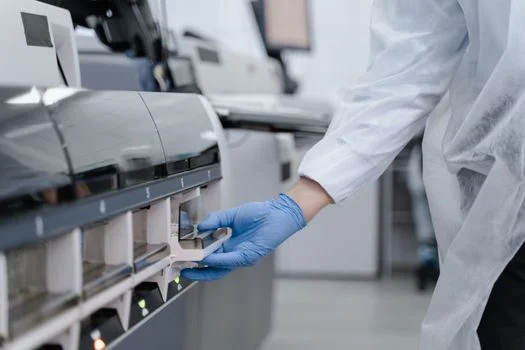
Energy costs for Arizona wastewater facilities in 2026 range from $0.12 to $0.18 per kWh, with aeration processes typically consuming 40–60% of the total plant power budget. MBR systems generally exhibit higher energy intensity, requiring 0.8–1.2 kWh/m³ of treated water due to membrane scouring air requirements, compared to 0.4–0.6 kWh/m³ for conventional activated sludge. In the extreme heat of the Sonoran Desert, cooling requirements for electrical rooms and blower assemblies further inflate energy demand during the summer months.
Chemical expenditures are a significant OPEX driver, ranging from $0.30–$0.80 per 1,000 gallons for coagulants and flocculants. The high alkalinity and TDS of Arizona’s water often require higher dosages to achieve effective precipitation. Utilizing an Arizona-optimized chemical dosing system can mitigate these costs by 20% through precision monitoring. Disinfection costs also vary by technology; while UV is common, many Arizona plants utilize chlorine dioxide for its effectiveness in high-temperature environments, with costs ranging from $0.15–$0.30 per 1,000 gallons.
Labor costs represent a fixed OPEX burden that scales poorly for smaller plants. ADEQ Rule R18-9-A302 requires certified operators for any facility exceeding 1 MGD, which translates to a labor cost of $0.20–$0.50 per 1,000 gallons depending on the complexity of the tech stack. Maintenance budgets should be set at 2–5% of total CAPEX annually. Regional variations are stark: OPEX in Phoenix and Tucson is typically 10–15% higher than in Yuma or rural Pinal County, primarily due to the higher cost of specialized maintenance labor and local utility rates. For instance, a plant in Phoenix may operate at $1.20/1,000 gal, while a similar facility in a rural district might achieve $0.90/1,000 gal.
Real-World Arizona WWTP Cost Examples: From Patagonia to Phoenix
The 2026 upgrade of the Patagonia Wastewater Treatment Plant highlights the cost impact of meeting modern ADEQ standards. Originally a 110,000 gpd extended aeration system built in 2004 for $1.8M, the facility faced new Total Nitrogen limits. The 2026 upgrade to an MBR configuration added $1.2M in CAPEX, bringing the effective unit cost to over $27/gpd. Despite the capital hit, the upgrade reduced manual maintenance hours, stabilizing OPEX at approximately $0.80/1,000 gallons.
In contrast, the Lake Pleasant Water Treatment Plant serves as a benchmark for large-scale municipal projects. With an 80 MGD capacity and a $215M CAPEX ($2.7M/MGD), the project utilized a 15-year Design-Build-Operate (DBO) contract valued at $336M. This model allowed the City of Phoenix to lock in long-term operational costs and shift performance risks to the contractor. Similarly, the Tucson Regional Wastewater Treatment Plant (RWWTP) underwent a 30 MGD MBR upgrade in 2025 with a $90M CAPEX. The OPEX for this facility is currently $1.10/1,000 gallons, with a significant portion allocated to the $1.2M annual membrane replacement fund.
The Scottsdale Water Campus provides the most relevant data for industrial buyers interested in high-purity reuse. Their 20 MGD RO system, completed with a $60M CAPEX ($3M/MGD), operates at $0.90/1,000 gallons. This facility is critical for Arizona’s "One Water" strategy, successfully reducing TDS from 1,200 mg/L to less than 100 mg/L, enabling direct injection into the local aquifer. These projects demonstrate that while initial costs are high, the ability to create a reliable, drought-proof water supply often justifies the investment.
Modular vs. Custom-Built WWTPs: Cost and Timeline Trade-offs for Arizona Projects
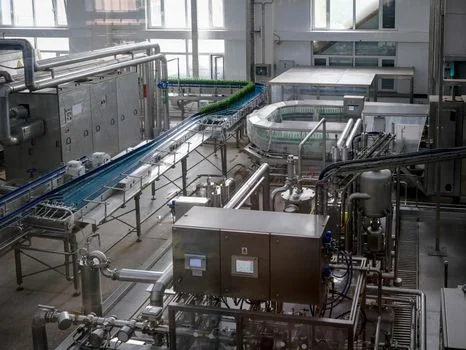
Modular wastewater treatment systems in Arizona offer a 40% faster installation timeline and 10–20% lower CAPEX compared to custom-built facilities for flows under 2.0 million gallons per day (MGD). For developers in Phoenix facing rapid compliance deadlines, modular WWTPs for Arizona’s urban land constraints provide a "plug-and-play" solution that can be operational in 6–12 months, whereas custom civil works often require 18–24 months for design, permitting, and construction.
The footprint advantage of modular systems is particularly valuable where land costs exceed $10/sq ft. A 1 MGD MBR modular system typically requires only 0.5 acres, whereas a conventional custom plant would need at least 2 acres. However, custom-built plants offer better economies of scale for flows exceeding 5 MGD, where the CAPEX can drop to $20/gpd compared to the $35/gpd often seen for large-scale modular arrays. Custom plants also allow for more robust integration of solar-powered aeration and covered clarifiers to combat Arizona’s evaporation rates.
| Metric | Modular System (0.5 MGD) | Custom-Built (0.5 MGD) | Modular System (5 MGD) | Custom-Built (5 MGD) |
|---|---|---|---|---|
| CAPEX ($/gpd) | $25–$35 | $35–$45 | $35–$50 | $20–$30 |
| OPEX ($/1k gal) | $1.10–$1.40 | $0.90–$1.20 | $1.20–$1.50 | $0.75–$1.00 |
| Timeline | 6–9 Months | 18–24 Months | 12–15 Months | 24–36 Months |
| Footprint | Minimal (Integrated) | Large (Civil Works) | Moderate (Arrays) | Optimized (Custom) |
For industrial facilities, the decision often hinges on compliance flexibility. Modular systems allow for incremental upgrades; a facility can start with a basic biological process and add a DAF or RO module later as ADEQ regulations tighten. Custom plants, by contrast, require significant upfront design to accommodate future nutrient limits, which can lead to "over-building" and stranded capital if regulations evolve slower than anticipated.
How to Reduce Arizona WWTP Costs: 5 Proven Strategies
Implementing covered clarifiers in Arizona wastewater designs can reduce influent flow loss from evaporation by up to 15%, significantly lowering the volumetric cost of treatment. By preventing water loss, facilities maintain more consistent chemical concentrations, which reduces the complexity of dosing and helps stabilize the biological process during the 110°F+ summer months. Additionally, integrating solar-powered aeration can leverage Arizona’s high solar irradiance to offset up to 30% of energy costs, especially when paired with 2026 federal tax credits for renewable energy in infrastructure.
Leveraging state-specific financial instruments is another critical strategy. ADEQ’s Border Environment Infrastructure Fund (BEIF) grants can cover 50–75% of CAPEX for rural projects, as seen in the Patagonia case study. For industrial buyers, optimizing the "front end" of the plant is essential. Using Arizona-optimized chemical dosing for high-TDS wastewater can reduce coagulant and flocculant waste by 20–30%, saving an estimated $0.10–$0.20 per 1,000 gallons. This is particularly effective in Phoenix, where source water variability is high.
Choosing energy-efficient technologies like low-energy MBR membranes (consuming 0.6–0.8 kWh/m³) can lead to substantial long-term OPEX savings over standard membranes. Finally, adopting collaborative delivery models like Design-Build-Operate (DBO) has been proven to save 15% on total lifecycle costs compared to traditional design-bid-build. The Lake Pleasant WTP serves as a prime example of how this model reduces change orders and ensures that the design team is incentivized to prioritize operational efficiency. For a comparison of how these strategies differ in other regions, see how Iowa’s WWTP costs compare to Arizona’s.
Frequently Asked Questions
Q: What are the biggest cost drivers for WWTPs in Arizona?
A: Compliance with ADEQ’s 2026 nutrient limits (e.g., 1 mg/L TP) adds 15–30% to CAPEX. Additionally, the arid climate increases chemical and energy costs by 10–20% due to evaporation-induced TDS concentration and high cooling loads for equipment.
Q: How much does a 1 MGD WWTP cost in Arizona?
A: In 2026, CAPEX ranges from $10M to $25M. A conventional plant costs roughly $10M–$12M, an MBR system $20M, and a full-scale RO reuse facility can reach $25M. OPEX typically falls between $0.80 and $1.50 per 1,000 gallons.
Q: Can I use a modular WWTP for a 5 MGD project in Arizona?
A: While possible through modular arrays, it is generally not cost-effective. For flows over 2 MGD, custom-built systems offer better economies of scale ($20–$30/gpd) compared to the $35–$50/gpd required for large-scale modular configurations.
Q: What grants are available for Arizona WWTP projects?
A: Rural projects often qualify for ADEQ’s BEIF grants (50–75% coverage). Industrial and municipal projects can also access low-interest loans through the Water Infrastructure Finance Authority of Arizona (WIFA), which offers rates 2–3% below market averages.
Q: How do Arizona’s WWTP costs compare to California?
A: Arizona’s CAPEX is generally 10–15% lower due to reduced labor and material costs. However, Arizona’s OPEX is often 5–10% higher because of higher chemical demand for TDS management and energy-intensive cooling requirements during summer months.