Why Industrial Buyers Are Comparing Pentair Alternatives in 2026
Three procurement conditions converged in 2025–2026 to make Pentair alternative wastewater treatment a board-level topic rather than a niche technical query. First, the May 2024 nVent Electric spinoff separated Pentair's electrical and flow-control businesses from its water assets, leaving the post-spin Pentair as a narrower filtration, pool, and residential water company (per the 2015 WEFTEC portfolio and the current pentair.com catalog). Second, lead times for skidded membrane and filtration systems sourced from US/EU production have stretched to 26–40 weeks for some Pentair X-Flow configurations as of 2026-Q1, versus 10–14 weeks for factory-built alternatives out of Asia. Third, tariff exposure on cross-border equipment (Section 301 duties, EU CBAM drag on steel tanks) has added 6–12% to landed Pentair quotes for US municipal buyers and 4–8% for EMEA industrial buyers (HydropureWater field data, 2026).
The 2015 Pentair WEFTEC release — the only major Pentair wastewater press piece indexed in 2026 — listed Delta Environmental ECOPOD residential systems, X-Flow ultrafiltration membranes, and Flow & Filtration Solutions as the core portfolio. Eleven years later, that portfolio has been pruned: ECOPOD still exists but the biological-process EPC capability around it is gone, and the Flow & Filtration Solutions unit is now nVent. According to the iScience 2025 special issue on wastewater harvesting (Cell Press, 2025-09), the dominant reuse technologies in 2026 are reverse osmosis, UV disinfection, and membrane filtration — areas where Pentair still competes — but the equally critical pre-treatment and biological stages (DAF, A/O, SBR, MBBR) have fallen out of the Pentair catalog. For an EPC project engineer or plant procurement manager, that gap is the entire reason this comparison exists.
Three concrete buyer triggers are driving 2026 searches: (1) lead-time risk on Pentair skids for projects with 2027 commissioning dates; (2) tariff and FX exposure on dollar-denominated Pentair quotes landing in EUR, GBP, or CNY budgets; (3) a process scope mismatch — buyers needing biological treatment, DAF, or packaged plants discover that alternative suppliers bundle these stages while Pentair's 2026 line does not.
What Pentair Offers Today vs. What an Alternative Must Match
Pentair's 2026 wastewater-relevant product line, drawn from pentair.com and the 2015 WEFTEC release, narrows to three families: ECOPOD residential advanced treatment systems (still under the Delta Environmental brand), X-Flow hollow-fiber and multibore ultrafiltration membrane modules, and a flow/filtration skid portfolio that now sits with nVent but remains specified under Pentair project references. None of these three lines bundle biological process design, high-rate DAF, sludge dewatering EPC, or buried package-plant civil works. That is the structural gap a 2026 alternative must close.
The non-negotiable spec floor any alternative must clear is set by EPA secondary treatment standards (40 CFR 133) and the EU Urban Wastewater Treatment Directive 91/271/EEC: BOD₅ ≤30 mg/L and TSS ≤30 mg/L for discharge to sensitive waters, with TN ≤15 mg/L and TP ≤2 mg/L where eutrophication rules apply. For water-reuse applications, the practical floor drops to <1 NTU turbidity and <1 μm nominal pore — a benchmark where MBR membrane bioreactor systems and Pentair X-Flow operate on the same envelope. Anything weaker than 30/30 on BOD/TSS is not a viable alternative regardless of CAPEX discount.
Where Pentair is structurally weak in 2026 is in four specific process blocks. First, biological treatment (A/O, SBR, MBBR) — the Delta Environmental biological capability that supported ECOPOD in 2015 is no longer marketed as a standalone EPC scope. Second, high-rate DAF pre-treatment for FOG, TSS, and colloidal load reduction, a standard front end for food, paper, and metalworking plants. Third, sludge dewatering EPC (belt presses, centrifuges, screw presses) — Pentair does not build these. Fourth, underground packaged plants for small communities or industrial parks with footprint constraints. A WSZ underground package plant with full A/O biological train is the type of integrated solution (1–80 m³/h, A/O contact oxidation, fully buried, no operator required) that fills this gap directly. Any shortlisted alternative should publish third-party effluent data and reference installations covering at least two of these four blocks.
Head-to-Head: Pentair vs. MBR vs. DAF vs. Package Plants
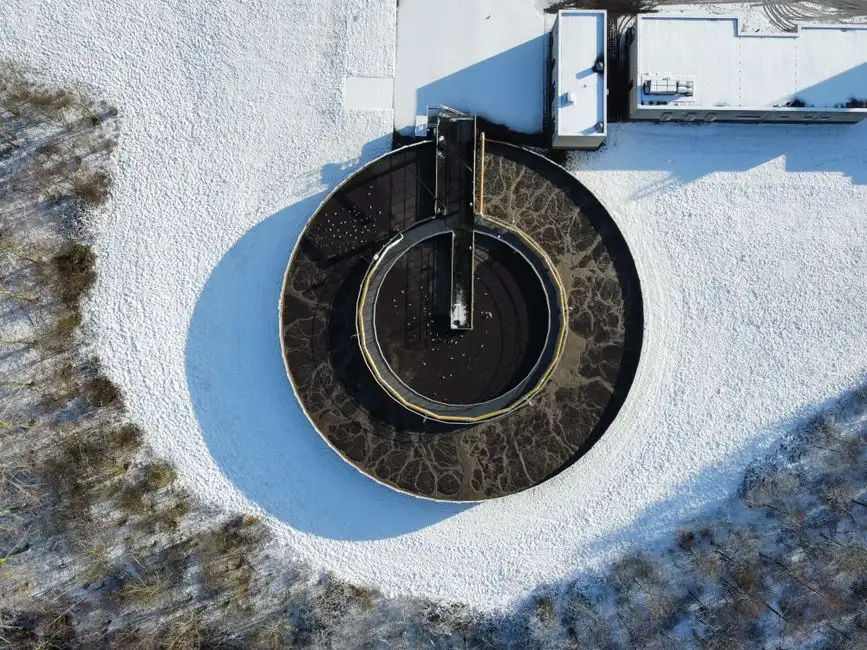
The four-way comparison below is built from published 2026 specs and the DF series, DAF line, and WSZ series datasheets. Treat the flow ranges as bracket guidance for screening — not as binding engineering specifications for any specific influent.
| Parameter | Pentair X-Flow / ECOPOD | MBR Membrane Bioreactor | DAF | Package Plant (WSZ Series) |
|---|---|---|---|---|
| Standard flow range | 5–500 m³/day per skid (X-Flow UF) | 10–2,000 m³/day per train | 4–300 m³/h | 1–80 m³/h |
| Footprint vs. CAS baseline | ~30–50% reduction | ~60% reduction | Pre-treatment only | ~70% reduction (buried) |
| Effluent BOD (mg/L) | <30 (with biological upstream) | <5 | N/A (front-end step) | ≤30 |
| Effluent TSS (mg/L) | <10 (post-UF) | <1 | 90%+ removal as feed to next stage | ≤30 |
| Effluent turbidity | <0.2 NTU (post-UF) | <1 NTU | N/A | N/A |
| Best-fit application | Filtration polish / reuse | High-strength industrial, reuse | FOG, TSS, colloidal pre-treatment | Small community, industrial park, remote site |
MBR specs from the DF series datasheet: 0.1 μm nominal pore, 80–225 m² active area per module, 32–135 m³/day per skid at 10–25 LMH flux, and aeration demand 10–20× lower than cross-flow designs. The full MBR membrane bioreactor system with <1 μm effluent quality integrates pre-treatment, bioreactor, and membrane tank in a single skid. DAF specs: 4–300 m³/h across 13 standard models, micro-bubble generation through an ejector-nozzle manifold, whitewater recycle typically 20–30% of throughput, proven in food, paper, textile, and metalworking pre-treatment. The DAF for FOG, TSS, and colloidal removal covers the same 4–300 m³/h envelope. For existing MBR retrofits or capacity expansions, DF series flat-sheet membrane modules for retrofit or expansion drop into most standard cassette frames without basin modification.
The honest read: Pentair X-Flow is competitive on reuse-grade turbidity but carries a 15–25% CAPEX premium per m³/day versus an MBR alternative in 2026 quotes (HydropureWater field data, 2026), and Pentair does not supply the biological front end. Package plants are the right answer for small flows and footprint-constrained sites; MBR is the right answer for reuse or variable load; DAF is the right answer when influent FOG or TSS is the binding constraint before any biological step runs.
2026 CAPEX and OPEX Benchmarks by Technology Tier
The published 2026 package-plant CAPEX range of $0.08M–$8.5M — sourced from the Saudi Arabia municipal guide and the 2026 refinery wastewater CAPEX/OPEX breakdown — anchors the small-to-mid scale tier. A 10 m³/h WSZ unit ships at roughly $0.10M–$0.18M; an 80 m³/h buried unit with civil works lands at $0.6M–$1.2M; refinery- or industrial-park scale package plants (500–5,000 m³/day) sit in the $4M–$8.5M band. Use these as screening numbers, not as fixed quotations.
| Technology | 2026 CAPEX range | 2026 OPEX (per m³ treated) | Key OPEX driver | Typical membrane/media life |
|---|---|---|---|---|
| Package Plant (WSZ) | $0.08M–$8.5M | $0.05–$0.20 | Power, occasional sludge haul | Filter media 3–5 yr |
| MBR (DF series skid) | 20–40% above CAS baseline | $0.08–$0.35 | Membrane aeration, periodic CIP | PVDF flat-sheet 8–10 yr |
| DAF | $15K–$250K per unit | $0.02–$0.06 | Compressed air, polymer | Nozzles 5–7 yr |
| Pentair X-Flow skid | +15–25% per m³/day vs MBR | $0.10–$0.40 | Membrane replacement $80–$150/m² | UF hollow-fiber 5–7 yr |
MBR CAPEX is typically 20–40% above conventional activated sludge, but a 60% footprint reduction and the elimination of secondary clarifiers offset that premium on land-constrained sites (per the MBR vs MBBR industrial comparison). DAF CAPEX is linear with flow: a 4 m³/h DAF-001 ships near $15K, a 300 m³/h DAF-300 industrial unit lands at $180K–$250K depending on material (SS304 vs SS316 vs FRP). Pentair X-Flow membrane replacement is the structural OPEX penalty — $80–$150/m² every 5–7 years versus 8–10 years for PVDF flat-sheet modules in the DF series. The 2026 refinery wastewater CAPEX and OPEX breakdown covers how these tier numbers map to a hydrocarbon-influenced influent profile.
The 6-Criteria Vendor Selection Scorecard
The scorecard below works for any supplier, including Pentair and full-line alternative manufacturers. Weight each criterion from 1 (poor) to 5 (excellent) and multiply by the importance factor shown. A passing score is 75/100; below that, escalate to a second-round pilot or a different vendor.
| Criterion | What to verify | Weight | Pentair 2026 typical | Full-line alternative typical |
|---|---|---|---|---|
| 1. Process scope | Pre-treatment + biological + tertiary + sludge in one contract | ×5 | Filtration only | All four stages bundled |
| 2. Capacity match | Standard model range brackets design flow (WSZ 1–80 m³/h, DAF 4–300 m³/h, MBR 10–2,000 m³/day) | ×4 | Custom-engineered | Catalog models available |
| 3. Effluent guarantee | Third-party or pilot COD/BOD/TSS/N numbers in writing | ×5 | Theoretical removal rates | Pilot data, reference plants |
| 4. Compliance | EPA, EU UWWTD 91/271/EEC, WHO reuse, country-specific | ×4 | US/EU-centric | Multi-jurisdiction references |
| 5. Lead time / EPC scope | Factory-built skids 10–14 wk vs stick-built 6–12 mo | ×3 | 26–40 wk reported (2026-Q1) | 10–14 wk standard |
| 6. After-sales | Spare-parts inventory, on-site commissioning, remote PLC support, quantified response time | ×3 | Regional distributor network | Factory-direct + local partner |
The two highest-weighted criteria are process scope and effluent guarantee — both areas where Pentair's 2026 line is structurally thin. Lead time carries weight ×3 rather than ×5 because extended lead times can be absorbed by project scheduling; missing process blocks cannot.
5-Step Qualification Checklist Before You Switch
Run this checklist on every shortlisted vendor before signing an EPC contract. It is designed to be completed inside one week per supplier.
- Influent characterization. Pull a 7-day composite of BOD, COD, TSS, FOG, pH, and temperature. Match the numbers to the vendor's reference installations — a supplier whose references are 80% municipal should not be your first call for 5,000 mg/L COD refinery wastewater.
- Request a process flow diagram and mass balance. Not a marketing brochure, not a one-pager. A P&ID with stream-by-stream BOD/COD/TSS values forces the vendor to commit to a design, not a slogan. Reject any supplier who cannot produce one inside two weeks.
- Validate membrane and media warranties in writing. MBR membrane life, DAF nozzle life, filter media replacement cycle — all should appear in the technical schedule with prorated replacement cost. Verbal assurances do not survive a warranty claim.
- Compare PLC platforms. Confirm the vendor supports Ethernet/IP, Modbus TCP, or Profinet for plant SCADA integration. Locked proprietary PLCs are a 10-year operational risk. The PLC control architecture for wastewater plants in 2026 covers the protocol map and cyber hardening checklist.
- Negotiate a pilot or rental period for any system above $500K CAPEX before signing the full EPC contract. A 60–90 day pilot on real influent is the cheapest insurance you will buy on a process guarantee.
Frequently Asked Questions

What is a Pentair alternative in wastewater treatment?
Any non-Pentair system delivering comparable or better BOD, TSS, and nitrogen removal at competitive 2026 CAPEX and OPEX — including MBR membrane bioreactors, DAF pre-treatment, and underground package plants. The 2026 shortlist is shaped by Pentair's post-nVent narrowed scope, not by capability gaps in the alternatives.
How does MBR effluent quality compare to Pentair X-Flow?
Both reach reuse-grade turbidity. An MBR membrane bioreactor system running DF series flat-sheet modules at 0.1 μm pore delivers <1 NTU turbidity and <5 mg/L BOD with a single integrated skid; Pentair X-Flow reaches <0.2 NTU post-UF but requires a separate biological front end that Pentair no longer bundles.
What is the 2026 CAPEX range for a package sewage treatment plant?
$0.08M–$8.5M depending on flow and scope, anchored by the WSZ series at 1–80 m³/h for the small-to-mid scale. A 50 m³/h buried unit with A/O + sedimentation + disinfection typically lands at $0.4M–$0.7M ex-works.
Is MBR or DAF the better Pentair alternative for industrial wastewater?
Different jobs. MBR is the answer for high-strength industrial influent with reuse as the end target (<1 μm effluent, 60% footprint reduction versus CAS). DAF is the answer when the binding constraint is FOG, TSS, or colloidal load at the front end — typical flow range 4–300 m³/h with 90%+ TSS removal as a pre-treatment step.
What effluent standards must a Pentair alternative meet in 2026?
EPA secondary treatment (40 CFR 133): BOD₅ ≤30 mg/L, TSS ≤30 mg/L. EU UWWTD 91/271/EEC: same discharge floor with TN ≤15 mg/L and TP ≤2 mg/L in sensitive catchments. WHO reuse guidelines apply for any non-potable reuse end use.