What PLC Control Means in a Modern Wastewater Treatment Plant
PLC control for a wastewater treatment plant places a Programmable Logic Controller at the core of a distributed system. Field stations read flow, pH, DO, and level, then run ladder or structured-text logic to drive pumps, blowers, valves, and dosing skids. A 2026 stack adds central SCADA HMI, industrial Ethernet, and an optional MQTT or OPC UA gateway.
Four layers must stay distinct before any bid sheet is written. The PLC is a ruggedized industrial computer that executes deterministic scan logic in 1–20 ms cycles. A DCS is the architecture that joins multiple PLCs, remote I/O, and supervisory stations into one process. SCADA is the supervisory software layer—often Wonderware/AVEVA, Ignition, or WinCC—that polls PLCs for visualization, alarming, and trending. The HMI is the operator screen, typically a 15–22 in panel PC on the cabinet door. In water and wastewater these layers are not optional: a typical 2026 mid-size plant uses 2–6 PLC stations, one SCADA server pair, and 3–8 HMI clients.
The 2026 reference architecture has four tiers. Tier 1 covers field instruments—pH and DO probes, magnetic flow meters, ultrasonic level, and pressure transmitters. Tier 2 places distributed PLC stations with remote I/O on Profinet or EtherNet/IP; plants above 1,000 m³/day often add hot-standby CPUs. Tier 3 is a central SCADA server with an engineering station and historian (OSIsoft PI, Ignition Tag Historian, or AVEVA). Tier 4 is an optional cloud/IIoT gateway publishing OPC UA over MQTT to AWS IoT, Azure IoT Hub, or an on-prem Ignition Edge node. A single-rack PLC almost never fits even a packaged plant, because equalization tanks, bioreactors, and the sludge building sit 50–200 m apart and need their own I/O drops.
Two control modes coexist on every panel we size. Hard-wired I/O handles safety interlocks—pump dry-run, motor thermal overload, valve limit-switch feedback, and E-stop loops. Those points wire directly to discrete inputs (DI) and outputs (DO) and run inside the CPU scan, not on the fieldbus, so a Profinet cable break cannot defeat them. Fieldbus I/O (Profinet, EtherNet/IP, Modbus TCP) carries process loops: DO cascade, flow ratio, pH trim, and VFD speed reference. Hard-wired interlocks are typically 15–25% of total I/O count on a WWTP panel; the remaining 75–85% rides the fieldbus.
Platform Comparison: Siemens, Allen-Bradley, Schneider, ABB
Choosing a platform locks the plant into 10–15 years of spare parts, training, and integrator support. The four contenders below cover roughly 85% of the 2026 global water/wastewater market between them. The figures below are engineering reference points, not quotes; a real bid depends on I/O count, redundancy, and the panel builder's region.
| Parameter | Siemens S7-1500 + ET 200SP | Allen-Bradley CompactLogix 5380 + POINT I/O | Schneider Modicon M580 | ABB AC500 V3 |
|---|---|---|---|---|
| Program memory | 1–6 MB (CPU 1515–1518) | 2–8 MB (5380 1756-L8x) | 4–64 MB (BME P58) | 1–8 MB (PM5xxx) |
| Bit instruction time | 6 ns | 4 ns | 5 ns | 10 ns |
| Max I/O per station | ~32,000 | ~32,000 | ~64,000 (native Ethernet backplane) | ~20,000 |
| Integrated motion / PID loops | 256 PID | 256 PID | 200 PID | 128 PID |
| Native protocols | Profinet, Modbus TCP, OPC UA, MQTT (S7-1500 fw ≥ 2.9) | EtherNet/IP, Modbus TCP, OPC UA, MQTT (5380 fw ≥ 33) | Modbus TCP, Ethernet/IP, Profinet (BME P58), OPC UA, MQTT | Profinet, Modbus TCP, OPC UA, MQTT |
| IEC 62443-4-2 certified | Yes (SL2 since 2022) | Yes (SL2, 2023) | Yes (SL2, 2023) | Yes (SL1, partial SL2) |
| 2026 indicative turnkey panel, 500 m³/day, ~220 I/O | $22k–$42k | $25k–$45k | $20k–$38k | $19k–$36k |
Decision rule used by most multi-site owners: match the existing site standard when the plant joins a multi-facility fleet. Otherwise Siemens S7-1500 leads 2026 global water/wastewater market share per industry tracking (ARC Advisory Group, 2025). Schneider M580 is the only one of the four with a native Ethernet backplane across all I/O drops, which simplifies redundant-ring Profinet topologies. CompactLogix 5380 is the default pick in U.S. food and beverage plants because of the existing integrator base. ABB AC500 V3 is price-competitive and common in European municipal tenders, but spare-parts logistics are thinner outside EMEA.
Siemens still publishes IEC 62443-4-2 conformity documents for S7-1500 family controllers. Software-controller variants remain covered from firmware V30.1 onward. The SL2 row in the table stays the working 2026 procurement baseline.
I/O Sizing and Panel Specification for a 500 m³/day Wastewater Plant
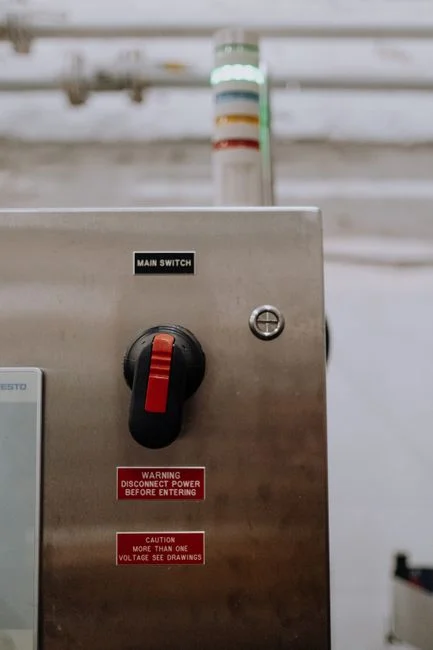
Under-sizing I/O is the single largest source of cost overrun on PLC retrofits; over-sizing wastes $4k–$8k per unused slot. The template below is a working I/O list for a 500 m³/day MBR plant treating mixed industrial/municipal influent, which can be scaled up or down by ±20% depending on influent characteristics.
| Signal type | Count | Typical field devices | Notes |
|---|---|---|---|
| DI (24 VDC, sourcing) | 64 | Pump running, E-stop, valve limit switches, level floats, motor thermal, door interlock | 8–12 dedicated to safety (E-stop, dry-run, seal leak) |
| DO (relay or 24 VDC, 0.5–2 A) | 48 | Pump start/stop, valve open/close, blower enable, dosing pump run, alarm horn/strobe | Mix of relay (for motor contactors) and solid-state (for VFD enable) |
| AI (4–20 mA, HART, 16-bit) | 24 | Influent flow, pH, conductivity, DO, MLSS, equalization level, MBR level, sludge level, filtrate turbidity, discharge flow, discharge pH, sump level | HART passthrough mandatory for valve and instrument diagnostics |
| AO (4–20 mA, isolated) | 12 | VFD speed reference (blower, transfer pump, permeate pump), dosing-pump stroke, modulating valve position | Isolated outputs prevent ground loops between VFDs and instruments |
| Safety DI (hard-wired, fail-safe) | 8–12 | E-stop, motor overload, dry-run probe, high-high level, gas detector | Routed to safety relay or F-CPU, never on fieldbus |
| Total | ~180–260 points | Add 20% spare slots; physical = ordered I/O × 1.2 |
Panel specification starts with enclosure material matched to the room. Use powder-coated carbon steel (1.5–2.0 mm) for indoor equipment rooms at IP54, and 304/316 stainless at NEMA 4X / IP65 for outdoor or washdown locations. Separate 24 VDC instrument bus from 230/400 VAC motor bus with a physical barrier; instrument bus must be a regulated, redundant power supply (Phoenix Contact QUINT or equivalent) sized at 1.5× the calculated load. Specify 10% spare DI/DO and 20% spare AI/AO slots minimum, plus 25% spare 24 VDC terminals.
Redundancy options matter once capacity climbs. A hot-standby CPU pair adds $6k–$12k but cuts unplanned downtime by ~60% on plants above 1,000 m³/day. Redundant 24 VDC supplies ($300–$600 each) are essentially mandatory. For chemical dosing skids like the PLC-controlled chemical dosing skid, specify isolated analog barriers and ATEX/IECEx-rated enclosures if the room handles hypochlorite, polymer, or acid. Most plants we size also stock spare Water Treatment Parts, Valves & Filter Media for the same room so a failed solenoid or media bed does not idle the new panel.
How the PLC Sequences Real Processes: MBR Cycle and SBR Cycle Walkthrough
Marketing brochures show a PLC as a black box. The walkthrough below is what ladder logic actually does on a real plant, line by line. It is the same code that runs on a MBR membrane bioreactor system as on a packaged SBR—only the I/O map and timer setpoints differ.
MBR cycle (continuous-flow, ~6-hour hydraulic residence time). Step 1: the influent VFD ramp-starts when the equalization tank level switch closes (LS-101 high). The VFD reference tracks influent flow via a PID loop to hold the tank level at 60%. Step 2: the equalization mixers run continuously. Step 3: the transfer pump starts when MBR tank level < 80%, feeding the bioreactor. Step 4: the aeration blower VFD runs a DO cascade—the DO probe (AIT-201) feeds a PID block that biases the blower speed reference to hold DO at 2.0 mg/L, the standard setpoint for nitrification/denitrification balance. Step 5: the permeate pump runs on a 9-min ON / 1-min back-pulse cycle, with the back-pulse valve (FV-301) opening on a timer. Step 6: when transmembrane pressure (PT-302) exceeds 25 kPa, the PLC triggers a CIP (clean-in-place) sequence—isolate permeate line, dose NaOCl + citric acid, soak 60 min, rinse to drain.
SBR cycle (batch, 5 phases, 4–8 hours total). Phase 1 — Fill (30–60 min): influent valve opens, mixers run, blowers OFF (anoxic fill). Phase 2 — React (90–180 min): blowers ON, DO held > 2 mg/L, mixers ON. Phase 3 — Settle (60 min): all blowers and mixers OFF, sludge blanket forms. Phase 4 — Decant (30–60 min): the floating decanter (or solenoid-driven decanter valve) opens on a float-switch permissive, drawing clarified supernatant. Phase 5 — Idle (0–60 min): waits for the next cycle trigger or a sludge-wastage command.
Interlocks are written in ladder, not in SCADA. For a permeate pump, the run coil energizes only if three hard-wired DI prove true: MBR tank level > 30%, CIP valve not open, and no E-stop active. Those points are not software tags, so a Profinet failure cannot start the pump with an empty tank. A 2026 trend worth noting: PID loops are increasingly augmented or replaced by model-predictive control (MPC) running on the same PLC runtime, which the major vendors now support natively. Field data on retrofitted MBR plants (HydropureWater field data, 2025–2026) shows MPC reduces DO excursion by ~30% and blower energy by 8–15% versus fixed-PID. Peer-reviewed plant work on effluent pH loops has long used Allen-Bradley MicroLogix-class PLCs with float and pH sensors to automate neutralization that operators cannot hold by hand (Chaitra et al., 2017).
SCADA, IIoT, and Remote Monitoring: The 2026 Layer Above the PLC
Owners rarely buy a PLC alone anymore. They buy a SCADA + IIoT package that turns the PLC into a connected asset, because that is what regulators and corporate ESG reporting now require. SCADA is the human-machine layer: trending, alarming, batch records, and shift handovers. The 2026 default for new water-sector SCADA is Ignition by Inductive Automation, on roughly 38% of greenfield water projects in North America and EMEA per industry surveys (2025). Legacy installations still run Wonderware/AVEVA System Platform, WinCC, or FactoryTalk View, and a retrofit often keeps the existing SCADA for cost reasons.
The cloud path is now standardized. The PLC exposes an OPC UA server (built into S7-1500 firmware since V2.9, into CompactLogix 5380 since fw 33, and into M580 since 2022). A small gateway box (or a VM on the SCADA server) publishes tags over MQTT to AWS IoT Core, Azure IoT Hub, or an on-prem Ignition Edge node. The cloud historian stores 1–5 years of trends at 1-second to 1-minute resolution. From there, dashboards surface on a browser, alarms route to operators' phones via SMS or push, and EPA Discharge Monitoring Reports (DMR) generate automatically. The engineering and operations guide for remote monitoring for industrial wastewater plants walks through the gateway selection and MQTT topic design in detail.
Cybersecurity is the non-negotiable part of this layer. Apply IEC 62443-3-3 zone-and-conduit segmentation: the PLC LAN is a separate zone from the office LAN, with a single hardened firewall in between. No direct internet exposure of the PLC. Use signed firmware updates only, role-based HMI login (operator / supervisor / engineer / admin), and disable all unused Ethernet ports on the CPU. According to NIST (2023), SP 800-82 Revision 3 reframes the older ICS guide as OT security and adds updated architectures plus an SP 800-53r5 OT overlay for low-, moderate-, and high-impact systems. Audit logs must be retained ≥ 1 year for NIST 800-82 r3 and most EPA cyber-resilience guidance. Skipping this is the single fastest way to fail a 2026 owner cyber-insurance questionnaire.
CAPEX, OPEX, and ROI: What a Plant Automation System Costs in 2026
A 500 m³/day WWTP control system CAPEX in 2026 runs $90k–$220k depending on instrumentation scope. The typical split: PLC panel hardware and engineering 35%, SCADA software and engineering 20%, field instruments (flow, pH, DO, level, VFD) 30%, installation and commissioning 15%. A redundant CPU pair pushes the PLC line to 45% of CAPEX. The wider engineering buyer's view sits in the SCADA system for sewage treatment 2026 guide.
OPEX is dominated by three lines. SCADA licensing, typically an annual Ignition subscription at $1,200–$4,000/yr for a mid-size plant, or a one-time perpetual license at 3–4× that figure. Remote connectivity, $50–$200/month for cellular or VPN to a cloud historian. Preventive maintenance, usually 4–6% of CAPEX per year (per industry rule of thumb, AWT 2025), covering CPU battery replacement, backup of programs, and I/O calibration. The largest hidden OPEX line is operator time, which the SCADA + PLC combination can cut by 2–4 hours/day on a 200 m³/day plant by removing manual log entries and rounds.
The savings case for a relay-to-PLC retrofit on a 200 m³/day textile WWTP, drawn from HydropureWater field data (2025–2026), is concrete. VFDs on blowers and feed pumps cut electrical consumption 8–12%. A DO cascade loop on the aeration tank adds another 5–8% on top. Reclaimed operator time is worth 2–4 hours/day at typical loaded labor cost. Chemical overuse from manual dosing drops 5–10% once pacing ties to actual flow.
Net payback is 18–36 months for retrofits on plants above 200 m³/day. Greenfield projects often need 24–48 months when the PLC is bundled into a larger EPC scope. Budget also includes consumables and actuators—pair the panel scope with Water Treatment Parts, Valves & Filter Media so spare valves and media match the I/O map from day one.
Selection Checklist and Common Pitfalls

Print this section. Use it on the bid-review meeting.
- Platform standardization with the rest of the owner's fleet (one PLC family across all sites)
- I/O count + 20% spare, plus 25% spare terminals in the panel
- Panel IP rating matched to location: NEMA 4X/IP65 outdoor, IP54 indoor
- Redundancy tier defined up front — CPU hot-standby, dual 24 VDC, dual Ethernet ring
- SCADA openness: native OPC UA server on the PLC, no proprietary middleware
- Cybersecurity: IEC 62443-3-3 zones, no PLC on the office LAN, role-based login
- Training: minimum 40 hours of operator + 80 hours of maintenance technician training included
- Local support: integrator within 4-hour drive, 24/7 hotline, next-day spare parts
- Documentation: I/O list, network diagram, ladder logic printouts, and a control narrative in native English or bilingual
- Lifecycle: ≥ 10-year spare-parts guarantee from the PLC vendor (Siemens, AB, Schneider, and ABB all publish this)
Three pitfalls account for the majority of 2024–2025 panel-builder rework in our region. Pitfall 1: under-specifying discrete inputs for pump thermal, seal-leak, and vibration — the most common field rework on Chinese-built WWTP panels. Pitfall 2: omitting HART passthrough on AI cards, which later blocks intelligent valve and instrument diagnostics. Pitfall 3: specifying a panel without surge protection or lightning arrestors — the top cause of PLC CPU failure in tropical and high-lightning regions (West Africa, Southeast Asia, the Gulf). Specify Type 2 SPDs on the 230/400 VAC feed, Type 1+2 on incoming service, and signal-line surge protectors on every 4–20 mA loop leaving the building.
Who This Is For and Next Step
This guide is for plant engineers, EPC contractors, and procurement managers sizing automation on plants from roughly 100 m³/day packaged units to multi-station industrial trains. Look elsewhere if you only need a single relay cabinet for a sump pump with no process loops. When the I/O list and platform shortlist are ready, request a control-panel quote with your flow rate, influent type, and preferred PLC brand so the panel builder can return a matched I/O map.
Frequently Asked Questions
What does a PLC do in a wastewater treatment plant?
A PLC runs the deterministic control logic that starts/stops pumps and blowers, modulates VFDs on aeration and transfer pumps, and sequences valves for backwash and CIP. It polls field instruments (flow, pH, DO, level) and executes ladder or structured-text code at 1–20 ms scan time. Hard-wired safety DI stay inside the CPU scan so a fieldbus fault cannot defeat dry-run or E-stop protection.
Which PLC platform is best for a 500 m³/day wastewater plant?
Siemens S7-1500 with ET 200SP remote I/O is the 2026 default for greenfield water projects globally. Allen-Bradley CompactLogix 5380 is preferred where the owner already runs Rockwell. Schneider M580 suits plants needing a native Ethernet backplane across all I/O drops. Match the fleet standard first; only then compare the $19k–$45k indicative panel bands in the table above.
How much does a plant PLC system cost in 2026?
A 500 m³/day plant runs $90k–$220k CAPEX depending on instrumentation scope. OPEX is 4–6% of CAPEX per year plus SCADA licensing at $1,200–$4,000/year for an Ignition-based system. Add redundancy and the PLC hardware share can rise toward 45% of CAPEX. Detailed figures sit in our SCADA system for sewage treatment 2026 guide.
What is the difference between PLC and DCS for wastewater treatment?
A PLC is a single controller. A DCS is the network architecture that ties multiple PLCs, remote I/O, and a supervisory SCADA station into one process. In modern water and wastewater, plant automation almost always means a DCS with PLCs as the controller tier—even on small packaged plants like a WSZ underground packaged treatment plant.
Do I need SCADA if I already have a PLC?
Yes, for any plant above ~100 m³/day. The PLC runs the control loop; SCADA provides trending, alarming, batch records, and remote access. Without SCADA, the operator has no visibility into the past 24 hours of process data, which regulators and most corporate ESG reports now require.