Directive (EU) 2024/3019, the recast of Council Directive 91/271/EEC, entered into force on 1 January 2025. The eu urban wastewater treatment directive compliance deadlines now run in stages through 2045, rather than as one cutoff in 2027. According to the European Commission, the revised rules cover urban areas of more than 1,000 inhabitants. The Austrian Federal Ministry states that Member States have 30 months from that entry into force to transpose the text.
The directive sets collection, treatment, and discharge standards for urban wastewater in the European Union, and it sits beside the Water Framework Directive goal of good ecological status. It applies to agglomerations with a population equivalent greater than 2,000. The aim is to protect human health and aquatic ecosystems from inadequately treated sewage and industrial effluent discharged into surface waters. The urban waste water treatment directive is the name still printed on many older permits for this same recast.
This recast moves past the 1991 text and the European Green Deal zero-pollution ambition. Nutrient-driven eutrophication, put at approximately 50% of Europe's surface waters in earlier briefings, is why the tertiary step got tighter.
EU Urban Wastewater Treatment Directive Compliance Deadlines
The Austrian Federal Ministry's summary of Directive (EU) 2024/3019 sets the nutrient dates. Plants of 150,000 p.e. and above must reach at least 80% nitrogen removal by 2039 and 0.5 mg/L phosphorus from 2039. Plants from 10,000 p.e. have until 2045, at 0.7 mg/L phosphorus. Quaternary treatment for plants of 150,000 p.e. and above runs to 2045.
Earlier guidance used 1 January 2027 for agglomerations above 150,000 p.e., 1 January 2029 for plants between 50,000 and 150,000 p.e., and 1 January 2031 for plants between 20,000 and 50,000 p.e. The phrase wastewater treatment directive 2027 comes from that earlier tier, not from the ministry summary.
The Austrian Federal Ministry says plants from 150,000 p.e. must add quaternary treatment, the fourth stage for micropollutants, by 2045. Selected plants from 10,000 p.e. must add it where trace substances put the receiving area at risk. The Commission notice of 20 December 2024 requires the pharmaceuticals and cosmetics industries to pay at least 80% of that removal cost under Extended Producer Responsibility.
Earlier text said that by 2035 the pharmaceutical and cosmetics industries must finance at least 80% of the extra advanced-treatment cost. The Commission notice keeps that 80% share for the same two sectors under the polluter pays principle, while the retrofit itself runs to 2045.
A uwwtd compliance schedule should show transposition, nutrient limits, and the fourth stage. Transposition is 30 months after 1 January 2025, which falls in 2027 rather than in 2025. Most plants we size still have a 2025 note on the drawing border.
The 20 December 2024 Commission notice requires monitoring of microplastics and PFAS, plus antimicrobial resistance and viruses such as SARS-Covid. Plants we commission put those samplers on the final effluent.
Key Changes in the Revised UWWTD
The revised UWWTD removes room for national nutrient variances and adds micropollutant control. All large dischargers were told, in earlier summaries, to implement advanced nutrient removal by 2027 on a phased schedule. The eu urban wastewater treatment directive now also expects mandatory industrial pre-treatment for sectors such as food processing and textiles before discharge into municipal sewers.
Stricter stormwater management plans for combined sewer overflows (CSOs) in sensitive areas stay in the picture. The Commission notice of 20 December 2024 says large cities must prepare integrated stormwater plans, and smaller cities must do so where stormwater poses a risk. The Austrian Federal Ministry sets a clearer size cut: settlements of 100,000 p.e. by 2033, and selected settlements of 10,000 p.e. by 2039. Plans are updated at least every 6 years, and blue-green infrastructure should be tried first.
The updated text places greater emphasis on monitoring and controlling micropollutants, including pharmaceuticals and endocrine-disrupting compounds. Earlier articles also said the directive mandates near-real-time public reporting of CSO discharges, so bathers can judge the risk. On plants we audit, the CSO sensor is specified with the storm plan, not after the first overflow fine.
The Commission overview page requires treatment plants to reach energy neutrality and to cut greenhouse gas emissions by 2045. The Austrian Federal Ministry adds energy audits for sewers and plants from 10,000 p.e., and it allows up to 35% of non-fossil energy to be bought off site in the final stage. According to the Commission notice of 20 December 2024, by the end of 2029 Member States must improve public sanitation for vulnerable people in urban areas of at least 10,000 inhabitants. Until 2028, countries still report under the 1991 directive.
Population Thresholds and Treatment Standards

Population equivalent sets the treatment level an agglomeration must build under Directive (EU) 2024/3019. Agglomerations exceeding 2,000 p.e. must install collecting systems and secondary biological treatment, such as conventional activated sludge or sequencing batch reactors (SBRs), achieving at least 70-90% BOD removal. For agglomerations above 10,000 p.e. discharging into designated sensitive areas, tertiary treatment is mandatory. That stage was described as less than 10-15 mg/L for total nitrogen (TN) and less than 1-2 mg/L for total phosphorus (TP).
The Austrian Federal Ministry now states a tighter phosphorus number than that 1-2 mg/L band. Plants from 150,000 p.e. face 0.5 mg/L phosphorus from 2039, and plants from 10,000 p.e. face 0.7 mg/L from 2045. Nitrogen for the large tier is a removal rate of at least 80% by 2039, not only a concentration.
The p.e. metric counts permanent residents, seasonal tourism, and industrial load. The Austrian Federal Ministry says the scope drops from 2,000 p.e. to plants from 1,000 p.e. The Commission states the same expansion as urban areas of more than 1,000 inhabitants, which is not the same unit as 1,000 p.e. Seasonal resorts we check often jump a tier once hotel load is added to the winter population.
Agglomerations serving more than 150,000 p.e. were assigned 1 January 2027 in earlier guidance, with 1 January 2029 and 1 January 2031 for the two smaller tiers. Many contracts still say urban wastewater treatment directive when they mean this recast. Treat 2029 and 2031 as that old briefing, and sign the nutrient line to 2039 or 2045.
Technology Requirements for Nutrient and Micropollutant Removal
Nutrient and micropollutant limits under the recast take a process train, not a single tank. For biological nutrient removal (BNR), Anaerobic/Anoxic/Oxic (A²/O) processes commonly reach 80-90% reduction in both nitrogen and phosphorus. For industrial facilities with high fat, oil, and grease (FOG) loads, a high-efficiency DAF system for industrial pre-treatment is the usual upstream step, removing 90-95% of suspended solids before the municipal biology. The most compact tertiary step is an integrated MBR system for tertiary treatment and reuse, which uses microfiltration membranes to produce effluent with less than 1 NTU turbidity and greater than 95% COD/BOD removal.
Granular media filters or cloth disc filters lock in low total suspended solids (TSS), which tracks with low phosphorus. Anaerobic digestion with biogas capture is now a normal energy path at larger plants, and it feeds the 2045 neutrality goal. A Supervisory Control and Data Acquisition (SCADA) system should trend TN, TP, and overflow events, not only flow.
Plants we size for nutrient compliance typically run A²/O at an HRT of 6-8 h at 20 °C, with chemical P-polish added as a safety net. The Commission notice also pushes phosphorus recovery from sludge, because phosphorus is a critical raw material in the EU.
| Technology | Primary Function | Typical Efficiency | Best For |
|---|---|---|---|
| A²/O Process (BNR) | Simultaneous N & P Removal | TN < 10 mg/L, TP < 1 mg/L | Municipal & High-Strength Industrial |
| Dissolved Air Flotation (DAF) | TSS & FOG Removal | > 95% TSS Reduction | Food, Textile, Pulp & Paper Pre-treatment |
| Membrane Bioreactor (MBR) | Tertiary Treatment/Reuse | BOD < 5 mg/L, TSS < 1 mg/L | Space-constrained sites, Water reuse |
| Chemical Dosing (P-Precipitation) | Enhanced Phosphorus Removal | TP < 0.5 mg/L | Industrial streams, Cold climates |
daf system for industrial effluent pre-treatment eu
A dissolved air flotation unit specified as a daf system for industrial effluent pre-treatment eu belongs on the industrial sewer branch, upstream of the municipal biological stage. FOG or high TSS is the trigger, because either load can blind municipal aeration or MBR membranes. Food plants we pre-treat usually need that float step on a variable daily load, not on a flat average flow.
Most plants we size for this duty run the DAF at the lower chemical dose once a jar test on the real effluent is stable. DAF does not remove dissolved nitrogen, but it protects the A²/O or MBR that does.
Comparison of Compliance-Ready Wastewater Treatment Systems
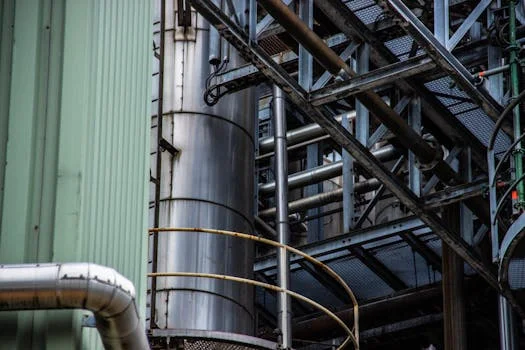
Compliance-ready wastewater treatment systems differ by footprint, capital cost, and how they take a shock load. Modern MBR systems are typically 60% smaller than conventional activated sludge plants that reach the same effluent. For industrial pre-treatment, DAF systems take shock loads and high suspended solids better than a bare biological tank. Remote sites and short-term capacity use integrated package plants that connect to the local sewer or outfall.
Operators comparing site discharge rules outside Europe can read industrial waste water discharge requirements for a different jurisdiction. US industry tables are set out under industrial effluent discharge. Neither page changes the EU nutrient dates in this guide.
On operational expenditure (OPEX), conventional activated sludge often spends more on aeration energy and on manual sludge handling. MBR systems carry membrane replacement cost, yet automated operation and less sludge can cut the total in some plants. For the collection side, compare prefabricated vs traditional pump stations before you size the upstream network, and on a tight retrofit the 60% footprint cut is what makes MBR fit.
| System Type | Footprint | Capital Cost (Relative) | Operational Complexity | Ideal Application |
|---|---|---|---|---|
| Conventional Activated Sludge + Tertiary | Large | Low | High | Large greenfield municipal plants |
| MBR System | Compact | High | Medium | Space-limited sites, direct reuse |
| DAF + Biological Process | Moderate | Medium | Medium | Industrial pretreatment or combined streams |
| Integrated Package Plant (WSZ) | Small | Medium | Low | Small communities (< 10,000 p.e.), remote sites |
Who This Is For and Next Step
Municipal utility engineers, EPC contractors, and procurement managers are the readers who must sign a process train against Directive (EU) 2024/3019. Lock the eu urban wastewater treatment directive compliance deadlines into the basis of design before membranes or DAF steel are ordered. If the site has a non-domestic load with high FOG, color, or salinity, read industrial wastewater treatment for the pretreatment selection.
Hospitals and clinical campuses with diel load swings should read Hospital Wastewater Treatment in Salalah: Systems, Compliance & Costs before copying a municipal diurnal curve. Clinical peaks are shorter than a town's morning peak, so a daily-average design misses the ammonia spike.
Selection checklist before you commit to a process train:
- Confirm design p.e. including seasonal and industrial contributions, and record whether the floor is 1,000 p.e. or more than 1,000 inhabitants.
- Identify whether the receiving water is a designated sensitive area.
- Decide between new build (greenfield) and retrofit (brownfield) layout.
- Set a target reuse rate to size MBR vs conventional tertiary.
- Lock in sludge-handling, biogas, and phosphorus recovery early, not after commissioning.
- Plan SCADA, near-real-time CSO reporting, and microplastics and PFAS monitoring.
Main cost drivers are civil works, membrane replacement cadence, aeration energy, and sludge haulage or digestion capital. Send influent data and the target effluent through the project inquiry form for a sized process proposal.
Frequently Asked Questions
The questions below cover dates, pre-treatment duty, and the phosphorus number to sign.
What is the nutrient deadline for plants above 150,000 p.e.?
Plants of 150,000 p.e. and above must reach at least 80% nitrogen removal by 2039 and 0.5 mg/L phosphorus from 2039, according to the Austrian Federal Ministry's summary of Directive (EU) 2024/3019. Earlier guidance used 1 January 2027 for this tier, 1 January 2029 between 50,000 and 150,000 p.e., and 1 January 2031 between 20,000 and 50,000 p.e. Transposition is 30 months after 1 January 2025, not a 2025 legal deadline.
Do industrial facilities have to pre-treat before a municipal sewer?
Yes, industrial facilities discharging to sensitive waters or to a municipal sewer are covered. Food processing and textiles are named for mandatory pre-treatment before the municipal network. A float step for FOG and TSS is the usual first unit where those loads would upset the city's biology. Direct dischargers meet the same nutrient dates as their agglomeration tier.
How is a sensitive area defined under the UWWTD?
Sensitive areas include waters at risk of eutrophication, all Natura 2000 protected habitats, and surface waters designated as bathing waters under EU bathing-water rules. A discharge into one of those waters is what pulls tertiary treatment forward for agglomerations above 10,000 p.e. The older concentration band cited for that case is total nitrogen below 10-15 mg/L and total phosphorus below 1-2 mg/L. Confirm the receiving-water designation before you drop tertiary treatment.
What phosphorus limit applies from 2039?
From 2039, plants of 150,000 p.e. and above face a phosphorus limit of 0.5 mg/L, and plants from 10,000 p.e. face 0.7 mg/L from 2045, according to the Austrian Federal Ministry. Earlier sensitive-area guidance used total nitrogen below 10 mg/L and total phosphorus below 1 mg/L for agglomerations above 10,000 p.e. The technology table already shows chemical dosing at TP < 0.5 mg/L for cold climates and industrial streams.
Can containerized systems meet UWWTD nutrient limits?
Yes, modern modular MBR and DAF-based containerized plants are built to reach tertiary treatment, including TN below 10 mg/L and TP below 1 mg/L. That matches the older sensitive-area band, not automatically the 0.5 mg/L phosphorus figure for 2039. State the design temperature next to the HRT, and reject a quote that only lists average BOD removal.