What Defines Containerized and Permanent Plants?
A containerized wastewater plant is a factory-tested treatment train inside an ISO shipping container; a permanent plant is a site-built concrete or steel facility. Containerized units commonly serve 10–2,000 m³/day, while permanent plants typically cover 1,000–50,000+ m³/day. Schedule, land area, and relocatable assets decide which delivery model fits.
Container trains usually arrive with MBR or SBR process gear, wiring, and controls already proven at the factory. Field crews connect inlet, outlet, power, and sludge lines, then run wet commissioning. Permanent plants need excavation, cast tanks or steel vessels, buildings, and staged mechanical install on site. Most plants we size below 1,000 m³/day lean toward modules when pad space or the start-up date is tight. The steel enclosure also shelters blowers, membranes, and instruments from weather that stresses open-yard equipment.
Capital and Operational Cost Comparison
Containerized plant CAPEX typically runs $150–300 per m³/day of rated capacity on 2024–2025 industrial project benchmarks. Permanent plant CAPEX typically runs $300–600 per m³/day under the same benchmark set. Civil works drop by up to 70% for modular builds, so overall CAPEX often falls 20–40% versus a site-built train of similar duty. That gap shrinks when the site already has deep tanks or buildings ready for reuse.
Over a 10-year lifecycle, permanent plants often post 15–25% lower OPEX per m³ on stable, high-volume duty. Large permanent trains can reach aeration energy of 0.5–0.7 kWh/m³ with optimized blowers and control. A 500 m³/day containerized MBR more often sits at 0.8–1.2 kWh/m³ for aeration. Full automation can cut modular labor needs by about 50%, with many sites budgeting 2–4 operator hours per week versus 8–12 hours for a conventional permanent plant.
| Cost Parameter | Containerized System | Permanent Plant |
|---|---|---|
| CAPEX per m³/day | $150 - $300 | $300 - $600 |
| Civil Works Cost (% of CAPEX) | 10-20% | 30-50% |
| 10-Year OPEX per m³ | $0.45 - $0.65 | $0.35 - $0.55 |
| Operational Labor (hrs/week) | 2-4 | 8-12 |
Footprint and Installation Timeline
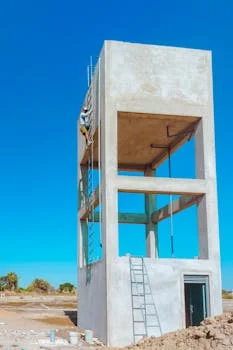
Modular wastewater systems use about 60% less land than an equal-capacity permanent plant. One 40-foot container (12 m L × 2.4 m W) can treat up to 500 m³/day, while a conventional plant for that flow often needs 300–400 m². These plug-and-play wastewater packages usually install and commission in 4–8 weeks after fabrication. A permanent plant commonly needs 6–12 months for design, permits, civil works, mechanical install, and start-up.
Crane set, utility tie-ins, and wet testing replace months of excavation and concrete pours. Noise and dust windows shrink on operating industrial sites. Relocatability stays with the modular asset; permanent civil works stay fixed in place.
| Parameter | Containerized System | Permanent Plant |
|---|---|---|
| Footprint for 500 m³/day | ~30 m² | 300-400 m² |
| Typical Installation Timeline | 4-8 weeks | 6-12 months |
| Relocatable | Yes | No |
Performance and Effluent Quality
Modern containerized MBR systems routinely deliver BOD <10 mg/L, COD <50 mg/L, and TSS <5 mg/L under design loading. Those levels match typical non-potable reuse targets referenced against WHO guidance and US EPA reuse practice. Permanent conventional activated sludge (CAS) trains more often land at BOD <20 mg/L and TSS <30 mg/L, then need tertiary filtration to hit reuse-grade TSS. The integrated nature of MBR technology also cuts footprint by about 60% versus a CAS plant of equal capacity while tightening effluent solids control.
Membrane barriers in MBR packages commonly hold fecal coliform below 10 CFU/100 mL when membranes and CIP stay healthy. That barrier often removes a separate UV or chlorine stage for irrigation or cooling-tower makeup, though local permits still set the final disinfection rule. Process choice—not the building type—sets effluent quality. Pairing MBR with factory QC is why many reuse projects shortlist modular trains first.
| Effluent Parameter | Containerized MBR System | Permanent CAS Plant | Reuse Standard (Typical) |
|---|---|---|---|
| BOD (mg/L) | < 10 | < 20 | < 10 |
| COD (mg/L) | < 50 | < 100 | < 50 |
| TSS (mg/L) | < 5 | < 30 | < 5 |
Scalability and Future-Proofing
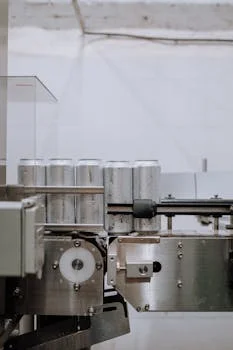
Modular trains scale in discrete capacity steps. Operators add a second or third unit on the same manifold when production rises, with short downtime and no new major civil package. Expanding a permanent plant usually means redesign, new permits, and another 6–12 month construction cycle. That modular path suits decentralized treatment at mining camps, staged industrial parks, and resorts that grow in phases.
Some owners lease or stage-finance extra modules so capacity tracks occupancy instead of one oversized civil build. A resort can start with one unit, add a second for peak season, then idle or relocate surplus capacity in the off-season. Permanent infrastructure cannot match that reverse gear without stranded concrete volume.
Maintenance and Operational Complexity
Factory-built plants ship with fewer field interfaces and a pre-wired PLC. Maintenance frequency often runs 30–50% lower than a conventional permanent plant of similar duty, and many sites run without a dedicated full-time operator. Permanent plants still need daily walk-downs for process tuning, clarifier checks, and equipment rounds. Standardized parts shorten repair lead times; custom tank fittings on permanent plants can stretch outages when a unique casting or weldment is on order.
Packages with integrated chemical dosing and SCADA over 4G/5G let operators watch dissolved oxygen, sludge proxies, and pump status off-site. Parameter tweaks and first-pass troubleshooting then happen without a travel day. Remote visibility does not remove membrane CIP discipline or blower service intervals—it only cuts unnecessary site visits.
Containerized Wastewater Plant Decision Guide
Modular container systems fit projects that must treat water in under 6 months, face scarce land, plan phased growth, sit on remote or temporary sites, or need reuse-grade effluent. Temporary camps, emergency response, and pilot trains fall in the same bucket. Permanent works fit when average flow stays above 5,000 m³/day, the site is fixed for decades, lowest 20-year OPEX dominates, and CAPEX headroom exists for civil works. Complex, highly variable industrial loads that need long hydraulic retention times and bespoke tank volumes also favor permanent concrete.
Hybrid layouts work well in practice: modular MBR units trim peaks or hard side streams while a permanent plant carries base flow. Run the checklist below before locking the delivery model.
- Confirm design flow band (m³/day) and peak factor for the next 5–10 years.
- Map available pad area versus a 40-ft module grid or a full civil footprint.
- Set the must-run date; if under 6 months to water, favor factory-built modules.
- Write the effluent permit limits, including reuse pathogen targets if any.
- Compare 10-year OPEX (energy, labor, membranes, chemicals) at your actual load factor.
- Decide whether the asset must relocate, lease, or expand in discrete steps.
- Score industrial variability: if HRT and tank geometry must be custom, weight permanent higher.
| Project Characteristic | Recommended System |
|---|---|
| Timeline < 6 months | Containerized |
| Flow > 5,000 m³/day | Permanent |
| Phased expansion planned | Containerized |
| Lowest 20-year OPEX required | Permanent |
| Reuse-quality effluent needed | Containerized (MBR) |
Who This Is For / Next Step
Plant engineers, EPC leads, and procurement managers sizing 10–5,000+ m³/day municipal or industrial trains should use this comparison. Buyers needing only a septic-scale package under about 10 m³/day, or a multi-train mega-plant already locked into civil design, should look at other page types. When flow, footprint, and permit limits are drafted, send the duty data through our request a quote form so CAPEX, OPEX, and delivery weeks can be checked against site conditions.
Frequently Asked Questions
What is the lifespan of a modular treatment unit?
A maintained containerized plant typically lasts 15–20 years in service. The steel container shell can exceed 25 years when coatings and drainage stay intact. Internal mechanical and membrane assets more often need major refurbishment or replacement on a 7–15 year cycle, depending on load, CIP practice, and spare-parts discipline.
Can containerized plants meet EPA or EU discharge standards?
Yes—MBR-based modular units are commonly engineered to meet US EPA discharge limits and EU Urban Wastewater Directive 91/271/EEC targets for the design wastewater. Third-party certifications such as NSF listings apply only where the specific unit and duty are certified. Always match the local permit’s BOD, COD, nutrient, and pathogen numbers to the process guarantee, not to the container shell.
Are containerized systems suitable for industrial wastewater?
Yes, when the process train matches the waste: DAF for oils and solids, MBR for high effluent quality, and chemical dosing for pH or coagulation. Food, textile, and pharmaceutical streams are routine duties when equalization and pretreatment are sized correctly. Corrosion-resistant coatings and metallurgy are specified when the effluent is acidic or hot, rather than relying on a standard municipal liner.
How much space does a 100 m³/day modular plant need?
Plan on one 40-ft container footprint (12 m × 2.4 m) plus about a 5 m access strip, or roughly 100–120 m² total. Add space for a generator, chemical totes, or sludge handling if those skids sit outside the box. Exact pad layout still follows local fire, chemical storage, and tanker access rules.
Do permanent plants have better effluent quality?
No. Effluent quality tracks the process, not whether tanks sit in concrete buildings or containers. A containerized MBR system will outperform a conventional permanent activated-sludge plant on TSS and pathogen barriers under comparable design loads. Factory assembly can improve wiring and leak checks, but only a correct process design holds the permit.