MBR vs Conventional Activated Sludge Performance
MBR systems deliver <5 mg/L TSS and <5 mg/L BOD, versus 20–30 mg/L TSS and 15–25 mg/L BOD for CAS without tertiary steps. MBR vs conventional activated sludge also shows a 60% smaller footprint and about 30% less sludge, at 0.7–1.2 kWh/m³ versus about 0.25 kWh/m³ aeration for CAS, with 25–35% higher upfront CAPEX (HydropureWater field data, 2025).
Choose MBR when reuse quality or very low discharge limits apply. Choose CAS when capital is tight and tertiary filtration is an acceptable add-on.
Which Parameters Really Separate MBR from CAS?
MBR permeate TSS typically stays below 5 mg/L, so many industrial reuse duties can run without a separate tertiary solids barrier (HydropureWater field data, 2025). Conventional Activated Sludge (CAS) secondary effluent usually sits at 20–30 mg/L TSS and 15–25 mg/L BOD when no filtration polish is added. The gap comes from the membrane barrier, which physically excludes suspended solids and most microorganisms.
High-quality reuse schemes often target TSS below 5 mg/L for irrigation or process water makeup. MBR meets that solids target in one biological step for most plants we size. With biological nutrient removal (BNR) design, MBR trains commonly reach TN <3 mg/L and TP <0.2 mg/L and earn 3–6 log pathogen credits. CAS usually needs clarification plus filtration and disinfection to match those reuse-class solids and pathogen goals, which adds footprint and control points.
| Effluent Parameter | MBR Permeate (Typical) | CAS Secondary Effluent (Typical) | Applicable Reuse Class (ISO 20761 Equivalent) |
|---|---|---|---|
| Total Suspended Solids (TSS) | <5 mg/L | 20–30 mg/L | High-quality reuse (e.g., irrigation, industrial process water) |
| Biochemical Oxygen Demand (BOD₅) | <5 mg/L | 15–25 mg/L | High-quality reuse |
| Total Nitrogen (TN) | <3 mg/L (with BNR) | 10–20 mg/L (variable) | Environmental discharge, some reuse |
| Total Phosphorus (TP) | <0.2 mg/L (with BNR) | 1–5 mg/L (variable) | Environmental discharge, some reuse |
| Log-Removal Credits (Pathogens) | 3–6 log (Viruses, Bacteria) | <1 log (Particulate) | Enables unrestricted urban/agricultural reuse |
How Does MBR Handle Sludge Separation?
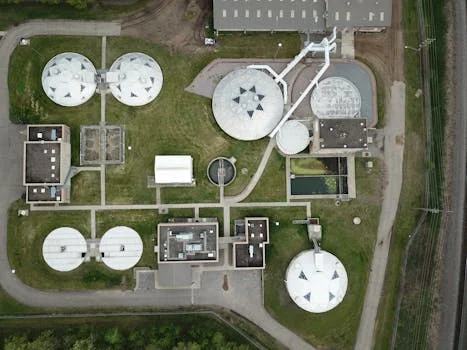
MBR sludge separation uses a physical membrane barrier, typically 0.04–0.1 μm PVDF flat-sheet modules, instead of a gravity secondary clarifier (HydropureWater technical analysis, 2025). CAS depends on clarifier overflow rates of about 0.8–1.2 m³/m²·h and is sensitive to sludge bulking and SVI swings. Removing the clarifier is what unlocks the compact MBR layout on brownfield industrial sites.
Higher MLSS follows from that barrier: MBR commonly runs 8–12 g/L, while CAS stays near 3–5 g/L to protect clarifier settleability. Most industrial trains we size hold MBR SRT at 15–30 days versus 5–15 days for CAS. Longer SRT supports nitrification–denitrification in a tighter tank set and cuts excess sludge through more endogenous decay. Variable industrial influent is still a fouling risk, but solids breakthrough is no longer tied to a sludge blanket upset.
| Design Parameter | MBR System | Conventional Activated Sludge (CAS) |
|---|---|---|
| Solids Separation | Membrane filtration (e.g., 0.04–0.1 μm PVDF) | Gravity clarification (overflow rate 0.8–1.2 m³/m²·h) |
| Mixed Liquor Suspended Solids (MLSS) | 8–12 g/L | 3–5 g/L |
| Sludge Retention Time (SRT) | 15–30 days | 5–15 days |
| Footprint Requirement | Compact (60% smaller) | Large (requires secondary clarifier) |
| Biological Nutrient Removal | Integrated (long SRT) | Often requires separate anoxic/anaerobic zones |
Engineers often consider upgrading existing CAS systems with PVDF flat-sheet membranes with 0.1 μm pores for submerged MBR upgrades to enhance capacity and effluent quality.
What Energy Does Activated Sludge COD Removal Need?
Activated sludge COD removal energy is dominated by aeration. CAS aeration alone is often near 0.25 kWh/m³ of treated water when no tertiary filters are counted (HydropureWater field data, 2025). Full MBR specific energy is higher at 0.7–1.2 kWh/m³ because membrane scour air, permeate pumping, and backwash sit on top of biological oxygen demand.
Large municipal modeling with tertiary filtration on the CAS train reports baseline SEC near 0.40 kWh/m³ for CAS and 0.52 kWh/m³ for optimized MBR above about 10 MLD (The MBR Site / Judd, 2024). Industrial package plants we commission usually sit toward the higher MBR band above, especially when scour air is oversized for peak flux. Chemicals for MBR CIP remain part of the OPEX picture: citric acid at 2–4 g/m²·week for organic fouling and NaOCl at 500–1,000 mg/L every 3–6 months for irreversible fouling.
Sludge mass still moves the total cost needle. Longer SRT and higher MLSS push MBR excess sludge to 0.15–0.25 kg DS/kg BOD removed, versus 0.3–0.4 kg DS/kg BOD for CAS. Lower cake volume cuts dewatering, haul, and Scope 1–2 emissions tied to sludge logistics. Facilities that need to compare sludge dewatering options after biological treatment should size the dewatering island from these yield ranges, not from a generic rule of thumb.
| Operating Metric | MBR System | Conventional Activated Sludge (CAS) |
|---|---|---|
| Specific Energy Consumption | 0.7–1.2 kWh/m³ | 0.25 kWh/m³ (aeration only) |
| Excess Sludge Production | 0.15–0.25 kg DS/kg BOD removed | 0.3–0.4 kg DS/kg BOD removed |
| Membrane Cleaning Chemicals | Citric acid (2–4 g/m²·week), NaOCl (500–1000 mg/L every 3–6 months) | N/A |
| Estimated CO₂-e/m³ (Scope 1+2) | 0.3–0.6 kg CO₂-e/m³ | 0.15–0.3 kg CO₂-e/m³ (excluding tertiary) |
CAPEX and OPEX Cost Ranges
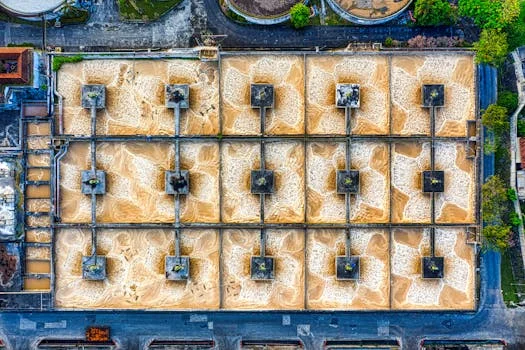
MBR CAPEX typically runs 25–35% above CAS because membrane modules, tanks, scour blowers, permeate pumps, and controls add capital (HydropureWater market analysis, 2025). Industrial ranges used here are 1,200–1,800 USD/m³·d for MBR versus 800–1,200 USD/m³·d for CAS without tertiary filtration. Those figures cover installed process equipment, not every site civil package.
OPEX follows a different curve. MBR OPEX is usually 0.35–0.45 USD/m³ with energy, CIP chemicals, and skilled membrane care included. CAS OPEX often lands at 0.20–0.30 USD/m³ for aeration, sludge handling, and routine labour when tertiary steps are excluded. Add media filters or UF after CAS to hit reuse TSS, and both CAPEX and OPEX climb toward the MBR band.
Membrane replacement still lands every 7–10 years at about 8–12% of initial CAPEX. A 20-year NPV at 6% discount often closes when sludge disposal is expensive, discharge limits are strict, or reuse water displaces purchased makeup. An MBR Membrane Bioreactor Wastewater Treatment System packaged for <5 mg/L TSS in a compact footprint is the usual starting point for that lifecycle screen.
| Cost Metric | MBR System (2025) | Conventional Activated Sludge (CAS) (2025) |
|---|---|---|
| CAPEX (USD/m³·d capacity) | 1,200–1,800 | 800–1,200 (excluding tertiary) |
| OPEX (USD/m³) | 0.35–0.45 | 0.20–0.30 (energy + labour + chemicals) |
| Membrane Replacement Cost | 8–12% of CAPEX (every 7–10 years) | N/A |
| NPV (20-yr @ 6% discount) | Higher initial, potentially competitive long-term | Lower initial, higher long-term with tertiary needs |
Decision Matrix: When MBR Wins and When CAS Wins
Project selection between MBR and Conventional Activated Sludge should start from constraints, not from a single unit-cost line (HydropureWater engineering guide, 2025). Weight each criterion from 1 (low) to 5 (high), score each technology from 1 to 5, then compare totals. Scores above about 70% of the weighted maximum usually favor MBR; scores below about 40% usually favor CAS.
| Criterion | Weight (1-5) | MBR Score (1-5) | CAS Score (1-5) | MBR Weighted Score | CAS Weighted Score |
|---|---|---|---|---|---|
| Footprint Constraint (Limited Space) | 5 | 5 | 1 | 25 | 5 |
| Effluent Reuse / Strict Discharge Limits | 5 | 5 | 2 | 25 | 10 |
| Sludge Disposal Cost (High) | 4 | 4 | 2 | 16 | 8 |
| Energy Target (Low Consumption) | 3 | 2 | 5 | 6 | 15 |
| Capital Limit (Strict Budget) | 4 | 2 | 5 | 8 | 20 |
| Total Score (Max 100) | 80 | 58 |
Worked example: 5,000 m³/day textile WWTP needing reuse
A textile mill plans 5,000 m³/day treatment on limited land with dyeing-water reuse as a corporate mandate. Sludge disposal is expensive, power is moderate, and the capital budget is neither open nor frozen.
- Footprint Constraint: Weight 5. MBR score 5; CAS score 1.
- Effluent Reuse: Weight 5. MBR score 5; CAS score 2 without tertiary.
- Sludge Disposal Cost: Weight 4. MBR score 4; CAS score 2.
- Energy Target: Weight 3. MBR score 2; CAS score 5.
- Capital Limit: Weight 4. MBR score 2; CAS score 5.
Weighted totals are 80 for MBR and 58 for CAS. Reuse quality and land drive the choice even though energy and CAPEX favor CAS on paper.
Selection Checklist and Next Step
Who this is for: EPC and plant engineers comparing membrane bioreactors against CAS for industrial reuse, tight plots, or strict TSS/BOD permits. Who should look elsewhere: sites with cheap power, soft discharge limits, and ample land for a simple CAS clarifier train. Teams already choosing between sequencing-batch options should see head-to-head MBR vs SBR for industrial wastewater.
Before you freeze the P&ID, confirm these items:
- Permit or reuse TSS/BOD/TN/TP limits and pathogen credits
- Available plot area and whether a secondary clarifier fits
- Sludge haul/disposal unit cost and cake dryness target
- Power tariff and whether scour air can be optimized
- CAPEX ceiling and membrane replacement reserve (7–10 years)
- Influent FOG, peak COD, and shock-load pattern
- Need for DAF pretreatment ahead of biology on oily streams
If those constraints still point to a membrane bioreactor package, send flow, loads, and the reuse spec through our request a project quote form for a sized option set.
Frequently Asked Questions
What is the typical lifespan of MBR membranes?
MBR membranes typically last 7–10 years when CIP and maintenance cleaning stay on schedule. Influent FOG, abrasive solids, and chronic under-scouring shorten that window. Plants that keep TMP trends visible and run weekly acid or oxidant cleans on time usually reach the upper end without early module replacement.
Can existing CAS plants be upgraded to MBR?
Yes. Many CAS aeration basins can host submerged modules after clarifier duty is retired or bypassed. The same footprint often supports about 2–3× hydraulic capacity because MLSS can rise from 3–5 g/L to 8–12 g/L. Budget for scour blowers, permeate pumps, and membrane tanks, not only for the cassettes.
How does MBR handle fluctuating industrial loads compared to CAS?
MBR tolerates load swings better because high MLSS and long SRT buffer COD and ammonia shocks. Effluent solids stay membrane-limited instead of clarifier-limited. CAS can lose settleability during toxic or high-FOG spikes, which pushes TSS and BOD out of permit even when biology recovers.
Is MBR always more expensive than CAS over the long term?
No. MBR starts higher on CAPEX and energy, but sludge yield of 0.15–0.25 kg DS/kg BOD versus 0.3–0.4 kg DS/kg BOD for CAS, plus avoided tertiary filtration, can equalize 20-year NPV at 6% discount. High disposal fees and reuse water value are the usual tipping points.
What are the main advantages of MBR for water reuse applications?
MBR holds permeate near <5 mg/L TSS and <5 mg/L BOD, supplies 3–6 log pathogen credits, and removes the secondary clarifier from the reuse train. That single-step solids barrier cuts polishing stages for many industrial recycle loops. Pair it with nutrient control when TN or TP limits are written into the reuse permit.