
Why Hopewell, Virginia Is a Special Case for Chemical Plant Pretreatment
Hopewell, Virginia is one of the most heavily documented chemical-manufacturing discharge corridors in the United States, and the EPA Site Visit Report dated June 22, 2016 puts the regulatory stakes in writing (per EPA Site Visit Report, 2016-06-22). The Hopewell Regional Wastewater Treatment Facility was constructed in the mid-1970s and went online in 1977 under the Clean Water Act, with a design capacity of 50 MGD against a current average daily flow of 27 MGD — meaning roughly 46% of permitted hydraulic capacity is still available, but the headroom is allocated across the seven named industrial users. Those users, as listed in the EPA memo, are Virginia American Water, Honeywell, Ashland Chemical, West Rock, Fort Lee, the City of Hopewell, and Evonik Chemical.
The regulatory anchor for any new or expanding plant in this catchment is 40 CFR 403.8, the general pretreatment regulations that require POTWs above a certain size to implement an approved program. Within that framework, chemical manufacturers in Hopewell must also meet categorical effluent standards in 40 CFR Part 414 (organic chemicals, plastics, and synthetic fibers), Part 415 (inorganic chemicals manufacturing), and Part 417 (soap and detergent manufacturing) where their SIC/NAICS code overlaps those subparts. A separate but instructive precedent: the EPA memo confirms that Hopewell Regional acts as the contractual agent for West Rock to meet the 92% methanol reduction requirement under 40 CFR §63.446(e) of the NESHAP rules. That shared-responsibility model is the precedent an EHS manager should cite when negotiating categorical compliance with the POTW. The bottom line: Hopewell is not a generic "industrial wastewater" setting — it is a federally named, EPA-audited pretreatment program, and the limits downstream are tighter and more enforceable than at most U.S. POTWs.
The Pretreatment Limits a Chemical Plant Near Hopewell Must Hit
A chemical plant discharging to Hopewewell Regional must hit two parallel ceilings simultaneously: the federal categorical standards under 40 CFR 403.6 and the local limits issued by the POTW under 40 CFR 403.5(d) (per 40 CFR 403.5/403.6). The categorical track applies to any Significant Industrial User (SIU), which 40 CFR 403.3 defines as a user discharging more than 25,000 gpd of process wastewater, contributing 5% or more of POTW hydraulic or organic capacity, or meeting other EPA designation criteria. At a 27 MGD POTW, the 5% threshold alone is roughly 1.35 MGD — so most medium and large chemical plants near Hopewell are SIUs by default, and the categorical standards table applies on top of local sewer-use ordinance limits. The local track fills the gaps: pass-through, interference, and sludge-management ceilings for pollutants that the categorical subparts do not already pin down.
The numbers an EHS manager has to design against look like the representative ceilings below. Always confirm the exact values against Hopewell Regional's current published sewer-use ordinance before procurement; ranges shown are typical for chemical SIUs discharging to a 40 CFR 403.8 POTW.
| Parameter | Daily max (typical SIU ceiling) | Regulatory source |
|---|---|---|
| pH | 5.0–12.0 (instantaneous); pre-discharge adjustment mandatory per EPA memo | 40 CFR 403.5 / EPA Hopewell Site Visit 2016 |
| Total suspended solids (TSS) | 250–400 mg/L | Local sewer-use ordinance |
| COD / BOD5 | 300–600 mg/L daily max | Local sewer-use ordinance / categorical subpart |
| Oil & grease | 50–100 mg/L | 40 CFR Part 414 / local limits |
| Sulfide (S²⁻) | 1–2 mg/L | Local limits (corrosion / pass-through) |
| Total cyanide | 1–5 mg/L | 40 CFR Part 414 / local limits |
| Chromium (total) / nickel / zinc / copper | 1–5 mg/L combined; see 40 CFR §414.91 table for subpart-specific values | 40 CFR Part 414 (organic chemicals) and Part 415 (inorganic chemicals) |
| Methanol | Per §63.446(e) NESHAP reduction requirement; West Rock precedent: 92% reduction handled via POTW contract | 40 CFR §63.446(e) |
Two operational facts are non-negotiable. First, the EPA memo states that all industrial users must adjust pH of the wastewater prior to discharge to the city sewers — a baseline requirement, not a design preference. Second, 40 CFR Part 414 subparts 414.10 through 414.91 carry the specific organic-chemicals categorical standards table (toxic organics, BOD, TSS, pH, cyanide, metals), and 40 CFR Part 415 covers inorganic-chemicals categories. A defensible compliance plan maps every internal effluent target to a specific subpart line and to a local ordinance clause, then audits both quarterly.
Step-by-Step Process Train That Gets You to Compliance
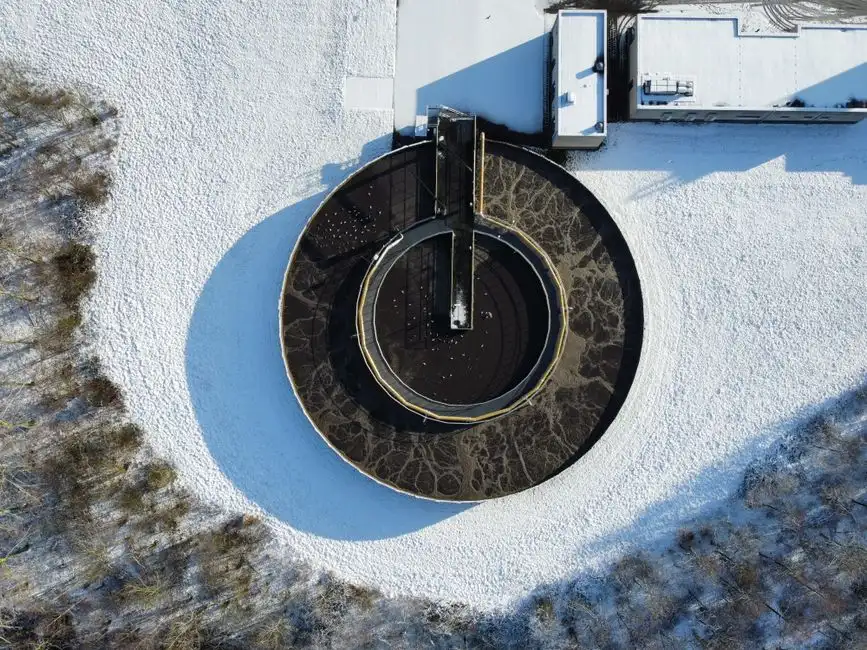
A chemical plant near Hopewell can reach categorical and local compliance with a six-stage train that mirrors Hopewell Regional's own headworks and adds the polishing steps a high-strength chemical effluent requires. The numbers below are typical design parameters, not vendor-specific; a process engineer should run a bench- and pilot-scale treatability study before locking in final sizing.
Step 1 — Influent screening. A continuous-duty rotary mechanical bar screen with 3–6 mm aperture protects downstream pumps and grit chambers. This stage mirrors the headworks listed in the EPA memo (bar screens, grit chambers, Parshall flume) and is sized for peak site flow, not average daily flow. A GX-series rotary mechanical bar screen at 3 mm aperture is a typical choice for chemical-plant headworks.
Step 2 — Equalization and pH adjustment. A 24–48 hour hydraulic retention time (HRT) surge basin with PLC-controlled acid/alkali feed is the lowest-cost insurance against slug loads. Hold pH in the 6.5–9.0 band before any further biological or chemical step; the EPA memo makes pH adjustment a baseline requirement. A PLC-controlled automatic chemical dosing skid with redundant pumps handles acid/alkali, coagulant, flocculant, and methanol-scavenger injection from one panel.
Step 3 — Primary clarification / DAF. Dissolved air flotation (DAF) is the workhorse for emulsified organics, oil & grease, and suspended solids. Typical design: hydraulic surface loading 5–20 m/h, air-to-solid (A/S) ratio 0.005–0.060 kg air/kg solids. A lamella clarifier is the right alternative when the stream is high-solids inorganic. A HydropureWater dissolved air flotation system is typical equipment for this step.
Step 4 — Biological treatment. Conventional activated sludge runs at F/M 0.2–0.5, HRT 6–12 h, SRT 5–15 d for COD/BOD/ammonia reduction. For tighter effluent targets (especially BOD < 30 mg/L or TN < 10 mg/L), an MBR delivers a <1 μm effluent that cuts downstream polishing load. MBR design: flux 10–25 LMH, MLSS 8,000–12,000 mg/L, transmembrane pressure controlled under 0.3 bar. A HydropureWater integrated MBR membrane bioreactor is a typical equipment package for the biological stage.
Step 5 — Targeted chemical precipitation / resin polishing. Use pH-window precipitation for metals per 40 CFR Part 414 (Cr, Ni, Zn, Cu): raise pH to 8.5–9.5 for Ni and Zn, 9.0–9.5 for Cu, and reduce Cr(VI) to Cr(III) with FeSO4 or Na2S2O5 before raising pH. Ion-exchange or selective resin polishing can drop trace metals below 0.1 mg/L when the categorical ceiling is tight.
Step 6 — Final filtration and disinfection. Multi-media (sand/anthracite/garnet) or activated carbon polishing removes residual TSS and trace organics. A chlorine dioxide generator at 1–5 mg/L ClO2 residual is preferred over Cl2 gas for organic-rich chemical effluent because ClO2 does not form trihalomethanes (THMs) — protecting downstream residual-chlorine limits at Hopewell Regional.
| Stage | Unit operation | Key design parameter | Target removal |
|---|---|---|---|
| 1 | Rotary bar screen | 3–6 mm aperture | Solids > 3 mm |
| 2 | Equalization + pH adjust | HRT 24–48 h, pH 6.5–9.0 | Flow / load dampening, pH compliance |
| 3 | DAF or lamella | Surface loading 5–20 m/h, A/S 0.005–0.060 | O&G 50–100 mg/L → < 25 mg/L |
| 4 | Activated sludge or MBR | MBR flux 10–25 LMH, MLSS 8,000–12,000 mg/L | COD 600 → < 50 mg/L; BOD 300 → < 5 mg/L |
| 5 | Chemical precipitation / resin | pH 8.5–9.5, stoichiometric FeSO4 | Total metals to < 1 mg/L (verify per subpart) |
| 6 | Multi-media filter + ClO2 | ClO2 1–5 mg/L residual | Residual TSS / pathogen credit |
For a parallel benchmark of how a different U.S. chemical corridor designs the same train, see our Cleveland-area chemical plant pretreatment guide and the 2026 petrochemical wastewater discharge standard comparison. For a single-company case study on pharma-and-chem pretreatment, the Bayer chemical plant wastewater process guide is a useful reference.
How to Select the Right Equipment for a Hopewell Chemical Plant
Selection starts with influent character, not vendor brochures. Use the decision rules below to shortlist equipment packages, then take a final pass on operating cost, redundancy, and compliance documentation.
- High oil & grease or emulsified load (≥ 200 mg/L) → DAF first, with polymer make-up and a saturator recycle ratio of 20–50% of forward flow.
- High suspended solids or inorganic load (≥ 500 mg/L TSS, low organics) → lamella clarifier first, with sludge recirculation to a plate-and-frame filter press.
- High COD with tight effluent targets (BOD < 30 mg/L or NH3-N < 10 mg/L) → MBR over conventional activated sludge; expect 30–40% smaller footprint and tighter effluent, at the cost of higher membrane replacement (typically 5–8 year membrane life with proper maintenance).
For the screening step, pair a continuous-duty rotary mechanical bar screen at the headworks (3 mm aperture) with a grit chamber sized for 27 MGD or your site-specific peak flow — match the POTW's headworks design logic so the upstream solids load you send downstream is consistent. For chemical injection (pH adjusters, coagulants, flocculants, methanol scavengers, scale inhibitors), specify a PLC-controlled automatic dosing skid with redundant pumps, real-time pH/ORP feedback, and a calibration log. For sludge handling downstream of the clarifier, a HydropureWater plate-and-frame filter press (1–500 m² filter area) is the standard choice for chemical-plant sludge at Hopewell; design to a filter cake moisture target below 65% to keep hauling costs down and to meet POTW sludge acceptance criteria. For final disinfection where chlorine demand is high (organic-rich chemical effluent), prefer a ClO2 generator over Cl2 gas to avoid trihalomethane formation that would jeopardize the POTW's residual-chlorine limits.
| Influent characteristic | First unit process | Equipment reference |
|---|---|---|
| O&G / emulsified organics | DAF | Dissolved air flotation system |
| High TSS / inorganic | Lamella clarifier | Lamella plate pack + sludge hopper |
| High COD / tight BOD or NH3-N target | MBR | Integrated MBR membrane bioreactor |
| Variable pH / slug load | Equalization + dosing skid | PLC-controlled automatic chemical dosing skid |
| Solids > 3 mm | Rotary bar screen | GX-series rotary mechanical bar screen |
| Chemical sludge (post-clarifier) | Plate-and-frame filter press | HydropureWater plate-and-frame filter press |
| High chlorine demand effluent | ClO2 disinfection | Chlorine dioxide generator |
Self-Audit Checklist Before You Sign the Discharge Permit
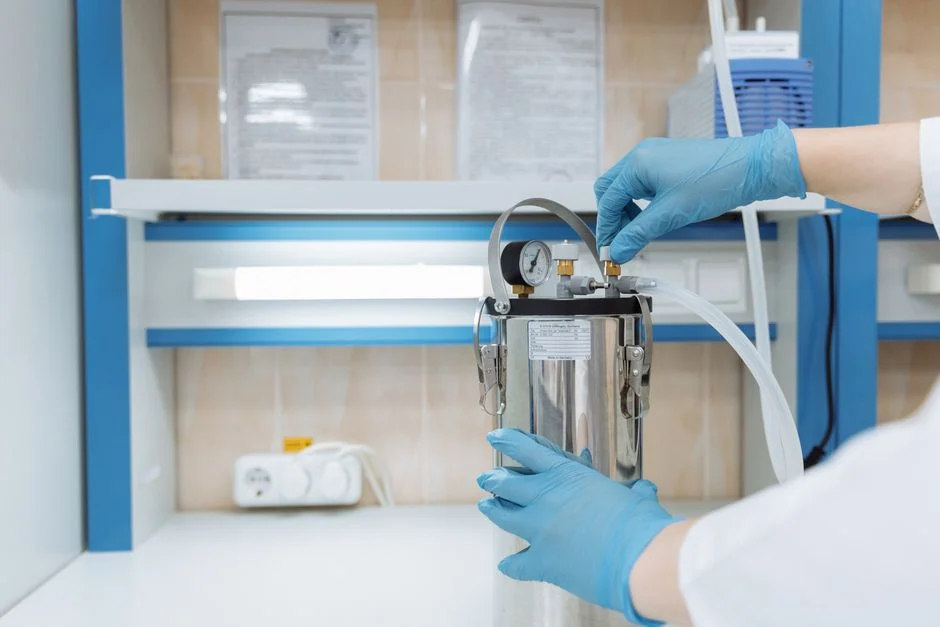
Run these five checks in your own plant this week, before you sign the discharge permit. Each one ties to a specific 40 CFR citation or to the EPA Site Visit Report on Hopewell Regional (2016-06-22).
- Verify your facility is a Significant Industrial User under 40 CFR 403.3 — the >25,000 gpd threshold and the 5%-of-POTW-flow test are the most common triggers. At 27 MGD, the 5% test trips at roughly 1.35 MGD.
- Confirm the categorical subpart (40 CFR §414.10 through §414.91, §415, or §417) that matches your SIC/NAICS code; tie every internal effluent target to a specific subpart line and a local ordinance clause.
- Verify continuous pH monitoring at the sewer discharge — the EPA memo makes pH adjustment a baseline requirement at Hopewell, not optional.
- Document baseline mass-loading for each regulated pollutant: 24-hour composite for general parameters, 8-hour grab for volatiles, before submitting the permit application.
- Build a 24/7 slug-control plan with equalization tank volume sized to your largest credible batch release; without this, the POTW's pass-through and interference prohibitions under 40 CFR 403.5(a) become a real liability.
Frequently Asked Questions
What categorical standards apply to a chemical plant discharging to Hopewell Regional POTW?
40 CFR Part 414 (organic chemicals, plastics, and synthetic fibers) and Part 415 (inorganic chemicals manufacturing) cover the dominant chemical SIC codes, with Part 417 (soap and detergent) as a secondary subpart where applicable. Hopewell Regional operates an EPA-approved pretreatment program under 40 CFR 403.8, and each SIU must meet the categorical effluent standards for its industrial source category per the EPA Site Visit Report (2016-06-22).
Is a chemical plant near Hopewell automatically an SIU?
Most medium and large chemical plants are. Under 40 CFR 403.3, an SIU includes any user discharging more than 25,000 gpd of process wastewater, or contributing 5% or more of POTW hydraulic or organic capacity — at Hopewell Regional's 27 MGD average flow, the 5% threshold is roughly 1.35 MGD, so process discharges above that level are SIUs by default and subject to categorical standards.
What is the methanol pretreatment precedent at Hopewell?
Per the EPA Site Visit Report, Hopewell Regional acts as the contractual agent for West Rock to meet the 92% methanol reduction requirement under 40 CFR §63.446(e). That shared-responsibility model — POTW + industrial user contracting to deliver NESHAP compliance — is the established precedent for categorical compliance in this catchment.
Why prefer chlorine dioxide over chlorine gas for disinfection at a chemical plant?
ClO2 at 1–5 mg/L residual disinfects without forming trihalomethanes (THMs), which organic-rich chemical effluent would otherwise generate in large quantities. THMs jeopardize both the plant's residual-chlorine limits and Hopewell Regional's downstream NPDES permit, so a ClO2 generator is the standard choice over Cl2 gas for high-chlorine-demand chemical streams.