Why Bayer Runs a Multi-Barrier Wastewater Train
Bayer treats wastewater at its chemical and pharmaceutical plants with a multi-barrier train: source segregation, equalization, primary/chemical precipitation, biological nutrient removal (nitrification/denitrification), advanced oxidation with ozone or ozone/H2O2 for trace active pharmaceutical ingredients (APIs), MBR or activated-carbon polishing, and selective reverse osmosis for reuse. The chain targets COD <250 mg/L post-biological, <50 mg/L post-MBR, AOX below 1 mg/L, and >90% removal of trace active ingredients before surface-water discharge.
A single activated-sludge step is not enough for chemical and pharma effluent. Pharmaceutical wastewater carries APIs, adsorbable organic halides (AOX), residual solvents, and inorganic salts that pass through conventional biology with only partial removal. A multi-barrier train — defined here as a sequential set of physical, chemical, and biological unit operations in which each stage removes a different contaminant class — lets the plant meet COD, nutrient, halogenated-organics, and micropollutant limits simultaneously, instead of overloading any one process. The AMBIO review by Rogowska et al. (2019) confirms the gap: pharmaceuticals and personal-care products are only partially removed in standard wastewater treatment plants, with treated effluents characterized almost exclusively by bulk parameters such as BOD, COD, and TSS while trace organics pass through unregulated. That evidence base is what motivates advanced oxidation and membrane polishing downstream of biology at a Bayer-class site.
Influent Characterization That Drives the Design
Each unit operation in the train exists because a specific fraction of the influent has to be removed before the next stage can function. Typical raw wastewater from a Bayer chemical or pharmaceutical site sits in the following bands, which the engineer should treat as design baselines rather than site-specific guarantees:
| Parameter | Typical Influent Range | Primary Driver of Design |
|---|---|---|
| COD | 1,500–5,000 mg/L | Biological load sizing, oxygen demand |
| BOD | 600–2,000 mg/L | Carbonaceous BOD in activated sludge |
| TSS | 200–800 mg/L | Primary clarifier and MBR flux |
| AOX | 5–40 mg/L | AOX discharge limit, drives AOP/AC polishing |
| Total Nitrogen | 50–200 mg/L | Nitrification/denitrification volume |
| Trace APIs | 1–100 µg/L individual species | AOP dose selection, RO membrane spec |
| Sulfate / Chloride | 500–3,000 mg/L | Corrosion allowance, RO brine volume |
Source segregation is the first engineering decision. High-strength solvent and API mother-liquor streams are kept out of the sanitary stream and sent to dedicated stripping, recovery, or thermal destruction, instead of being diluted into the mixed influent. That decision controls the load reaching the main biological train and keeps the F/M ratio inside the design window of 0.05–0.3 kg BOD/kg MLSS·d.
The Harremoes (Springer, 1992) COD partition explains why chemical precipitation precedes biology. Total COD of about 350 g/m³ splits into roughly 200 g/m³ suspended, 65 g/m³ colloidal, and 85 g/m³ soluble fractions. Pre-precipitation strips much of the colloidal and suspended COD before the activated-sludge basin, so the soluble fraction becomes a higher share of what the biology actually sees. The remaining COD is denitrifiable at a high rate but at lower total capacity, which is why a Bayer-class plant commonly doses methanol or acetic acid to meet a TN target of 20–40 mg/L once the easy carbon has been precipitated out.
Primary and Chemical Pre-Treatment Stage
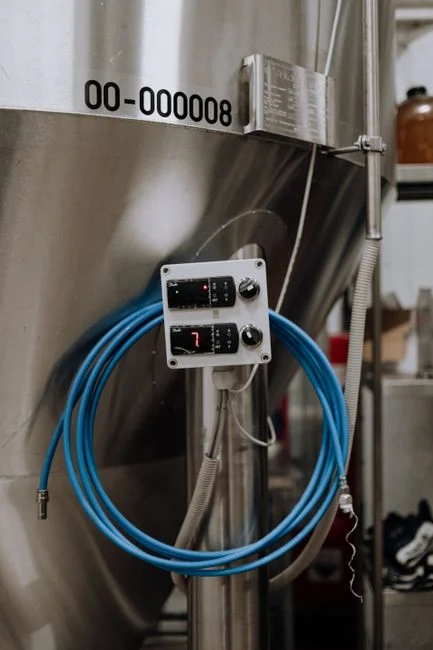
Equalization comes first and is not optional at a batch API plant. Flow and load swing 2–4× across a shift, and equalization basins sized at 12–24 h of hydraulic retention time flatten both concentration and hydraulic peaks before chemistry. The next step is chemical precipitation, typically with FeCl3 at 50–150 mg/L, lime, or polyaluminum chloride, to drop colloidal COD and co-precipitate heavy metals. pH is held at 7–8 to protect the nitrifiers in the downstream aeration basin, which lose activity below pH 6.5 and above pH 9. Solvent-rich sidestreams — acetone, methanol, dichloromethane — are stripped or recovered before the aqueous stream joins the main biological train; sending raw solvent into an activated-sludge basin strips biological activity and risks deflagration in covered aeration tanks. Online pH and ORP control on the coagulant dosing line, handled by an automatic chemical dosing system for precipitation and pH control, is standard practice. A worked example of how the same upstream chemistry decision affects a downstream MBR flux calculation is given in the 2026 MBR sizing guide for oily condensate.
Biological Nutrient Removal (Nitrification and Denitrification)
The biological stage is the load-removal workhorse. Bayer-class plants run single- or two-stage activated sludge with an aerobic zone for nitrification (NH4+ → NO3−) and an anoxic zone for denitrification (NO3− → N2), often configured as a pre-anoxic or modified Ludzack-Ettinger (MLE) loop with internal mixed-liquor recycle at 2–4× the influent flow. Typical operating windows for a pharma/chemical influent of the strength shown above:
- MLSS 3,000–5,000 mg/L
- HRT 24–72 h total across the aerobic and anoxic zones
- SRT 15–30 days — long enough to retain the slow-growing nitrifiers (Nitrosomonas, Nitrobacter) that wash out below 10 days at 10–15 °C
- DO 1.5–2.5 mg/L aerobic, <0.2 mg/L anoxic
Effluent after biology on a Bayer-class plant typically lands at COD 150–250 mg/L, NH4-N below 5 mg/L, TN 20–40 mg/L, and AOX still 1–5 mg/L — numbers that meet conventional discharge consents for bulk parameters but leave trace APIs and multiresistant bacteria largely untouched. The Lausanne dataset in Frontiers in Microbiology (2012) showed only a 0.5–1 log reduction in multiresistant bacteria across a full-scale activated-sludge plant, and similar or higher proportions of resistant organisms in the treated effluent than in the raw sewage for 9 of 11 antibiotics tested — direct evidence that conventional biology is necessary but not sufficient for a pharma effluent. That is the case for adding an MBR membrane bioreactor system downstream to combine a high-biomass reactor with a physical solids barrier.
Tertiary Polishing: AOP, MBR, and Activated Carbon
This is where trace APIs and the residual AOX actually disappear. A Bayer-class plant typically combines three polishing technologies in series:
| Polishing Step | Mechanism | Operating Window | Outcome |
|---|---|---|---|
| Ozone or O3/H2O2 AOP | ·OH radical oxidation of ozone-refractory APIs | 5–15 mg O3 per mg DOC; H2O2:O3 molar ratio 0.3–0.5 | >90% removal of many trace APIs; partial COD reduction |
| Submerged MBR (PVDF, 0.1–0.4 µm) | Physical solids and biomass retention | Flux 10–25 L/m²·h; TMP 0.1–0.4 bar | COD <50 mg/L, TSS <5 mg/L, SDI low enough to feed RO |
| Granular activated carbon (GAC) | Adsorption of residual COD and partially oxidized organics | EBCT 10–30 min; periodic thermal reactivation | Final guard before discharge; smooths AOP transients |
The typical hydraulic order is biological effluent → sand filter → ozonation → MBR or GAC → disinfection → discharge, with a sidestream RO loop taking MBR permeate for reuse. PVDF flat-sheet MBR modules are a common choice in this duty because they tolerate the higher residual COD that an AOP-fed stream carries, and they back-flush cleanly with the standard CIP chemicals already on site. Ozone dose selection is driven by UV absorbance at 254 nm — the specific UV absorbance (SUVA) of the biological effluent — rather than by total COD, which is why most plants install online UV meters rather than relying on grab-sample COD alone; a useful methodology is in the online COD analyzer selection guide. For sites that need a residual disinfectant before surface-water discharge, an on-site chlorine dioxide generator is typically preferred over chlorine because ClO2 does not form AOX byproducts when it contacts the AOP effluent.
Sidestream RO and Water Reuse Loop
Reverse osmosis sits at the end of the train, not the front, because RO membranes foul rapidly on raw pharma effluent. Once MBR or AOP effluent is already below 50 mg/L COD and 5 mg/L TSS, RO can run at 70–85% recovery with multi-stage array design (typically a 2:1 or 3:1 staging) without chemical cleaning intervals dropping below 30 days. Permeate is reused as cooling-tower makeup, boiler feedwater (after a downstream mixed-bed polisher), or process rinse water, displacing freshwater demand and shrinking the discharge volume. The bottleneck is not the RO step itself — it is brine management. Concentrate at 5–8% total dissolved solids has to go to evaporation, crystallization, or a ZLD configuration such as a mechanical vapor recompression (MVR) crystallizer if a true zero liquid discharge chemical plant is the goal. The 2026 engineering reference for sizing the RO half of this loop is the 2026 RO sizing guide for industrial reuse water, and the hardware itself is in standard industrial RO systems.
Measured Effluent Bands and Compliance Targets
The numbers below are the design targets a Bayer-class plant works to, presented as bands that an engineer can benchmark against their own discharge permit. They are not a guarantee for any specific site.
| Unit Process | COD (mg/L) | NH4-N (mg/L) | TN (mg/L) | AOX (mg/L) | TSS (mg/L) | Trace API Removal |
|---|---|---|---|---|---|---|
| Raw influent | 1,500–5,000 | 30–80 | 50–200 | 5–40 | 200–800 | — |
| Primary / chem-precip | 800–1,500 | 30–80 | 50–200 | 3–25 | 80–250 | 10–40% |
| Biology (post-clarifier) | 150–250 | <5 | 20–40 | 1–5 | 20–60 | 20–60% |
| AOP (ozone or O3/H2O2) | 80–150 | <5 | 20–40 | <1 | 20–60 | >90% |
| MBR or GAC polish | <50 | <5 | 20–40 | <1 | <5 | Further 30–60% |
| RO permeate (reuse stream) | <10 | <2 | <10 | <0.1 | <1 | >99% cumulative |
Pharma and chemical sites in the EU and Germany typically discharge against COD ≤250 mg/L, AOX ≤1 mg/L, and TN ≤40 mg/L for direct surface-water discharge, with stricter limits for receiving waters that feed drinking-water abstractions. Antibiotic-resistance gene (ARG) reduction is best documented for the AOP + UV combination, which delivers 1–3 additional log reductions over biological treatment alone (Frontiers in Microbiology, 2012); the MBR stage contributes further by retaining biomass-bound resistance genes on the reject side rather than letting them through with the clarified effluent.
Frequently Asked Questions
What unit operations does Bayer use to treat pharmaceutical wastewater?
Bayer uses a multi-barrier train in this order: source segregation, flow/load equalization, primary settling with chemical precipitation (FeCl3 or polyaluminum chloride at pH 7–8), activated-sludge biological nutrient removal with nitrification and denitrification, advanced oxidation with ozone or ozone/H2O2 for trace APIs, MBR or granular activated-carbon polishing, and a sidestream reverse osmosis loop for water reuse.
Does Bayer use ozone or hydrogen peroxide for trace API removal?
Both, in combination. Ozone doses of 5–15 mg O3 per mg of dissolved organic carbon, with H2O2 added at a 0.3–0.5 molar ratio to O3 to drive hydroxyl-radical formation, are typical for ozone-refractory APIs. Reported removal exceeds 90% for many trace pharmaceuticals when AOP follows biological treatment.
How much of the wastewater is reused?
Multi-stage RO operating on MBR or AOP effluent commonly achieves 70–85% recovery. Permeate is reused as cooling-tower makeup, boiler feedwater, or process rinse water. The bottleneck is concentrate management: brine at 5–8% TDS usually goes to evaporation or a zero-liquid-discharge crystallizer.
What effluent COD does a Bayer-class plant target?
The design target after biological treatment is COD <250 mg/L, NH4-N below 5 mg/L, and TN 20–40 mg/L. After MBR polishing the target tightens to COD <50 mg/L and TSS <5 mg/L, with AOX below 1 mg/L and >90% removal of trace APIs measured across the AOP + MBR combination.
Why can't a standard activated-sludge plant treat pharma effluent alone?
Conventional biology removes bulk BOD, COD, and ammonia, but only achieves 20–60% removal of most trace APIs and a 0.5–1 log reduction in multiresistant bacteria (Frontiers in Microbiology, 2012). The AMBIO review (Rogowska et al., 2019) shows that pharmaceuticals and personal-care products are only partially removed in standard WWTPs, which is why AOP, MBR, and RO polishing are added downstream of biology for pharmaceutical effluent.