Which treatment should a Vernal petroleum factory choose?
Factories in Vernal should usually choose DAF when petroleum wastewater contains recoverable free oil, FOG, or floatable contaminants that must be skimmed, especially when chemical conditioning is acceptable. A clarifier is more appropriate when the primary objective is settling relatively settleable solids with fewer chemical-intensive steps. DAF performance depends on coagulation-flocculation, while published systems use 30–50 micron microbubbles and automatic skimming. Because no Vernal permit limits or site wastewater data were supplied, final selection must be based on flow, oil and grease, TSS, settleability, treatment objectives, sludge handling, and the applicable discharge authorization rather than a universal choice.
That recommendation can change when the stream contains emulsified oil, low-buoyancy solids, widely varying flows, or a dissolved contaminant load that primary separation cannot address. A petroleum waste stream is not one uniform wastewater: generated water, refinery process water, wash water, stormwater, and bulk wastewater can have materially different contaminant profiles. A stream may also need both stages: clarification for settleable solids followed by DAF for floatables.
The supplied research does not identify an applicable Vernal discharge permit or local numerical limits. The plant manager should therefore obtain the controlling authorization before selecting equipment. A DAF system is a strong candidate for oil and grease removal and free oil recovery; a sedimentation tank is more defensible when settling is the primary function and chemical-intensive conditioning is unnecessary.
How DAF and petroleum wastewater clarifiers separate contaminants
DAF separates contaminants by flotation, while a lamella plate clarifier separates them by sedimentation. Clearwater Industries’ DAF descriptions specify 30–50 micron microbubbles that attach to conditioned solids and carry them to the surface for skimming; heavier solids settle into the bottom collection zone and are removed with an auger. A lamella clarifier uses inclined plates to increase the available settling area and separate settleable solids from the liquid.
DAF is not dissolved-air stripping. The bubbles create a flotation mechanism; they do not remove dissolved hydrocarbons by themselves. Biological treatment, adsorption, membranes, or advanced oxidation may still be necessary where the treatment objective or permit requires it.
| Function | DAF | Lamella plate clarifier |
|---|---|---|
| Primary mechanism | Microbubble flotation after chemical conditioning | Sedimentation on inclined plates |
| Mainly recovered fraction | Free oil, FOG, floatable solids, and conditioned solids | Settleable solids |
| Removal mechanism | Surface skimming and bottom solids withdrawal | Sludge collection and withdrawal |
| Published specification | 30–50 micron microbubbles, according to Clearwater Industries | 20–40 m/h surface loading, according to HydropureWater |
The two mechanisms can complement each other. Clarification may protect downstream flotation equipment by removing heavy solids, while DAF can recover oil and FOG that would otherwise remain in the clarified stream. That ordering must be confirmed against the actual contaminant distribution rather than assumed from the equipment layout.
Match the equipment to the wastewater characteristics
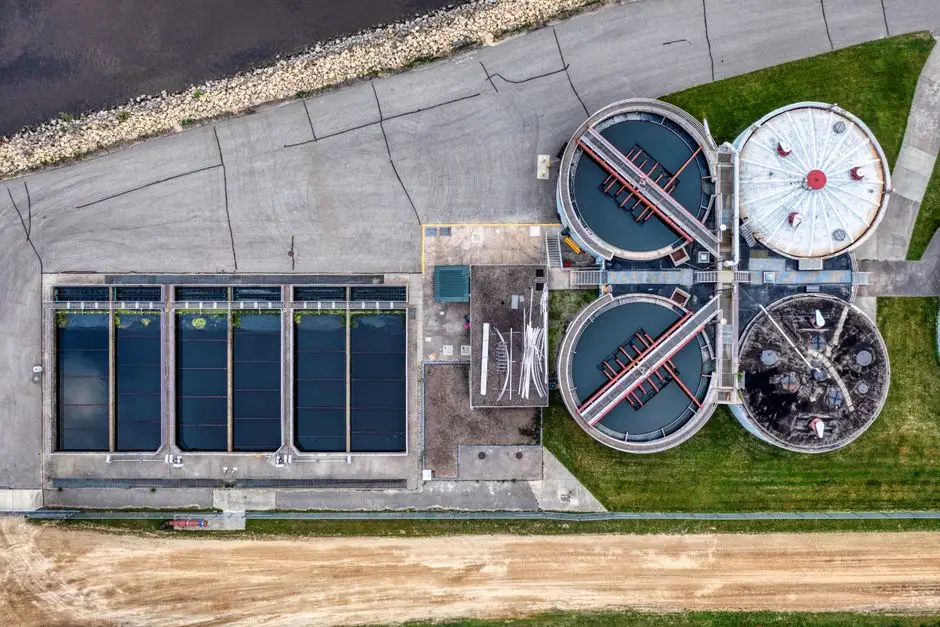
The dominant contaminant and the required recovery objective should determine the process train. Clearwater Industries describes a low-profile DAF for small-to-medium flows with very high TSS and FOG loads, a high-profile DAF for low-to-medium solids loads including low-buoyancy particles, and a high-flow DAF for low-to-large solids loads. These are equipment configurations, not automatic selections for a petroleum plant.
| Selection case | DAF | Lamella or gravity clarification | DAF after clarification |
|---|---|---|---|
| Dominant objective | Recover free oil or FOG and skim floatables | Remove relatively settleable solids | Remove settleable solids first, then recover remaining floatables |
| Low-buoyancy solids | Possible with the appropriate DAF configuration and conditioning | Potentially suitable where solids settle reliably | Clarification may improve downstream flotation conditions |
| Chemical conditioning | Generally required for reliable flotation performance | May be unnecessary for gravity separation, depending on the stream | Conditioning may still be required before DAF |
| Residual handling | Skummings plus bottom solids | Sludge | Two residual streams to manage |
| Footprint and staffing | Compare full skid area, controls, dosing, and skimmer maintenance | Compare settling area, sludge withdrawal, and access | Requires space and operating attention for both units |
HydropureWater’s published lamella clarifier specification lists surface loading rates of 20–40 m/h and claims chemical consumption reduction of up to 30%. These are manufacturer product specifications, not guaranteed outcomes for a Vernal petroleum application. The selected design must establish whether the stated rate remains valid for the proposed flow, wastewater characteristics, and geometry.
A representative waste characterization should measure oil and grease, FOG, TSS, settleable solids, emulsified oil, pH, temperature, flow variability, and relevant hydrocarbon characteristics. Emulsified oil is a specific concern: a small quantity of dispersed oil can behave differently from recoverable free oil and may require additional chemical or mechanical pretreatment. Consider the automatic chemical dosing system only after defining the chemistry, required dose range, mixing sequence, and control response.
Build a train that can treat petroleum wastewater
A practical petroleum wastewater pretreatment train starts with equalization and characterization, then protects the treatment equipment from oil and debris, applies chemical conditioning where needed, performs primary separation, manages skimmings or sludge, and sends the remaining water to biological, membrane, or other polishing required by the permit.
Clearwater Industries states that DAF should be paired with proper coagulation and flocculation to optimize performance. Conditioning increases particle size and improves contact with microbubbles. That dependency makes the PLC-controlled automatic chemical dosing system a process component, not an accessory: dose control should be coordinated with flow, pH, temperature, and wastewater chemistry.
Emulsified oil may need chemical or mechanical pretreatment before flotation. Neither DAF nor clarification should be presented as a complete solution for every oil, BOD, nutrient, or dissolved-hydrocarbon objective. The required downstream train depends on the discharge destination and written limits.
The academic source titled “Combining Dissolved Air Flotation (DAF) and Modified Moving Bed Biofilm Reactors (MMBBR) for Synthetic Oily Wastewater Treatment,” published through Elsevier BV’s SSRN platform, supports the use of hybrid DAF and biological treatment as an active research strategy. The supplied record does not expose performance values, so it cannot support a removal-efficiency claim.
Residuals complete the design. A plate-frame filter press may be evaluated for dewatering; the MBR-integrated wastewater treatment system may be relevant where biological solids separation and membrane treatment are required. Neither should be selected without the process basis, disposal route, and receiving requirements.
Size the system with operating and procurement inputs
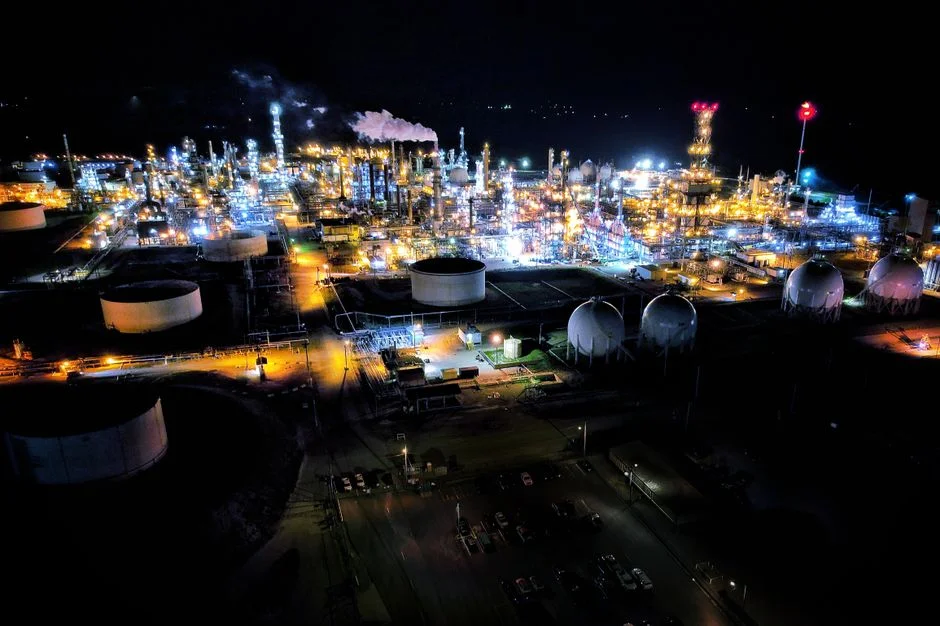
A defensible size requires average and peak flow, flow duration, oil and grease, FOG, TSS, particle settleability, emulsified-oil tendency, pH, temperature, chemical demand, available footprint, and the discharge or pretreatment objective. A catalog flow range identifies available equipment scale; it does not establish hydraulic loading, chemical dosage, removal efficiency, or compliance performance.
HydropureWater’s DAF catalog contains 13 standard models spanning 4–300 m³/h. That range is a purchasing filter, not a design basis. The DAF product range still needs to be tested against peak flow, hydraulic loading, contaminant loading, operating hours, and future growth.
For a lamella clarifier, HydropureWater’s published surface loading range is 20–40 m/h. Require the bidder to identify the selected unit’s verified hydraulic and solids-loading basis, because surface loading alone does not establish performance for a changing petroleum stream.
| Input a buyer must obtain | Why it changes the selection |
|---|---|
| Average, peak, and duration-based flows | Determines hydraulic capacity, equalization, peak-flow response, and equipment arrangement |
| Oil, grease, FOG, TSS, and settleability data | Defines whether flotation, clarification, or both are needed and establishes loading |
| Emulsified-oil behavior | Determines whether pretreatment, chemical conditioning, or pilot testing is required |
| Chemical assumptions | Defines conditioning equipment, control demand, operating labor, and chemical cost |
| Material and temperature profile | Determines compatibility and corrosion-resistance requirements |
| Residual-disposal route | Determines skimmings and sludge handling requirements |
Ask each supplier to state design flow, peak-flow response, minimum and maximum operating ranges, chemical assumptions, materials of construction, control philosophy, skimmer or sludge-removal design, start-up requirements, and included services. Clearwater Industries describes standard DAF equipment in 304SS, with 316SS, polypropylene, and other materials available on request. Petroleum compatibility must be checked against the complete chemical and temperature profile.
The supplied research provides no defensible Vernal equipment price, payback period, lead time, or guaranteed removal rate. Obtain those through a project-specific quotation.
Control cost, sludge handling, and compliance risk
Total cost includes more than the separator. Compare equipment, chemical conditioning, operating labor, utilities, controls, maintenance, skimmings disposal, sludge dewatering, and downstream treatment. DAF can add chemical dosing and skimmings-management duties; a clarifier may reduce those demands when the contaminants are primarily settleable. The actual stream determines which option has the lower operating burden.
Purchase specifications should state removal targets for oil and grease, FOG, and TSS; the hydraulic basis; chemical consumption assumptions; material requirements; control requirements; redundancy; sludge handling; and required documentation. A performance guarantee must identify the test method, operating conditions, feed characteristics, and acceptance criteria. A model number alone is not a guarantee.
| Cost or risk category | DAF-centered train | Clarifier-centered train | Hybrid train |
|---|---|---|---|
| Chemical use | Conditioning is generally required for effective flotation | May be lower when gravity settling is adequate | May include dosing before flotation |
| Residual management | Skummings and bottom solids | Concentrated sludge | Skummings and sludge from separate stages |
| Site and maintenance | Compare skid footprint, dosing systems, controls, and skimmer service | Compare settling footprint, sludge withdrawal, and access | More equipment and interfaces to inspect |
| Compliance risk | Risk remains if dissolved pollutants or emulsified oil require polishing | Risk remains if floatables or dissolved pollutants are outside the design basis | Broader treatment capability, but more interfaces to verify |
A 2024 California Water Board order for the Lincoln-SMD1 facility includes BOD5, TSS, ammonia, and nitrate-plus-nitrite limits at named monitoring points. It is a regulatory example only: it applies to a California facility and does not establish Vernal requirements.
Determine whether the flow goes to a municipal pretreatment system, a permitted outfall, or another destination. Obtain the controlling Vernal receiving and discharge requirements in writing. A separator’s treatment capability is not the same as authorization to discharge.
A practical selection checklist for the bid
A repeatable bid begins with a representative wastewater characterization and, where available, at least 12 months of production, flow, and known upset-event information. The history matters because a unit sized to average flow may fail during a washout, tank cleanout, or batch discharge.
Define whether the project is a new installation, a retrofit, or a temporary high-load campaign. Each changes the hydraulic, footprint, redundancy, and controls requirements. For a retrofit, verify available head, utility connections, access for maintenance, and compatibility with existing collection systems. For a campaign, clarify how the unit will be started, moved, and connected.
Issue the same process basis and performance criteria to every bidder. Require a proposed process flow and mass-balance narrative rather than accepting a model selected from flow alone. Specify peak flow, treatment objectives, chemical assumptions, controls, materials, sludge handling, service scope, and acceptance testing.
Leave the final equipment choice contingent on pilot testing or vendor performance data when the stream contains emulsified oil or highly variable free oil. The broader 2026 comparison of DAF and clarifiers for petroleum wastewater provides useful context, but the final process basis must be site-specific.
Frequently Asked Questions
How much does a DAF or clarifier cost for petroleum wastewater in Vernal?
The supplied research does not support a defensible equipment price for Vernal. Request a quotation that separates the separator, chemical conditioning, controls, equalization, skimmings or sludge handling, utilities, installation, commissioning, and downstream treatment. Chemical consumption and residual disposal must be included in the operating-cost comparison rather than treated as incidental items.
How should DAF capacity be sized for a petroleum wastewater stream?
Use the DAF model’s flow range only to identify a candidate scale. Provide average and peak flow, flow duration, oil and grease, FOG, TSS, settleability, emulsified-oil tendency, pH, temperature, chemical demand, and future growth to the supplier. The selected unit should have a stated hydraulic and contaminant-loading basis, not merely a catalog flow rating.
What should be required when selecting a DAF or clarifier supplier?
Request the proposed process flow, sizing calculations, materials list, chemical assumptions, control philosophy, skimmer or sludge-removal design, utility requirements, service scope, commissioning plan, and acceptance-test method. Performance evidence should state the feed characteristics and operating conditions. A broader 2026 comparison of DAF and clarifiers for petroleum wastewater can help frame technical questions, but it does not replace vendor documentation or a site-specific pilot.
Does treatment capability establish discharge compliance in Vernal?
No. Treatment capability and regulatory authorization are separate. First identify the destination: a municipal pretreatment system, a permitted outfall, or another receiving route. Then obtain the applicable local limits, sampling requirements, monitoring points, and written authorization. The final equipment specification should be checked against those requirements and any downstream treatment needed to meet them.
When is a hybrid clarifier-and-DAF train justified?
Use clarification before DAF when heavy settleable solids need removal before flotation and the stream contains both floatable oil or FOG and a significant solids load. DAF alone is more logical when floatables are the primary target and clarification would add little. A hybrid is justified by wastewater behavior and treatment objectives—not by flow capacity alone.