
Which Treatment Should a Petroleum Factory Choose?
For petroleum wastewater, choose DAF when the primary objective is removing oil, FOG, emulsified droplets, or floatable solids after screening, equalization, and chemical conditioning; choose gravity sedimentation or a lamella plate clarifier when heavier settleable solids dominate. Neither device solves every oily-wastewater condition alone. EPA research identifies free oil, dispersed and stabilized emulsions, dissolved oil, and oil-coated solids as distinct states and concludes that treatment trains are necessary because no single method separates them all efficiently (EPA, Oil/Water Separation: State of the Art, April 1978). For West Liberty factories, the decision is therefore which unit belongs at each stage—not which equipment name sounds best.
Start with the contaminant’s physical state and separation duty. Use dissolved air flotation for material that must rise; use gravity sedimentation for material that can settle. A practical treatment train may include both. The broader petroleum wastewater DAF comparison provides the mechanism detail behind this decision.
| Observed or likely condition | Primary treatment choice | Required qualification |
|---|---|---|
| Free oil or FOG that separates readily | DAF or an upstream oil-recovery stage | Verify recovery and downstream residual handling. |
| Dispersed or chemically stabilized emulsion | Conditioning followed by DAF | Establish chemical dose and floc integrity with representative testing. |
| Floatable solids with low specific gravity | DAF | Provide coagulation and flocculation where required. |
| Heavier settleable solids | Gravity sedimentation or lamella clarification | Confirm actual settling behavior and oil coating. |
| Oil-coated solids that still settle | Clarification, potentially combined with DAF | Do not assume the oil fraction will leave with the sludge. |
West Liberty’s applicable pretreatment or discharge conditions must be confirmed for the facility’s actual process and discharge pathway. The supplied EPA research is foundational and does not establish a current local numerical limit for any petroleum facility.
Why Petroleum Wastewater Cannot Be Treated as One Generic Stream
The same total oil measurement can conceal contaminants that require different separation mechanisms. EPA’s 1978 technical review divides oily wastewater into free oil, dispersed oil, chemically stabilized dispersions, molecularly dissolved oil, solubilized oil, and oil-coated suspended solids (EPA, April 1978). This classification matters because a unit suitable for floating free oil may be ineffective for stabilized fine droplets, while a gravity clarifier may capture a heavy particle while leaving its oil coating behind.
The wastewater characteristics that change separation behavior include oil type, suspended-solids concentration, aqueous-phase properties, originating process, salinity, and temperature (EPA, April 1978). Other process variables matter as well: surfactants, mixing history, and chemical dosing affect whether oil remains separated, dispersed, or emulsified. The petroleum plant pretreatment limits guide explains why treatment must be matched to the receiving requirement rather than to a generic oil concentration.
| Oil or solids state | Behavior and separation difficulty | Equipment implication |
|---|---|---|
| Free, non-dispersed oil | Floats readily; the academic flotation review describes easy removal as a surface layer. | DAF or upstream free-oil removal may be appropriate. |
| Dispersed oil or emulsion | Fine droplets are more difficult to separate; stable emulsions may be stabilized by surfactants. | Test de-emulsification and coagulation before flotation. |
| Chemically stabilized dispersion | Requires chemical or physical change before efficient separation. | Conditioning must precede DAF; flotation alone is not the complete design basis. |
| Molecularly dissolved or solubilized oil | Oil is in the aqueous phase rather than as a readily floatable discrete phase. | Do not assign primary removal to DAF or gravity clarification. |
| Oil-coated suspended solids | Removal requires capture of the particle while also managing its associated oil. | Evaluate whether gravity capture is reliable; add flotation where necessary. |
Stable emulsions may require de-emulsification and coagulation before flotation, while heavy or oil-coated solids may need gravity capture upstream or downstream. The academic flotation review notes that modern emulsions can contain droplets smaller than 10 micrometers stabilized by powerful emulsifying agents, making separation especially difficult (New Developments in Mixing, Flocculation and Flotation for Industrial Wastewater Pretreatment and Municipal Wastewater Treatment, 2012). No supplied source supports a universal oil-removal guarantee. Chemical dose, solids loading, flotation behavior, sludge yield, and achievable effluent must be established from representative wastewater testing.
How DAF and Gravity Clarifiers Separate Different Fractions
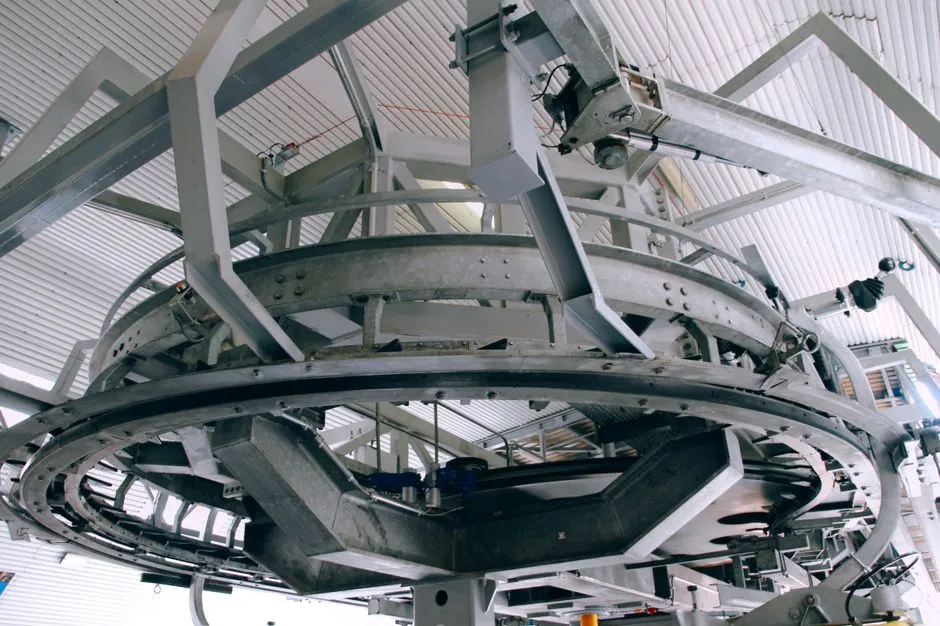
Differences in separation mechanisms determine which contaminants each unit can remove. Dissolved air flotation attaches conditioned particles to gas bubbles and removes the resulting float from the surface; gravity sedimentation removes material that settles under its own weight, while a lamella plate clarifier adds inclined separation surfaces.
A conventional DAF train screens the wastewater, equalizes it, applies coagulant and flocculant, saturates a recycle stream with compressed air, releases the pressurized water into a contact zone, and separates floated material with a skimmer. Settled material also requires bottom-solids removal. The 2012 academic review describes recycle saturation at pressures up to 5 atmospheres, or 40–70 psig, and bubbles up to 20 micrometers. A current commercial source describes 30–50-micron microbubbles. These are source-specific operating descriptions, not universal 2026 design specifications.
Small bubbles rise slowly, which contributes to large DAF-tank dimensions in the academic source. Floc integrity also matters: recycle-pump and pressure-release shear can break flocs, increasing carryover. A gravity unit primarily relies on density and settling behavior, although light, coated, or poorly settleable particles may still require chemical conditioning or flotation.
| Process element | Dissolved air flotation | Gravity or lamella clarification |
|---|---|---|
| Separation mechanism | Bubble attachment and upward flotation. | Natural settling; inclined plates increase effective separation area in a lamella design. |
| Conditioned oil droplets and FOG | Primary duty after suitable conditioning. | Limited suitability where droplets are sufficiently light and remain floatable. |
| Heavier settleable solids | Can be carried in the bottom-solids stream. | Primary duty. |
| Flow distribution | Contact zone must distribute flow and permit bubble-particle contact. | Distributor and basin geometry must support even settling. |
| Residual removal | Surface skimmer plus bottom-solids provision. | Bottom sludge withdrawal. |
| Terminology check | Commercial sources also call these flotation clarifiers. | Ask whether “clarifier” means gravity sedimentation or lamella design. |
Clarification remains important for settled solids. A lamella clarifier for settleable solids may be appropriate in a solids-heavy train, while an industrial DAF flotation system addresses floatable oil-bearing fractions. A commercial DAF clarifier may also contain lamella packing; that configuration does not make its primary mechanism gravity sedimentation.
DAF or Clarifier: Engineering Comparison for Petroleum Plants
DAF is the stronger primary choice for floatable petroleum contaminants, while gravity clarification is the stronger primary choice for heavier settleable solids. The comparison becomes less simple when oil coats solids, when emulsions require chemical conditioning, or when one stage must handle both float and settle fractions.
| Design consideration | DAF | Gravity or lamella clarifier |
|---|---|---|
| Primary mechanism | Bubble attachment and flotation. | Gravity settling, optionally enhanced by inclined plates. |
| Target fractions | Oil, FOG, conditioned emulsions, and floatable solids. | Heavier settleable solids and oil-coated material that settles reliably. |
| Pretreatment | pH control, coagulation, and flocculation are commonly required. | Conditioning may be needed for light, coated, or poorly settleable particles. |
| Solids handling | Surface-skimming and bottom-solids provisions. | Bottom sludge withdrawal and basin maintenance. |
| Utilities and equipment | Compressed air, saturation equipment, recycle flow, and bubble-contact area. | Hydraulic distribution, settling area, and sludge withdrawal. |
| Controls | Chemical dosing, pH, saturation, recycle, skimming, and sludge systems. | Flow distribution, sludge withdrawal, and basin condition. |
| Materials | One current supplier lists 304 stainless steel as standard, with 316 stainless steel, polypropylene, and other options available. | Confirm corrosion compatibility with the complete wastewater and treatment train. |
The historical flotation source reports that modern flotation technologies can produce sludge with solids loadings over 10%. It also states that a common DAF air-to-water ratio is 0.15:1 by volume and that classical DAF is not efficient above 1% suspended solids (2012 academic source). Newer designs may differ, so these figures belong in vendor design reviews rather than being treated as universal limits.
Physical and operating implications are significant. DAF needs adequate recycle, compressed air, saturation conditions, contact time, and undisturbed flocs. A gravity unit needs sufficient settling area and dependable withdrawal of sludge. Both can require chemical dosing; the automatic chemical dosing system should therefore be specified around the wastewater chemistry and the selected separation mechanism, not added as an accessory after tank selection.
For materials, the April 2026 commercial DAF literature lists 304 stainless steel as standard and 316 stainless steel, polypropylene, and other materials as options. That is supplier-specific, not evidence that any one material fits a petroleum application. Compatibility must be reviewed against oil type, salinity, temperature, pH, cleaning chemicals, and the complete water chemistry.
Build the Treatment Train Before Comparing Equipment Quotes
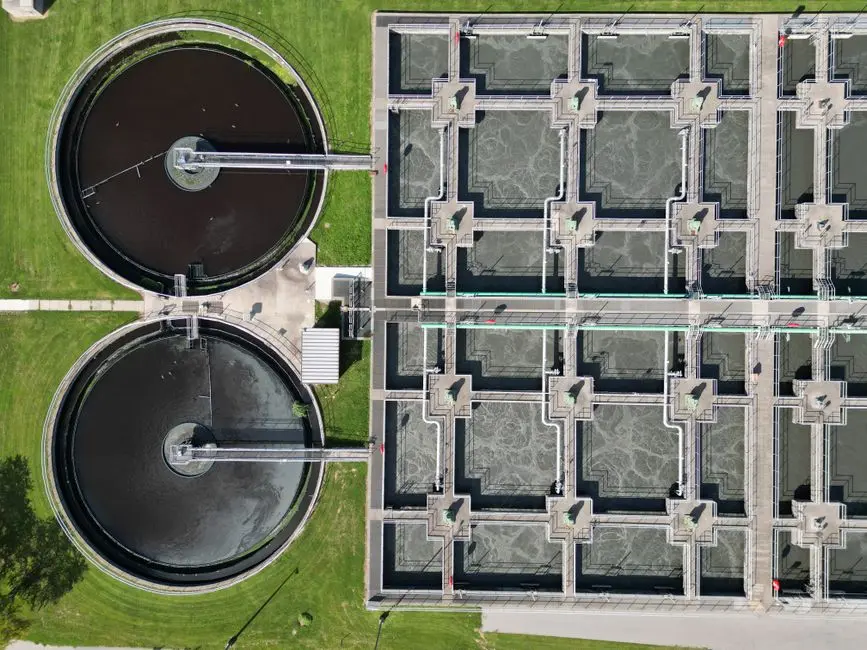
A comparable quote requires a treatment duty and upstream scope, not a flow rate alone. Characterize the actual stream, protect downstream equipment, condition the contaminants, assign each fraction to the appropriate separation stage, and define how residuals leave the system.
- Characterize the stream. Record average and peak flow, TSS, FOG or oil range, oil state, pH, temperature, relevant salinity, surfactants, operating hours, and variability across production conditions.
- Screen and equalize. The 2012 academic source identifies screening as protection for downstream pumps, valves, and orifices and as a way to reduce downstream chemical demand. Equalization provides more constant flow and composition, reduces hydraulic surging, and improves chemical conditioning.
- Condition where needed. Set pH precisely, then apply coagulation and flocculation with enough mixing and contact time to form particles without breaking them. The mechanical bar screen can protect downstream equipment where large solids are present.
- Assign the separation stages. Use upstream gravity or API-style separation for recoverable free oil where appropriate, DAF for floatable and conditioned fractions, and clarification where settled solids are the dominant load. The supplied EPA review presents API gravity separation and dissolved air flotation as components of a combined system (EPA, April 1978).
- Plan residuals. Define expected sludge characteristics, storage, transfer, dewatering, and disposal requirements before selecting skimmer and basin arrangements. A plate-frame filter press may be relevant for a dewaterable sludge fraction, but suitability depends on the actual residue.
- Test and verify. Use representative samples or a pilot study to establish chemical dose, solids loading, flotation performance, sludge yield, and achievable effluent. No supplied source establishes a universal performance value for all petroleum wastewater.
| Procurement package | Required information | Decision enabled |
|---|---|---|
| Wastewater characterization | Flow, TSS, FOG or oil, oil state, pH, temperature, salinity, surfactants, variability. | Separation duty and chemical-conditioning concept. |
| Upstream preparation | Screening, equalization, pH control, dosing, mixing, and contact-time requirements. | Protection of the separator and reliable dosing. |
| Separator | Mechanism, loading basis, tank geometry, recycle and air demand, skimmer or sludge withdrawal. | Comparable equipment scope and sizing. |
| Residuals | Expected sludge volume and solids state, storage, transfer, dewatering, disposal route. | Complete operating and ownership cost. |
| Verification | Representative testing or pilot basis, acceptance method, and performance guarantees. | Accountable performance rather than generic claims. |
What West Liberty Buyers Should Confirm Before Ordering?
A purchase order should define the wastewater duty and every utility, control, and residual interface. For West Liberty facilities, permit verification must be completed for the actual process and discharge pathway; the supplied research does not establish a local numeric pretreatment limit.
Require each bidder to state design flow and peak flow, TSS, FOG or oil range, oil state, pH, temperature, operating hours, and the required effluent or pretreatment target. Ask whether its “clarifier” is gravity sedimentation, a lamella plate clarifier, or a DAF flotation clarifier. Commercial terminology can blur that distinction, so a product label is not a sufficient engineering description.
| Supplier question | Information to require |
|---|---|
| What separation mechanism is being quoted? | Named process, fraction removed, and treatment-train position. |
| What is the sizing basis? | Design flow, peak flow, contaminant loading, hydraulic criteria, and performance data relevant to the application. |
| What utilities and auxiliaries are included? | Recycle flow, compressed air, tank geometry, chemical-feed points, controls, skimming, and sludge withdrawal. |
| How is floc damage controlled? | Pump, pressure-release, and recycle-shear design and the basis for that assessment. |
| What residuals will the system produce? | Expected sludge characteristics, removal method, storage, transfer, dewatering, and disposal interfaces. |
| What regulatory basis applies? | Current pretreatment or discharge requirements confirmed for the facility’s actual receiving authority and outfall. |
For a compact-skid reference, Clearwater Industries describes a single-skid arrangement for flows of 66 GPM or less and a modular two-skid arrangement for higher flows (April 2026). This is one supplier’s commercial configuration, not a universal capacity boundary or a West Liberty requirement. Buyers should compare the industrial DAF flotation system and gravity alternatives against the same written duty basis.
Frequently Asked Questions
How much does a DAF or clarifier cost for petroleum wastewater?
The supplied research does not provide reliable 2026 capital-cost figures for this application. Request itemized pricing based on design flow and loading, pretreatment, tank and mechanism materials, controls, utilities, sludge handling, installation, commissioning, and performance testing. Compare like-for-like scopes, including chemical equipment and residual management, rather than comparing tank price alone.
How should a petroleum wastewater DAF system be sized?
Size it from measured flow and contaminant-loading data, including peak conditions, TSS, FOG or oil, oil state, pH, temperature, and variability. Use representative testing or a pilot study to establish conditioning needs, flotation performance, and sludge yield. The supplied sources do not support a universal flow-to-area rule, so a single design flow without a loading basis is incomplete.
Can a lamella clarifier replace DAF for oily wastewater?
Not when free oil, FOG, conditioned emulsions, or other low-specific-gravity material is the primary target. A lamella clarifier is appropriate when settleable solids dominate and can be removed reliably. EPA’s April 1978 review concludes that no single technique efficiently handles every oil/water state, so replacement depends on the actual oil state and treatment objective.
What should a supplier selection checklist include?
Require a written duty basis, named separation mechanism, sizing calculations, material compatibility, utility requirements, controls, skimmer or sludge-withdrawal details, auxiliary equipment, installation boundaries, commissioning plan, and acceptance tests. Verify that “clarifier” is defined unambiguously and ask how recycle or pressure-release shear will be controlled so conditioned flocs remain intact.
What compliance risk should a West Liberty buyer address?
Equipment selection does not establish regulatory compliance. Confirm the current pretreatment or discharge requirements for the facility’s actual process, outfall, and receiving authority. Also distinguish equipment-selection evidence from a performance guarantee: require an agreed test method, representative wastewater, and acceptance criteria in the purchase documents.