Which treatment is right for a North Las Vegas petroleum plant?
North Las Vegas factories with petroleum wastewater should choose dissolved air flotation (DAF) when the objective is to recover free or dispersed oil and floatable solids, especially before biological treatment; a conventional clarifier is more appropriate when the stream mainly contains heavy, readily settleable solids and gravity separation is adequate. EPA identifies both clarifiers and DAF as petroleum-refining pretreatment options. DAF uses micro-bubbles to lift oil and solids for skimming, while clarification relies on gravity sedimentation. The final choice should follow wastewater characterization, chemical-conditioning tests, vapor and hazardous-area review, and downstream treatment needs—not equipment name alone.
For a North Las Vegas facility, the distinction starts with three equipment categories. A gravity oil separator is intended to recover free oil by gravity and skimming. A conventional sedimentation clarifier removes settleable solids through gravity-driven settling and sludge collection. A DAF unit uses pressurized air and released micro-bubbles to float oil, grease, and conditioned solids. Calling either of the latter two a “clarifier” does not establish that oil recovery is its design objective.
EPA identifies clarifiers and DAF as methods for separating suspended oil droplets and suspended solids from petroleum-refining wastewater in its Preliminary Assessment of Air Emissions from Aerated Wastewater Treatment Processes. The appropriate candidate is therefore conditional: DAF for significant free or dispersed oil, floatable contaminants, or solids that can be conditioned into floatable floc; gravity clarification for heavy, readily settleable solids when characterization confirms adequate settling. The final decision must also account for the downstream biological process, discharge or reuse requirements, chemical availability, operator capability, footprint, maintenance access, and site constraints. An industrial dissolved air flotation system should therefore be evaluated as part of a treatment train, not purchased as an isolated guarantee of compliance.
How petroleum wastewater reaches the pretreatment unit
Wastewater segregation should determine the treatment design because oil form, solids behavior, and hydraulic variability change the separation mechanism that works. EPA’s petroleum-refining example reports influent to activated-sludge units and aerated lagoons containing up to 40 mg/L phenols and up to 200 mg/L BOD under typical conditions, according to the EPA assessment cited above. Physical pretreatment can remove suspended material, but it does not by itself establish compliance for those dissolved or biodegradable constituents.
- Characterize each source during production, cleanup, and dump cycles.
- Equalize flows and concentrations where the operating strategy permits.
- Remove screenings and other unsuitable material before the selected separator.
- Apply DAF or gravity clarification, depending on the contaminant form.
- Route recovered float and settled sludge to defined handling systems.
- Send clarified water to biological, advanced, reuse, or discharge treatment as required.
The source characterization should include oil-and-water interfacial behavior, oil density, free oil, emulsified oil, suspended solids, particle-size distribution, pH, temperature, flow, and records of batch variability. Ask also whether samples represent routine production or cleanup events. Stormwater, tank washdown, truck-wash water, and floor wash should be considered as separate design questions because combining relatively clean stormwater with oily process wastewater changes both hydraulic loading and contaminant loading.
| Design input | Why it affects equipment selection |
|---|---|
| Oil form and interfacial behavior | Distinguishes recoverable free oil from emulsified oil that may require conditioning or a different removal mechanism. |
| Suspended-solids distribution | Determines whether solids can settle by gravity, float, or need flocculation before separation. |
| Flow and batch records | Establishes the hydraulic and contaminant basis for equalization and separator sizing. |
| pH and temperature | Affects chemical conditioning, oil behavior, equipment materials, and downstream biological loading. |
| Source segregation | Keeps stormwater and cleanup streams from obscuring the design basis for oily process wastewater. |
DAF targets the floatable fraction, but it is not a substitute for treatment of dissolved organics, BOD, COD, or other regulated constituents. A gravity oil separator ahead of DAF may be useful where source control or segregation materially reduces free-oil loading. The decision should follow the wastewater’s physical form rather than a general industry label.
DAF versus conventional clarification
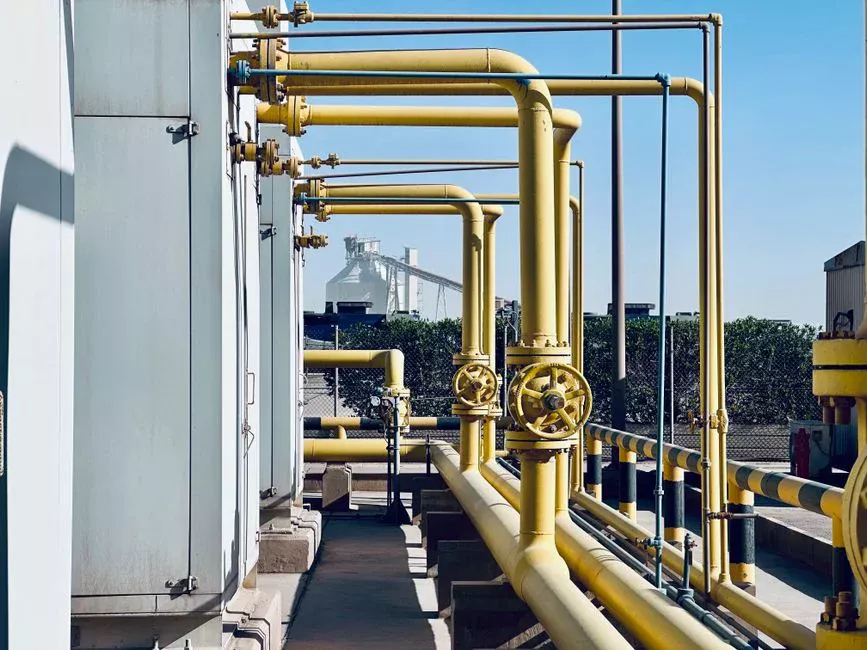
DAF and conventional clarification separate different fractions of the same waste stream: DAF uses air bubbles to float material, while a conventional clarifier relies on gravity to settle it. EPA describes primary treatment as detention in rectangular or circular basins for 1–2 hours to remove readily settleable organic solids through gravity-induced sedimentation in the EPA assessment cited above. That mechanism is appropriate when dense solids settle reliably and the primary objective is solids removal.
DAF instead attaches micro-bubbles to oil and conditioned particles. Clearwater Industries states that its systems use 30–50 micron bubbles that attach to impurities and flocculated particles, rise to the surface, and are removed by a skimmer. This makes DAF the stronger candidate where recoverable oil, grease, floatable solids, or flocculated low-specific-gravity material dominate the separation problem.
| Decision factor | DAF | Conventional sedimentation clarifier |
|---|---|---|
| Primary mechanism | Micro-bubble flotation followed by surface skimming. | Gravity settling followed by sludge collection. |
| Best-matched material | Free or dispersed oil, grease, floatable solids, and conditioned floc. | Dense, readily settleable solids. |
| Conditioning | Clearwater states that coagulants and flocculants are regularly used; acids and bases may be used for pH adjustment. | Chemical use should follow jar testing and the selected solids-removal objective. |
| Hydraulic complexity | Requires recycle pumping, pressure saturation, air release, flotation, and skimming. | Depends on settling, effective hydraulic distribution, and sludge withdrawal. |
| Residual solids route | Clearwater notes that heavier solids can settle into a bottom collection zone requiring removal. | Settled solids are withdrawn directly as sludge. |
| Key risk | Poor conditioning or flotation control can leave oil and floatable solids in the clarified stream. | Poor distribution or insufficient settling behavior can carry solids into overflow. |
DAF adds mechanical and operating complexity; it is not automatically the lower-lifecycle-cost option. Its operating burden includes chemical consumption, compressed air, recycle pumps, saturation equipment, nozzles, skimming, and controls. Clarification has its own burdens: hydraulic distribution, sludge collection, odor control, and structural maintenance. No universal footprint comparison is defensible without the site layout and hydraulic basis.
Chemical demand also needs evidence rather than assumption. Clearwater says coagulation and flocculation improve DAF solids removal and can create thicker sludge; its equipment guidance calls for jar testing to determine the required mixing time and chemical regime. For clarification, use the same testing discipline, but evaluate the floc against settling behavior and the required clarification objective.
Clarify the project boundaries before sizing equipment
Equipment sizing should follow a representative wastewater dataset and the complete treatment train, not a single routine sample or a catalog flow rate. The minimum design package should include design and peak flow, operating duration, batch dumps, oil types, oil-concentration range, emulsification tendency, TSS, particle settling behavior, pH, temperature, and the required effluent or reuse targets.
Representative sampling should cover production and cleanup cycles. The sampling plan should identify whether flows and concentrations are continuously stable, intermittently dumped, or affected by tank and vehicle cleaning. Without those records, neither hydraulic capacity nor treatment performance can be defended.
Jar testing should evaluate candidate coagulants and polymers, pH adjustment, mixing time, floc strength, float recovery, and settled-sludge behavior. A vendor’s selected chemistry should follow the test results rather than a fixed dose. Where emulsion or variable loading remains uncertain, require pilot work or a defined verification step.
| Boundary | Information to establish before purchase |
|---|---|
| Hydraulic basis | Representative design flow, peak flow, operating duration, batch-dump sequence, and equalization strategy. |
| Wastewater quality | Oil types, concentration range, emulsification tendency, TSS, particle behavior, pH, and temperature. |
| Treatment objective | Effluent or reuse targets, downstream biological or advanced treatment, and the required removal responsibility of each unit. |
| Conditioning | Jar-test results for chemical selection, dose, mixing, floc behavior, float recovery, and sludge characteristics. |
| Handling routes | Recovered oil, float, settled sludge, screenings, chemicals, and wash-water disposal or reuse. |
| Compliance basis | Applicable permit, sewer requirements, discharge objectives, and compliance responsibility for the complete train. |
The complete train may include equalization, screens or other physical pretreatment, the selected separator, recovered-oil and sludge handling, biological treatment, filtration, disinfection where applicable, and reuse or discharge. A high-efficiency lamella clarifier may fit the gravity-separation branch, while a DAF system may fit the flotation branch; neither guarantees permit compliance by itself. Check the final arrangement against the factory’s permit, sewer requirements, and reuse or discharge objectives. Uncertainties such as emulsified-oil behavior, variable hydraulic loading, dissolved-hydrocarbon limits, and downstream biological loading remain verification items rather than assumed performance values.
Design for petroleum-site safety and operability
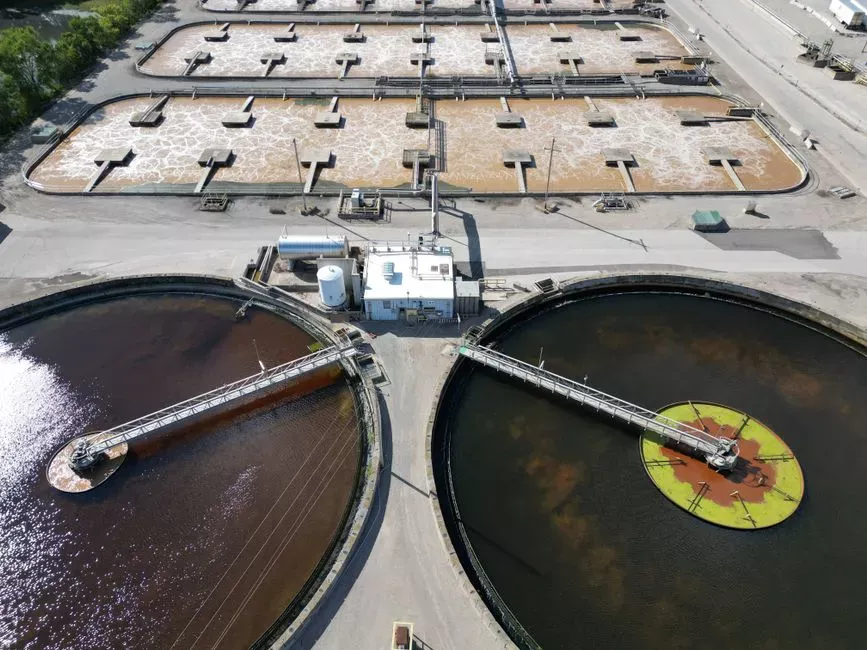
A separator that performs well in a test can still be a poor site investment if it creates uncontrolled vapor transfer or inaccessible maintenance points. EPA’s Preliminary Assessment of Air Emissions from Aerated Wastewater Treatment Processes addresses volatile organic compound losses from aerated wastewater treatment and includes DAF among the industrial processes evaluated. The engineering review should therefore cover enclosure, vapor management, hazardous-area classification, and applicable site safety controls rather than treating aeration as an odor-control detail.
Where practical, segregate volatile compounds from floating oil and evaluate the resulting vapor-control requirements separately. EPA reports that available theoretical and sem-empirical methods can predict VOC emissions from aerated treatment within approximately ±20% where bulk wastewater concentrations are known and competing removal mechanisms are absent, as stated in the EPA assessment. That supports a site-specific engineering check; it does not establish a North Las Vegas emission limit or permit requirement.
Clean-water start-up is a commissioning requirement. Clearwater warns that filling a DAF with wastewater can discharge dirty, unclarified water for an extended period and can damage the recirculation pump and air-saturation system. The startup procedure should specify clean-water fill, recycle, saturation-system commissioning, and transition to wastewater.
| Review area | Bidder or vendor must address |
|---|---|
| Safety and vapor control | Enclosure, ventilation or vapor-management concept, hazardous-area basis, electrical controls, and applicable code requirements. |
| Start-up | Clean-water fill, recycle and saturation commissioning, introduction of wastewater, and stabilization criteria. |
| Maintenance access | Skimmer service, sludge withdrawal, inspection, cleaning, nozzle and saturation-system access, and safe work zones. |
| Operating burden | Chemical use, compressed air, pumps, energy, sludge handling, controls, and operator training. |
| North Las Vegas layout | Available footprint, utilities, truck access, odor and noise constraints, and plant tie-ins. |
Evaluate lifecycle factors qualitatively because the supplied research does not provide comparable operating-cost data. For DAF, review chemical consumption, compressed-air demand, pump and saturation-system maintenance, skimming, and sludge handling. For clarification, review distribution, sludge withdrawal, odor control, and structural access. At either site, request a layout tied to actual footprint, utilities, truck access, noise, odor, and tie-ins rather than accepting a generic arrangement.
A vendor-selection and acceptance plan
A defensible purchase compares bidders against the same documented design basis and separates guaranteed performance from assumptions. Each proposal should identify the separation mechanism, hydraulic basis, materials of construction, chemical-conditioning concept, control philosophy, utility demand, maintenance access, and the route for recovered oil, float, and settled sludge.
Require each bidder to label guaranteed values, design assumptions, and claims that depend on jar testing, pilot work, or site verification. Clearwater’s guidance to obtain application-specific flow, operating, and production information before selecting a DAF design illustrates the basic point: a catalog unit is not a project design. The comparison should also include downstream impacts, not just separator capture.
| Procurement stage | Required deliverable |
|---|---|
| Design basis | Representative flow and wastewater data, treatment objective, downstream train, and applicable permit or sewer constraints. |
| Technical proposal | Mechanism, hydraulic calculations, materials, chemical concept, controls, utilities, access, and maintenance assumptions. |
| Performance allocation | Guarantees separated from design assumptions and site-test-dependent claims. |
| Commissioning | Clear-water fill, recycle, saturation commissioning, float and sludge checks, controls verification, and operator training. |
| Acceptance | Stable hydraulic loading, representative oily wastewater, float recovery, oil capture, solids capture, sludge removal, and control response. |
| Lifecycle review | Chemical use, labor, utilities, recovered-material and sludge handling, maintenance, and downstream treatment impacts. |
Evaluate lifecycle value using the same categories for every bidder: chemicals, labor, utilities, maintenance, recovered-oil and sludge handling, and downstream treatment effects. Purchase price alone will hide operating and disposal burdens. The acceptance protocol must use representative oily wastewater and confirm float recovery, oil capture, solids capture, settled-sludge removal, and control-system response under stable hydraulic loading. Recovered float and bottom solids need a defined handling route before purchase; a plate-and-frame filter press may be evaluated as one dewatering option where its suitability is demonstrated by the actual sludge.
Frequently Asked Questions
Should a North Las Vegas petroleum factory buy DAF or a conventional clarifier?
Choose DAF as the leading candidate when characterization shows significant free or dispersed oil, floatable material, or solids that jar tests show can be conditioned for flotation. Choose conventional clarification when the objective is predominantly removal of heavy, readily settleable solids and testing confirms adequate gravity settling. EPA identifies both as petroleum-refining pretreatment options, so the waste stream—not the equipment label—must decide the selection.
What should I request when budgeting for DAF or a clarifier?
Ask each bidder for a cost breakdown covering equipment, chemical conditioning and storage, utilities, controls, installation, commissioning, operator training, maintenance, recovered-oil handling, and sludge dewatering or disposal. No supported quotation or universal operating-cost range is available from the supplied research. Require bidders to state assumptions for chemical dose, air and power demand, labor, sludge volume, and downstream impacts so those inputs can be evaluated rather than hidden behind one purchase price.
How should a supplier be selected and the equipment sized?
Require a documented design basis covering representative flow, peak and batch conditions, wastewater characterization, treatment objectives, materials of construction, controls, utilities, conditioning concept, maintenance access, and acceptance testing. Then have the vendor or plant engineer verify sizing against those inputs and the full treatment train. Do not accept a flow rate or guaranteed capture percentage without stating the wastewater conditions on which it is based.
Does DAF or clarification alone make the discharge compliant?
No. Physical pretreatment removes suspended oil and solids, but it does not establish compliance for dissolved organics, BOD, COD, or other regulated constituents. EPA’s petroleum-refining example reports influent to activated-sludge units and aerated lagoons containing up to 40 mg/L phenols and up to 200 mg/L BOD under typical conditions, illustrating why downstream biological or advanced treatment may still be necessary. Confirm the complete train against the factory’s permit, sewer requirements, and discharge or reuse objectives.