
What controls a Searsport bulk plant's sewer discharge?
The current industrial-user discharge permit or equivalent control mechanism issued by the receiving publicly owned treatment works controls the discharge, read with applicable sewer-use requirements and 40 CFR Part 403. EPA defines local pretreatment limits as site-specific numerical or narrative discharge limits, including best management practices, and applies them at the industrial user’s point of connection to the POTW collection system. Pass-through and interference remain separate compliance concerns: under 40 CFR 403.3(p) and 403.3(k), respectively, a discharge can violate the POTW’s NPDES permit or disrupt treatment or sludge processes. The supplied research establishes no universal Searsport-area oil-and-grease concentration. A generic hexane extractable material figure or supplier efficiency claim therefore cannot establish compliance without the site-specific permit.
For a petroleum bulk plant near Searsport, request the current permit, sewer map, applicable sewer ordinance, approved BMP language and any state conditions. The petroleum plant pretreatment limits near Titusville discussion provides a useful permit-first structure, but its cited examples are not substitutes for the receiving POTW’s enforceable terms.
| Control item | What the buyer or operator must establish |
|---|---|
| Industrial-user permit or equivalent mechanism | Applicable parameters, concentration and loading limits, monitoring methods, reporting dates, BMPs and notification requirements |
| Sewer-use requirements | Discharge authorization, prohibited materials, operating controls and any sewer-map or connection conditions |
| 40 CFR Part 403 | General pretreatment standards, industrial-user duties and the distinct pass-through and interference tests |
| Site-specific evidence | Wastewater analyses, flow records, slug history, equipment basis and sampling procedures supporting each compliance claim |
Separate true sewer pretreatment from stormwater and refinery rules
EPA’s Chelsea River draft permits regulate stormwater and non-stormwater discharges from specified bulk petroleum storage facilities, not every petroleum terminal discharging to a POTW. EPA describes facilities receiving products by ship or barge, transferring them to aboveground tanks and moving them onward by tanker truck, ship or pipeline; the covered flows included stormwater, hydrostatic-test water, treated groundwater and boiler blowdown, subject to each facility’s permit (EPA, “Draft Water Permits for Bulk Petroleum Storage Facilities,” 2021-03). Those provisions establish a useful scope test, but they do not establish the Searsport permit.
Refinery standards in 40 CFR Part 419 apply only when a facility’s operations and regulatory classification meet that category; a petroleum bulk plant is not automatically a refinery. EPA’s Chelsea River example required, at minimum, oil-water separation before discharge, followed by regular monitoring, control documentation and reporting (EPA, “Draft Water Permits for Bulk Petroleum Storage Facilities,” 2021-03). At a Searsport-area facility, the POTW must identify which storm and non-storm flows enter the industrial pretreatment system and whether any outfall is covered separately by an NPDES stormwater permit. The sewer pretreatment requirements for petroleum bulk plants provide a broader compliance framework.
Build the wastewater stream around the permit
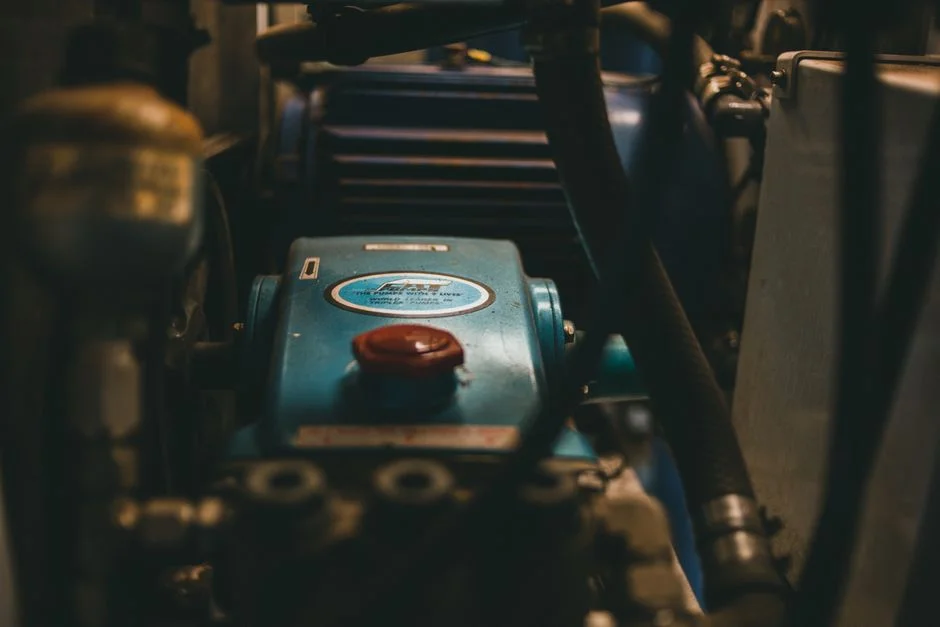
A permit-compliant treatment train starts with a complete inventory of candidate flows, not with a selected machine. Tank-bottom water, coalescer dumps, loading-arm drip, truck or wash-rack wastewater, hydrostatic-test water and stormwater contacting product-handling areas have different origins, oil forms and discharge destinations. Each stream must be mapped to a treatment step, monitoring point and authorized discharge route before equipment loads are assigned.
Use segregated laterals, covered dump valves and dedicated oil-water sewering where practical so clean or separately regulated flows do not enter the pretreatment train unnecessarily. A written slug-control plan should identify what constitutes a slug; procedures for tank transitions, coalescer dumps and batch discharges; the valve that isolates each affected stream; retained-sample locations; POTW notification; root-cause review; and corrective action. HydropureWater identifies 40 CFR 403.8(b)(4) as the slug-control-plan reference used in its refinery discussion, but the permit and POTW must establish the facility’s exact duties (HydropureWater, “How U.S. Petroleum Bulk Plants Meet Pretreatment Limits Before Sewer Discharge,” 2026). The DAF versus clarifier for petroleum wastewater reference is useful for equipment screening.
| Candidate stream | Required engineering record |
|---|---|
| Tank-bottom water and coalescer dumps | Source, batch frequency, retained volume, oil form, available segregation and sampling method |
| Loading-arm drip and wash-rack wastewater | Contributing drains, operating hours, peak flow, emulsification and chemical inputs |
| Hydrostatic-test water | Source, destination, test-water status and POTW acceptance conditions |
| Stormwater contacting product areas | Drainage area, contaminants, segregation route and separate stormwater authorization |
Treat free oil before polishing emulsified oil
Free oil and emulsified oil require different treatment functions. An API gravity separator, corrugated-plate interceptor or coalescer can remove separated oil before dissolved air flotation; those devices do not reliably break emulsions. DAF is suited to emulsified or colloidal oil and suspended solids, with automatic skimming, but a DAF-only train is vulnerable when a slug of free oil reaches the flotation unit. HydropureWater’s field guidance states that free oil from coalescer dumps and tank drops can blanket DAF micro-bubbles and crash the air-to-solids ratio (HydropureWater, “How U.S. Petroleum Bulk Plants Meet Pretreatment Limits Before Sewer Discharge,” 2026).
HydropureWater’s 2026 DAF reference lists 4–300 m³/h across 13 standard models, and its petroleum guidance cites a 20–30% margin on hydraulic and air-to-solids loading; the selected manufacturer must confirm applicability through performance data. The same guidance identifies peak instantaneous flow, daily oil-and-grease load and the permit-derived residual target as the three defensible engineering inputs. For its cited petroleum application, HydropureWater recommends pH adjustment to 6.5–7.5 before DAF and identifies a 50–200 mg/L demulsifier or coagulant dose; jar testing and the final process design must confirm both values (HydropureWater, “How U.S. Petroleum Bulk Plants Meet Pretreatment Limits Before Sewer Discharge,” 2026).
| Treatment stage | Primary function | Selection evidence |
|---|---|---|
| API separator, interceptor or coalescer | Remove separated oil before flotation | Representative free-oil load, peak flow and manufacturer performance data |
| DAF polishing | Remove emulsified or colloidal oil and suspended solids | Peak flow, oil and solids loading, target residual and verified air-to-solids performance |
| Chemical dosing | Destabilize emulsions and support separation | Jar-test results, process pH, dosing range, control method and consumption records |
For procurement, evaluate the complete DAF system for petroleum wastewater polishing only in the context of upstream primary separation and validated chemical addition. An automatic chemical dosing system for DAF pretreatment should be specified around the chemistry demonstrated by testing, not a generic dose.
Size treatment from peak flow and pollutant load
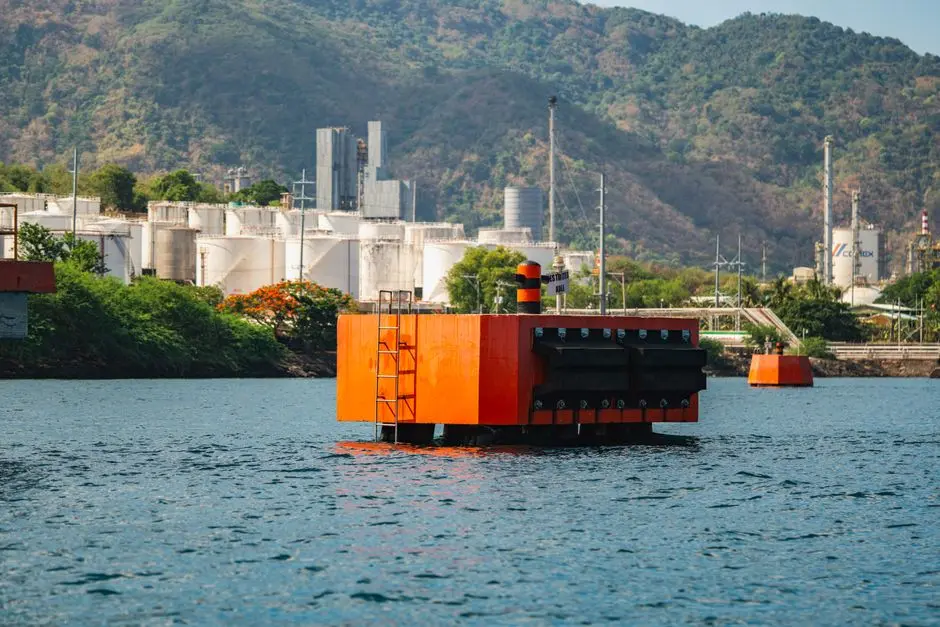
Treatment capacity should be established from peak instantaneous flow, daily pollutant load and the permit-derived residual target—not average daily flow alone. Collect representative analyses for each source, including oil and grease or HEM, free oil, emulsified oil, TSS and any locally regulated hydrocarbon parameters. Record peak flow during tank drops, coalescer dumps, wash-rack operations and batch discharges. Calculate the daily oil-and-grease load from actual flow and concentration data, then compare the proposed treatment result with the permit target.
HydropureWater cites at least 30 minutes of residence time at peak flow as a standard reference for API equipment, subject to confirmation against the selected unit’s manufacturer data (HydropureWater, “How U.S. Petroleum Bulk Plants Meet Pretreatment Limits Before Sewer Discharge,” 2026). The 20–30% margin cited in its 2026 petroleum guidance applies only where the selected equipment’s confirmed performance supports it. Before requesting a fixed-price proposal or performance guarantee, provide bidders with the current permit, sewer map, representative analyses, peak-flow records, known slug events and required monitoring methods.
| Design input | Why it controls the decision | Evidence required |
|---|---|---|
| Peak instantaneous flow | Determines hydraulic capacity and equipment footprint | Event-level flow records and operating sequence |
| Daily oil-and-grease load | Tests whether removal capacity matches mass loading | Source-specific flow and concentration data |
| Permit-derived residual target | Defines the required treatment outcome | Current permit or equivalent POTW control mechanism |
| Oil form and slug behavior | Determines the need for primary separation and controls | Representative sampling and documented dump or batch events |
Verify compliance before every sewer discharge
Treatment performance becomes compliance evidence only through controlled sampling, records and corrective action. EPA’s Chelsea River draft permits required regular discharge monitoring, documentation of controls and frequent reporting to EPA; the actual cadence for a Searsport-area plant must come from its POTW permit (EPA, “Draft Water Permits for Bulk Petroleum Storage Facilities,” 2021-03).
HydropureWater identifies daily visual free-oil inspection, weekly TSS grab sampling, monthly HEM composite sampling by EPA Method 1664A and flow-proportional BTEX/TPH composites where locally required as the minimum self-monitoring cadence it says most POTWs expect in 2026 (HydropureWater, “How U.S. Petroleum Bulk Plants Meet Pretreatment Limits Before Sewer Discharge,” 2026). Treat that as a planning reference, not a Searsport requirement. Use accessible sampling taps, calibrated flow measurement and defensible chain-of-custody procedures. If an excursion or prohibited discharge occurs, isolate the stream, follow permit notification and reporting procedures, retain samples, and document root cause and corrective action.
| Compliance record | Evidence it should contain |
|---|---|
| Monitoring | Date, time, location, method, flow, result, sampler and analytical report |
| Operations | Inspection logs, equipment condition, maintenance and chemical-dosing records |
| Batch and slug events | Volume, oil form, isolation, retained sample, POTW notification and disposition |
| Corrective action | Notification, root-cause analysis, repairs, retesting and closure evidence |
Make the treatment decision from a compliance checklist
The first supplier-selection criterion is compatibility with the actual permit-derived residual target; a general claim of oil-removal efficiency is not a selection basis. The second is demonstrated performance under the plant’s peak hydraulic and oil-loading conditions, including batch and slug events. Evaluate the full train—primary oil-water separation, DAF polishing and chemical dosing where testing supports it—rather than award the project on a standalone flotation unit.
Require each bidder to identify its sizing basis, influent assumptions, applicable performance data, electrical and utility requirements, controls, instrumentation, startup support, operator training and maintenance plan. The proposed effluent concentration must be labeled site-specific and contingent on influent testing; it cannot replace the POTW’s enforceable limit. For a DAF proposal, the equipment submittal should reconcile peak flow, daily pollutant load, primary-separator performance, DAF loading and the residual target rather than quote capacity in isolation. See the DAF system for petroleum wastewater polishing and automatic chemical dosing system for DAF pretreatment only as reference points within the permitted treatment train.
| Approval check | Question the buyer should answer before award |
|---|---|
| Permit compatibility | Does the proposed train address every applicable concentration, loading, BMP and monitoring requirement? |
| Peak performance | Is performance demonstrated for documented batch, dump and wash-rack conditions? |
| Design basis | Are flow, oil load, solids load and residual target traceable to site data? |
| Operations | Are controls, maintenance, startup support, training and chemical consumption defined? |
Frequently Asked Questions
What sewer discharge limit applies to a petroleum bulk plant near Searsport?
The enforceable limit is the numerical or narrative condition in the current industrial-user discharge permit or equivalent POTW control mechanism, read with applicable sewer rules and 40 CFR Part 403. The supplied research establishes no universal Searsport-area concentration. Confirm the parameter, averaging period, monitoring method, BMPs and notification duties with the receiving POTW.
Can a DAF system meet the permit without an oil-water separator?
No universal assurance is possible. HydropureWater’s 2026 field guidance states that free oil can blanket DAF micro-bubbles and crash air-to-solids performance, so upstream primary separation and slug controls must be engineered around actual influent and peak loads. Request demonstrated performance for the complete train.
How much treatment capacity should a bulk plant buy?
Base the design on peak instantaneous flow, daily oil-and-grease load and the permit-derived residual target. HydropureWater’s 2026 petroleum guidance cites a 20–30% margin on hydraulic and air-to-solids loading, but apply it only where the selected equipment’s confirmed performance data support the margin.
Which records should be prepared before a POTW audit?
Keep the permit, sewer map, source-control records, batch and slug notifications, inspection logs, analytical results, flow records, equipment maintenance, chemical dosing and corrective-action documentation together. The sewer pretreatment requirements for petroleum bulk plants and DAF versus clarifier for petroleum wastewater provide supporting process references.