Which Treatment Is Better for Petroleum Wastewater?
Factories with petroleum wastewater should usually choose DAF when free oil, emulsified oil, grease, or light solids are the main treatment challenge; a clarifier is generally more economical when the dominant load is heavy, settleable solids. The best choice depends on wastewater characterization, flow variability, space, utilities, sludge handling, and downstream limits. A hybrid train—DAF after oil-water separation or equalization, followed by biological treatment and clarification—may be appropriate for complex streams. The historical Ozark poultry plant is a useful local precedent, but its wastewater data should not be used to design a petroleum facility.
Dissolved air flotation uses air bubbles to carry light particles, oils, and greases to the surface, where they are skimmed from the treatment tank. Gravity sedimentation, or clarification, removes heavier solids from the bottom of a tank as sludge. Ecologix Systems’ commercial selection guide, published in 2026, describes DAF as suited to oils, greases, and fine solids, while clarifiers suit heavy solids and cost-conscious operations.
The central selection rule is therefore conditional: favor DAF when oil, grease, or emulsified contaminants control the treatment objective; favor clarification when heavy solids dominate and gravity separation is sufficient. The available industrial DAF system for petroleum wastewater and lamella clarifier for heavy-solids separation address different separation jobs.
Petroleum wastewater is not one uniform stream. Runoff, vehicle washing, tank washing, cooling blowdown, process wastewater, and oily sludge can have different flow, oil, solids, temperature, and discharge characteristics. Equipment selection before source characterization creates a risk that the main contaminant is either missed or diluted into an unrepresentative composite.
Characterize the Wastewater Before Selecting Equipment
A defensible selection starts with source-specific samples and an operating envelope, not a catalog capacity. The factory should document what each stream contains, how it changes through the day, what upstream equipment already removes, and what downstream treatment must receive.
- Sample each distinct source and operating condition. Include vehicle washing, tank washing, process wastewater, stormwater, cooling blowdown, and oily cleanup waste where they are relevant. Do not rely only on a diluted composite that conceals an oily slug or a high-solids wash event.
- Request flow, oil and grease, free-versus-emulsified oil, TSS, settleable solids, COD or BOD where relevant, pH, temperature, and conductivity. Identify additional petroleum-specific constituents through the applicable permit or sewer authority.
- Map average flow, peak flow, batch discharges, storm events, shutdown cleanouts, operating hours, and available equalization. Record whether streams can be segregated before treatment.
- Inventory existing oil-water separators, trench drains, sumps, bag filters, and API separators. Their performance and maintenance records belong in the design basis.
- Require each bidder to state its design basis, applied load, operating range, treatment objective, and performance guarantee against the factory’s characterized wastewater.
| Design input | Evidence a buyer should obtain | Equipment decision affected |
|---|---|---|
| Source and flow | Representative samples, average and peak flow, batch and storm events | Equalization, hydraulic capacity, duty-cycle selection |
| Oil condition | Oil and grease data, free-versus-emulsified oil assessment | DAF, free-oil recovery, chemical conditioning |
| Solids | TSS, settleable solids, particle characteristics | DAF versus gravity or lamella clarification |
| Process conditions | pH, temperature, conductivity, COD/BOD where relevant | Materials, biology, chemical dosing, treatment train |
| Existing pretreatment | Separator performance, maintenance history, bypass records | Whether upstream recovery or polishing is required |
If discharge or handling routes may involve screenings or coarse debris, evaluate a rotary mechanical bar screen separately from the primary flotation or clarification duty. It should not be allowed to define an inadequately characterized liquid treatment train.
DAF Performance Where Oil Drives the Treatment Objective
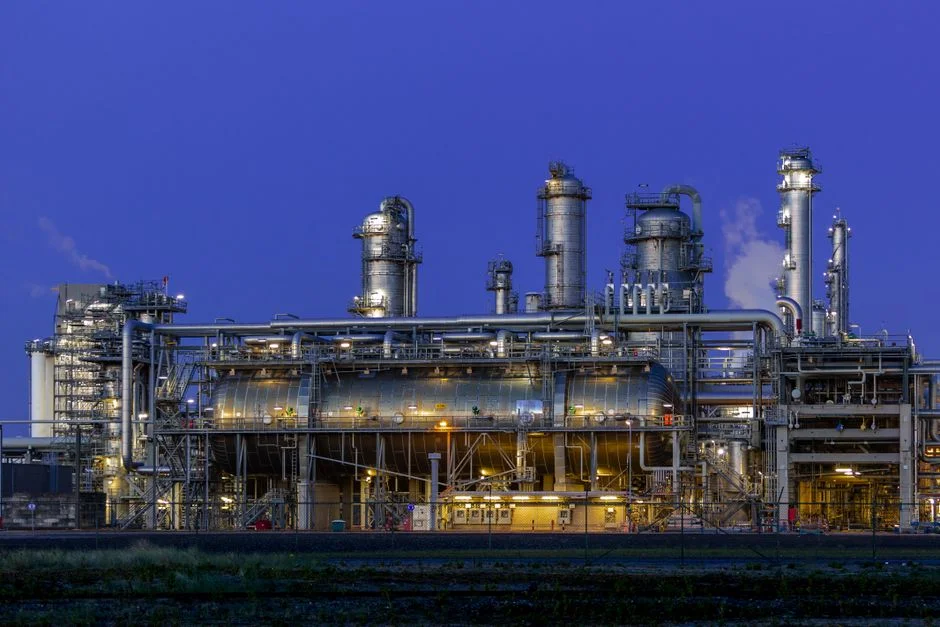
DAF is technically preferable when the controlling contaminant is buoyant or attached to flocculated material. Micro-bubbles attach to oil droplets, grease, and flocculated particles, which rise and are removed from the surface.
Ecologix Systems’ 2026 commercial guide reports that a food-processing plant with high oil content achieved 95% oil-and-grease removal with DAF, compared with 70% for a clarifier on the same stream. That comparison is an illustrative food-processing case, not a guaranteed performance range for petroleum wastewater. Petroleum duty can differ substantially in free oil, emulsification, hydrocarbon composition, flow variation, and wash-water chemistry.
The mechanical burden is also material. Ecologix describes DAF as requiring moderate utility support, including an air compressor and pumps, and associates it with higher upfront and operating demands than gravity settling. A DAF bid therefore needs to include compression, saturation, recycle or pumping requirements, electrical demand, control interlocks, maintenance access, and chemical-conditioning demand. Where chemical conditioning is required, evaluate automatic chemical dosing for DAF pretreatment as part of the complete package.
DAF often fits industrial pretreatment ahead of biological treatment when the objective is to recover oil and reduce the contaminant load entering downstream equipment. It can also remove fine solids that would otherwise settle slowly. The treatment objective should state whether the recovered material is valuable, reusable, or waste; that decision affects skimming, storage, and downstream sludge handling.
The published industrial DAF system for petroleum wastewater range is 4–300 m³/h across 13 standard models, according to HydropureWater’s product literature. That range establishes available configurations, not the required capacity. Average flow, peak demand, wastewater characteristics, operating hours, and equalization must determine the selected model.
Clarifier Strengths in Heavy-Solids Treatment
Clarification is the stronger option when the separation objective is removal of heavier solids through gravity settling. Solids move to the bottom of the tank and are withdrawn as sludge, without relying on air flotation.
Ecologix Systems’ 2026 guide cites a mining facility with heavy sediment loads that selected a clarifier and reduced solids by 90% at lower cost. This is not a petroleum application, but it illustrates why clarification can be economical when settleable material is the dominant load. It does not establish a petroleum removal rate, footprint, or cost.
A lamella clarifier adds inclined plates to increase effective separation area within a compact tank. This arrangement can suit facilities where footprint is constrained, while sludge recirculation and flocculation remain part of the solids-handling design. Its suitability for a petroleum facility still depends on oil behavior: clarification alone does not reliably perform the job assigned to free-oil recovery.
HydropureWater’s published lamella clarifier data state surface loading rates of 20–40 m/h and chemical consumption up to 30% lower than the referenced conventional approach. Those figures should be used as manufacturer-published selection information with the vendor required to identify the referenced comparison basis and demonstrate it against the factory’s actual solids and chemistry.
Clarification also complements DAF. A hybrid treatment train can remove buoyant petroleum material by DAF and then address heavier solids by gravity settling, particularly after biological treatment. When comparing a lamella clarifier for heavy-solids separation with DAF, require the bids to identify which contaminant each unit is credited with removing rather than comparing overall performance claims.
DAF vs. Clarifier: Decision Matrix for Factory Teams
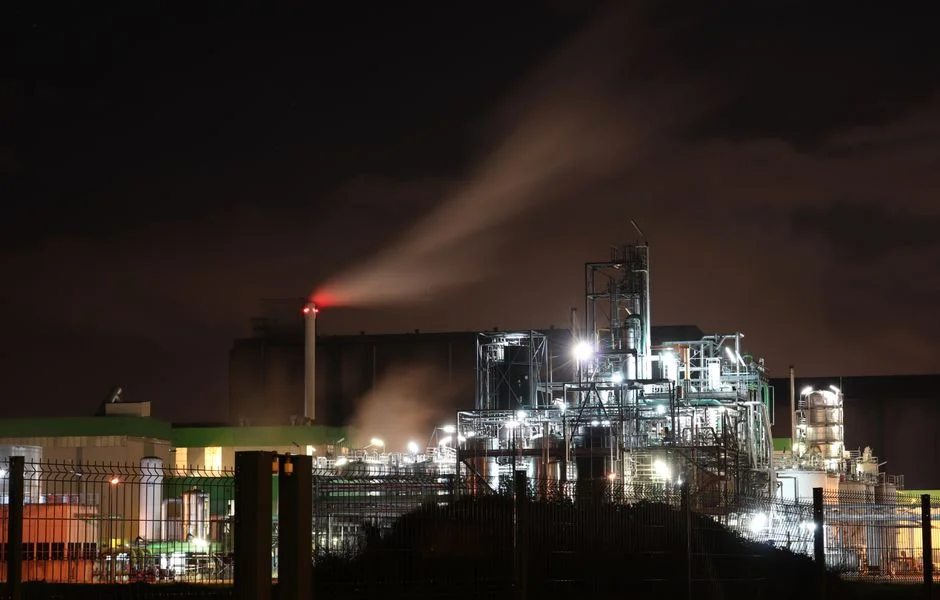
DAF wins the comparison when oil, grease, emulsified material, or fine solids set the treatment objective; clarification wins when heavy solids dominate and the facility prioritizes simpler gravity operation.
| Decision factor | DAF | Clarifier | Factory implication |
|---|---|---|---|
| Removal mechanism | Bubbles float oil, grease, and flocculated material | Heavier solids settle as sludge | Match mechanism to the controlling contaminant |
| Primary contaminants | Oil, grease, emulsified contaminants, fine solids | Heavy and settleable solids | Characterize free oil separately from emulsified oil |
| Typical process position | Oil and solids pretreatment ahead of biology | Primary solids separation or downstream clarification | Evaluate a hybrid train for mixed streams |
| Mechanical utilities | Air compressor and pumps | Lower mechanical intensity; sludge handling still required | Compare utility availability and maintenance load |
| Chemical requirements | May require conditioning for flocculation or emulsification control | May require flocculation where沉降 performance requires it | Price actual reagent demand at characterized loads |
| Sludge | Surface skum plus settled residuals | Bottom sludge | Characterize quantity, oil content, and dewatering need |
| Footprint and structure | Compact flotation package | Lamella plates can increase effective separation area in a compact structure | Verify usable area, access, and installation constraints |
| Operator attention | More equipment and process controls to inspect | Simpler settling duty, but sludge withdrawal remains critical | Assess staffing and preventive maintenance capability |
| Cost profile | Higher equipment and operating demands may be justified for oils | Generally lower operating cost according to Ecologix Systems’ 2026 guide | Use site-specific lifecycle bids, not generic statements |
| Best fit | Oil-dominated or fine-solids streams | Heavy-solids streams | Use a mixed train where both loads matter |
Ecologix Systems’ 2026 comparison states that clarifiers generally have lower operating costs, while DAF may be more cost-effective for specific contaminants such as oils. That is a screening statement, not a plant budget. Electricity, chemicals, operator attention, sludge disposal, replacement parts, and the consequences of an upset can reverse the apparent advantage.
Neither equipment automatically displaces upstream oil-water separation. Clarification is not a substitute for recovery of free oil before biological treatment, and DAF does not remove the need to establish a managed route for collected oil and solids. The conditional verdict is straightforward: DAF-led treatment for oil-dominated streams, clarifier-led treatment for heavy-solids streams, and hybrid treatment for mixed or variable streams.
What Ozark's Local Treatment Precedent Does—and Does Not—Show
The historical Ozark permit shows that DAF can serve as one stage in a larger treatment train; it does not establish a current petroleum design basis. The Arkansas Department of Energy and Environment’s attachment describes a ConAgra turkey-processing plant in Ozark with three parallel DAF cells used for pretreatment.
The documented sequence was DAF pretreatment, complete-mix activated-sludge biological treatment, gravity clarification for TSS removal, and ultraviolet disinfection. This arrangement demonstrates an engineering logic that can be relevant to petroleum wastewater: use flotation for the front-end separation objective, biological treatment for dissolved and biodegradable constituents, and clarification for residual solids.
The permit attachment states that approximately 1.1 million gallons per day of process wastewater was generated. That value is a historical food-processing flow, not a petroleum benchmark and not a sizing input for a new Ozark facility. Petroleum sources may differ in flow, hydraulic duration, oil concentration, wash-water composition, and discharge route.
The same document describes conditioning DAF sludge for land application and combining it with waste activated sludge before thickening and land application. That historical route does not establish the permissible route for a 2026 petroleum project. The project must characterize the resulting residues and confirm current disposal, reuse, pretreatment, and land-application requirements independently.
The useful local lesson is therefore procedural: select equipment by treatment objective and train sequence. Do not treat a historical food-processing permit, its flow, or its sludge route as proof that the same arrangement will comply for petroleum wastewater in 2026. If solids dewatering becomes necessary, evaluate sludge dewatering equipment for DAF and clarifier residuals only after residue characterization and route confirmation.
Build the Petroleum Wastewater Treatment Train
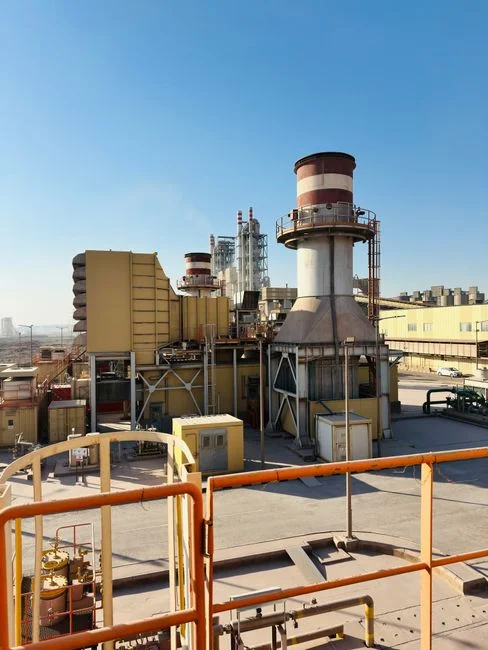
A defensible petroleum treatment train begins with source control and segregation, not with a flotation or clarification purchase order. The sequence below must then be adjusted to the characterized wastewater and the receiving authority’s requirements.
| Sequence stage | Primary purpose | Equipment or decision |
|---|---|---|
| Source control and segregation | Keep oily slugs and high-solids washes out of diluted flows | Segregate runoff, wash water, process wastewater, blowdown, and cleanup waste |
| Equalization | Stabilize flow and load before treatment | Provide the available storage and mixing basis established during characterization |
| Free-oil recovery | Remove recoverable free oil where required | Use existing or new oil-water separation before biological treatment |
| Primary separation | Address the dominant contaminant | DAF for oil or fine solids; clarification for heavy solids |
| Biological treatment | Remove biodegradable constituents where required | Define the process basis from characterization and receiving requirements |
| Final clarification or polishing | Remove residual TSS | Use gravity clarification after biology or DAF when required |
| Disinfection | Apply only where the current permit or sewer authority requires it | Confirm receiving-body requirements |
| Sludge and skum management | Control collected oil, DAF residuals, and clarifier sludge | Characterize, dewater where needed, and confirm disposal or reuse |
For an oil-dominated stream, evaluate DAF after suitable free-oil removal and equalization. Uncontrolled oil slugs should not be fed directly to downstream biological equipment. For mixed streams, evaluate DAF for oil and fine solids, followed by biological treatment and a gravity clarifier for residual TSS. This arrangement reflects the sequence in the historical Ozark precedent, but the hydraulic and pollutant basis must be developed independently for petroleum service.
Include sludge handling in the initial scope. Characterize DAF skum, DAF sludge, and clarifier sludge; determine whether oil recovery is feasible; assess dewatering requirements; and confirm the disposal or reuse route. A sludge dewatering equipment for DAF and clarifier residuals can then be evaluated against the actual residue properties and handling system.
The Arkansas permit document is historical. A 2026 project must verify current discharge, industrial pretreatment, stormwater, and disposal requirements with the Arkansas Department of Energy and Environment and the applicable sewer authority or receiving body. The industrial DAF system for petroleum wastewater and lamella clarifier for heavy-solids separation should enter the final train only after those requirements and the source loads are defined.
Procurement Checklist for Selecting a Supplier in 2026
The lowest equipment bid is not necessarily the lowest project cost. A defensible comparison requires every bidder to expose the design basis, performance responsibility, utilities, maintenance obligations, and downstream consequences.
| Bid review area | Information to request | Reason for the check |
|---|---|---|
| Design basis | Characterized wastewater, design flow, operating mode, treatment objective, applied load | Prevents comparison of equipment for different duties |
| Equipment basis | Tank volume, hydraulic or surface-loading criteria, hydraulic residence, operating range | Tests whether peak and batch conditions are covered |
| Materials | Corrosion and hydrocarbon compatibility information | Addresses process chemistry and operating environment |
| Utilities | Power, compressed air, water, chemicals, drainage | Exposes site-infrastructure obligations |
| Controls and maintenance | Alarms, interlocks, skimming, sludge withdrawal, access, spare parts | Identifies operability and maintenance risk |
| Performance | Guarantee tied to characterized influent and treatment objective | Defines measurable responsibility |
| Outside envelope | Alarm, bypass, upset, and recovery actions when wastewater changes | Addresses petroleum variability and slug loads |
| Implementation | Installation disruption, commissioning, training, support, schedule | Tests deliverability rather than technical performance alone |
| Lifecycle cost | Equipment, chemicals, power, maintenance, labor, sludge handling, disposal | Supports a like-for-like ownership comparison |
Require bidders to provide installed dimensions, access clearances, utility connections, controls architecture, material specifications, and available space requirements. Evaluate automatic chemical dosing where the process depends on repeatable conditioning; the automatic chemical dosing for DAF pretreatment package should be evaluated as part of process reliability, not as an accessory.
The performance guarantee should identify the characterized wastewater, operating conditions, sampling point, parameter, acceptance criterion, and remedy for noncompliance. It should also state what happens outside the agreed envelope. Clarification of these responsibilities is more useful than repeating the generic statement that clarifiers cost less.
Compare total lifecycle requirements for each proposed train: equipment, chemicals, power, maintenance, operator attention, sludge handling, and disposal. For a DAF-led option, review the industrial DAF system for petroleum wastewater together with recycle equipment, chemical dosing, controls, skum management, and sludge dewatering.
Frequently Asked Questions
Which is more cost-effective for petroleum wastewater?
Ecologix Systems’ 2026 commercial guide states that clarifiers generally have lower operating costs, while DAF may be more cost-effective when oils are the controlling contaminant. For an Ozark factory, request competing bids based on the same characterized influent and compare equipment, chemicals, power, maintenance, labor, sludge treatment, and disposal. Do not convert that general comparison into a project price without those inputs.
How do we size a DAF system for a petroleum plant in Ozark?
Size DAF from characterized flow, peak and batch conditions, oil and solids loads, operating hours, equalization, and the treatment objective. Confirm the selected surface-loading or hydraulic criteria and skid configuration in the vendor’s design basis. Do not use the historical 1.1 million-gallon-per-day Ozark food-processing flow as a petroleum design input.
Can DAF and a clarifier be used together?
Yes. A hybrid arrangement can use DAF for oil and fine-solids removal and gravity clarification for heavier solids after biological treatment where required. The units should have separate design duties so that the bid does not assign the same contaminant-removal objective to both stages without an explicit process basis.
What should a supplier demonstrate during selection?
The supplier should demonstrate the wastewater basis, design criteria, material compatibility, controls, maintenance access, utilities, sludge handling, commissioning plan, and performance responsibilities. Ask how the guarantee applies to the factory’s actual wastewater and what operating response is required when a slug or changed composition falls outside the agreed envelope.
Which permit and disposal conditions should an Ozark factory verify?
Confirm current discharge and industrial pretreatment limits, stormwater obligations, sewer requirements, and sludge or oily-residue disposal routes with the Arkansas Department of Energy and Environment and the applicable sewer authority or receiving body. The cited Ozark document is a historical food-processing permit example; its treatment sequence may inform preliminary planning, but its permit terms and sludge route cannot be carried into a 2026 petroleum design without current confirmation.