
Honolulu's Industrial Wastewater Discharge Permit: What the Ordinance Actually Requires
A petroleum bulk plant on Oahu cannot discharge process water, dispenser sump water, vehicle washdown, or stormwater-contacted runoff to the public sewer without first holding a written Industrial Wastewater Discharge Permit (IWDP) issued by the City & County of Honolulu director under ROH §43-5.1. The same subsection (a) requires that the permit be issued for a specified period not to exceed five years, be non-transferable without prior written director consent, and be reissued — not assumed — when ownership changes (S4).
The permit shell is the legal mechanism that drives equipment selection, not the other way around. Under ROH §43-5.1(a)(3) the director must set effluent limits based on applicable general pretreatment standards, categorical pretreatment standards, local limits, and State and local law, and under (a)(4) must spell out self-monitoring, sampling location, sampling frequency, sample type, and recordkeeping (S4). For an industrial user subject to categorical pretreatment standards, ROH §43-5.1(e) adopts the baseline monitoring report requirements of 40 CFR § 403.12(b) (S4). The director may additionally require pretreatment, a compliance schedule, peak flow restrictions, designated discharge sewers, discharge-hour limits, or a self-monitoring program under §43-5.1(b) (S4).
Bypass is prohibited, and the notice procedure mirrors 40 CFR § 403.17. ROH §43-5.1(h)–(i) requires at least 10 days advance notice when a bypass is foreseeable, oral notice within 24 hours for an unanticipated exceedance, and a written submission within five days containing the cause, the exact dates and times, and the corrective steps taken or planned (S4). Substantial changes in the volume or character of pollutants — adding a dispenser, switching to a detergent wash, or bringing on a new waste stream — must be reported to the director in advance under §43-5.1(j), which is the practical trigger for a permit amendment rather than a field modification (S4). Operators building the same compliance documentation stack used at food and beverage sites on the mainland can borrow the structure from this pretreatment compliance playbook for industrial facilities, but the local ordinance language and director discretion remain the controlling inputs.
The Numeric Stack: Federal 40 CFR 419, Hawaii DOH, and POTW Local Limits
The numeric target at the oil-water separator outlet is set by a three-layer stack, and the equipment spec is only defensible when all three layers are visible at design review. EPA's effluent limitation guidelines for the petroleum refining category sit at 40 CFR 419, and the 10 mg/L effluent oil limit for petroleum facilities is the federal floor that anchors every downstream sizing decision (S5). The receiving publicly owned treatment works then layers its own local limits on top; the headworks ceiling most often cited for petroleum discharges is approximately 100 mg/L oil and grease, which means the OWS outlet must sit well under the federal 10 mg/L target to leave margin for analytical variability and routine upsets (S5). Hawaii Department of Health rules and the City & County pretreatment program both reference 40 CFR 403 prohibited discharges, so any petroleum bulk plant waste stream must also be screened for flash point, pH, and chemical oxygen demand before it leaves the site (S2).
Two further overlays change the design envelope. Aboveground petroleum storage over 1,320 gallons pulls the site into EPA's 40 CFR 112 Spill Prevention, Control, and Countermeasure rule, which adds secondary containment, monthly visual inspections, and a 5-year engineering review on top of the Honolulu permit obligations (S5). Emulsified oil — typical of high-pressure hot-water wash pads or detergent cleaning — does not separate in a plain gravity OWS and is treated by the permit writer as a separate pollutant, which is the regulatory trigger for a downstream DAF or carbon polish step (S5). Federal civil penalties under the Clean Water Act start at $67,544 per day per violation, so the cost of missing the 10 mg/L target is large enough that sizing margin is cheaper than a single out-of-compliance event (S5).
| Layer | Authority | Numeric Target (Oil & Grease) | Operational Implication |
|---|---|---|---|
| Federal floor | 40 CFR 419 | 10 mg/L at discharge point | Sets the minimum engineering target for the OWS outlet |
| Local ceiling | Receiving POTW local limits | ~100 mg/L at the headworks | Requires outlet performance well below 10 mg/L for margin |
| Categorical / 403 | 40 CFR § 403.12(b) | Baseline monitoring report | Adopted by ROH §43-5.1(e) for categorical users |
| SPCC overlay | 40 CFR 112 | Trigger at >1,320 gal aboveground | Adds secondary containment and 5-yr review |
| Prohibited discharges | 40 CFR 403 | No flammable, corrosive, or pass-through pollutants | Screens flash, pH, and COD at the outfall |
The Physical Treatment Train: API 421 OWS, Coalescing Plates, and DAF Polishing
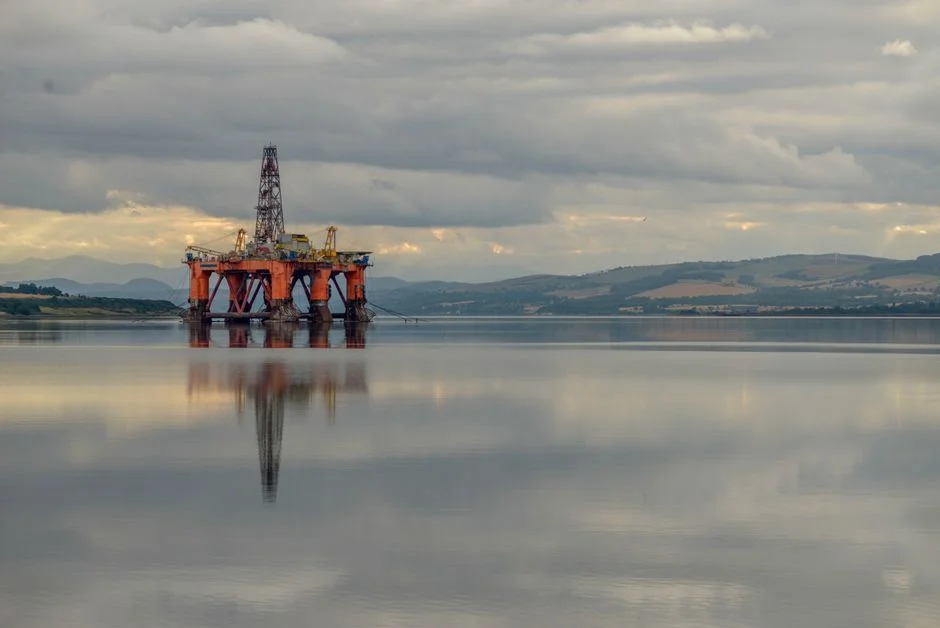
The numeric stack above resolves to a four-stage treatment train that a Hawaii procurement manager can put on a drawing. Stage 1 is an API Publication 421 gravity oil-water separator: a tank built to exploit the ~0.15 g/mL density gap between free oil and water, typically 6 ft wide by 12–30 ft long with 20–40 minute retention, handling free and dispersed oil but not emulsified or dissolved hydrocarbons (S5). Stage 2 is a coalescing plate or oleophilic-media pack, where inclined plates or media force droplets to merge and rise under Stokes' law, capturing down to 20 microns in 2–5 minutes versus the ~150-micron floor of a plain gravity separator, so a much smaller footprint still meets the 10 mg/L outlet target (S5). For context on whether to send the effluent to a clarifier or a DAF, the DAF vs gravity clarifier selection guide for petroleum wastewater walks the same trade-off in more detail.
Stage 3 is a dissolved air flotation (DAF) system for emulsified oil, wash-pad detergent streams, or high-TSS loadings: micro-bubbles lift oil and suspended solids to the surface for skimming, with surface loading rates that suit high-throughput terminals (S5). Stage 4 is carbon adsorption or multimedia filtration as a polish step when the POTW local limits include BTEX, dissolved hydrocarbons, or trace metals from anti-icing or additive carryover; an integrated coagulation-sedimentation-filtration package can be specified when TSS and trace metals must drop together (S5). Bypass routing and spill containment are integral to the train: secondary containment beneath the separator is required in jurisdictions such as Florida when recoverable product exceeds 100 gallons, and Hawaii's SPCC overlay adds similar pressure to design for containment at the design flow, not the average flow (S5).
| Stage | Unit Operation | Removes | Does Not Remove | Typical Removal Floor |
|---|---|---|---|---|
| 1 | API 421 gravity OWS | Free and dispersed oil, settleable solids | Emulsified or dissolved hydrocarbons | ~150 microns |
| 2 | Coalescing plate / oleophilic media | Dispersed oil down to 20 microns | True emulsions, dissolved organics | 20 microns in 2–5 min |
| 3 | Dissolved air flotation | Emulsified oil, high TSS | Dissolved BTEX, trace metals | Bulk oil + TSS lift |
| 4 | Carbon adsorption / multimedia polish | Dissolved hydrocarbons, trace contaminants | None at this stage | Final polish to local limit |
Sizing the OWS for a Honolulu Bulk Plant
Sizing starts with peak flow, not average flow — a separator sized to mean flow will bypass the first heavy storm and trigger a sheen complaint at the outfall. Plumbing code calculations use fixture unit counts: each vehicle service bay floor drain contributes about 6 fixture units, each wash rack about 12, and each fuel island trench drain about 8 per dispensing position, with the total converting to gallons per minute through UPC Table 1014.3.6 (S5). A three-bay auto shop typically sizes out at a 750-gallon unit under that method, and a petroleum bulk plant scales upward from there based on dispenser count, draw-off frequency, and wash-pad throughput (S5).
Stormwater sizing follows a different path. Most state design manuals use the 85th-percentile 24-hour storm, which ranges from 0.5 inches in arid regions to 1.5 inches along the Gulf Coast, and a coalescing unit that meets the 10 mg/L oil target in dry weather may still bypass in peak stormwater unless sized for that event (S5). API 421 gravity units are favored at large terminals where flow stays above ~10 gpm; below that threshold, flow patterns inside the tank break down and a coalescing plate unit is the safer choice (S5). The 2026 reference ranges for equipment and installation — for example, a 1,000-gallon coalescing tank at roughly $6,000–$9,000 for equipment with installation commonly running $8,000–$15,000 in a typical metro market (S5) — should be treated as reference points, not project quotes, because Oahu labor, freight, and corrosion-resistant materials commonly push figures above mainland averages. For higher-throughput polish steps, a dissolved air flotation (DAF) system is sized off surface loading rate and influent oil plus TSS, not the same fixture-unit table the OWS uses.
Monitoring, Reporting, and Recordkeeping Honolulu Expects to See
Honolulu's permit requires identification of the pollutants to be monitored, sampling location, sampling frequency, and sample type, all backed by recordkeeping under ROH §43-5.1(a)(4) and (7) (S4). A monthly visual plus quarterly oil and grease sampling cadence is consistent with the NPDES industrial stormwater pattern cited for separator permits, and the Honolulu director has discretion to require more frequent sampling for higher-risk discharges under ROH §43-5.1(b) (S4, S5). Operators are expected to measure oil layer thickness with a clear sampling tube, sludge depth with a sludge judge, and water clarity at the outlet with a visual sheen test, and to pump the tank when the oil layer reaches 6 inches, the sludge layer reaches 12 inches, or a sheen appears at the outfall (S5).
Recovered oil ships on a bill of lading to a 40 CFR 279 used-oil recycler; sludge at a petroleum site can classify as RCRA hazardous waste F037 or F038 and must move under a 40 CFR 262 uniform hazardous waste manifest, with manifests retained on site for 3 years (S5). Any substantial change in the volume or character of pollutants — for example, adding a new dispenser or switching to a detergent wash — must be reported to the director in advance under ROH §43-5.1(j) (S4). A clean binder with pump tickets, analytical reports, monthly inspection checklists, and a current SPCC plan is what an EPA inspector expects to see within 10 minutes of arrival, and sites that produce paperwork on request almost always close out an inspection without a notice of violation (S5).
| Frequency | Action | Trigger to Pump or Report | Recordkeeping Source |
|---|---|---|---|
| Monthly | Visual inspection, oil/sludge layer measurement | Oil ≥ 6 in, sludge ≥ 12 in, or outfall sheen | S5 field-check practice |
| Quarterly | Oil and grease sampling at outlet | Result > 10 mg/L triggers NOV within ~30 days | S5 NPDES industrial stormwater pattern |
| Per event | Bypass notice (foreseeable / unanticipated) | 10 days advance, 24 h oral, 5 d written | ROH §43-5.1(i) (S4) |
| Per change | Substantial change in discharge character | New dispenser, new detergent, new stream | ROH §43-5.1(j) (S4) |
| 5 years | SPCC engineering review | Aboveground storage > 1,320 gal | 40 CFR 112.8 (S5) |
| 3 years | Retain waste manifests on site | Recovered oil, F037/F038 sludge | 40 CFR 262 / 279 (S5) |
Frequently Asked Questions
What budget should a Hawaii petroleum bulk plant plan for a compliant OWS plus DAF polisher in 2026?
Use 2026 reference ranges as a starting point — for example, a 1,000-gallon coalescing tank at roughly $6,000–$9,000 for equipment with installation commonly running $8,000–$15,000 in a typical metropolitan market, and a 5,000-gallon API gravity unit for a truck terminal at $18,000–$35,000 (S5). On Oahu, request separate line items for freight, corrosion-resistant materials, and prevailing-wage labor, and ask each bidder to confirm whether their scope covers the DAF polish step and the SPCC secondary containment so the comparison is apples to apples.
How do I pick a qualified supplier for a Honolulu IWDP-compliant treatment train?
Confirm the contractor holds a state plumbing license, has documented experience with SPCC-regulated facilities, and can provide references from at least three commercial or industrial separator installations (S5). Require each bidder to scope to the same tank volume, same material, same bedding, same piping tie-ins, and the same permit scope, and verify that the bid explicitly addresses ROH §43-5.1 self-monitoring deliverables and 40 CFR 419 effluent targets before signing.
When does a petroleum bulk plant need to add a DAF or carbon polish step beyond a basic OWS?
Add a DAF whenever the waste stream contains emulsified oil from high-pressure hot-water wash pads, detergent cleaning, or high TSS loadings, because a plain gravity OWS and even a coalescing pack will not break a true emulsion (S5). Add a carbon or multimedia polish step when the receiving POTW's local limits address BTEX, dissolved hydrocarbons, or trace metals from additive carryover, and confirm the specific pollutant list in the issued IWDP before specifying the polish media.
What is the biggest compliance risk that gets a Honolulu IWDP holder a notice of violation?
The most common finding during EPA compliance audits is a missed scheduled inspection, and a discharge monitoring report that shows oil and grease above 10 mg/L typically triggers a notice of violation within 30 days, with federal Clean Water Act penalties assessed per day per violation (S5). Build the inspection cadence, the sampling schedule, and the manifest retention into a single binder before the first turnover so the documentation is ready within the first 10 minutes of an inspector's arrival.