industrial wastewater primary clarifier design parameters
Use industrial wastewater primary clarifier design parameters of 30–50 m³/m²·d surface loading, 1.5–2.5 hours detention, and a 0.3–0.6 m sludge blanket. Those settings remove about 50–65% TSS when weir loading stays at 125–250 m³/m·d. Inlet speed near 0.3 to 0.7 m/min limits blanket scour on variable industrial flow.
Target particle settling velocity is 0.5 to 1.5 m/h, also stated as 0.5 to 1.5 meters per hour, and that speed sets overflow rate. In Surat, a textile plant ran effluent near 100 mg/L TSS and 30 mg/L BOD against CPCB limits of 50 mg/L TSS and 20 mg/L BOD. An undersized, aging tank let solids leak into aeration, raising power use and cutting biological efficiency. An EPA 2023 Operator Survey reported that about 40% of industrial ETPs miss clarification targets from poor design or weak operations.
According to the Texas Commission on Environmental Quality, 30 TAC §217.129 still caps design-flow surface loading at 1,000 gallons per day per square foot, about 40.7 m³/m²·d, excluding recirculation. Detention at design flow must be at least 1.8 hours, and at least 0.9 hour at peak flow, with sidewater of at least 10.0 feet. A 2026 reading of that rule text and of Washington Ecology Chapter T2 found no newer federal replacement for these caps.
Most plants we size for textile and food waste sit near the low end of 30–50 m³/m²·d when influent TSS swings day to day. CPCB’s industry list still carries a textile effluent standard at serial 06, covering integrated units and printing, dyeing, or bleaching. Keep the permit numbers, including the 50 mg/L TSS and 20 mg/L BOD cited for Surat, ahead of any generic band.
How Gravity Removes Settleable Solids Before Biology
A sedimentation tank separates settleable solids from wastewater by gravity alone. Industrial units usually include an inlet zone, a settling zone 1.5 to 3 meters deep, and a controlled outlet zone. Wastewater enters at 0.3 to 0.7 m/min so turbulence does not re-suspend solids or scour the sludge blanket.
Stokes’ Law sets particle settling velocity; denser particles fall faster. Hydraulic retention time should stay at least 1.5 hours under the EPA 2024 guidance carried in this guide, which limits short-circuiting. Oils and greases with specific gravity below water float as scum. Rotating skimmers or fixed baffles take that scum off before secondary treatment.
According to NPTEL IIT Kharagpur (Module 16, Lecture 21), a flow-through velocity of 1 cm/sec at average flow suits organic solids above about 0.1 mm. That 1 cm/sec equals 0.6 m/min and sits inside the 0.3 to 0.7 m/min band. The same lecture multiplies column overflow rates by 0.65 to 0.85, and detention by 1.25 to 1.50, to cover wind, eddies, and density currents in the field.
For the mechanics walk-through, read How Does a Primary Clarifier Work? Engineering Mechanics, Ef. Most plants we size for oily kitchens and dye houses see scum, not the blanket, as the first upset.
When FOG loads overwhelm skimming alone, a Dissolved Air Flotation (DAF) System can cut floatables upstream of settling. For a fuller mechanics walk-through, see how a primary clarifier works in engineering practice.
Loading, Detention, and Blanket Limits That Hold TSS Removal
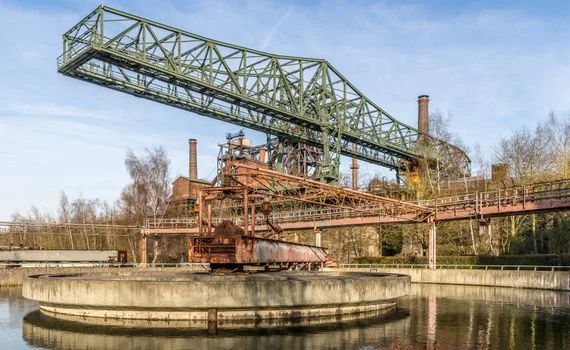
Stable removal depends on specs that balance capture with day-to-day operation. For industrial wastewater, surface loading rate is typically 30–50 m³/m²·d, tighter than the 20–40 m³/m²·d municipal band under CPCB norms in this guide. Detention time of 1.5–2.5 hours generally yields 50–65% TSS removal. Holding wastewater beyond 3 hours can turn the sludge layer anaerobic, release gas, and hurt settling.
Keep sludge blanket depth between 0.3–0.6 m per the EPA guidance in this guide. Deeper blankets can trap more solids but need more frequent pumping and raise carryover risk. Weir loading of 125–250 m³/m·d keeps effluent velocity low enough not to scour settled sludge. Typical industrial influent sits at 100–500 mg/L TSS and 150–600 mg/L BOD.
Clarifiers lose TSS efficiency when influent drops below 100 mg/L because particle-to-particle flocculation weakens. Most plants we size for thin industrial influent add a coagulant only after a jar test, not by default. According to Washington Ecology (Publication 98-37 WQ, Chapter T2), domestic units at the recommended overflow should remove 50 to 60 percent of suspended solids and 30 to 35 percent of BOD5.
Ecology’s Table T2-2 sets primary-solids overflow at 800 to 1,200 gallons per day per square foot at average design flow, about 33 to 49 m³/m²·d. Peak design flow on that table is 2,000 to 3,000 gallons per day per square foot. Co-thickening with waste activated sludge drops the average band to 400 to 600 gallons per day per square foot. Nondomestic wastewater may not match the domestic 50 to 60 percent solids figure, so the 50–65% TSS industrial band stays in use here.
Ecology also says weir rates should range from 10,000 to 40,000 gallons per day per linear foot, about 124 to 497 m³/m·d. This guide keeps industrial weirs at 125–250 m³/m·d, the lower half of that span. Liquid detention should not be greater than 2.5 hours at average design flow, which matches the top of the 1.5–2.5 hours band. Side water depth should be 8 to 14 feet so flights, inlet baffles, and sludge storage all fit.
NPTEL’s design band is 35 to 50 m³/m²·d at average flow, with 40 m³/m²·d typical, and 80 to 120 m³/m²·d at peak when secondary treatment follows. Weir loading used for design is under 185 m³/m·d, inside a 125 to 500 m³/m·d envelope. Common detention practice is 1.5 to 2.5 hours, and the lecture allows 1 hour to 2.5 hours. Texas is stricter on the minimum: 1.8 hours at design flow, rather than a 1.5 hour floor.
| Parameter | Industrial Wastewater (EPA 2024) | Municipal Wastewater (CPCB Norms) | Impact on Performance |
|---|---|---|---|
| Surface Loading Rate (SLR) | 30–50 m³/m²·d | 20–40 m³/m²·d | Higher SLR reduces footprint but can decrease TSS removal efficiency. |
| Detention Time (HRT) | 1.5–2.5 hours | 1.5–3 hours | Longer HRT improves settling but risks anaerobic conditions if >3 hours. |
| Sludge Blanket Depth | 0.3–0.6 m | 0.3–0.7 m | Deeper blankets increase capture but require more frequent pumping. |
| Weir Loading Rate | 125–250 m³/m·d | 100–200 m³/m·d | Prevents scouring of settled solids and maintains effluent quality. |
| Influent TSS (Typical) | 100–500 mg/L | 100–300 mg/L | Lower TSS (<100 mg/L) reduces clarifier efficiency. |
| Influent BOD (Typical) | 150–600 mg/L | 150–300 mg/L | Primary clarifiers remove a portion of BOD associated with TSS. |
Texas also caps peak surface loading at 1,800 gallons per day per square foot. Peak weir loading must not exceed 20,000 gallons per day per linear foot for plants of 1.0 million gallons per day or less. Larger plants may use up to 30,000 gallons per day per linear foot at peak flow.
The BOD5 removal used for design must not exceed 35% unless a pilot study, or similar full-scale data, justifies more. Inlet stilling-well vertical velocity must not exceed 0.15 feet per second at peak flow.
circular vs rectangular clarifier for industrial wastewater
Circular units often need 20–30% more land for the same flow than rectangular tanks, per the EPA 2024 design manuals cited in this guide. That footprint gap matters on tight industrial sites. Shape choice changes both first cost and the scraper you must maintain.
For 50–200 m³/h service in 2025, circular CAPEX is estimated at ¥150,000 to ¥400,000. Rectangular units often land higher, about ¥200,000 to ¥500,000, because of chain-and-flight hardware. Circular scrapers use roughly 0.05–0.1 kWh/m³. Rectangular drives may use 0.08–0.15 kWh/m³.
Annual maintenance is about ¥10,000–¥30,000 for circular units versus ¥20,000–¥50,000 for rectangular trains. Circular scrapers usually run at 3–5 rpm. Rectangular flights move at 0.3–0.6 m/min. High-flow municipal plants often favor circular tanks. Food and textile sites short on land often favor rectangular layouts.
NPTEL lists circular flight speed at 0.02 to 0.05 rpm, with 0.03 rpm typical, and rectangular scraper speed at 0.6 to 1.2 m/min, with 0.9 m/min typical. Keep the 3–5 rpm and 0.3–0.6 m/min figures as the equipment notes already in this guide. Ask the vendor whether 3–5 rpm is the motor shaft or the rake arm before you compare energy.
According to Washington Ecology, circular tanks use a center feed well and rotating scraper arms, and rectangular tanks use chain-and-flight collectors. Rectangular launders should cover 33 to 50 percent of basin length. Rectangular width is often limited to 24 feet per flight, unless parallel collectors are used. Stacked tanks save land and usually cost more to build, and they restrict access to the lower tank.
Most plants we size on tight industrial plots pick rectangular tanks when the extra chain maintenance is acceptable. Where footprint is the binding constraint, a high-efficiency sedimentation tank with lamella plates can shrink the area further. The lamella clarifier working principle page covers that plate-settler path.
| Feature | Circular Clarifier | Rectangular Clarifier | Trade-offs |
|---|---|---|---|
| Footprint | Higher (20-30% more area per m³/h) | Lower (More space-efficient) | Rectangular is better for limited space. |
| CAPEX (50-200 m³/h) | ¥150,000–¥400,000 | ¥200,000–¥500,000 | Rectangular can have higher initial cost for similar capacity. |
| Energy Use (per m³) | 0.05–0.1 kWh | 0.08–0.15 kWh | Circular generally more energy-efficient for sludge movement. |
| Annual OPEX (Maintenance) | ¥10,000–¥30,000 | ¥20,000–¥50,000 | Rectangular has higher maintenance costs due to mechanical wear. |
| Sludge Removal Mechanism | Rotating scrapers (3-5 rpm) | Chain-and-flight system (0.3-0.6 m/min) | Different maintenance requirements and potential failure points. |
| Typical Application | High-flow municipal plants | Space-constrained industrial sites | Application dictates preference. |
primary sludge dewatering cost for textile wastewater
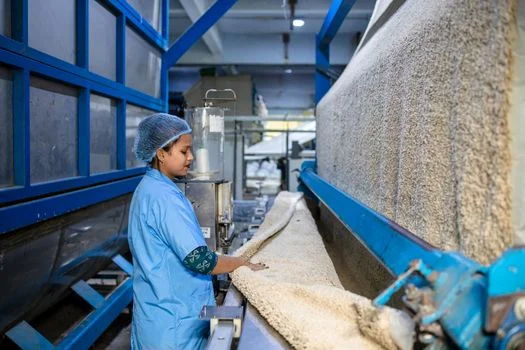
Primary sludge dewatering cost for textile wastewater starts from a wet cake, not from a dry ton. Settling produces dense primary sludge at about 93–97% moisture. Dewatering to 70–80% moisture cuts haul and disposal cost. Plate-and-frame filter presses reach about 95% solids capture, with CAPEX often ¥500,000 to ¥2,000,000.
Belt presses cost less up front, at ¥300,000–¥1,000,000, and capture about 90%. Centrifuges automate well at about 92% capture, with CAPEX of ¥800,000 to ¥3,000,000. Disposal cost spans ¥200–¥500 per ton for landfill, ¥800–¥1,500 for incineration, and ¥50–¥200 for permitted agricultural reuse.
A Tirupur textile plant in 2024 cut sludge disposal cost 40% by moving from belt presses to filter presses. Solar beds or thermal dryers can push moisture to 10–30% for fuel use where allowed. A plate and frame filter press for sludge dewatering is one practical path when cake dryness drives OPEX.
According to Washington Ecology (T2-3.2.3 and T2-2.2.13), collectors must keep primary sludge from rising above a 2-foot depth, about 0.61 m, and sludge detention time shall be less than 1 hour at average design flow. That 1 hour cap is stricter than the 4–8 hour pumping clock listed in the questions below. Most plants we size for textile sludge still pump on the 4–8 hour clock while the blanket stays inside 0.3–0.6 m, and they shorten the interval when gas or odor shows up.
Ecology calls for sludge piping of at least 4 inches and a line velocity of at least 2 feet per second. Texas 30 TAC §217.129 requires a gravity sludge transfer pipe of at least 8.0 inches. Use the larger pipe when the state rule and the vendor drawing disagree. Tank dewatering gear should empty a basin in 24 hours without bypassing secondary treatment.
primary clarifier troubleshooting high tss effluent
Effluent TSS above 100 mg/L often points to short-circuiting, excess flow, or a sludge blanket deeper than 0.6 m. Damaged inlet baffles need repair. Cutting influent flow by 20% can calm the tank. Raise sludge pumping if blanket depth exceeds 0.6 m.
Floating sludge can mark anaerobic pockets or grease. Skim weekly and check upstream FOG sources. Uneven floor deposits may mean circular scrapers off the 3–5 rpm band, or worn rectangular chains that need replacement every 2–3 years. Scum thicker than 5 cm calls for daily skimming and a FOG audit.
Monthly checks of scrapers, weirs, and pumps, plus quarterly blanket depth readings, prevent most carryover events. Most plants we size see the high-TSS events start with a blanket past 0.6 m, not with a level weir. According to Ecology, inlet channels should keep at least 2 feet per second at one-half design flow so solids do not settle in the channel and then slough.
Ecology also says a water drop over 8 inches at the launder can strip odors, so cover that drop or vent it when neighbors complain. With one tank out of service, the tanks still online must pass peak design flow without exceeding the allowable surface overflow rate.
| Symptom | Potential Causes | Diagnostic Steps & Solutions |
|---|---|---|
| High TSS in Effluent (>100 mg/L) | Short-circuiting, Excessive Flow Rate, Sludge Blanket Depth too High | Check inlet baffles for damage/blockage. Reduce influent flow by 20%. Increase sludge pumping frequency if blanket depth >0.6m. |
| Floating Sludge | Anaerobic Conditions, Grease/Oil Buildup | Ensure adequate aeration in secondary treatment. Clean scum skimmers weekly. Investigate upstream FOG sources. |
| Uneven Sludge Distribution | Improper Scraper Alignment (Circular), Chain Wear (Rectangular) | Adjust scraper speed/alignment (3-5 rpm for circular). Inspect and replace worn chains/flights in rectangular units (every 2-3 years). |
| Scum Accumulation (>5 cm) | Insufficient Skimming Frequency, High FOG in Influent | Increase scum skimming frequency to daily. Consider upstream DAF unit installation. |
| Odor Issues | Anaerobic Sludge Digestion, Scum Layer Decomposition | Increase sludge removal frequency. Ensure adequate aeration. Remove scum promptly. |
primary clarifier selection guide for industrial etp
Selection for an industrial ETP starts by sizing average and peak flow in m³/h. EPA practice cited here often designs at 1.5 times average daily flow. If land is scarce, remember circular tanks need 20–30% more area than rectangular ones. Match hydraulics, space, sludge, cost, and the permit in the same pass.
High FOG streams need stronger scum baffles and skimming. Very high TSS may need detention up to 2.5 hours. Compare lifecycle cost: circular units may cost less to maintain, while rectangular units can cost more each year to keep chains and flights online. CPCB industrial ETPs in this guide need at least 50% TSS removal, and EPA municipal targets often sit at 60% or higher.
Check flow, area, loading bands, and haul cost before you freeze a datasheet. Confirm average flow, peak flow, and the 1.5 times average daily flow area check. Keep surface loading, detention, weir loading, and blanket depth inside the bands in the table above. Price cake haul at the per-ton rates for landfill, incineration, or reuse, and read the consent TSS and BOD limits rather than hoping for 50–65% removal on every waste.
When you need the owned overview page, start with the primary clarifier guide, then return here for parameter math and failure checks. Dissolved organics still need biological stages or chemical help from a coagulant dosing system.
Plants that must polish dissolved load after biology should read the mbr working principle page before they treat a settler as the final barrier. Most plants we size for industrial ETPs stop the settler at TSS and FOG, then let biology or a membrane take ammonia and residual BOD. Fixed-film trains, such as trickling filters, should still see a settler or a fine screen first so media does not plug.
Who This Is For, Who Should Look Elsewhere, and the Next Step
This guide is for plant engineers and buyers sizing gravity settlers for industrial TSS and BOD control. Teams chasing dissolved nutrient removal, or ultra-compact polishing, should look at biological reactors, flotation, or plate settlers instead. Sites with peak flows above the 2,000 to 3,000 gallons per day per square foot Ecology peak band need equalization or a second tank, not a deeper weir.
If your flow, FOG, and land data are ready, map them against the surface loading, detention, and weir ranges above. Send average flow, peak factor, influent TSS, and FOG notes when you request a duty-specific clarifier layout.
Frequently Asked Questions
What is the difference between primary and secondary clarification?
Primary tanks remove settleable solids, about 50–70% TSS, before biology and yield sludge at 93–97% moisture. Secondary tanks after biology separate biomass at ≥99% TSS and produce sludge at 98–99% moisture, using the EPA 2024 figures in this guide. According to Washington Ecology (section G2-1.2.1), secondary treatment removes about 85 percent of the organic matter in sewage. Gravity settling alone does not reach that organic removal, and dissolved load still moves downstream.
Can settling alone remove dissolved ammonia or phosphorus?
No, settling alone cannot remove dissolved ammonia or phosphorus. Physical separation targets suspended solids only. Dissolved organics, ammonia, and phosphorus need biological treatment or chemical precipitation. According to Washington Ecology (Table T2-1), chemical salts added on the influent can precipitate phosphorus, while plain gravity cannot, and most plants we size still send nutrients on to a biological stage.
What surface loading rate should industrial plants use?
Industrial plants should use a surface loading of 30–50 m³/m²·d for primary solids settling. Municipal CPCB norms carried in this guide usually sit at 20–40 m³/m²·d. According to Washington Ecology (Table T2-2), domestic average flow uses 800 to 1,200 gallons per day per square foot, about 33 to 49 m³/m²·d. Texas caps design flow at 1,000 gallons per day per square foot, excluding recirculation, and higher rates shrink footprint and can cut TSS removal.
How often should primary sludge be pumped?
Pump primary sludge every 4–8 hours while holding blanket depth at 0.3–0.6 m. Over-pumping wastes energy, and under-pumping sends solids downstream. According to Washington Ecology (T2-2.2.13), sludge detention time shall be less than 1 hour at average design flow and loading. That 1 hour rule is a design cap against septic sludge, not a ban on a 4–8 hour operator round, so shorten the interval when the blanket climbs or odor appears.
What is the CAPEX for a 100 m³/h unit?
Expect about ¥250,000 to ¥600,000 in 2025 for a 100 m³/h unit, excluding civil works. Price depends on concrete or steel, a circular or rectangular layout, and options such as covers. Circular CAPEX for 50–200 m³/h here is ¥150,000 to ¥400,000, and rectangular CAPEX is ¥200,000 to ¥500,000. A 100 m³/h duty sits inside that 50–200 m³/h band, so the wider quote overlaps both shapes.