

What a Filter Press Removes from Coal Mining Wastewater
A filter press dewaters coal mining wastewater by applying pressure to conditioned slurry, retaining coal fines and tailings solids on filter cloth while recovering the liquid fraction. The appropriate design depends on feed solids, particle size, clay content, required filtrate quality, cake moisture and discharge method. A membrane press adds diaphragm squeezing after the chambers fill; the mining supplier source recommends inflation at about 80% capacity, while a standard plate-and-frame press uses filtration pressure alone. HydropureWater offers plate-and-frame presses from 1 m² to 500 m² with manual, hydraulic or automatic PLC operation. Performance must be verified on representative coal slurry because published results vary by feed and conditioning.
The press is one stage in a coal-site separation train, not a complete wastewater treatment system. A typical sequence is feed characterization, clarification or thickening where required, chemical conditioning, plate-and-frame filtration, cake discharge, and filtrate collection or recycling. The distinction matters because clarification removes suspended material from the water stream, while dewatering converts a concentrated solids stream into a handleable cake. A plate-and-frame filter press for coal mining wastewater should therefore be selected around the required solids and water outlets, not only the nominal plant flow.
Pressure drives liquid through the cloth and retains the solids as cake during filtration. The press does not remove dissolved contaminants. The 2024 Processes study distinguishes free water, which conventional dewatering can remove, from bound water, which is more tightly associated with particles and is harder to remove. It also identifies sludge type, conditioning, dewatering equipment and operating conditions as factors affecting efficiency.
Coal fines and tailings can act as skeleton-builder conditioners in other industrial applications, but that should be treated as a testable concept for coal slurry rather than an assumed requirement. This distinction prevents a supplier from transferring laboratory results from a different feed directly to a mine without evidence.
Coal Wastewater and Tailings Feed Characterization
A representative feed sample is the starting point for any defensible filter-press selection; clear-water analysis alone will not establish filtration performance. Request solids concentration, suspended-solids profile, particle-size distribution, clay content, pH and filtrate-return chemistry. Also document whether the stream contains coal fines, ultrafine clay, grit, oil, high salinity or variable coal blends, because each can affect conditioning, cloth selection and washing requirements.
The BRIN journal study provides a useful prompt for cloth testing: it compared cotton and drill cloth with CaCO3 at 1–4% w/w and reported better performance for cotton, including 56.00% solids-removal efficiency at 4% w/w (BRIN journal study, 2024). That scope is critical. The material was simulated activated sludge, not coal slurry, so the result is evidence that cloth and feed concentration should be tested—not a transferable coal-slurry guarantee.
Ask the site team to define the required outlet before asking for a press: cake moisture or dry-solids target, filtrate quality target, allowable solids carryover, recovery objective and disposal route. The automatic chemical dosing system for slurry conditioning should then be selected only after the feed and conditioning requirements are understood.
| Input for supplier or trial | Why it matters | Required record |
|---|---|---|
| Feed solids and suspended-solids profile | Sets the solids and hydraulic loading basis | Wet-basis concentration and sampling location |
| Particle-size distribution and clay content | Influences floc formation, cake structure and cloth blinding risk | Representative size fractions and mineral description |
| pH, oil, salinity and filtrate-return chemistry | Influences conditioning and downstream recycle behavior | Analysis of feed and returned filtrate |
| Target cake solids and filtrate limits | Defines the separation objective | Site acceptance values |
| Cycle and throughput requirements | Links filtration area to production demand | Representative slurry test results |
How Conditioned Coal Slurry Becomes Filter Cake
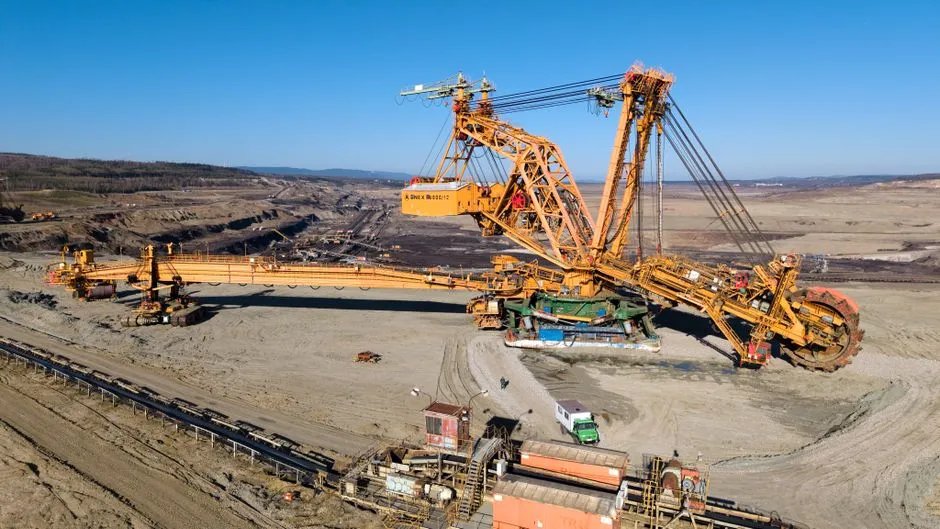
The operating sequence involves conditioning the thickened feed, loading the chambers, applying filtration pressure, completing the cycle, discharging the cake, and inspecting and cleaning the cloth. Polymer or coagulant selection must be established through site testing because particle size, mineralogy and shear can change the required dose.
For a membrane press, the mining supplier source describes inflation beginning when the press is about 80% full, determined from historical information and diaphragm-pump timing, to add squeezing after filling. A standard press uses filtration pressure alone. In both cases, the sequence has to be controlled: an incomplete fill, an early pressure step, a poorly released cake or insufficient cloth washing can reduce performance even when the nominal filtration area is adequate.
A membrane press retains the basic plate-and-frame arrangement but adds diaphragms in the chambers. An automatic plate shifter can reduce manual handling and improve operating consistency, while a cake conveyor may be needed if discharged material must be moved to a stockpile or disposal point.
Evaluate the cycle with several outputs together: cake dry solids, solids capture efficiency, filtrate quality, cycle time and cake-handling properties. Cake dryness alone can hide poor capture or excessive polymer use. The plate-and-frame filter press for coal mining wastewater should be judged against the complete outlet specification.
Standard Plate Press or Membrane Press
The standard-versus-membrane decision is a decision about the required cake condition and operating objective, not simply about equipment cost. Standard plate presses use pressure filtration and cake release through plate opening and gravity or assisted discharge. Membrane presses add diaphragm squeezing after chamber filling, which can improve cake dryness and accelerate attainment of the target while increasing equipment complexity.
The 2024 Processes retrofit produced cake with 35% solids using a filter press and 19% using a vacuum belt filter. The result came from industrial polymer sludge after coagulation and flocculation, not coal feed. The same study notes that conventional sludge dewatering typically reaches around 20% dry solids, while fibrous pulp and paper sludge can reach 50–60% dry solids. These figures describe different feeds and should be treated as context, not coal guarantees.
| Decision factor | Standard plate-and-frame press | Membrane press |
|---|---|---|
| Filtration mechanism | Pressure filtration through cloth | Pressure filtration followed by diaphragm squeezing |
| Primary operating objective | Reliable solids-liquid separation and cake discharge | Higher cake solids or faster attainment of the dryness target |
| Cake release | Depends on cloth condition, conditioning and plate opening | May require coordinated membrane release and plate handling |
| Operational complexity | Lower, with manual, hydraulic or automatic PLC operation available | More complex because diaphragms require inflation and control |
| Selection basis | Target solids, throughput, labor and capital scope | Target solids, cycle time, labor and control requirements |
Adding filter plates can expand capacity as an operation grows, according to the mining supplier source. Plate count alone does not establish capacity: the design calculation must include feed solids, hydraulic loading, cycle time and allowable pressure. Use the verified HydropureWater catalog range of 1 m² to 500 m² as an available configuration range, not as a universal sizing answer.
Sizing a Filter Press for Coal Mining Wastewater
Size the press from the required hourly wet-slurry or dry-solids throughput, then balance feed and filtrate streams using representative solids data. Nominal plant flow is not enough because the solids concentration, slurry density and recovery target determine the water-removal duty.
Specify usable filtration area, chamber depth, plate dimensions, maximum operating pressure, feed method, cake-discharge method, control level and auxiliary duties. Include the feeding pump, holding or thickening equipment, chemical preparation, controls, cake handling, wash system, commissioning and operator training when defining the quotation scope.
| Sizing input | Acceptable evidence | Design question |
|---|---|---|
| Throughput | Hourly wet slurry and dry-solids duty | What must the press process during peak mine-water conditions? |
| Filtration area | Usable area and chamber geometry | Is the area derived from feed solids and cycle data? |
| Pressure | Maximum operating pressure and control limits | Does the selected cloth and plate design support the required duty? |
| Cycle time | Representative-slurry trial data | How long are filling, filtration, squeezing and discharge taking? |
| Outputs | Cake dry solids, capture efficiency and filtrate quality | Are the site targets met under defined feed conditions? |
| Expansion | Future plate or membrane addition plan | Can capacity increase without redesigning the entire train? |
Require pilot or site-trial data for cycle duration, feed and filtrate rate, cake dry solids, solids capture and filtrate quality under representative coal-slurry conditions. The 2024 BRIN study also supports a specific cloth trial rather than a generic cloth recommendation.
Plan for variable mine-water flow and coal-blend changes. The selected design should explain how increased plates or membrane equipment can be incorporated, how the press responds to changed feed solids, and which operating parameters trigger a hold or adjustment.
Filtrate Quality, Water Recovery and Cake Disposal
Filter pressing does not guarantee discharge compliance. The 2024 Processes polymer-sludge study reported that its filter-press filtrate met local discharge regulations for that application and project conditions; it did not establish a universal mining-water standard. Specify suspended-solids carryover, turbidity, pH and any site-defined contaminants in the acceptance protocol.
Develop a test-and-treat workflow for filtrate reuse, settling or polishing before discharge, and assess the impact of recycle on upstream thickening. Returning a high-solids filtrate to the head of the process can change solids loading and chemical demand, so the recycle stream must be included in the mass balance.
The cake needs a disposal plan covering moisture content, transportability, storage area, stockpile behavior and the selected return-to-tailings or off-site disposal route. Mining filter presses can support water reclamation and dry-stack tailings, but the economic case depends on local water scarcity, disposal rules and transport distance.
The high-efficiency sedimentation tank should be considered as upstream clarification or thickening where the feed and recycle streams require it, not assumed to replace the press.
Procurement Checklist for Mining Operators
A mining filter-press quotation should state the feed basis, design solids loading, hydraulic loading, cycle time, target cake solids, expected filtrate quality and calculation assumptions. If those items are absent, the supplier cannot demonstrate how the equipment was sized for the duty.
Separate the quoted scope into the press frame and plates, membrane system where applicable, feeding pump, thickening or holding equipment, chemical preparation, controls, cake conveyor, wash system, commissioning and operator training. A plate-and-frame press package is not automatically a complete dewatering plant.
Require guarantees to be tied to defined feed conditions and acceptance tests rather than generalized claims for all mining wastewater. References and a pilot-test protocol using representative coal slurry should be requested before accepting the selected design.
The 2024 Processes retrofit is useful as an economic benchmark for evaluating the whole system: 35% cake solids versus 19%, annual cost savings of up to 50%, and a 1.5-year payback were reported for that polymer-sludge installation. These economics belong to that case and must not be transferred to a coal project without local cost and disposal data.
| Procurement check | Supplier response required | Buyer decision |
|---|---|---|
| Feed basis | Measured solids, particle-size and chemistry data | Accept only if representative of the intended duty |
| Performance guarantee | Target cake solids, capture, filtrate quality and cycle time | Compare against defined acceptance conditions |
| Equipment scope | List all mechanical, chemical, controls and handling exclusions | Close interface and responsibility gaps |
| Economics | Whole-system operating and disposal assumptions | Do not reuse polymer-sludge payback as a coal estimate |
| Validation | Representative-slurry trial and operating procedure | Make acceptance conditional on test results |
Frequently Asked Questions
When should a mining operator choose a membrane press instead of a standard plate press?
Choose a membrane press when the required cake dry solids or cycle time justifies the additional diaphragm-squeezing step and the controls needed to operate it. The mining supplier source recommends inflation at about 80% capacity for a membrane press, compared with filtration pressure alone in a standard press. Confirm the decision through representative coal-slurry trials rather than transferring the 35% versus 19% result from the 2024 Processes polymer-sludge case.
What information is needed
Frequently Asked Questions
Should a coal mining wastewater filter press use standard plates or membrane plates?
For coal mining applications, membrane plates are generally superior to standard recessed chamber plates because they allow for a secondary squeeze cycle. By inflating the membrane with water or compressed air at pressures typically ranging from 7 to 15 bar, the filter press can achieve a significantly higher solids content in the filter cake, often reducing moisture content by 5 to 10 percent compared to standard plates.
This increased dryness is critical for coal tailings, as it reduces transportation costs and improves the handling characteristics of the final waste product. While membrane plates involve a higher initial capital expenditure and more complex maintenance, the reduction in cycle time and improved cake consistency usually provide a faster return on investment in high-volume coal processing plants.
How much filtration area do I need for coal slurry dewatering?
Filtration area requirements are determined by the specific solids throughput rate, which is typically measured in kilograms of dry solids per square meter per hour (kg/m²/h). For coal fines and tailings, typical loading rates range from 5 to 15 kg/m²/h depending on the particle size distribution, clay content, and the use of flocculants.
To calculate the required area, divide your total hourly dry solids mass flow by the determined loading rate based on bench-scale or pilot testing. Because coal slurry characteristics vary significantly between seams, it is industry standard to include a 15 to 20 percent safety margin to account for seasonal variations in feed concentration and slurry viscosity.
What information should I request before choosing a mining filter press supplier?
You should request a comprehensive technical proposal that includes the supplier’s experience with similar ash or tailings profiles and a verified performance guarantee based on your specific slurry analysis. Specifically, demand a mass balance calculation, a detailed cycle time analysis, and a list of utility consumption requirements, including compressed air volume (in m³/h) and hydraulic power demand.
Additionally, ask for the supplier's plate material specifications—such as polypropylene grade and reinforcement—and the expected service life of the filter cloths under your specific pH and chemical conditions. Requesting a list of reference sites where the equipment has been operational for at least three years provides insight into the long-term reliability and availability of spare parts.
Can filter-press filtrate from a coal mine be reused or discharged without further treatment?
In most cases, filter-press filtrate cannot be discharged directly into the environment without further treatment, as it often contains residual suspended solids, heavy metals, and dissolved chemical reagents used during the upstream coal preparation process. While the filtrate is significantly cleaner than the raw slurry, it typically requires secondary clarification, pH adjustment, or biological treatment to meet local environmental discharge standards.
However, the filtrate is frequently suitable for internal plant reuse, such as in the coal washing circuit or for dust suppression. If the goal is internal recycling, a high-efficiency cloth selection is necessary to ensure the filtrate turbidity remains within the tolerances required for the plant's process water system, preventing the buildup of fine solids in the recirculating loop.
What maintenance and operating controls matter most for a coal wastewater filter press?
The most critical maintenance factor is the regular inspection and cleaning of filter cloths to prevent blinding, which occurs when fine coal particles obstruct the fabric pores and drastically reduce throughput. Operators should implement a scheduled high-pressure water wash cycle and monitor the feed pressure closely; if the feed pressure rises too quickly without a corresponding increase in filtrate flow, it is a primary indicator that the cloths require acid washing or replacement.
From an operating control perspective, the automated management of the cake discharge and the squeeze cycle pressure are vital for consistency. Utilizing programmable logic controllers (PLCs) to adjust feed pump curves based on real-time pressure sensors ensures that the press is not over-pressurized, which protects the structural integrity of the plates and extends the life of the hydraulic system.