What wastewater characteristics should a Fontana factory test first?
Fontana factories should select the separation mechanism based on the dominant contaminant behavior rather than generic DAF-versus-clarifier specifications. A dissolved air flotation (DAF) clarifier is the stronger primary choice for free oil, grease, emulsified hydrocarbons, and attachable fine solids; a gravity sedimentation tank is more suitable when heavy, readily settleable solids control the treatment objective. The decision depends on representative wastewater analysis, production conditions, flow variability, pretreatment requirements, downstream treatment, and the applicable permit. For refinery-specific context, see the DAF engineering guide for oil refinery wastewater.
Request a representative characterization covering free oil, emulsified oil, FOG, suspended solids, particle buoyancy, temperature, pH, flow, and flow variability. Free oil that rises naturally may be recoverable by gravity skimming, while stable emulsions generally require chemical conditioning and effective bubble attachment. The sample program should also capture the factory’s petroleum products, actual emulsions, temperature range, batch dumps, and production flow pattern.
| Test or operating input | Why it affects selection | Information the buyer should obtain |
|---|---|---|
| Free oil and FOG | Identifies whether floatable hydrocarbons are a primary treatment target. | Representative concentrations, settling behavior, and skimming demand. |
| Emulsified hydrocarbons | Emulsions may require conditioning before reliable flotation performance can be expected. | Emulsion identity, stability, and response to candidate chemical pretreatment. |
| Suspended solids and buoyancy | Separates heavy settleable solids from oil or fines that can attach to bubbles. | Particle distribution, settling rate, solids concentration, and expected loading. |
| Temperature and pH | These conditions affect oil behavior, chemical conditioning, and equipment selection. | Normal operating range and excursions during production and cleaning. |
| Flow and production pattern | Peak flow, batch dumps, and variability determine hydraulic and solids-handling requirements. | Continuous and batch flow records, including peak simultaneous flows. |
| Permit conditions | The governing requirement defines the required treatment contribution. | Applicable discharge or pretreatment limits from the authority having jurisdiction; the supplied research provides no universal Fontana limit. |
How DAF and gravity clarification separate petroleum contaminants
A dissolved air flotation clarifier separates attachable contaminants by flotation rather than by settling alone. Pressurized effluent is released into the flotation tank, producing microbubbles that carry oil, grease, emulsified hydrocarbons, and suitable fine solids to the surface for removal by a skimmer. Clearwater Industries describes its DAF microbubbles as 30–50 microns and states that heavier solids settle into a bottom collection zone while floated material is removed by a paddle skimmer (Clearwater Industries, 2026-04-27).
A gravity sedimentation tank or clarifier relies on the settling of heavier solids. This is a natural primary mechanism when the removable fraction consists mainly of dense, settleable material rather than floatable petroleum contaminants. A lamella clarifier for heavy solids can increase available settling area, but the applicable arrangement depends on hydraulic loading, solids properties, sludge withdrawal, and the required effluent quality.
The MDPI review identifies flotation as particularly applicable to low-density materials in petroleum wastewater and describes micro-bubble and nano-bubble development as an approach to oil removal from emulsions (MDPI, volume 5, issue 4, article 138). That mechanism does not make flotation a universal solution. Neither a DAF nor a gravity clarifier alone necessarily resolves dissolved hydrocarbons, high chemical oxygen demand, or every biological treatment requirement.
For a dissolved air flotation clarifier used for petroleum wastewater, the relevant performance boundary matters: reported separator performance is not the same as final-effluent performance after chemical conditioning, biological treatment, filtration, or other downstream stages.
DAF versus clarifier: choose by treatment objective
A DAF should be the primary separator when petroleum wastewater is dominated by free oil, FOG, emulsified hydrocarbons, or fine solids that can attach to bubbles; a clarifier should lead when heavy, readily settleable solids dominate. Mixed streams often justify a hybrid, with DAF removing floatable oil before clarifier sedimentation handles the solids load. The procurement decision should compare defined treatment objectives, not generic removal percentages.
| Decision factor | DAF | Gravity clarifier | Procurement implication |
|---|---|---|---|
| Dominant contaminant | Free oil, FOG, emulsified hydrocarbons, and attachable fine solids. | Heavy and readily settleable solids. | Base selection on representative characterization and the required contaminant removal. |
| Conditioning | Clearwater Industries states that DAF should be paired with proper chemical coagulation and flocculation for optimal performance. | The MDPI review identifies coagulation and flocculation as integral to enhancing sedimentation. | Assign chemical preparation and dosing responsibility explicitly in the proposal. |
| Operating considerations | Includes compressed air, recycle pumping, conditioning chemicals, skimming, and solids handling. | Generally has lower operating costs according to Ecologix. | Compare complete-train operating requirements rather than purchase price alone. |
| Flow behavior | Performance depends on effective bubble attachment, contact, and floatable-solids handling. | Performance depends on adequate settling area, hydraulic distribution, and solids withdrawal. | Size for measured peaks and realistic production variation, not average flow. |
| Complex streams | Removes floatable hydrocarbons before downstream separation. | Provides sedimentation after upstream oil removal. | For mixed loads, define each stage’s contribution and guarantee the complete train. |
Flow variability is decisive in both cases. DAF suppliers must show that the proposed contact time, recycle arrangement, float accumulation, skimming rate, and sludge interface can handle the factory’s peak and batch conditions. Clarifier suppliers must show that settling area, distribution, bottom withdrawal, and solids storage are adequate for the expected heavy-solids inventory.
For mixed wastewater, pilot and guarantee the complete train rather than assuming one vessel can satisfy every oil, solids, COD, and discharge objective. The hybrid MBR and DAF treatment design provides context for assigning distinct treatment stages.
What determines DAF capacity and operating performance?
DAF capacity should be established from representative peak flow, flow variability, wastewater characteristics, treatment objective, and downstream requirements—not average flow alone. The HydropureWater DAF catalog lists 13 standard models covering 4–300 m³/h (HydropureWater, 2026). A buyer should check whether a standard model covers the measured production envelope or whether project-specific sizing is required.
| Sizing or design input | What the supplier must demonstrate | Buyer action |
|---|---|---|
| Design flow envelope | Continuous flow, peaks, batch dumps, and simultaneous wastewater contributions. | Provide production and drainage records rather than a single average. |
| Saturation and recycle | How recycle rate, air saturation, contact time, and bubble generation support the claimed treatment duty. | Require the calculation and operating-control method. |
| Chemical pretreatment | Conditioning response for the actual oil and solids, including control and verification. | Test candidate chemicals and doses with representative wastewater. |
| Solids and float handling | Skimming capacity, sludge draw-off, float-storage duration, and downstream waste routing. | Include recovery, maintenance, and waste-handling interfaces in the bid. |
| Materials and controls | Compatibility with the wastewater and service environment, plus instrumentation and access. | Compare construction, controls, maintenance access, and spare-parts scope. |
The MDPI review states that dissolved gas flotation can recycle up to 30% of the effluent after pressurization (MDPI, volume 5, issue 4, article 138). Suppliers should explain how their saturation, recycle, and contact design affect effective capacity rather than treating recycle percentage as a stand-alone performance guarantee.
Chemical dosage cannot be selected generically. The supplied research supports the importance of pretreatment but does not establish a universal chemical or dose for petroleum wastewater. Trial the actual stream, with automatic chemical dosing for DAF pretreatment evaluated as part of the complete control strategy. Clearwater Industries reports 304 stainless steel as standard construction, with 316 stainless steel, polypropylene, and other materials available when specified (Clearwater Industries, 2026-04-27).
How should factory owners compare total operating and compliance risk?
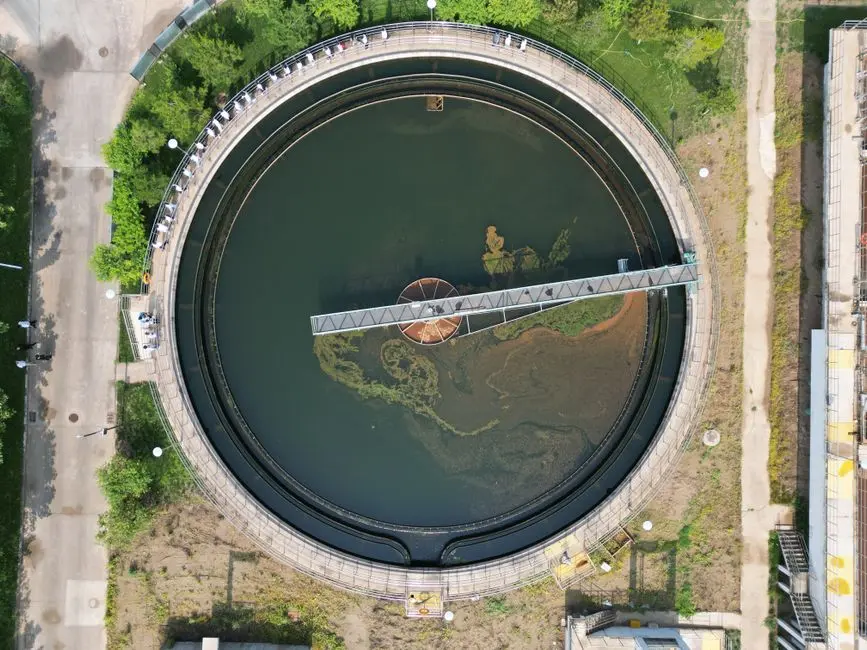
Total-cost comparisons must include chemical consumption, compressed air, pumping energy, sludge handling, maintenance, operator attention, and downstream treatment impacts. No supported purchase-price estimate is available, so quotations should be normalized to the same flow basis, treatment objective, construction scope, and performance guarantees.
| Commercial or risk item | What to compare | Decision rule |
|---|---|---|
| Operating cost | Chemicals, air, power, recovered oil, sludge transport, labor, and maintenance. | Compare the complete train over the factory’s actual operating pattern. |
| Performance guarantee | DAF alone, complete treatment train, or final effluent after downstream treatment. | State the guaranteed equipment boundary, influent envelope, test method, and acceptance condition. |
| Waste handling | Oil recovery, skimming, sludge draw-off, storage, odor control, and disposal interfaces. | Assign responsibility for every recovered or residual waste stream. |
| Operations and maintenance | Access, controls, instrumentation, cleaning, spare parts, training, and service support. | Price lifecycle support rather than treating it as optional. |
| Compliance | Applicable permit conditions and each treatment stage’s guaranteed contribution. | Do not infer permit compliance from a generic separator removal claim. |
Industrial & Environmental Services reports 95%–97% FOG and TSS removal with proper chemical pretreatment, while Hermann Hahn’s 2010 flotation summary reports 90% oil removal for DAF (HydropureWater, 2026). These are reference figures, not automatic site guarantees. Require proposal language that identifies the tested wastewater, treatment stage, analytical method, and conditions attaching to each claim.
Recovery, skimming, waste-oil handling, and downstream sludge treatment can materially affect the chosen configuration. A plate-and-frame filter press for sludge dewatering may therefore belong in the project comparison when the proposed treatment train creates a dewaterable sludge stream. Its need should follow pilot solids characterization and the factory’s waste-disposal route.
What should a Fontana factory require before approving a supplier?
Approval should require a traceable engineering basis rather than only an equipment datasheet. Require a written wastewater characterization, treatment-train recommendation, flow basis, and sizing calculation tied to representative data.
- Request the sizing calculations, process-flow diagram, control philosophy, and operating envelope.
- Require materials of construction, chemical interface, skid or field-installation scope, commissioning plan, operator training, maintenance requirements, and warranty terms.
- Define performance guarantees for the specified equipment or complete train, including test methods, acceptance conditions, and the covered influent envelope.
- Identify sludge and waste-oil handling requirements, utility demands, downstream treatment needs, and any limitation affecting the factory’s discharge strategy.
- Use the selected approach to prepare a like-for-like DAF, clarifier, and hybrid bid comparison.
For a related capacity-planning question, see the 2026 DAF capacity-planning guide. This is supporting context; the Fontana decision requires local flow data, wastewater characterization, and applicable permit conditions.
Frequently Asked Questions
Should a Fontana factory choose DAF or a clarifier for petroleum wastewater?
Choose DAF when free oil, FOG, emulsions, and attachable fine solids dominate the treatment objective. Choose a clarifier when heavy, readily settleable solids dominate. Confirm that decision with representative wastewater analysis and the required effluent contribution.
Is DAF more expensive to operate than a gravity clarifier?
Ecologix states that clarifiers generally have lower operating costs, while DAF may be more cost-effective for oils and other floatable contaminants (HydropureWater, 2026). Request itemized operating inputs for each proposed train, including chemicals, compressed air, pumping energy, sludge handling, maintenance, and downstream impacts.
Frequently Asked Questions
Should a Fontana factory choose DAF or a clarifier for petroleum wastewater?
For a Fontana facility, a Dissolved Air Flotation (DAF) system is generally superior if the wastewater contains emulsified oils, greases, or low-density suspended solids that do not settle readily. Given California’s stringent Title 22 and local POTW discharge limits, DAF units are preferred because they achieve oil and grease removal efficiencies of 90-95%, whereas conventional gravity clarifiers often struggle to reach 60-70% without extensive chemical coagulation and long hydraulic retention times.
If your influent stream is characterized by heavy inorganic solids or grit exceeding 250 mg/L, a gravity clarifier may be necessary as a primary stage. However, for most petroleum-impacted industrial streams, the smaller footprint of a DAF—typically requiring 70% less space than a clarifier—makes it the more viable choice for urban industrial zones where property square footage is at a premium.
Is DAF more expensive to operate than a gravity clarifier?
Yes, DAF systems have higher operational expenditures (OPEX) than gravity clarifiers due to the energy requirements of the air saturation pump and the ongoing consumption of flocculants and coagulants. While a gravity clarifier relies on passive sedimentation, a DAF system requires continuous power for the recycle pump and air compressor, typically adding $0.15 to $0.35 per 1,000 gallons treated depending on local utility rates.
However, this cost is often offset by the reduction in sludge handling expenses. DAF systems produce a thickened float (typically 3-5% solids) compared to the dilute sludge (0.5-1.5% solids) produced by clarifiers. This significantly reduces the volume of waste sent for third-party disposal, which is a major cost driver in the California regulatory landscape.
How do I size a DAF system for petroleum wastewater?
DAF sizing is primarily governed by the surface overflow rate (SOR) and the hydraulic loading rate, usually measured in gallons per minute per square foot (gpm/ft²). For petroleum wastewater, the SOR is typically designed between 1.5 and 3.0 gpm/ft². You must calculate the peak flow rate based on your facility's maximum daily discharge rather than the average, ensuring the unit can maintain laminar flow to prevent air bubble shear.
Additionally, you must account for the air-to-solids (A/S) ratio, which should be maintained between 0.01 and 0.05 ml of air per mg of solids. If your influent oil concentration fluctuates significantly, you should incorporate a flow equalization tank upstream to ensure the DAF operates within its optimal hydraulic design range, preventing the hydraulic overloading that leads to effluent degradation.
What performance guarantee should I require from a petroleum wastewater DAF supplier?
You should require a performance guarantee based on specific effluent quality metrics, most notably Total Oil and Grease (TOG) and Total Suspended Solids (TSS) concentrations. A standard industry guarantee for a properly configured petroleum DAF is an effluent TOG of less than 20-50 mg/L, provided the influent parameters remain within the agreed-upon design range.
The contract should also stipulate a minimum removal efficiency percentage (e.g., 95% removal of free and emulsified oils) and define the maximum allowable chemical dosage rates. Ensure the guarantee is backed by a 72-hour performance verification test conducted by an independent third-party laboratory to confirm the system meets local discharge standards before final project sign-off.
When is a DAF and clarifier hybrid better than a single unit?
A hybrid configuration is recommended when the wastewater contains a dual-phase contaminant profile: high concentrations of heavy, settleable grit or sand alongside emulsified petroleum hydrocarbons. In this setup, a primary gravity clarifier acts as a roughing stage to remove dense solids that would otherwise abrade the DAF internals or settle in the flotation tank, while the secondary DAF polishes the effluent by floating the lighter oil fractions.
This approach is also optimal when the influent flow is highly variable. The clarifier provides a buffer to dampen surges, while the DAF ensures consistent polishing. Implementing this hybrid system allows for a more robust treatment train that protects downstream biological systems or RO membranes from oil fouling, often extending the lifespan of sensitive equipment by 30-50% compared to a single-stage system.