Which Treatment Technology Fits the Wastewater?
For petroleum bulk wastewater in Long Beach in 2026, factories should choose DAF when the treatment objective centers on floating oil, grease, emulsified hydrocarbons, and fine solids that benefit from bubble attachment; choose a clarifier when most removable material is heavy and settleable. DAF can achieve 95% to 97% FOG and TSS removal with proper chemical pretreatment according to Industrial & Environmental Services, while a flotation reference reports 90% oil removal. These are not universal guarantees. Final selection should follow wastewater analysis, discharge requirements, flow variability, chemical pretreatment, available footprint, sludge handling, and downstream treatment needs.
The practical rule is simple: characterize the wastewater first, then select the separation mechanism that matches the dominant contaminant behavior. Do not compare equipment names, footprints, or operating-cost headlines in isolation. The comparison must be between a defined treatment objective and the actual petroleum bulk wastewater.
DAF, or dissolved air flotation clarifier, uses microscopic bubbles to attach to floatable material. Industrial & Environmental Services describes the arrangement: clean effluent is pressurized and recycled, released into the flotation tank, and converted into microscopic bubbles that carry contaminants into a surface float removed by a skimming mechanism.
A gravity sedimentation tank, or clarifier, removes heavier solids through gravity. This makes clarification the more natural starting point when settleable solids dominate. DAF is more directly aligned with oil, fats oils and grease, and fine solids; Industrial & Environmental Services lists oil-refinery waste and petrochemical applications among its DAF uses. A broader DAF versus clarifier comparison for petroleum wastewater provides a useful process-level reference, but the site-specific wastewater analysis remains the controlling input.
Three screening cases follow from the available sources. Use DAF when the target is refinery or petrochemical oily wastewater. Use DAF when oils and fine solids are the principal contaminants. Use clarification when heavy solids dominate and gravity settling is the required mechanism. If both floating and settleable fractions are material, evaluate a hybrid train rather than forcing the plant into a single-unit decision. For the broader operating context, see DAF and clarifier selection for wastewater with heavy solids.
How DAF and Gravity Clarification Separate Contaminants
DAF separates contaminants through bubble generation, attachment, upward transport, and mechanical skimming. Clarification separates them by gravity sedimentation followed by sludge withdrawal.
For petroleum wastewater, the distinction between free oil and emulsified oil is important. Free oil can float readily; emulsified oil may require upstream conditioning and chemical pretreatment before flotation can perform as intended. Dissolved hydrocarbons may not be removed by physical separation and can require biological treatment downstream.
The flotation review by Hermann Hahn, published in 2010, identifies air/solids ratio, hydraulic loading, chemical addition, pressure, flow rate, and equalization as key design and operating variables. Equalization matters because variable flow and pollutant concentrations can change hydraulic loading, chemical demand, flotation conditions, and downstream loads. The same source identifies equalization as a factor affecting treatment efficiency.
| Selection input | What the engineer must establish | Why it affects separation |
|---|---|---|
| Wastewater composition | Free oil, emulsified oil, FOG, TSS, and settleable solids | Defines the contaminant fraction the process must capture |
| Hydraulic conditions | Design flow, peak flow, hydraulic loading, and flow profile | Defines contact, settling, and peak treatment conditions |
| Flotation variables | Air/solids ratio, pressure, recycle conditions, and chemical addition | Controls bubble attachment and float stability |
| Equalization | Operating strategy and available equalization capacity | Reduces short-duration flow and concentration shocks |
| Residuals | Float and sludge handling requirements | Prevents removal from becoming an unclosed operating problem |
In a DAF system, clean effluent is pressurized and recycled before release into the flotation tank, according to Industrial & Environmental Services. A clarifier instead uses tank residence and solids settleability to concentrate heavier material into sludge. Neither mechanism should be selected from tank volume alone; the sizing calculation must combine hydraulic conditions with contaminant behavior.
Performance Evidence and Its Limits
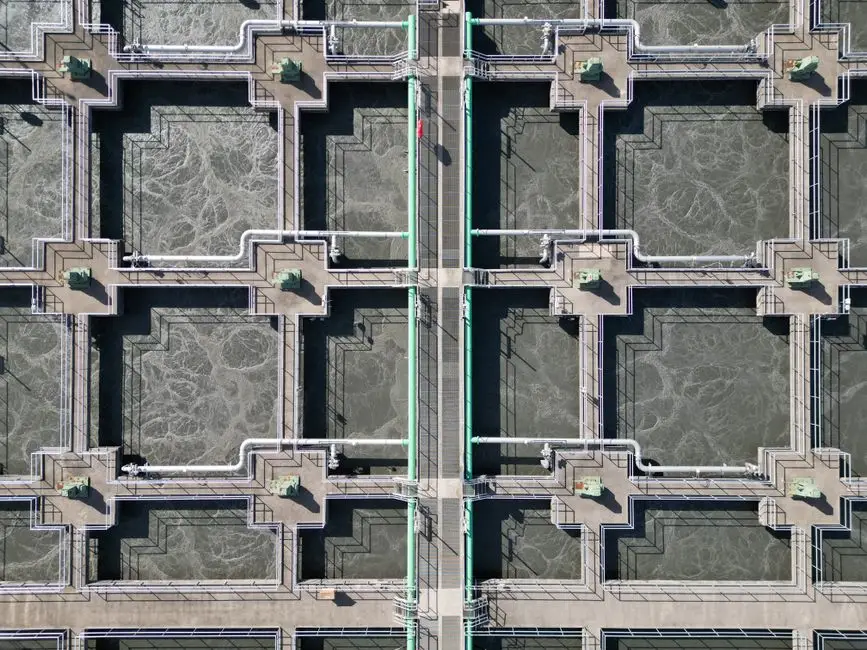
Industrial & Environmental Services reports typical FOG and TSS removal of 95% to 97% for its DAF systems with proper chemical pretreatment. The academic flotation summary by Hermann Hahn, published in 2010, reports 90% oil removal for DAF. These figures describe reported performance under their respective conditions; they do not establish that every petroleum plant will achieve the same results.
The qualification matters. The DAF result explicitly depends on proper chemical pretreatment. The flotation summary also identifies hydraulic loading, pressure, flow rate, air/solids ratio, chemical addition, and equalization as variables affecting operation. A buyer should therefore ask which variables were held constant, how the feed was characterized, and how performance was measured before converting either figure into a design guarantee.
Performance testing should use representative wastewater containing the facility’s actual petroleum products, emulsions, solids, temperature range, and flow pattern. The analytical program should distinguish free oil from emulsified oil and evaluate whether chemical conditioning changes the wastewater sufficiently to affect flotation.
A supplier guarantee should define the test conditions, sampling points, feed characteristics, analytical methods, operating period, and whether chemical consumption is included. It should also state which unit performance is being guaranteed: the DAF alone, the complete pretreatment and treatment train, or final effluent after downstream treatment. A percentage detached from those conditions is a screening claim, not an acceptance criterion.
Likewise, the commercial comparison by Ecologix states that clarifiers generally have lower operating costs, while DAF may be more cost-effective for oils and other floatable contaminants. That statement provides purchasing context, but the supplied research contains no site-specific quotation for a Long Beach petroleum facility. Capital cost, chemical use, labor, energy, and residue disposal must be compared using actual proposals.
DAF or Clarifier: A Selection Matrix for Petroleum Plants
DAF is the go-forward choice when free oil, FOG, emulsified hydrocarbons, or fine solids are the dominant treatment targets; a clarifier is the go-forward choice when heavy solids dominate and gravity settling is acceptable.
| Decision factor | DAF | Gravity clarifier | Hybrid train |
|---|---|---|---|
| Dominant contaminant | Free oil, emulsified hydrocarbons, FOG, and fine solids | Heavy, settleable solids | Material floating and settleable fractions |
| Primary mechanism | Bubble attachment, flotation, and skimming | Gravity sedimentation and sludge withdrawal | Flotation and sedimentation applied in sequence |
| Supporting source | Industrial & Environmental Services lists oil-refinery waste, refinery, petrochemical, and oil-related applications | Ecologix identifies clarifiers with heavier-solids applications | Ecologix states the technologies can be combined for complex streams |
| Additional equipment | Air compression, recycle pumping, skimming, float handling, and potentially chemical dosing | Sludge collection and withdrawal | Both systems’ auxiliary equipment plus transfer and controls |
| Operating-cost context | May be more cost-effective for oil and other floatable contaminants, according to Ecologix | Generally has lower operating costs, according to Ecologix | Cost depends on sequence, equipment scope, and operating labor |
| Main purchase risk | Poor attachment, unstable flow, incorrect chemical conditioning, or inadequate float handling | Poor settleability, hydraulic overload, or sludge accumulation | Incorrect sequencing, duplicated equipment, or an unbalanced hydraulic profile |
Use DAF when the oil-removal objective dominates. Industrial & Environmental Services identifies suspended solids, FOG, oil and grease, and non-soluble BOD among the contaminants its DAF clarifier can remove, and lists oil-refinery waste and petrochemical applications. Its catalog also describes chemical pretreatment, feed and effluent pumps, sludge/float pumps, expanded chambers, and controls as available options. Those are important scope items when comparing proposals.
Use a gravity clarifier when heavy solids dominate. The mechanism is straightforward: solids settle and are removed as sludge. This does not establish that clarification will remove emulsified oil effectively; it establishes that the physical target is the settleable fraction.
Use a hybrid train when both contaminant fractions matter. The sequence must be engineered from the wastewater rather than copied from another facility. DAF may capture floatable material before clarification, or clarification may precede flotation depending on the solids behavior, conditioning needs, hydraulic profile, and downstream requirements.
Evaluate the industrial DAF system for oil and grease removal and the high-efficiency sedimentation tank on the same complete-train basis: contaminant loads, included auxiliaries, controls, maintenance, and residue handling.
What Long Beach Factories Need to Confirm Before Purchase
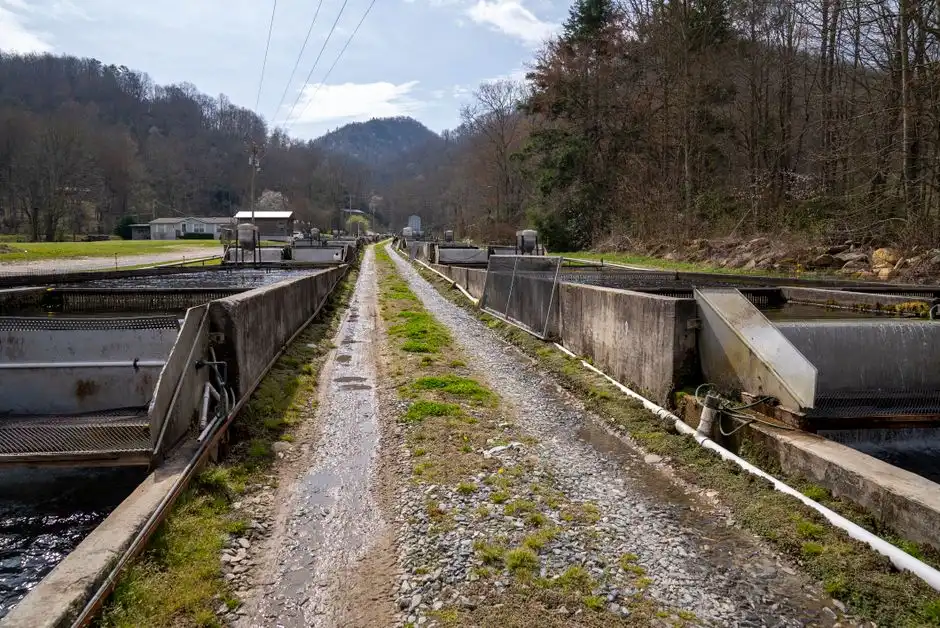
A defensible Long Beach equipment selection requires site-specific wastewater data, a confirmed discharge route, peak-flow information, and a defined residue destination before equipment is sized.
| Information to request | Required content | Decision supported |
|---|---|---|
| Representative wastewater analysis | Oil and grease, free oil, emulsified oil, TSS, settleable solids, pH, temperature, flow, and variability | DAF, clarifier, or hybrid screening |
| Discharge route | Applicable limits confirmed with the permitting authority and sewer or receiving-treatment provider | Required treatment and final compliance route |
| Flow record | Design flow, peak flow, batch discharges, duration, and operating profile | Equalization, recycle capacity, hydraulic loading, and peak treatment |
| Residue plan | Float removal, sludge collection, storage, dewatering, and disposal route | Complete-train scope and operating feasibility |
| Vendor scope | Chemical pretreatment, reclaimed-water recycle, materials, controls, redundancy, access, and services | Comparable proposals and operating-risk allocation |
Do not assume a universal Long Beach wastewater discharge limit. Confirm the applicable route and current requirements with the facility’s permitting authority and sewer or receiving-treatment provider. The local location matters for regulations, logistics, site constraints, and receiving infrastructure; it does not, by itself, prove a technical advantage for either technology.
Give vendors a flow-duration history and batch-discharge information. Equalization, recycle capacity, hydraulic loading, and peak-flow handling cannot be evaluated from an average flow alone.
Define where float and sludge will go. A treatment unit that separates contaminants but leaves no practical collection, storage, and dewatering route is not a complete solution. Specify access for inspection, float removal, sludge withdrawal, and maintenance before comparing footprint claims.
Ask each vendor to document chemical pretreatment, reclaimed-water recycle arrangements, materials of construction, controls, redundancy, maintenance access, and included services. For chemical addition, evaluate a PLC-controlled chemical dosing system as part of the process scope. If sludge dewatering is required, include a plate-and-frame filter press or the facility’s actual approved dewatering route in the evaluation.
Size the Treatment Train from Loads, Not Flow Rate Alone
Equipment capacity should be derived from flow, pollutant loads, hydraulic criteria, pretreatment, and equalization—not from flow rate alone.
The HydropureWater DAF catalog lists 13 standard models covering 4–300 m³/h, using micro-bubble technology and automatic skimming. This is a supplier catalog range, not a recommended size for a Long Beach facility. It provides a commercial reference point while plant-specific sizing inputs remain unresolved.
- Design flow and peak flow, including batch-discharge behavior
- Oil and FOG loading
- TSS and settleable-solids loading
- Applicable hydraulic-loading and retention criteria
- Recycle ratio and air/solids ratio
- Equalization strategy and operating controls
- Free-oil versus emulsified-oil characterization
- Downstream biological treatment, filtration, reuse, or discharge requirements
- Float and sludge storage, dewatering, and disposal constraints
- Available footprint and maintenance access
The wastewater analysis must distinguish free oil from emulsified oil because conditioning and chemical pretreatment can alter flotation performance. The vendor calculation should explicitly address hydraulic loading, pressure, flow rate, chemical addition, and equalization—the variables identified in the flotation review.
The stated removal scope of the dissolved air flotation system includes suspended solids, FOG, oil and grease, and colloidal matter. Those claims should be checked against the contaminants actually present rather than treated as evidence that every listed component will be removed at the same rate.
Downstream constraints can change the primary selection. A facility with soluble or dissolved pollutants may require biological treatment after physical separation. A reuse application may require filtration or further polishing. A site with limited space may favor a compact train, while a site with limited labor may favor the simplest maintainable arrangement. These are design inputs, not reasons to accept an undersized hydraulic or load basis.
Pretreatment, Controls, and Operating Risks
Chemical conditioning and equalization are performance variables, not optional accessories after equipment selection.
Industrial & Environmental Services specifically states that DAF effluent quality is greatly improved with chemical pretreatment. The research does not support a universal chemical or dose for petroleum bulk wastewater. A buyer should obtain a site-specific recommendation based on the oil speciation, emulsion stability, solids, pH, temperature, treatment objective, and selected chemical. An automatic chemical dosing system should be evaluated for metering, control logic, chemical storage, verification, and maintenance access—not treated as proof that dosage is correct.
The HydropureWater DAF catalog specifies automatic skimming. That is relevant because incomplete float withdrawal can allow accumulated oil and solids to affect downstream performance and operations.
| Operating risk | Consequence | Buyer or operator check |
|---|---|---|
| Poor equalization | Variable loading and unstable treatment conditions | Verify level control, mixing, available volume, and response to batch discharges |
| Unstable emulsion | Poor bubble attachment or inconsistent oil removal | Confirm upstream separation, characterization, and conditioning response |
| Chemical over- or under-dosing | Poor removal, excess chemical use, or downstream impacts | Define metering, calibration, storage, and dose-control responsibilities |
| Recycle-pump variation | Changes in bubble generation and flotation performance | Review pump redundancy, flow indication, and maintenance access |
| Air-saturation changes | Changes in available bubble attachment capacity | Evaluate pressure, recycle conditions, air supply, and operating controls |
| Inadequate float or sludge handling | Residue accumulation and loss of operating capacity | Define removal, storage, transfer, and final destination before acceptance |
Require an operations review covering chemical storage, dosing verification, pump redundancy, inspection access, float disposal, and performance trending. Biological treatment may be needed for soluble or dissolved pollutants that physical separation does not resolve; the supplied research provides no petroleum COD or BOD values, so that decision requires site analysis rather than an assumed threshold.
A Practical Selection and Procurement Workflow
Use a staged workflow that separates screening, sizing, and acceptance so that equipment is not selected before the wastewater is understood.
- Characterize the wastewater. Obtain representative analytical and operating data covering oil, emulsified oil, FOG, TSS, settleable solids, flow, variability, temperature, and pH.
- Identify the dominant target. Classify the required separation as floating oil/FOG, settleable solids, or both.
- Apply the selection matrix. Screen DAF for floatable contaminants, a clarifier for heavy solids, and a hybrid train when both fractions are material.
- Confirm the discharge and downstream route. Verify permit or sewer requirements with the responsible authorities and identify any biological, filtration, or reuse step.
- Issue a load-based sizing request. Include flow, pollutant loads, wastewater chemistry, equalization, pretreatment, footprint, controls, and residue handling.
- Compare complete proposals. Review demonstrated performance, included pretreatment and controls, operating labor, chemical use, maintenance, float and sludge handling, and technical support.
- Verify before acceptance. Conduct a representative performance test under defined feed and operating conditions, with agreed sampling points and analytical methods.
The purchasing decision should be recorded as a traceable chain from wastewater evidence to treatment objective, selected mechanism, sizing calculation, operating controls, and acceptance criteria. That chain is more defensible than choosing DAF or a clarifier from a generic equipment description or a stand-alone removal percentage.
Frequently Asked Questions
Is DAF usually more expensive than a clarifier for petroleum bulk wastewater?
Ecologix states that clarifiers generally have lower operating costs, while DAF may be more cost-effective for oil and other floatable contaminants. For a Long Beach purchase, request capital and operating-cost proposals using the same flow, pollutant loads, chemical assumptions, labor basis, and float/sludge-disposal inputs. The supplied research contains no site-specific quotation, so no defensible price difference can be stated without those inputs.
How much DAF capacity does a Long Beach petroleum factory need?
Size from design and peak flow, oil/FOG and solids loads, hydraulic criteria, equalization, recycle capacity, air/solids ratio, and pretreatment. The HydropureWater catalog spans 4–300 m³/h across 13 standard models, but that commercial range cannot establish the required capacity for a particular facility. Ask each vendor to show the load and hydraulic calculation behind its selected model.
Which wastewater characteristics should be included in an oil-removal equipment request?
Request oil and grease, free oil, emulsified oil, TSS, settleable solids, pH, temperature, flow and variability, flow-duration data, batch-discharge information, and the applicable discharge route. Also provide downstream biological, filtration, reuse, or discharge requirements and the destination for float and sludge. These inputs determine both mechanism and size.
Can a petroleum wastewater plant use DAF and a clarifier together?
Yes, when both floating and settleable fractions require removal. Ecologix identifies hybrid systems as a way to combine DAF oil removal with clarifier sedimentation for complex streams. Sequence the units according to measured contaminant behavior, conditioning requirements, hydraulic capacity, and downstream constraints rather than assuming one fixed arrangement.
What should a buyer verify before accepting a DAF performance claim?
Check the claim against the reported evidence: Industrial & Environmental Services states 95%–97% FOG and TSS removal with proper chemical pretreatment, while Hermann Hahn’s 2010 flotation summary reports 90% oil removal. Require the supplier to define feed characteristics, test duration, sampling points, analytical methods, operating conditions, pretreatment scope, chemical use, and whether the guarantee applies to the DAF or the complete train.
Related Equipment
- industrial DAF system for oil and grease removal — specifications, capacity range, and technical data