Which Treatment Should a St. Mary Petroleum Factory Choose?
For most petroleum-wastewater streams in St. Mary, choose dissolved air flotation (DAF) as the primary separator when the wastewater contains free or emulsified oil, FOG or floatable solids; choose a clarifier when the stream mainly contains dense, settleable solids with little oil. Clarifiers generally cost less to operate, but DAF is designed to float oil and attached solids. A robust 2026 treatment train often combines DAF for oil recovery with clarification for residual solids. Final selection requires influent characterization, jar testing, flow data and the applicable permit or sewer limits.
The direction is supported by a commercial comparison, not a petroleum guarantee. Ecologix Systems reports 95% oil-and-grease removal with DAF versus 70% for a clarifier on the same high-FOG food-processing stream. That analog indicates why flotation deserves priority for oily duties, but it does not establish removal performance for refinery wash water, tank-bottom slop or surfactant-stabilized emulsions.
DAF adds compressed-air, recycle-pumping, chemical-conditioning and float-skimming demands. Gravity clarification usually has lower operating costs, but it cannot reliably capture oil that should float. Use the conditional decision below, then verify it against the actual stream.
| Plant condition | Leading primary treatment | Engineering basis |
|---|---|---|
| Free oil, emulsified oil, FOG or floatable solids | DAF, with chemical conditioning where tests require it | Flotation targets material that rises; a clarifier mainly captures denser settleable solids. |
| Dense sediment with little floatable oil | Clarifier, subject to settleability testing | Its operating advantage is generally more relevant when settling, not oil capture, is the principal duty. |
| Oil plus substantial residual solids | DAF followed by clarification when polishing is required | Each stage performs the separation for which it is better suited. |
| Variable or unidentified stream | Do not issue final sizing yet | Obtain flow, oil form, concentration, suspended-solids, variability and discharge data first. |
For an initial equipment basis, compare an industrial DAF system with a lamella clarifier. The decision should also reflect chemical demand, sludge handling, available footprint and the actual St. Mary permit or sewer requirement rather than purchase price alone.
Why Petroleum Wastewater Changes the Separation Method
DAF and gravity clarification use opposite physical mechanisms, so the state of the oil determines which mechanism can work. Dissolved air flotation saturates a recycle stream with air, then releases microbubbles that attach to oil droplets or floc and carry the separated material to the surface for skimming.
Clearwater Industries describes a DAF bubble population of 30–50 microns used to lift suspended solids, oils and fats in its April 27, 2026 equipment article. The same article states that DAF should be paired with proper coagulation and flocculation: conditioning increases particle size and improves contact between solids and microbubbles. Where reliable capture depends on this response, an automatic chemical dosing system becomes part of the treatment design rather than an accessory added after startup.
Gravity sedimentation works differently. Clarification relies on denser solids settling into an underflow, where they are collected as sludge. Free oil is more readily floatable than dense sediment, while emulsified oil may remain dispersed and require chemical conditioning to form larger flocs that can be captured reliably. A clarifier can perform well on suspended solids, but relying on it to remove oil or stable emulsions creates a stream-classification error.
Petroleum streams complicate that distinction further because temperature, surfactants, batch variability and oil composition can alter settling, flotation and chemical demand. Wash water may contain free oil; tank-bottom and hydrotreater slop may contain dense sediment; produced-water-style streams may contain both emulsions and surfactants. Each needs its own sample rather than one plant-average dataset.
The U.S. Department of Energy Office of Scientific and Technical Information report on the Pipeline Gas Demonstration Plant, Phase 1: The Pipeline Gas Demonstration Plant—Design and Evaluation of Commercial Plant, Volume 2: Process and Project Engineering Design, provides a useful engineering discipline: evaluate physical separation equipment alongside the process description, material balance, utilities and chemicals. It is an older process-engineering reference, however, and it is not current St. Mary regulatory guidance or proof of performance for the proposed equipment.
Match Each Wastewater Stream to the Right Primary Unit
Petroleum facilities produce streams that differ more in separation mechanism than their shared origin suggests. Classify each stream by oil form, solids density, surfactant content and variability before choosing a primary unit.
| Wastewater stream | Preferred equipment sequence | Required verification |
|---|---|---|
| Vehicle, equipment or floor wash water containing free or emulsified oil | DAF with chemical conditioning as the leading option | Oil form, emulsified-oil concentration, TSS, temperature, surfactant presence and jar-test response. |
| Tank-bottom, hydrotreater or comparable slop dominated by dense sediment with little floatable oil | Clarification as the lower-complexity starting point | Settleability, solids distribution, contaminants in the underflow and batch variability. |
| Produced-water-style or surfactant-contaminated stream | DAF as the primary oil-capture step | Emulsion stability, surfactant concentration, temperature, toxicity indicators and suitability of any chemical conditioning. |
| Rainwater-dominated stormwater with occasional sheens | Segregation and pretreatment; add oil capture or polishing only if testing supports it | Dry-weather and first-flush characteristics, episodic flows and the applicable discharge route. |
| Mixed wastewater containing oil and residual solids | DAF, then optional clarification | Oil capture, residual TSS, float characteristics, underflow volume and downstream sludge-handling need. |
For wash water, an industrial DAF system is the leading starting point when free or emulsified oil is material to the treatment objective. Chemical conditioning should be included only after testing establishes the need and usable dose response.
For tank-bottom or hydrotreater slop dominated by dense sediment and little floatable oil, a lamella clarifier may be the lower-complexity choice. That conclusion still requires testing because dilution, particle density, oil coating and chemical demand can alter settling behavior.
For produced-water-style or surfactant-contaminated streams, DAF is the logical primary oil-capture step, but emulsion, surfactant, temperature and toxicity analyses are necessary before fixing the chemical program or discharge route. Stormwater should remain segregated from routine process wastewater; sheens and episodic flow require testing before adding permanent oil-removal capacity.
Mixed wastewater often justifies a hybrid: DAF captures oil and floatable material, then clarification polishes residual solids or supports sludge thickening. Ecologix Systems reports 90% solids reduction at lower cost for a clarifier on a heavy-solids mining stream. That result supports the mechanism for a heavy-solids duty, but it is not a petroleum-wastewater performance guarantee.
Compare Performance, Operating Demands and Lifecycle Costs
DAF incurs added utility and maintenance burdens that a clarifier generally avoids, but that burden buys the physical mechanism needed for oily wastewater.
| Criterion | DAF | Clarifier |
|---|---|---|
| Primary capture mechanism | Microbubbles attach to oil droplets, FOG, fine solids and floc; float is skimmed. | Denser solids settle and are withdrawn as underflow. |
| Contaminant emphasis | Oil, FOG, fine solids and colloidal material when properly conditioned. | Suspended solids with suitable settling characteristics. |
| Chemical demand | Clearwater Industries recommends coagulation and flocculation for optimal DAF performance. | May also need coagulant or flocculant when particles settle poorly. |
| Utilities and maintenance | Compressed air, recycle pumps, chemical preparation and skimmer maintenance. | Generally lower operating costs, with sludge collection and solids handling still required. |
| Residual solids stream | Float must be collected, conveyed and disposed of or dewatered. | Underflow must be collected, conveyed and disposed of or dewatered. |
| Directional evidence | Ecologix reports 95% oil-and-grease removal in a high-FOG food-processing comparison. | Ecologix reports 70% oil-and-grease removal in that same comparison and 90% solids reduction in a heavy-solids mining case. |
The Ecologix percentages are directional comparisons from food-processing and mining applications, not guarantees for a St. Mary petroleum stream. They show the separation mechanisms clearly: flotation is stronger for the high-FOG case, while sedimentation is appropriate for heavy solids.
HydropureWater’s published DAF range covers 4–300 m³/h across 13 models. Its lamella clarifier is specified at 20–40 m/h surface loading and uses inclined plates to provide a compact arrangement. These are manufacturer selection envelopes, not guarantees that a given stream will meet its discharge objective.
Sludge handling belongs in the lifecycle comparison from the start. DAF produces float, while a clarifier produces underflow. Neither stream should be treated as disposal-ready without determining its solids inventory, free oil content, required thickening and dewatering route. If collected float or sludge requires dewatering, evaluate a sludge dewatering filter press against the measured solids characteristics rather than assuming it is necessary.
For procurement, compare installed scope: tank or skid, recycle system, air supply, controls, chemical equipment, sludge withdrawal, utilities, foundation, containment, maintenance access and downstream solids handling. A low equipment quotation that omits those items is not a lifecycle comparison.
Size the Equipment from Verified Plant Data
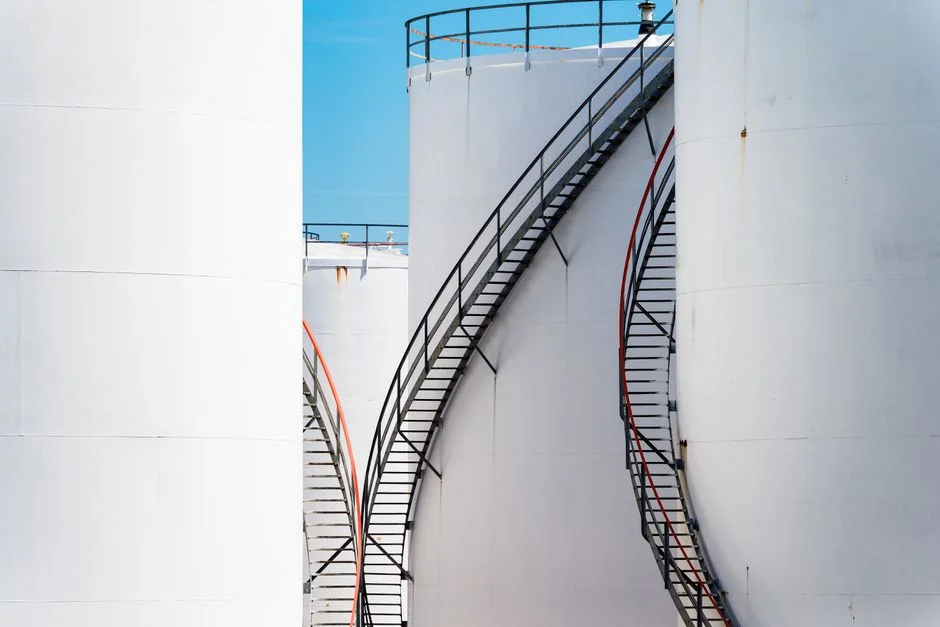
Equipment sizing must follow verified stream data because flow peaks, oil form and solids loading determine whether one skid, multiple skids or a separate polishing unit is appropriate.
- Collect average and peak flow, operating schedule and wastewater temperature.
- Measure oil and grease, TSS, emulsified oil, surfactants and pH for representative operating batches.
- Obtain toxicity indicators and the discharge destination, including the applicable permit or sewer requirement.
- Record stream variability, batch dumps, tank-bottom contributions and expected future operating changes.
- Run jar tests to establish chemical demand, floatability and settleability before final sizing.
The research does not provide a verified universal St. Mary oil-and-grease limit, so do not put one into the specification. Request the current permit or sewer discharge criteria from the facility’s compliance contact and require each bidder to demonstrate compliance against those site-specific conditions.
For preliminary DAF arrangements, Clearwater Industries states in its April 27, 2026 article that one skid handles flows of 66 GPM or less, while larger flows use a modular two-skid arrangement. HydropureWater’s standard DAF envelope of 4–300 m³/h provides the manufacturer’s preliminary capacity range. The lamella clarifier’s 20–40 m/h surface-loading range is likewise a selection input, not a substitute for application testing and a verified hydraulic design.
Material selection also needs support from the waste chemistry and operating conditions. Clearwater Industries identifies 304 stainless steel as its standard DAF material and states that 316 stainless steel, polypropylene and other materials are available on request. For petroleum wastewater, ask the supplier to justify the selected material against the expected constituents, temperature, corrosion mechanism and cleaning requirements.
Require vendors to state their sizing assumptions, identify the controlling design flow, show surface-loading or hydraulic calculations, define the chemical scope and provide startup and commissioning tests. A capital request should also identify the operating staff, utility and sludge-disposal costs that the vendor’s quotation excludes.
Build a Practical Petroleum Treatment Train
A defensible petroleum treatment train separates the oil-capture duty from the residual-solids duty and does not add clarification unless the data justify it.
- Segregate and equalize. Keep oily wash water, slop, stormwater and process drains separate where practical; equalize variable flows before treatment.
- Condition where required. Apply coagulant or flocculant only after jar testing establishes the dose and the expected response.
- Recover oil by DAF. Capture free oil, emulsified oil and floatable solids, then remove the float consistently by skimming.
- Add clarification conditionally. Use a lamella clarifier when residual solids require polishing or when its underflow can support sludge thickening.
- Collect and dewater residues. Route float and underflow to the selected handling method; use a filter press only when solids characteristics and the disposal plan establish that need.
This hybrid arrangement is appropriate when DAF effluent still contains solids that must be reduced, or when clarification provides a practical thickening step before dewatering. It is not automatically required for every oily stream. A well-characterized feed handled only by DAF may avoid the added capital, footprint and operating burden of a downstream clarifier.
Clearwater Industries’ April 27, 2026 guidance to pair DAF with proper coagulation and flocculation is relevant because conditioning affects both solids capture and float separation. The chemical system should therefore be commissioned with the flotation unit, not treated as an untested add-on.
Commissioning checkpoints should include chemical-dose response, oil skimming, float and sludge withdrawal, solids inventory, automation response and sustained effluent performance against the site-specific requirement. An automatic chemical dosing system should be tested across representative batch conditions. Where float or underflow is to be dewatered, confirm the sludge dewatering filter press duty using measured solids rather than relying on a generic sludge description.
Frequently Asked Questions
Which treatment is generally best for petroleum wastewater in St. Mary?
DAF is generally preferred for oily petroleum wastewater because flotation is designed to capture oil, FOG and floatable solids. A clarifier is preferred for heavy, settleable solids with little oil and may serve as a polishing step after DAF. Actual selection should follow stream characterization and jar testing.
What information should a buyer request before comparing equipment prices?
Request average and peak flow, operating schedule, oil and grease, TSS, emulsified oil, surfactants, pH, temperature, toxicity indicators, stream variability and the applicable discharge limits. Require each supplier to show which design flow and wastewater data control the selected capacity, because quotation prices are not comparable when their scope or sizing assumptions differ.
Why might DAF have a higher lifecycle cost than clarification?
DAF normally adds compressed-air consumption, recycle pumps, chemical conditioning, float-skimming maintenance and downstream float handling. Clarification generally has lower operating costs but still requires sludge collection and disposal or dewatering. Compare these recurring costs against the oil-removal objective rather than treating either option as universally cheaper.
How should a supplier be selected for a complete treatment train?
Evaluate relevant industrial or petroleum application experience, material and control-system documentation, jar-test support, utility requirements, controls scope and a clearly defined treatment-train offer. Also require evidence that the proposed DAF and any downstream lamella clarifier are coordinated for influent variability, oil capture, solids polishing and residue handling. A supplier that cannot identify its sizing inputs or demonstrate the sequence should not receive final equipment approval.
Is a DAF-to-clarifier train the most defensible sequence?
Not automatically. It is the most defensible sequence when residual TSS after DAF must be polished or when clarification supports sludge thickening. If DAF alone meets the verified objective and residue can be handled directly, adding clarification adds capital, footprint and operating cost without a demonstrated treatment need. A DAF system and lamella clarifier should therefore be compared as one train and as separate scopes.
Related Equipment
- industrial DAF system — specifications, capacity range, and technical data