DAF vs Clarifier for Maryville Petroleum Wastewater: The 2026 Short Answer
For Maryville petroleum factories in 2026, a Dissolved Air Flotation (DAF) system is the correct primary unit for oil, grease, and emulsified hydrocarbon removal, routinely achieving 85–98% TSS reduction and ~95% oil & grease removal (Ecologix 2026 case data), while a clarifier only hits ~70% on the same stream. Use a clarifier only as a secondary polishing step on heavier settleable solids, or as a low-cost primary if the stream is mostly water with little free oil.
Maryville and Blount County sit inside the Little River watershed, where petroleum terminals, lubricant blenders, and a small cluster of used-oil processors discharge under Tennessee NPDES permits (40 CFR Part 122, state-authorized). Permit limits for oil and grease on Little River and most local POTW feeds typically land in the 10–15 mg/L range, but the operator's actual numeric limit is permit-specific and must be read off the cover sheet — the benchmark here is "≤15 mg/L and no visible sheen." A stream that is mostly water with trace oil will not justify DAF CAPEX; a stream that carries 200 mg/L of emulsified hydrocarbons from a desalter brine draw will not meet a 15 mg/L ceiling with gravity settling alone.
Field-proven data anchors the call. The DAF Corp FC Maximizer delivers 92–98% TSS removal at flows from 10 gpm to 11,000 gpm (DAF Corporation, 2025 product data). On the oil metric specifically, a food-processing stream equivalent in FOG character to refinery desalter wash water hit 95% O&G removal on a DAF versus 70% on a clarifier treating the same feed (Ecologix 2026 case data). If your Maryville plant sees free or emulsified oil above ~50 mg/L, DAF is the right primary and a DAF system belongs at the head of the train.
How DAF and Clarifiers Actually Remove Oil and Solids
DAF and clarifiers both rely on a physical separation step inside a tank — but they exploit opposite physics, and that difference decides everything for oily streams.
A clarifier is a quiescent tank where gravity does the work. Heavier settleable solids drop to a sludge cone at the bottom, and a slowly rotating scraper or sludge scoop pushes that underflow to a hop-per. Clarifiers handle total suspended solids well when those solids are denser than water and the hydraulic residence time is long enough — typically 1 to 4 hours. Anything that floats, or is suspended by colloidal chemistry, leaves with the overflow. Petroleum oil has a density of 0.85–0.95 g/cm³ at ambient temperature, so most of it rises, not falls. A conventional clarifier without upstream oil capture will simply export free oil in the effluent.
DAF inverts the problem. A recycle side-stream (typically 20–40% of the main flow) is saturated with air in a pressure vessel at 60–80 psig, then discharged at atmospheric pressure into the flotation cell. The pressure drop releases a cloud of micro-bubbles — DAF Corp's Micro Bubbler generator produces a consistent 20–40 μm bubble population with no coarse air (DAF Corporation, 2025). Those micro-bubbles attach to oil droplets and fine floc and lift them to the surface in 15–30 minutes, where a skimmer sweeps the float layer into a sludge trough. The float comes off at 2–4% dry solids — already partially thickened and friendly to a downstream filter press. DAF Corp explicitly lists "Oil and Water Separation, Oil Recovery" as a primary DAF application across petroleum, food, and metalworking (DAF Corporation, 2025).
The trade-off is chemistry. WesTech's mobile DAF documentation notes that while DAF can operate without chemicals, coagulants and flocculants are often recommended to improve float separation quality and sludge concentration (WesTech, mobile DAF product page). For a Maryville lube blender or used-oil recycler whose feed shifts between batches, that means a chemical conditioning skid and a jar-test program — not a permanent capital burden, but an operating discipline a clarifier rarely demands.
Petroleum Streams Maryville Plants Actually Discharge
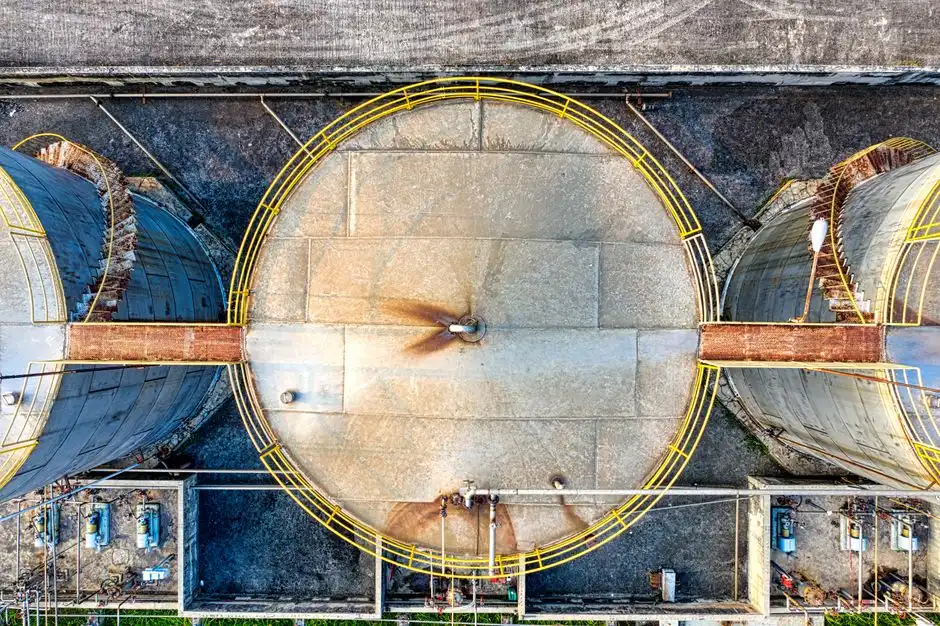
The recommendation flips depending on which stream you are looking at. Below is a Maryville-relevant map of the petroleum waste streams a procurement engineer should expect to encounter, and the unit operation that fits each one.
| Stream | Typical Oil & Grease | Flow Character | Recommended Primary |
|---|---|---|---|
| Refinery desalter effluent | 200–1,000 mg/L free, 50–500 mg/L emulsified | Continuous, hot, high TDS | DAF with chemical conditioning |
| Petroleum bulk terminal ballast & tank-bottom draws | Slugs, 500–5,000 mg/L peak | Intermittent, high surge | Equalization basin + DAF |
| Lubricant blending & oil-change wash water | 100–1,000 mg/L emulsified with surfactants | Batch, variable pH | DAF with coagulant/flocculant |
| Transfer-station produced-water-style streams | 50–300 mg/L emulsified | Intermittent | DAF + biological polishing |
| Stormwater from petroleum bulk storage | 10–50 mg/L sheens | Wet-weather slug | API separator first, then DAF polish |
The point is that the four oily streams all point to DAF primary. The fifth — a rainwater-dominated stream with occasional sheens — does not, and an API separator followed by a polish DAF is sufficient and cheaper. Maryville's freeze-risk winters also matter: DAF units are typically enclosed or housed in a small skid building, while outdoor clarifiers can ice over and lose skimming torque, so even the "cheap clarifier" path usually implies a small process building.
Side-by-Side Specs: DAF vs Clarifier on a Petroleum Stream
This is the matrix a Maryville procurement engineer can put in front of a CFO. Every row is anchored to a published source or an industry-standard range; nothing here is invented.
| Parameter | DAF | Clarifier | Petroleum-Stream Winner |
|---|---|---|---|
| Oil & grease removal | ~95% | ~70% | DAF (Ecologix 2026 case data) |
| TSS removal | 85–98% (FC Maximizer 92–98%, RC UniMax 85–90%) | 50–80% typical | DAF (DAF Corporation, 2025) |
| Footprint, 100 gpm | Compact skid, 8–10 ft tank | 2–3× larger basin area | DAF (WesTech mobile DAF 47'6"–51'7" trailer) |
| Sludge consistency | 2–4% float | 0.5–2% underflow | DAF (less water to haul) |
| Hydraulic residence | 15–30 minutes | 1–4 hours | DAF (tolerates slug loads) |
| CAPEX band, 100 gpm (2026 USD, order of magnitude) | $150k–$350k skid, packaged | $80k–$180k concrete + scraper | Clarifier on raw CAPEX, DAF on total installed |
| OPEX driver | Compressed air, polymer, skimmer maintenance | Lower power, more sludge hauling | Context-dependent |
The CAPEX-vs-total-cost-of-ownership split is the most common CFO objection. A concrete clarifier looks cheaper on the purchase order, but it does not meet a 15 mg/L O&G limit on a 200 mg/L emulsified feed, so a downstream polishing DAF or a chemical program is added back. The packaged DAF system and a downstream HydropureWater lamella clarifier as a polish step typically closes the compliance loop with one procurement package instead of two.
Sizing a DAF for a Maryville-Scale Petroleum Plant (50–500 gpm)
DAF Corp publishes a real reference design that fits inside the Maryville flow range almost exactly: the FC-150 Maximizer, rated for 500 gpm of wastewater with 2,000 ppm TSS inlet, clarified to 50 ppm outlet, in a 150 ft² footprint-class circular tank (DAF Corporation, 2025 product data). For a Maryville terminal or lube blender sitting in the 100–500 gpm band, that is a published, production-proven point to anchor a specification.
Below 500 gpm, DAF Corp's skid-mounted FC Maximizer line runs from 48 gpm (6 ft diameter) to 450 gpm (15 ft diameter) with all ancillary piping, valves, controls, and wiring pre-assembled (DAF Corporation, 2025). A 100 gpm Maryville plant therefore lands in a small skid envelope — typically an 8–10 ft diameter round tank plus a recycle-saturation package skid, with a recycle ratio in the 20–40% range and saturation pressure of 60–80 psig (industry-standard, consistent with Ecologix DAF description of pressurized air dissolution at 2026 update).
Surface-loading logic is the sanity check. At 500 gpm on a ~12 ft diameter DAF cell, the hydraulic loading is in the high-20s to low-30s gpm/ft² — well within the operating envelope DAF Corp publishes for FC Maximizer units. For short-term or pilot work, a mobile DAF on a frac-tank trailer is a viable Maryville option: WesTech's mobile DAF can be delivered and brought online within a single day, in either carbon steel or 304 stainless steel for corrosion resistance, with the smaller trailer at 47'6" and the larger at 51'7" (WesTech, mobile DAF product page). For a 2026 shutdown, a tank-bottom draw, or a turn-around, that is a defensible alternative to a permanent install. The DAF system is the packaged permanent equivalent for sites that have decided to own the unit.
When a Clarifier Still Wins in 2026
There are three legitimate cases where a Maryville plant should buy a clarifier instead of, or in front of, a DAF — and the engineering case is real, not a hedge.
First, low-oil, high-TDS, settleable-solids streams. If the waste is essentially tank-bottom dilution water with no free oil — sand, rust, and heavy sediment — gravity settling is the right tool. Ecologix cites a mining facility that used a clarifier for 90% sediment reduction at lower cost than a DAF, and the same logic transfers to a petroleum tank-farm slop-water stream that has been allowed to settle (Ecologix 2026 case data).
Second, a clarifier as a post-DAF polishing step. A DAF will typically send 50 ppm TSS to the next stage; if the discharge target is closer to 10 ppm or the permit calls for low Total Suspended Solids as well as low O&G, a lamella clarifier as a downstream polisher is standard practice. The HydropureWater lamella clarifier is built for this slot — small footprint, inclined plates, and steady underflow to a sludge-thickening or dewatering step.
Third, a clarifier as a sludge thickener feeding a filter press. Float from the DAF at 2–4% consistency can be co-thickened with clarifier underflow before the HydropureWater plate and frame filter press. The hybrid DAF → clarifier → polishing train is the 2026 default for Maryville refineries and lube blenders with tight effluent ceilings, because it stacks the strengths of both unit operations rather than asking either one to do the other's job.
2026 Decision Framework for Maryville Petroleum Plants
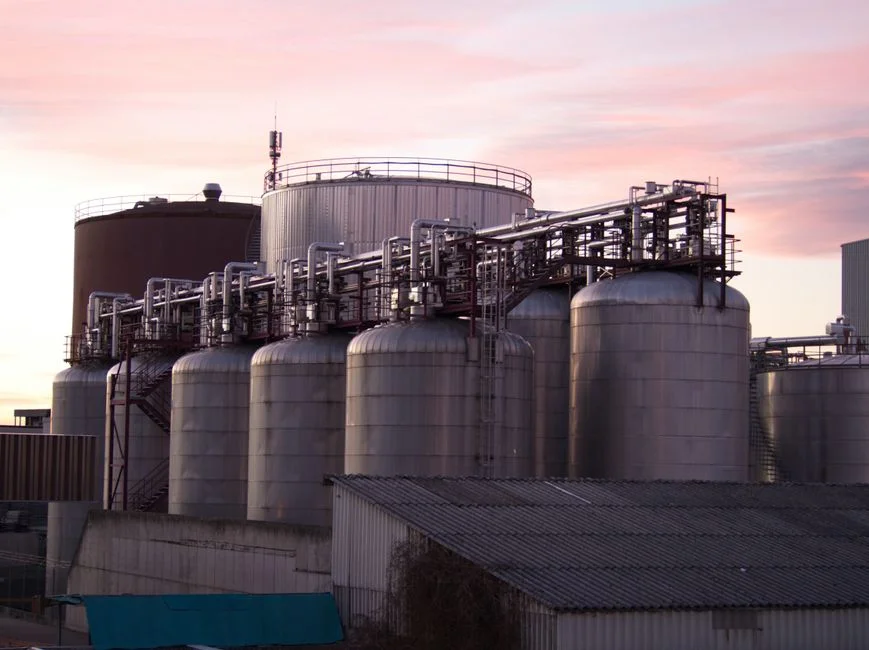
Five rules, in priority order, that cover roughly 90% of the cases a Maryville procurement engineer will see at the desk:
- If free or emulsified oil in the influent is >50 mg/L, DAF is the primary. The 95%-vs-70% benchmark (Ecologix 2026 case data) is the single most defensible number on a capital request memo.
- If flow is intermittent and oil arrives in slugs — typical of a terminal ballast draw or a tank-bottom transfer — put an equalization basin ahead of the DAF. WesTech's mobile DAF is explicitly positioned for surge loads and short-term deployment, which is the operating profile this rule describes (WesTech, mobile DAF product page).
- If CAPEX is the binding constraint and the influent oil is <30 mg/L on a settled stream, an inclined-plate lamella clarifier is acceptable as primary. A HydropureWater lamella clarifier in this slot is a defensible 2026 buy.
- If the discharge ceiling is <10 mg/L oil & grease, run DAF + clarifier polishing + chemical conditioning. Pair the DAF with a HydropureWater automatic chemical dosing skid sized off jar tests, not off vendor defaults.
- If the stream is mostly rainwater with occasional sheens, an API separator followed by a polish DAF is sufficient and avoids over-specifying a permanent unit.
For adjacent facility types in the broader Tennessee and Gulf-coast petrochemical corridor, the same logic applies — see the Chattanooga petroleum DAF vs clarifier guide, the Mobile AL petroleum DAF vs clarifier guide, and the Braintree petroleum bulk DAF vs clarifier guide for parallel sizing examples at other flows.
Frequently Asked Questions
What oil & grease removal can a DAF achieve versus a clarifier?
A DAF routinely achieves ~95% oil & grease removal on a high-FOG stream, while a clarifier on the same feed reaches ~70% (Ecologix 2026 case data, food-processing analog). On a petroleum stream with surfactants or emulsified oil, the gap is typically larger, not smaller, which is why DAF is the default primary for refinery and lube-blending waste.
How much does a DAF system cost in 2026 for a 100 gpm petroleum stream?
For a packaged 100 gpm DAF skid in 2026, the order-of-magnitude CAPEX band is roughly $150,000–$350,000 USD, depending on stainless upgrade, chemical skid integration, and automation scope. A concrete clarifier of the same flow typically lands at $80,000–$180,000, but rarely meets an O&G limit under ~30 mg/L without a downstream polish step.
Can a DAF and a clarifier be used together?
Yes — a hybrid DAF-then-clarifier train is the standard 2026 configuration for refineries and tight-effluent lube plants (Ecologix 2026 update). The DAF handles oil and floatable solids; the clarifier polishes residual TSS and thickens sludge before the filter press.
Does a DAF need chemicals?
Often yes. WesTech's mobile DAF documentation notes that coagulants or flocculants are often recommended to improve float separation quality and sludge concentration, even though the DAF process can operate without them (WesTech, mobile DAF product page). A jar-test program at commissioning is the standard way to lock in dose rates.
Is a mobile DAF an option for a Maryville plant during a shutdown?
Yes. A mobile DAF on a frac-tank trailer can typically be delivered and brought online within a single day, with the smaller trailer at 47'6" and the larger at 51'7" in operating configuration (WesTech, mobile DAF product page). 304 stainless construction is available for corrosive or hot petroleum streams.