What Petroleum Wastewater in Mobile, AL Actually Looks Like in 2026
For Mobile, Alabama petroleum wastewater in 2026, choose a DAF as the primary treater when free and emulsified oil exceed ~50 mg/L or when 40 CFR Part 435 daily maximum oil and grease (29 mg/L) is the binding limit; choose a gravity clarifier when the stream is heavy on settleable solids and grit with low emulsified oil. Most Mobile refineries still keep an API separator upstream of either.
Four contaminant fractions define a Mobile petroleum feed: free oil (>100 µm droplets that float within minutes), emulsified oil (1–100 µm, the fraction a clarifier struggles with), total suspended solids (silica, catalyst fines, coke, corrosion debris), and dissolved organics plus salts (COD, plus chloride from ship-channel stormwater intrusion). Across U.S. refinery surveys published by EPA and in 2024–2025 academic literature, desalter effluent typically runs 200–2,000 mg/L free oil, 50–500 mg/L emulsified oil, 100–1,500 mg/L TSS, and 200–3,000 mg/L chloride after major rain events.
Mobile swings harder than inland refineries. Hurricane-season stormwater surges (June–November) push clarifier underflow rates and double TSS for a week at a time, while Mobile ship-channel salt intrusion drives chloride above 2,000 mg/L in the first flush. Seasonal crude-slate changes at the terminal and refinery blend point — light sweet in summer, Canadian heavy in winter — shift the droplet-size distribution toward tighter emulsions in cold-crude runs. The dominant fraction dictates the unit: free oil points to an API separator, emulsified oil points to dissolved air flotation refinery service, settleable grit points to a clarifier. Characterize all four before sizing anything.
How a DAF and a Clarifier Actually Work on Oily Feed
A DAF saturates a pressurized side stream (60–80 psi) with air, then releases it through needle valves or a micro-bubble generator producing 20–40 µm bubbles (DAF Corp's Micro-Bubbler spec). Bubbles attach to oil droplets and floc particles, lifting them to the surface as a thin float that surface skimmers remove. Quoted DAF Corp performance in oily service is 92–98% TSS removal on the round FC Maximizer and 85–90% on the rectangular RC UniMax, with the FC line scaling from 10 gpm pilot units up to 11,000 gpm at 70 ft tank diameter (dafcorp.com).
A clarifier is a tank where Stokes-law settling does the work: rectangular (lamella or conventional) or circular (center-feed, scraper-driven). DAF Corp's clarifier line reaches 1,000 gpm rectangular and 70 ft circular at low overflow rates. Quoted oil and grease removal on oily feed is ~70% in Ecologix's 2026 comparison, versus 90–95% for a DAF on the same stream (ecologixsystems.com, 2026). TSS removal on low-oil grit feeds is 92–98% in clarifiers and 85–98% in DAFs, which is why the chemistry of the feed — not the equipment brand — picks the winner.
DAFs typically run with a coagulant plus an anionic flocculant for sharp float, though they can operate chemical-free at lower removal rates. Clarifiers need no chemicals, but produce a heavier, more dewatered bottom sludge on grit-heavy streams (3–8% DS) while DAF float is wetter (2–4% DS on DAF Corp systems) and concentrated in oil — a credit if recovered, a hazard if mishandled. The physics explains every cell in the comparison table that follows.
DAF vs Clarifier: Parameter-by-Parameter Comparison
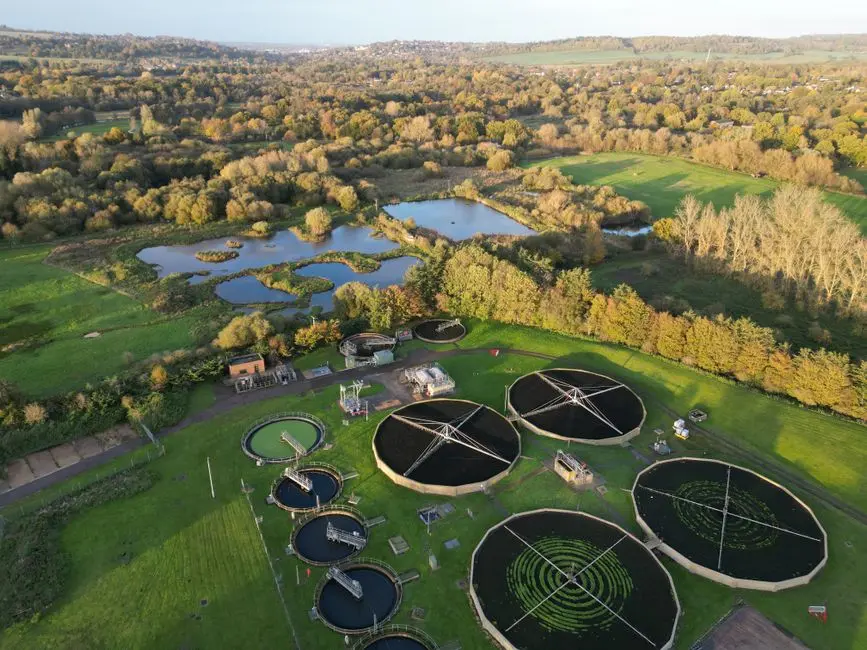
Eight parameters decide the procurement question. The bands below are drawn from vendor published data (DAF Corp, WesTech) and Ecologix's 2026 industrial comparison; a jar test on your specific Mobile feed is still required to lock in numbers before purchase.
| Parameter | DAF | Clarifier |
|---|---|---|
| TSS removal | 85–98% (FC Maximizer 92–98%, RC UniMax 85–90%, per dafcorp.com) | 70–90% on oily feed; 92–98% on grit feed (ecologixsystems.com, 2026) |
| Oil & grease removal | 90–95% (ecologixsystems.com, 2026) | ~70% on oily feed (ecologixsystems.com, 2026) |
| Footprint | Shallow tank, 5–8 ft water depth; skid units 6–15 ft diameter (48–450 gpm per dafcorp.com) | 12–20 ft side water depth; circular up to 70 ft diameter, rectangular to 1,000 gpm (dafcorp.com) |
| Hydraulic loading | 10–25 m/h (high rate) | 1–3 m/h (gravity-limited) |
| Sludge dryness | 2–4% DS float (dafcorp.com) | 3–8% DS bottom sludge |
| Chemical use | Coagulant + flocculant typical; can run unchemically at lower performance | None for settling; polymer optional for floc blanket |
| 2026 CAPEX (50–500 gpm, installed) | $35–$70 per gpm | $15–$40 per gpm |
| Operator skill | Moderate (air saturation, chemistry, skimmer) | Low (sludge pump, scraper) |
Three parameters flip the winner depending on what your plant values: footprint favors DAF by a wide margin, CAPEX favors clarifier by 1.8–2.5×, and oil removal favors DAF on any stream that crosses 50 mg/L emulsified. Treat the table as a trade-off matrix, not a scorecard. A DAF for petroleum primary treatment typically competes against a lamella clarifier as the grit or backup stage in the 50–500 gpm size class that Mobile terminals and specialty plants actually buy.
The 40 CFR Part 435 and ADEM Compliance Layer
40 CFR Part 435 is the federal categorical standard for petroleum refining wastewater and sets the numbers your environmental team will quote in any ADEM permit hearing. Key limits: oil and grease 29 mg/L daily maximum and 17 mg/L monthly average, TSS 30 mg/L monthly average, pH 6–9. Refinery stormwater and ballast contact water fall under Subpart A; lube and terminal operations are typically covered under Subpart D or F depending on SIC code (per 40 CFR Part 435).
Mobile plants discharge either to the Mobile Area Water and Sewer System (MAWSS) for sewered flows or under an ADEM-administered NPDES permit for direct discharges. MAWSS pretreatment limits can be tighter than Part 435 on oil and grease and on sulfides, and the binding limit on any given day is whichever standard applies to your outfall. A well-run DAF alone typically meets both 40 CFR Part 435 and MAWSS oil and grease limits on refinery desalter effluent; a clarifier alone usually does not, and requires a downstream CPI, sand filter, or second-stage DAF polish to reach 29 mg/L daily max on a sustained basis.
One item is non-negotiable under both Part 435 and standard refining practice: an API oil/water separator must remain upstream of any secondary treatment when free oil exceeds ~500 mg/L. The API separator handles bulk free oil that would overwhelm either a DAF or a clarifier. Plan the API first, then choose between DAF and clarifier for the polish step — the regulatory framing and the hydraulic framing both lead to the same answer.
When a Mobile Plant Should Rent a Mobile DAF Instead of Building Permanent
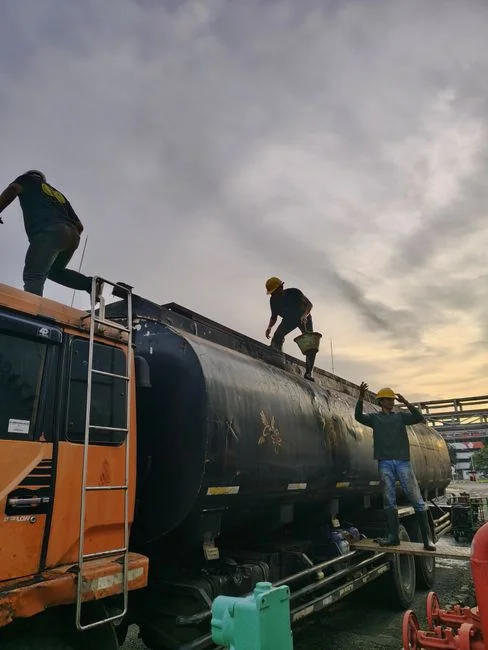
WesTech's mobile DAF fleet is a trailer-mounted unit on a frac-tank chassis, available in two sizes: a small trailer at approximately 47 ft 6 in × 8 ft 6 in and a larger unit at 51 ft 7 in × 8 ft 6 in in operation, with 3–5 ft clearance recommended around the unit. The system is online within a single day once power, influent, and drain connections are ready, runs on plant power, needs no permanent foundation, and discharges by gravity (westechwater.com).
Three Mobile-relevant use cases make the rental a real option, not a footnote. First, a 4–8 week refinery or terminal turnaround where the permanent treater is offline for inspection or repair — a mobile DAF maintains compliance without bypass. Second, emergency response to a separator upset, a storm surge, or a process spill, where the trailer can be on a flatbed within days. Third, pilot testing before committing to a permanent unit, where six weeks of jar-test-quality data on the actual feed beats any bench prediction. The mobile DAF can also integrate as a polish step in front of a permanent clarifier during a retrofit, avoiding full-flow bypass and keeping the existing tank in service.
The 2026 cost shape: a mobile DAF rental for a six-week Mobile turnaround typically runs $25k–$60k all-in (rental, mobilization, demob, operator support, chemistry) versus roughly $400k–$900k installed for a permanent system at the same flow. Rentals do not pencil for permanent capacity, but they pencil decisively for any of the three use cases above. A Beaumont petroleum DAF vs clarifier 2026 guide walks through an analogous Gulf-coast cost case for cross-reference.
Decision Framework: Pick DAF, Clarifier, or Both in 2026
Branch on your influent numbers, not on vendor preference. If free oil exceeds 500 mg/L or emulsified oil exceeds 50 mg/L, the right primary is an API separator plus DAF, with the API handling bulk free oil and the DAF polishing emulsified oil and TSS to 40 CFR Part 435 limits. If the stream is mostly settleable grit, sand, and catalyst fines with oil under 50 mg/L, a clarifier — lamella plate or circular — is enough, and a DAF would be overspec.
If the stream is mixed, or you face storm surges that double TSS for a week at a time, the answer is DAF primary with a clarifier as a sludge thickener or standby; the reverse — clarifier primary with a DAF polish — is also valid where existing civil work favors a tank retrofit. If the flow is short-duration or uncertain, such as a new Mobile terminal still under construction, rent a mobile DAF first, run a six-week jar test on real feed, then commit to permanent equipment with data in hand. WesTech's single-day online capability makes that pilot path workable on a real construction schedule.
If you remember nothing else: in 2026, for a typical Mobile petroleum plant with a desalter or terminal drain, the DAF is the right primary; the clarifier is the right backup. The complementary Claremore mining DAF vs clarifier 2026 guide shows the same logic on a TSS-dominant feed, and the lamella clarifier retrofit and upgrade guide covers the case where a clarifier already exists and needs new internals rather than full replacement.
Cost Reality Check: CAPEX, OPEX, and Payback
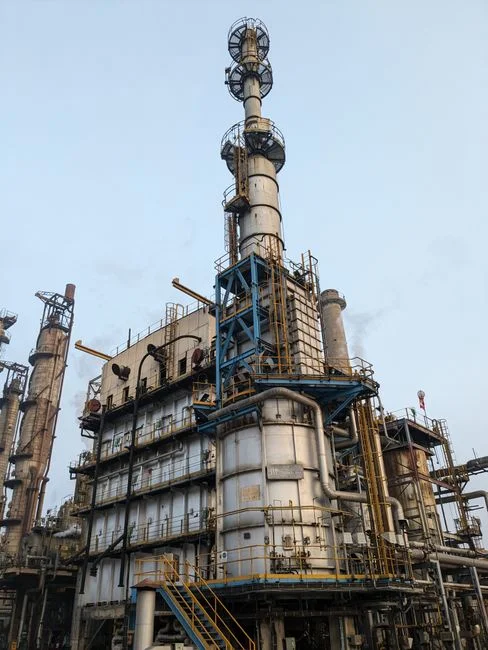
At the 50–500 gpm size class a single Mobile terminal or specialty refinery actually buys, 2026 installed CAPEX bands are $35–$70 per gpm for a permanent DAF (skid, chemical skid, controls) versus $15–$40 per gpm for a permanent clarifier — a 1.8–2.5× premium for the DAF. OPEX swings the other way for some plants: DAF chemicals run roughly $0.02–$0.08 per gallon treated in coagulant and flocculant, plus 0.5–2 kWh per m³ for the recycle pump and saturator; the clarifier has near-zero chemical OPEX but generates more sludge volume, which raises hauling cost.
| Cost driver (200 gpm, desalter effluent) | DAF | Clarifier |
|---|---|---|
| Installed CAPEX (200 gpm) | ~$600,000 | ~$300,000 |
| Chemical OPEX | ~$45,000/yr (coagulant + flocculant) | ~$0–$5,000/yr |
| Sludge hauling differential | Baseline | +$25,000–$35,000/yr (higher volume) |
| Net annual OPEX difference | +~$15,000/yr | Baseline |
| Premium payback (oil compliance only) | ~6–8 years | — |
| Premium payback (with permit excursion avoided) | < 3 years | — |
Run the math on a representative Mobile scenario: 200 gpm desalter effluent, 1.0 mg/L oil and grease influent 200 mg/L. DAF CAPEX ~$600k vs clarifier ~$300k, OPEX difference ~$45k/yr in DAF chemicals offset by ~$30k/yr lower sludge hauling, so the DAF premium pays back in roughly 6–8 years if oil compliance is the only driver. That payback shortens to under 3 years when the DAF also prevents a 29 mg/L daily max excursion that triggers MAWSS surcharges, ADEM consent-order exposure, and the operational cost of a shutdown-and-fix cycle. A PLC-controlled coagulant and flocculant dosing skid tightens OPEX further by keeping polymer consumption near jar-test targets rather than overdosing by rule of thumb, and a plate-and-frame filter press downstream of either system lifts sludge DS above 25% and cuts hauling tonnage by 60–80%.
Frequently Asked Questions
Can a DAF replace an API separator?
No. Whenever free oil exceeds ~500 mg/L, an API separator must stay upstream of any secondary treater. The DAF is designed to polish emulsified oil and TSS, not to handle bulk free oil that would overload its float layer and saturate the skimmer.
How much oil and grease can a DAF remove from refinery wastewater?
Typically 90–95% in oily refinery service, with effluent below 29 mg/L daily max on 40 CFR Part 435 streams when properly conditioned (ecologixsystems.com, 2026). Removal drops sharply without coagulant and flocculant, so chemical conditioning is treated as part of the design.
Is a lamella clarifier a good substitute for a DAF in Mobile?
Only for grit and TSS removal with low oil. Lamella plates do not float emulsified oil, and a lamella alone will not meet 40 CFR Part 435 oil limits on refinery feed. Use it as a polish or thickener downstream of a DAF, or as a stand-alone on stormwater with low oil.
How fast can a mobile DAF be deployed in Mobile for a turnaround?
WesTech reports online in a single day once power, influent, and drain connections are ready (westechwater.com). The small trailer measures 47 ft 6 in × 8 ft 6 in and the larger unit 51 ft 7 in × 8 ft 6 in in operating configuration.
What chemicals does a DAF need for oily wastewater?
Typically a coagulant such as polyaluminum chloride (PAC) plus an anionic flocculant. Site-specific jar testing is required to fix dose and cost; a PLC-controlled dosing skid is the standard way to hold polymer consumption near jar-test targets in operation.