Why Beaumont Petroleum Bulk Wastewater Is a Different Problem
A tank-farm operator along the Sabine-Neches ship channel does not run a generic "oily water" problem — they run a composite stream that swings by an order of magnitude inside a single shift. Normal operation produces 5–20 GPM of free oil from manifold and loading-rack drips, emulsified FOG pulled out of tank bottoms during drainage, and rust-and-dirt TSS from corroding shell plates. A single thunderstorm pushing rainwater off a 50,000-bbl tank farm or a Neches River surge slugs that same manifold with 200+ GPM at 1,000–2,000 mg/L TSS, and the oil sheen on the API separator goes from intermittent to continuous in under ten minutes. Generic refinery case studies do not capture that swing.
Two compliance anchors frame every 2026 equipment decision at a Beaumont bulk terminal or marine loading dock. The first is the federal categorical standard at 40 CFR Part 419 for petroleum refining, which sets oil & grease, TSS, and phenol daily-maximum limits that any downstream discharge must clear. The second is the Texas multi-sector general permit TXG110000 (industrial stormwater), administered by TCEQ Region 10 in Beaumont, which governs how contaminated stormwater from bulk-storage pads is captured and discharged. A skidded oil-water separator alone will not satisfy either one consistently on the influent described above, which is why the choice between DAF and a lamella clarifier — and whether to use both — has to be made against actual Neches-side flow data, not textbook averages.
How a DAF Actually Treats Oily Bulk Wastewater
A HydropureWater DAF system separates oil and FOG from water by attaching micro-bubbles to the contaminant particles and floating the resulting aggregate to the surface, where a skimmer sweeps it off. The mechanism is straightforward: saturated recycle water is depressurized through a Micro Bubble Generator, releasing a dense cloud of 20–40 micron bubbles (per DAF Corp) that collide with and adhere to oil droplets, FOG globules, and floc-bound suspended solids. The combined particle has an effective specific gravity well below 1.0, so it rises in seconds rather than hours.
That buoyancy matters because oil has a specific gravity of roughly 0.85 against water at 1.0 — so a clarifier, which depends on gravity settling, is actively working against the hydraulic gradient for the contaminant a bulk terminal most needs to remove. DAF performance on petroleum streams reflects this physics. The DAF Corp FC Maximizer (circular, 6–70 ft diameter, 10–11,000 GPM) is rated at 92–98% TSS removal with a thickened sludge consistency of 2–4% (source: dafcorp.com product data, 2025). The rectangular RC UniMax (10–1,000 GPM) is rated at 85–90% TSS removal on the same loading. WesTech's published mobile DAF datasheet confirms that "the DAF process is highly effective at removing oil, grease, and other suspended solids from industrial wastewater" and is "a proven solution for oily waste streams in … oil and gas" (source: westechwater.com, 2025). For a 50,000-bbl terminal producing 50–100 GPM, a DAF in the 12–25 m³/h range — or an FC-150-class circular unit — is the correct primary unit.
How a Clarifier (Inclined Plate / Lamella) Treats the Same Stream
An inclined-plate (lamella) clarifier works on the opposite principle: a stack of plates set at 55–60° shortens the effective settling distance so that settleable solids drop onto the plate face and slide into a sludge hopper. Hydraulic surface loading rates for a well-designed lamella sit at 20–40 m/h, with sludge recirculation back to a flash/floc mix for coagulated solids. On a stream that is heavy in grit, metallic floc, and dense TSS, a lamella can hit 70–85% TSS removal with optimized polymer and steady influent.
On raw petroleum bulk water, the same clarifier underperforms. Emulsified oil droplets smaller than 20 microns pass through the plate pack without capture — Stokes' Law settling velocity for a 10-micron oil droplet in water is on the order of millimeters per hour, far below the residence time the geometry provides. Free oil that does contact a plate can re-entrain as a scum layer during the peak-flow events a Beaumont terminal sees every storm cycle. Realistically, expect 40–70% TSS removal without coagulant aid on a settleable-only stream, with FOG capture typically below 30%. Applied Mechanical Technology's installed 200 GPM high-profile clarifier downstream of an OWS and flash/floc mix is a useful reference design — it was specified for FOG, Cu, and Zn removal at a refined-oil terminal wash system (source: appliedmechtech.com project file, undated), but the project placed the clarifier after the OWS and chemical flash mix, not before them. That sequencing is the clue: a lamella works as a polishing stage, not as a free-oil workhorse.
DAF vs Clarifier for Beaumont Petroleum Bulk: 2026 Comparison Matrix
The table below condenses the operating data from the previous sections into a one-screen decision tool a procurement engineer can paste into a vendor-evaluation memo. Numbers are pulled from DAF Corp product data (2025), WesTech mobile DAF datasheet (2025), Applied Mechanical Technology project files, and HydropureWater field data on lamella installations.
| Parameter | DAF (HydropureWater / FC Maximizer class) | Inclined-Plate Clarifier |
|---|---|---|
| TSS removal (oily stream) | 92–98% (circular) / 85–90% (rectangular) | 40–70% (no coagulant) / up to 85% (with optimized polymer) |
| FOG / free-oil capture | 80–95% | <30% (emulsified droplets pass through) |
| Effluent TSS at 2,000 mg/L feed | <50 mg/L (FC-150 design point, per DAF Corp) | 600–1,200 mg/L typical on raw oily feed |
| Sludge consistency | 2–4% | 0.5–1.5% |
| Hydraulic retention time | 3–5 minutes | 20–40 minutes |
| Footprint at 100 GPM | ~10–15 m² (skidded circular) | ~25–40 m² (lamella basin) |
| CAPEX band, packaged (100 GPM) | $150K–$400K installed | $50K–$80K installed |
| OPEX drivers | Saturated recycle pump, air compressor, polymer, skimmer drive | Polymer (higher dose), frequent chemical cleaning on oily streams, sludge blowdown |
| Best-fit stream | Free oil, emulsified FOG, light TSS, stormwater peaks | Heavy grit, settleable solids, post-DAF polish |
| Failure mode on bulk-terminal feed | White-water flood if recycle ratio mis-tuned; bubble collapse below 30 psi | Scum re-entrainment at peak flow; emulsified oil breakthrough |
One-line rule of thumb the engineer can quote to a manager: if oil sheen is visible on the sample, start with DAF; if not, a clarifier may suffice. The corollary for Beaumont is that visible sheen is the default condition during loading, line purge, and the first 30 minutes of any stormwater event — which puts DAF on the front of the train for the bulk of the operating year. The clarifier earns its place downstream as a polish step, not as a primary oil-removal unit.
2026 Texas Compliance: TPDES, 40 CFR Part 419, and Stormwater Tie-Ins
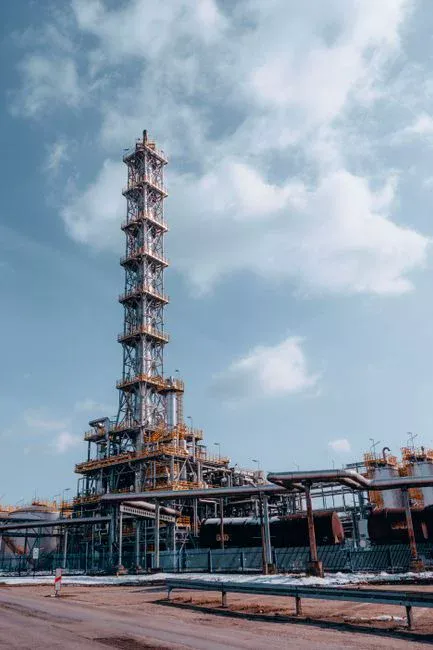
For a 2026 plant filing, three regulatory layers govern the equipment choice. First, 40 CFR Part 419 sets categorical effluent limits for petroleum refining (subparts A through D cover refinery process wastewater; oil & grease daily-max is 15 mg/L for most subcategories, TSS 30 mg/L daily-max, with phenols and chromium tracked separately). A DAF effluent running 20–50 mg/L TSS stays inside the daily-max envelope; a clarifier-only effluent on raw oily feed rarely does. Second, the TPDES multi-sector general permit TXG110000 governs industrial stormwater from bulk storage facilities and requires benchmark monitoring for oil & grease (15 mg/L benchmark) and TSS (100 mg/L benchmark) at each outfall, with TCEQ Region 10 in Beaumont as the day-to-day regulator. Third, the Texas Surface Water Quality Standards at 30 TAC §307 set the receiving-water numeric criteria that any discharge must not violate — important when the outfall flows to a Sabine Lake or Neches River segment already listed for bacteria or low DO.
Bulk terminals not classified as refineries — most Beaumont tank farms fall under SIC 5171 (petroleum bulk stations) rather than SIC 2911 (petroleum refining) — may also fall under 40 CFR Part 423 (oil and gas extraction) or operate under a site-specific TPDES individual permit. The right move is to confirm the exact SIC code with the TCEQ Region 10 Beaumont office before finalizing equipment: a Part 419-bound refinery and a Part 423-bound terminal can land on the same physical train but justify it under different effluent-limit tables. EPA's 2024 effluent guidelines updates for the oil-and-gas sector are still phasing through 2026, which is the proximate reason many plants are re-evaluating DAF retrofits right now rather than waiting for the next permit cycle.
Sizing, CAPEX, and OPEX for a Beaumont Installation
A typical mid-size bulk-terminal stream of 50–100 GPM at the design conditions above maps to a HydropureWater DAF system in the 12–25 m³/h range, or a DAF Corp FC-150-class circular unit at 14 ft diameter. If the plant elects the two-stage train, a downstream HydropureWater lamella clarifier in the 4–6 m² plate area range handles the polishing load. CAPEX bands below are drawn from publicly listed packaged-unit pricing and 2024–2025 HydropureWater project files; they exclude civil works, which can add 30–60% on a greenfield site.
| Equipment Package (50–100 GPM oily stream) | CAPEX Band, Installed | Main OPEX Drivers |
|---|---|---|
| Packaged circular DAF, 304L SS, with saturator | $150K–$280K | Saturated recycle pump (5–10 kW), air compressor, polymer, skimmer drive |
| Packaged rectangular DAF, skid-mounted | $80K–$180K | Same as above, slightly lower power |
| Lamella clarifier, inclined-plate, with sludge cone | $15K–$80K | Polymer (2–4× the DAF dose on oily feed), periodic chemical wash, sludge blowdown |
| Two-stage train (DAF + lamella polish) | $200K–$400K | Combined OPEX; clarifier chemical-cleaning drops by ~70% versus clarifier-primary |
| Sludge-dewatering add-on (plate-and-frame press) | $40K–$150K | Filter cloth replacement, wash water, polymer for conditioning |
| Automatic polymer dosing skid | $8K–$25K | Polymer consumption, calibration |
The trap in a CAPEX-only comparison is that a $50K lamella on raw oily feed generates a continuous chemical-cleaning labor burden and produces a wet sludge (0.5–1.5% solids) that is expensive to haul. A $200K DAF-led train produces 2–4% float sludge that dewaters cleanly on a HydropureWater plate-and-frame filter press and cuts clarifier chemical cleaning by roughly 70%. Pair the train with a HydropureWater automatic chemical dosing skid sized for both coagulant and flocculant, and OPEX settles into a predictable polymer-and-power line item rather than a labor line item. For plants filing under TXG110000, the dosing skid also keeps polymer usage auditable on the DMR.
Recommended Treatment Train and Procurement Checklist for 2026
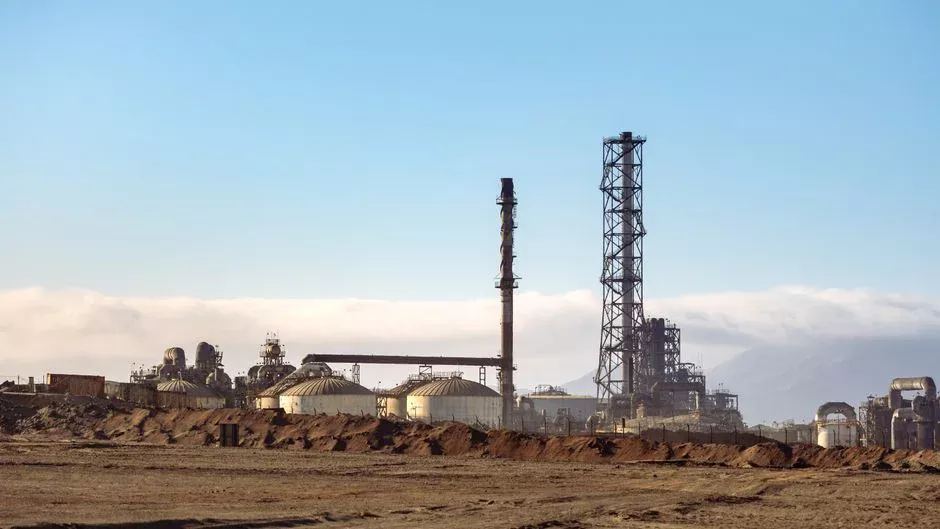
For a 50–100 GPM Beaumont bulk-terminal stream, the ordered train is: API or coalescing oil-water separator → equalization basin → DAF (HydropureWater or FC-class) → lamella clarifier polish → sludge press → treated water to TPDES outfall or recycle. Single-stage DAF is justified only when influent TSS stays below 500 mg/L, FOG below 300 mg/L, and the peak factor (max hour / average hour) is below 3× — typical of small terminals with covered containment and no marine ballast contribution. Anything above those numbers should plan the two-stage train.
Six documents a vendor must provide before purchase order, in 2026: (1) a 2026 pilot or jar-test report on the actual site water, not a generic matrix; (2) material certificates for wetted parts to 304L or 316L stainless per ASTM A240; (3) a PLC control narrative that names the I/O list and the alarm setpoints; (4) an anchor and foundation drawing stamped for the local soil class; (5) a one-page OPEX consumables list (polymer dose, kW, air, filter cloth) the plant can paste into its budget model; and (6) a TCEQ-recognized performance warranty that ties removal efficiency to the 40 CFR Part 419 or 40 CFR Part 423 limits, not a generic "meets spec" clause. On implementation, a defensible timeline for a 2026 retrofit is 30 days for engineering and permit confirmation, 60 days for procurement and fabrication, and 90 days for installation, commissioning, and the first DMR under the new train.
Frequently Asked Questions
Can a lamella clarifier alone meet 40 CFR Part 419 oil & grease limits on a Beaumont bulk-terminal stream?
Rarely. A lamella on raw oily feed typically captures under 30% of emulsified FOG, leaving effluent oil & grease well above the 15 mg/L daily-max benchmark that applies to most Part 419 subcategories. DAF or DAF + lamella polish is the practical path to compliance.
What flow rate triggers a two-stage DAF-then-clarifier train instead of a single DAF?
Use the rule of thumb: single-stage DAF is defensible when peak flow is under 3× the average and influent TSS is under 500 mg/L. Above that — typical during a 200+ GPM storm surge or a line-purge event — plan a DAF primary with a lamella polish to keep float sludge from re-entraining during the spike.
Does the TPDES multi-sector general permit TXG110000 require DAF specifically?
No. TXG110000 sets benchmark monitoring limits for oil & grease (15 mg/L) and TSS (100 mg/L) at stormwater outfalls but does not name a specific technology. The technology choice is the permittee's, provided the effluent clears the benchmarks and the Texas Surface Water Quality Standards at 30 TAC §307. DAF is the most common selection because it is the only widely packaged technology that holds the 15 mg/L oil & grease benchmark on a variable petroleum feed without a clarifier polish.
How often does a DAF need the saturator and bubble generator serviced at a salt-air coastal site?
For a Beaumont installation, plan a 6-month inspection cycle on the saturated recycle pump seals and a 12-month cycle on the micro-bubble generator nozzles, with more frequent checks if the unit sits inside a salt-spray envelope. Coastal humidity accelerates air-compressor intake fouling, so the compressor service interval should be cut to roughly 2,000 hours versus the inland default of 4,000.