Why 2026 Is a Different Compliance Year for Houston Chemical Plants
Three enforcement signals make 2026 a different planning year for chemical plants along the Houston Ship Channel, even though the underlying rules in 40 CFR Part 414 (Organic Chemicals, Plastics and Synthetic Fibers, or OCPSF) have not been amended since 1993. First, the City of Houston dropped its total oil & grease (O&G) local limit from 750 mg/L to 200 mg/L effective December 2, 2023 (per the City of Houston Industrial and Pretreatment FAQ), which means equalization basins and dissolved air flotation (DAF) units sized to the old 750 mg/L peak load are now non-compliant at slug loading — a re-spec, not a tweak. Second, the Environmental Integrity Project (EIP) report "Oil's Unchecked Outfalls" found that the ExxonMobil Baytown Refinery released approximately 127 million lb of chlorides, sulfates, and total dissolved solids (TDS) to the Houston Ship Channel in 2021, making it the No. 1 TDS discharger in the United States; seven of the ten worst TDS polluters that year were in Texas. Third, the Phillips 66 Sweeney Refinery exceeded its permitted pollution limits 44 times between 2019 and 2021, 42 of them for unpermitted cyanide discharges to the Brazos River, yet the total penalty was $30,000 — the canonical example of weak enforcement economics. On top of those, in April 2023 Bayou City Waterkeeper and twelve other groups filed a Ninth Circuit lawsuit challenging EPA's January 31, 2023 decision not to update effluent limitation guidelines (ELGs) for petroleum refining, organic and inorganic chemicals, plastics, fertilizer, pesticide, and nonferrous metals; an adverse ruling forces EPA to reopen 40 CFR Part 414 for the first time in 33 years. Finally, EPA's 2019 PFAS Action Plan already flags PFAS manufacturers and formulators as OCPSF-regulated, and a live Advance Notice of Proposed Rulemaking (ANPRM) is collecting data that may fold PFAS-specific numeric limits into a future OCPSF rulemaking — a 2026 watch-item even before limits exist.
The Two-Rule Architecture: 40 CFR Part 414 Plus City of Houston Local Limits
One treatment train has to satisfy two regulators: EPA at the federal level, and the City of Houston as the delegated Control Authority at the local level. The federal rule is 40 CFR Part 414, the Organic Chemicals, Plastics and Synthetic Fibers (OCPSF) effluent guideline, promulgated in 1987 and last amended in 1993 (per EPA's OCPSF Effluent Guidelines page). Part 414 covers process wastewater from seven subcategories — rayon fibers, other fibers, thermoplastic resins, thermosetting resins, commodity organic chemicals, bulk organic chemicals, and specialty organic chemicals — and applies to more than 1,000 chemical facilities nationwide. Any facility that performs an operation listed under Part 414 is automatically a Categorical Industrial User (CIU) and, because of that, a Significant Industrial User (SIU) under 40 CFR Part 403 (the General Pretreatment Regulations). The SIU numeric triggers are explicit (per the City of Houston FAQ and 40 CFR 403.3): greater than or equal to 25,000 gpd of process wastewater discharged to the publicly owned treatment works (POTW), excluding sanitary, non-contact cooling, and boiler blowdown, OR a process stream that makes up 5% or more of the POTW's average dry-weather hydraulic or organic capacity. The City of Houston acts as the delegated Control Authority under 40 CFR 403.5(c) and layers local limits on top of the categorical standards to prevent pass-through (40 CFR 403.3(p)) and interference (40 CFR 403.3(k)) at the receiving POTW — the two harms local limits exist to stop. The practical effect: a CIU discharging to the City sanitary sewer must hold an Industrial Waste Permit, hit 40 CFR Part 414 subcategory limits at the process end, and hit the City of Houston's numeric local limits at the point of connection.
The Houston Local Limits You Must Hit at the Point of Connection
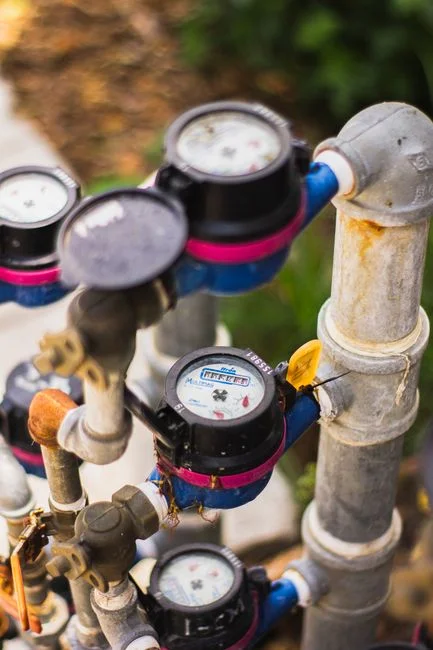
Houston Code of Ordinances Section 47-188 sets the numeric targets the treatment train is being designed to hit. The headline numbers, drawn from the City of Houston Industrial and Pretreatment FAQ, are pH 5.0 to 11.0 standard units, total sulfide below 5.0 mg/L, temperature at or below 45°C (113°F), closed-cup flash point at or above 60°C (140°F), and total oil & grease at or below 200 mg/L effective December 2, 2023. Floating oil and grease is prohibited at any concentration, which means skimmings must be removed before the sewer, not diluted. The City also enforces a list of categorical prohibited discharges regardless of pretreatment classification: flammable, reactive, explosive, corrosive, or radioactive substances; noxious or malodorous materials; medical or infectious wastes; solid or viscous substances capable of obstructing flow; toxic substances; non-biodegradable oils; and any pollutant that results in the emission of hazardous gases. Above those numeric caps, the City runs a sanitary sewer surcharge on Carbonaceous Biochemical Oxygen Demand (CBOD), Ammonia (NH3), and Total Suspended Solids (TSS) above domestic baseline, recalculated annually from industry self-monitoring data — biological underperformance translates directly into operating cost. The first action for any new discharger is a call to the City Industrial Wastewater Service at (832) 395-5800 or [email protected], located at 10500 Bellaire Blvd, Houston, TX 77072.
| Parameter | Houston local limit (Code 47-188) | What it controls |
|---|---|---|
| pH | 5.0–11.0 S.U. | Acid/alkali slug control; biological activity |
| Total sulfide | < 5.0 mg/L | Anaerobic pocket prevention, odor, corrosion |
| Temperature | ≤ 45°C (113°F) | POTW biological envelope, worker safety |
| Flash point (closed cup) | ≥ 60°C (140°F) | Fire/explosion risk at the sewer |
| Total oil & grease | ≤ 200 mg/L (since 2023-12-02) | Pass-through, fire risk, surcharge trigger |
| Floating oil & grease | Prohibited at any concentration | Skimmings must be removed, not diluted |
| CBOD, NH3, TSS | Surcharge above domestic baseline | Annual operating cost via fee schedule |
A Six-Step Treatment Train That Closes the Gap
Six unit operations, run in the order below, close the gap between the OCPSF raw influent envelope and the Houston plus 40 CFR Part 414 compliance targets at the sewer connection. Each step has a specific limit it owns; do not assume one unit can do another unit's job.
Step 1 — Equalization. Balance flow, pH, and temperature in a sized basin; design hydraulic residence time (HRT) for 8–24 h depending on diurnal swing amplitude so downstream units see a steady feed. Equalization is the unit that holds pH inside 5.0–11.0, sulfide below 5 mg/L, and temperature under 45°C, and it must be sized first because no downstream unit can fix a slug.
Step 2 — Oil/water separation via DAF. A DAF oil/water separation unit running at hydraulic loading of 2–5 m³/m²·h typically achieves 80–95% O&G removal, taking residual O&G comfortably below the 200 mg/L cap. Skimmings must be routed to a dedicated oil-recovery drum, not returned to the head of the plant, because floating O&G is prohibited at any concentration.
Step 3 — pH adjustment and chemical dosing. Use a PLC-controlled chemical dosing skid to land pH at 6.5–8.0 before biotreatment and to feed iron-salt or air/oxygen oxidation so total sulfide stays below 5 mg/L at the discharge flange. Tight setpoints across a batch OCPSF envelope are not achievable with manual dosing.
Step 4 — Biological treatment. Either conventional activated sludge at mixed liquor suspended solids (MLSS) 3,000–5,000 mg/L and HRT 6–12 h, or an MBR membrane bioreactor system at MLSS 8,000–12,000 mg/L and HRT 4–8 h when footprint or effluent quality is binding. MBR delivers tighter effluent, removes the secondary clarifier from the train, and reduces the chance of TSS surcharge — see the MBR installation and commissioning guide for commissioning specifics.
Step 5 — Clarification or polishing. A lamella clarifier for TSS polishing at surface overflow rate (SOR) 2–4 m³/m²·h, or the MBR membrane itself, holds TSS below the surcharge trigger and protects downstream monitoring instruments from fouling. The lamella clarifier troubleshooting guide covers the seven data-backed fixes most B2B engineers run into during the first 18 months.
Step 6 — Monitoring and self-reporting. Continuous flow, pH, and temperature; scheduled sampling for O&G, sulfide, CBOD, TSS, and NH3 on the cadence the Industrial Waste Permit specifies. Sampling quality feeds the annual surcharge calculation and the enforcement file.
| Step | Unit operation | Design parameter | Primary limit it owns |
|---|---|---|---|
| 1 | Equalization basin | HRT 8–24 h | pH 5.0–11.0; T ≤ 45°C; sulfide buffer |
| 2 | DAF oil/water separation | 2–5 m³/m²·h; 80–95% O&G removal | O&G ≤ 200 mg/L; no floating layer |
| 3 | pH and sulfide chemical dosing | PLC-controlled; iron salt or air/oxidation | pH 6.5–8.0 pre-bio; sulfide < 5 mg/L |
| 4 | Biological treatment (activated sludge or MBR) | MLSS 3,000–5,000 mg/L (AS) or 8,000–12,000 mg/L (MBR); HRT 4–12 h | CBOD reduction; downstream TSS protection |
| 5 | Lamella clarifier or MBR membrane | SOR 2–4 m³/m²·h (lamella); flux 10–20 LMH (MBR) | TSS below surcharge trigger |
| 6 | Self-monitoring and reporting | Continuous flow/pH/T; scheduled O&G, sulfide, CBOD, TSS, NH3 | Permit compliance; surcharge input |
Engineers working on comparable treatment trains in other chemical corridors can cross-check design choices against the parallel playbook for chemical plant pretreatment in Columbus, OH.
The Permit Process and the Surcharge Bill
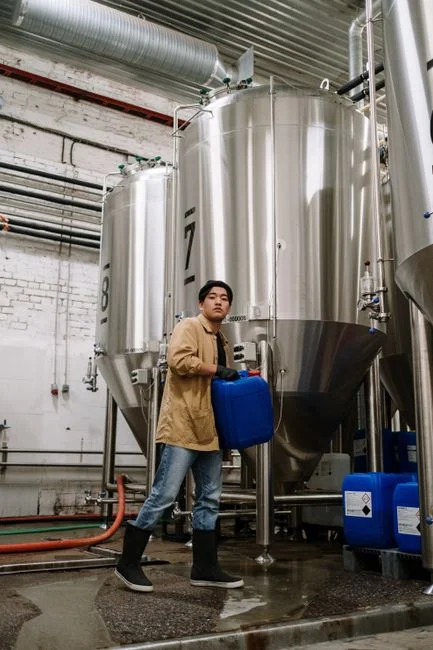
Permit sequence at the City Industrial Wastewater Service (IWS): contact IWS at (832) 395-5800 → submit the Industrial Waste Survey → IWS performs an on-site inspection → optional pre-application meeting → submit the application → pay the Permit Application Fee and Permit Administrative Fee per the current City fee schedule → receive the two-year Industrial Waste Permit → automatic renewal notice at least one month before expiration. The same self-monitoring dataset that drives compliance drives the bill: CBOD, NH3, and TSS above domestic baseline feed the annual sanitary sewer surcharge recalculated each year by IWS. Worked example, labeled as illustrative — use the current City fee schedule for live numbers: assume self-monitored annual averages of CBOD 400 mg/L, NH3 40 mg/L, TSS 350 mg/L against a domestic baseline of roughly CBOD 250 mg/L, NH3 25 mg/L, TSS 250 mg/L. The City formula bills the delta at the per-pound rate in the fee schedule; a 100 mg/L CBOD overshoot on 50,000 gpd is a six-figure annual line item, before NH3 and TSS are added in. The same dataset is what the City uses to escalate enforcement under the progressive response plan — Notice of Violation (NOV) → Administrative Order → service termination or administrative fines — so the monitoring record is both a cost ledger and a defense file. Texas Commission on Environmental Quality (TCEQ) wastewater pretreatment rules apply on top of City of Houston requirements where the City is the delegated Control Authority.
| Parameter | Assumed self-monitored annual average | Illustrative domestic baseline | Delta that drives the surcharge |
|---|---|---|---|
| CBOD | 400 mg/L | ~250 mg/L | +150 mg/L |
| NH3 | 40 mg/L | ~25 mg/L | +15 mg/L |
| TSS | 350 mg/L | ~250 mg/L | +100 mg/L |
What to Watch in 2026: PFAS, ELG Litigation, and TCEQ
Three 2026 watch-items could reshape the design basis inside a single capex cycle. First, the Bayou City Waterkeeper et al. v. EPA Ninth Circuit lawsuit: an adverse ruling forces EPA to revisit 40 CFR Part 414, which was last amended in 1993, and likely tightens limits for OCPSF subcategories — a retrofit trigger for plants on a 5-year capex horizon. Second, the OCPSF PFAS ANPRM under EPA's 2019 PFAS Action Plan: even before numeric limits land, expect source-control and monitoring obligations for PFAS feedstocks and intermediates in the specialty organics subcategory. Third, TCEQ wastewater pretreatment rules sit on top of City of Houston requirements where the City is the delegated Control Authority, so a permit that satisfies the City does not automatically satisfy state law.
Frequently Asked Questions
Which federal categorical rule applies to a chemical plant near Houston?
Any facility manufacturing products in the rayon fibers, other fibers, thermoplastic resins, thermosetting resins, commodity organic chemicals, bulk organic chemicals, or specialty organic chemicals subcategories is subject to 40 CFR Part 414, the OCPSF Effluent Guidelines, last amended in 1993. That facility is automatically a Categorical Industrial User and a Significant Industrial User under 40 CFR Part 403.
What are the Houston local limits at the point of connection?
Per Houston Code 47-188: pH 5.0–11.0 S.U., sulfide below 5.0 mg/L, temperature at or below 45°C (113°F), closed-cup flash point at or above 60°C (140°F), total oil & grease at or below 200 mg/L (effective December 2, 2023), and no floating oil and grease at any concentration. Surcharges apply to CBOD, NH3, and TSS above domestic baseline, recalculated annually.
Does a chemical plant need an Industrial Waste Permit before discharging to the City sewer?
Yes. Any facility subject to 40 CFR Part 414 is a CIU and SIU under 40 CFR Part 403 and must obtain an Industrial Waste Permit from the City of Houston Industrial Wastewater Service before discharge. Contact IWS at (832) 395-5800 or [email protected] to start the Industrial Waste Survey; permits are issued for two years and are renewable.
What is the typical treatment train for OCPSF wastewater near Houston?
A six-step train: equalization (HRT 8–24 h) → DAF oil/water separation (2–5 m³/m²·h, 80–95% O&G removal) → pH and sulfide chemical dosing → biological treatment (activated sludge at MLSS 3,000–5,000 mg/L or MBR at MLSS 8,000–12,000 mg/L) → lamella clarification or MBR membrane polishing → continuous and scheduled self-monitoring tied to the Industrial Waste Permit.
Why is 2026 a higher-risk year than 2022 for Houston chemical plant pretreatment?
Three reasons. The City of Houston O&G local limit dropped from 750 mg/L to 200 mg/L on December 2, 2023, re-spec'ing older equalization and DAF capacity. The April 2023 Bayou City Waterkeeper et al. Ninth Circuit lawsuit challenges EPA's January 31, 2023 decision not to update ELGs for seven industrial sectors including OCPSF — an adverse ruling forces EPA to reopen 40 CFR Part 414, last amended in 1993. And the EIP report "Oil's Unchecked Outfalls" found the ExxonMobil Baytown Refinery released roughly 127 million lb of chlorides, sulfates, and TDS in 2021, while the Phillips 66 Sweeney Refinery logged 44 permit exceedances (42 of them unpermitted cyanide discharges) for a $30,000 total penalty — a documented weak-enforcement baseline that the litigation aims to change.