
The 2026 Compliance Question Every Columbus Chemical Plant Faces
Chemical plants near Columbus meet 2026 pretreatment limits by satisfying the three-layer federal-plus-local stack: 40 CFR Part 403 general prohibitions, the applicable 40 CFR categorical subpart (commonly Part 414 for organic chemicals, Part 415 for inorganic chemicals, Part 419 for petroleum refining, or Part 433 for metal finishing), and the local limits in the receiving POTW's approved pretreatment program. The most stringent applicable number controls; pass-through and interference are independently enforceable, and Ohio EPA acts as the Approval Authority.
The question every process engineer is asking right now is not "do I need pretreatment" but "which rule will fail me first." Pretreatment under 40 CFR Part 403 is the set of pollutant discharge limits and procedural requirements EPA applies to every nondomestic Industrial User (IU) that sends wastewater to a POTW, whether or not the receiving POTW has issued the IU a control mechanism (per EPA, 2026). Statutory authority sits in Clean Water Act §307(b), which directs EPA to set pretreatment standards for pollutants that pass through or interfere with POTW operations, and §402(n), which authorizes POTW pretreatment programs under the NPDES framework.
The two legal triggers that will fail a plant even when every numeric limit looks clean are defined at 40 CFR 403.3(p) (pass-through) and 40 CFR 403.3(k) (interference). Pass-through is a discharge that exits the POTW into waters of the United States in quantities or concentrations that, alone or in conjunction with other sources, cause a violation of the POTW's NPDES permit. Interference is a discharge that, alone or with other sources, inhibits or disrupts the POTW, its treatment processes, or its sludge processes, and is thereby a cause of an NPDES permit violation. Either trigger alone is enforceable, regardless of whether a numeric limit was exceeded (per EPA, 2026).
The Three-Layer Limit Stack and Why the Most Stringent One Wins
Three layers of limits can govern a single discharge, and the most stringent applicable one controls; engineering to the wrong layer is the single most common compliance miss at chemical plants. Layer 1 is the general and specific prohibitions at 40 CFR 403.5(a) and (b): bans any discharge causing pass-through or interference, plus a list of specific prohibited pollutants (e.g., certain ignitable, corrosive, or toxic gases) that are banned regardless of numeric concentration (per EPA, 2026). This floor applies to every IU.
Layer 2 is the categorical pretreatment standards EPA issues for specific industry categories under 40 CFR Parts 405–471. For chemical plants the binding subparts are usually Part 414 (organic chemicals, plastics, and synthetic fibers), Part 415 (inorganic chemicals), Part 417 (soap and detergent manufacturing), Part 419 (petroleum refining), and Part 433 (metal finishing) (per EPA, 2026). Layer 3 is local limits set by the POTW's Control Authority and published in its approved pretreatment program; local limits can be more stringent than the federal numbers when the receiving plant's hydraulic or biological capacity is constrained (per EPA, 2026). The operating rule is to confirm the current numeric value in 40 CFR rather than relying on memory, because EPA revises subparts on a multi-year cycle.
| Layer | Source | What it sets | Scope |
|---|---|---|---|
| 1 — General & specific prohibitions | 40 CFR 403.5(a) and (b) | Qualitative ban on pass-through/interference; lists specific prohibited pollutants | Every IU |
| 2 — Categorical pretreatment standards | 40 CFR Parts 405–471 (e.g., 414, 415, 417, 419, 433) | Numeric effluent limits for specific industry categories | IUs in the listed category |
| 3 — Local limits | POTW's approved pretreatment program | Site-specific numeric limits, often more stringent than the federal floor | IUs discharging to that POTW |
Localizing the Stack to Columbus, Ohio
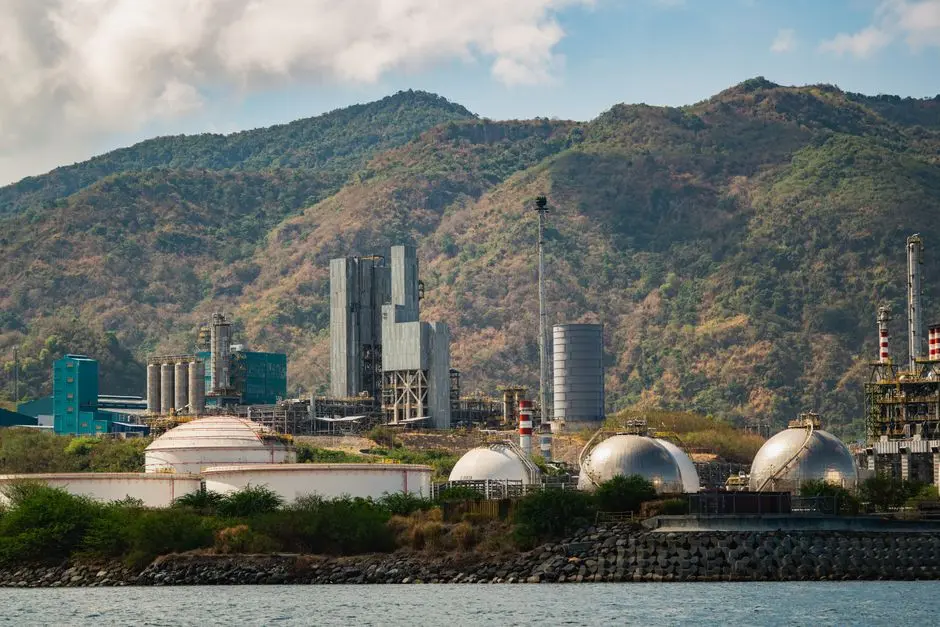
Most industrial wastewater from chemical plants in the Columbus, Ohio region flows to one of the City of Columbus Division of Water's two wastewater treatment works — the Jackson Pike WWTP and the Southerly WWTP — each operating under an NPDES permit and an approved pretreatment program administered by the City as Control Authority, with Ohio EPA as the Approval Authority. Any change to that approved pretreatment program must be submitted to the Approval Authority under 40 CFR 403.18, so the engineer specifying equipment in 2026 is effectively designing to a stack that is co-signed by Columbus and Ohio EPA.
The pressure that pushes local limits tighter in 2026 is structural, not theoretical. The parallel Columbus, GA example is illustrative: a 62-year-old South Columbus Water Resources Facility treating 38–42 million gallons per day now requires between $500 million and $750 million in replacement capacity to meet tighter NPDES nutrient limits, with rate increases expected to "double each year for the next four or five years" until the new plant is online (per Ledger-Enquirer, 2026-06). The same dynamic — aging POTW infrastructure, renewed NPDES permits with stricter nutrient and metal limits, and the resulting push to shift removal upstream onto industrial users — applies across the Ohio industrial corridor. A Columbus chemical plant must therefore treat the federal categorical standard as a floor, then verify against the local limits in the receiving POTW's sewer-use ordinance and individual control mechanism before finalizing design.
What Makes a Columbus Chemical Plant an SIU in 2026
Whether a plant is an SIU determines the monitoring, reporting, and documentation bar it must clear. The definition at 40 CFR 403.3(v) covers any IU that meets one of three triggers: (1) subject to categorical pretreatment standards; (2) discharges an average of 25,000 gpd or more of process wastewater; or (3) contributes a process waste stream making up 5% or more of the POTW's average dry-weather hydraulic or organic capacity (per EPA, 2026). Chemical plants in central Ohio almost always meet trigger (1) by falling under Part 414, 415, 419, or an adjacent subpart.
SIU status brings a defined set of obligations: a Baseline Monitoring Report (BMR) at the point of categorical standard promulgation or new-discharge startup, 90-day compliance reports on a defined schedule, a written control mechanism issued by the POTW, routine inspections and sampling under 40 CFR 403.12, and a slug load control plan under 40 CFR 403.8(f) (per EPA, 2026; per EPA Model Pretreatment Ordinance, 2007). For batch operators, the slug load control plan should be expected as a permit deliverable, not an optional add-on; it combines equalization capacity, flow and pH monitoring, and written batch-release procedures.
| SIU trigger (40 CFR 403.3(v)) | Typical chemical-plant case | Key obligation |
|---|---|---|
| (1) Subject to categorical pretreatment standards | Falls under Part 414, 415, 419, 417, or 433 | BMR; 90-day compliance reports; control mechanism; slug load control plan |
| (2) Discharges ≥25,000 gpd of process wastewater | Mid-to-large plant regardless of category | Same SIU obligations as trigger (1) |
| (3) Process waste ≥5% of POTW avg dry-weather hydraulic/organic capacity | Discharges to a small receiving POTW | Same SIU obligations; often the binding trigger at satellite plants |
Building the 2026 Unit-Operation Train for Columbus Chemical Plants
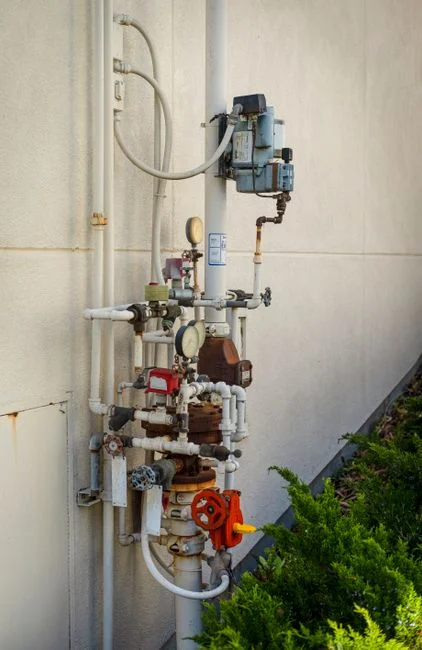
Translating the regulatory stack into a defensible equipment train comes down to four decision axes walked in order. Axis 1 is the controlling pollutant: oils and TSS point to a dissolved air flotation (DAF) system; dissolved metals (Cd, Cr, Cu, Ni, Pb, Zn) point to chemical precipitation followed by a high-efficiency sedimentation tank (lamella clarifier); high COD/BOD points to biological polishing via a MBR membrane bioreactor system or conventional activated sludge; pH swings point to equalization plus a PLC-controlled automatic chemical dosing system (per EPA, 2026).
Axis 2 is SIU status and the applicable standard: under a categorical standard, the federal number is the floor and the local limit is often the binding constraint; for non-categorical IUs the design still has to prevent pass-through and interference under 40 CFR 403.5(a), which is qualitative but no less enforceable. Axis 3 is flow pattern: batch operations with long cycle times or shared collection systems need equalization sized in hours to days, while continuous operations can usually run on 4–8 hours of retention. The cost penalty for over-sizing equalization is small compared with the cost of a single pass-through excursion. Axis 4 is water reuse: if the plant is moving toward reuse, MBR-plus-RO is a stronger candidate than discharge-only activated sludge because it produces reuse-quality effluent; a pure discharge-to-sewer operation can stay on conventional activated sludge. The standard 2026 train order is equalization → pH neutralization → DAF or lamella clarifier → biological (activated sludge or MBR) → multimedia/GAC polishing → sludge dewatering on a plate and frame filter press.
| Unit operation | Influent problem | Parameter controlled | Regulatory driver |
|---|---|---|---|
| Equalization basin | Batch swings in pH, flow, temperature, concentration | Hydraulic and concentration buffering | 40 CFR 403.5(a) pass-through/interference; 40 CFR 403.8(f) slug load control |
| pH neutralization + PLC dosing | Strong acid or caustic batches | pH (typically 6–9 local limit) | 40 CFR 403.5(b) specific prohibitions; local limit |
| DAF or lamella clarifier | Oils, greases, TSS, precipitated metals | Oils & grease; TSS; total metals | 40 CFR 403.5(a) pass-through; categorical standard; local limit |
| Biological (activated sludge / MBR) | High COD/BOD, residual organics | BOD, COD, ammonia | Categorical standard; local limit on BOD/COD to POTW |
| Multimedia / GAC polishing | Residual organics, color, trace contaminants | Refractory COD; reuse-quality targets | Local limit; reuse-quality targets if applicable |
| Plate and frame filter press | Sludge volume from prior steps | Cake solids; haul-off mass | Sludge handling and disposal under CWA §405 |
Engineers who already specify chemical-plant trains will recognize this is the same stack recommended for inorganic and organic chemicals plants in other corridors, e.g. how inorganic and organic chemicals plants near Baton Rouge meet 2026 pretreatment limits; the decision logic and the 40 CFR drivers are identical, only the local-limit envelope changes by POTW. For metal-bearing waste streams — common in inorganic chemical and metal-finishing subpart 433 plants — a tighter upstream precipitation step and a dedicated lead-removal polishing train is documented in the 2026 process guide to removing lead from industrial wastewater.
The 2026 Control-Mechanism Workflow From BMR to Slug Control Plan
Equipment selection and operating procedures have to be designed against the documentation sequence the POTW will demand, because a plant that satisfies every numeric limit can still be found in violation for missing a reporting deliverable. Step 1 is the BMR, which establishes the baseline pollutant envelope at categorical standard promulgation or new-discharge startup (per EPA, 2026). Step 2 is the 90-day compliance report, which confirms the train hits its limits on the schedule defined under 40 CFR 403.12. Step 3 is the control mechanism (permit or equivalent control document) issued by the POTW, which formalizes numeric limits, monitoring points, and reporting cadence (per EPA Model Pretreatment Ordinance, 2007).
Step 4 is the slug load control plan under 40 CFR 403.8(f), which combines equalization capacity, flow and pH monitoring, and written batch-release procedures (per EPA, 2026). Step 5 is the ongoing cycle: periodic compliance reports on the POTW-defined schedule, notice-of-violation repeat sampling rules, and significant-noncompliance publication under the model ordinance (per EPA Model Pretreatment Ordinance, 2007). In practice, the control mechanism is where PLC architecture is locked in: see the deeper dive on PLC control for chemical wastewater plants in 2026 for how the dosing, equalization, and reporting sequence are wired into a single platform.
| Step | Document / action | Driver |
|---|---|---|
| 1 | Baseline Monitoring Report (BMR) at startup or subpart promulgation | 40 CFR 403.12 (per EPA, 2026) |
| 2 | 90-day compliance reports | 40 CFR 403.12 (per EPA, 2026) |
| 3 | Control mechanism (permit) issued by POTW | EPA Model Pretreatment Ordinance, §4–5 (2007) |
| 4 | Slug load control plan | 40 CFR 403.8(f) (per EPA, 2026) |
| 5 | Periodic compliance reports; NOV repeat sampling; SNC publication | 40 CFR 403.12; EPA Model Pretreatment Ordinance, §6 and §9 (2007) |
Cost-vs-Compliance: What to Build First When the Budget Is Tight
Equalization and PLC-controlled chemical dosing are the lowest-cost insurance against compliance excursions in a chemical-plant pretreatment train, and under-sizing either is the most common root cause of failed compliance events (HydropureWater field data, 2026). Spend the early budget on these two, then size the DAF/clarifier and biological step to the controlling pollutant identified under Axis 1. The cost penalty for over-sizing equalization and dosing is small compared with the cost of a single pass-through excursion, which is why most engineers err on the long side at the front of the train and trim downstream.
Frequently Asked Questions
Which 40 CFR subpart applies to my Columbus chemical plant?
It depends on the plant's primary NAICS code and regulated activity. The usual candidates for a chemical manufacturer are Part 414 (organic chemicals, plastics, and synthetic fibers), Part 415 (inorganic chemicals), Part 417 (soap and detergent manufacturing), Part 419 (petroleum refining), and Part 433 (metal finishing) (per EPA, 2026). Confirm the current numeric values in 40 CFR before designing, because EPA revises subparts on a multi-year cycle.
When is my plant a Significant Industrial User?
When it meets any of three triggers at 40 CFR 403.3(v): (1) is subject to a categorical pretreatment standard; (2) discharges an average of 25,000 gpd or more of process wastewater; or (3) contributes a process waste stream making up 5% or more of the POTW's average dry-weather hydraulic or organic capacity (per EPA, 2026).
Do I still need pretreatment if I am below the categorical thresholds?
Yes. Every nondomestic IU is bound by the general prohibitions at 40 CFR 403.5(a) and (b), and the POTW can still issue a control mechanism with local limits even when no federal categorical standard applies (per EPA, 2026).
What is a slug load control plan and when is it required?
A slug load is any non-routine pollutant release or hydraulic surge that can cause pass-through or interference at the POTW. SIUs are typically required to develop and implement a slug load control plan under 40 CFR 403.8(f), combining equalization, flow and pH monitoring, and written procedures for batch releases (per EPA, 2026).
How often must I report compliance to the POTW?
At minimum, periodic compliance reports on the POTW-defined schedule, with 90-day compliance reports after categorical standard applicability and a BMR at startup (per EPA Model Pretreatment Ordinance, 2007). The control mechanism issued by the Columbus-area POTW is the controlling document for the exact cadence and the parameter list.