Why the Baton Rouge Corridor Has Two Federal Floors, Not One
Chemicals plants along the Geismar–Plaquemine–St. Gabriel corridor must satisfy two federal categorical floors at the same outfall: 40 CFR Part 414 — Organic Chemicals (SIC 2869 Industrial Organic Chemicals, Not Elsewhere Classified) — and 40 CFR Part 415 — Inorganic Chemicals Manufacturing, covering SIC 2812 (alkalies and chlorine, including chlor-alkali), 2813 (industrial gases), 2816 (inorganic pigments), and 2819 (industrial inorganic chemicals, n.e.c.) (per S4 SIC table and S2 confirmation of Part 414). The City-Parish of East Baton Rouge Industrial Pretreatment Program, administered through the East Baton Rouge IPP, is the controlling authority for any discharge to the C-P sanitary sewer, and its Industrial Wastewater Permit limits are commonly stricter than either federal floor (per S2 and S3). The design rule at every regulated parameter is therefore unambiguous: the basis-of-design must hit the more stringent of the federal categorical limit and the C-P local limit (per S2). A co-located plant running both organic and inorganic product lines on a single outfall is the rule on this corridor rather than the exception, and the C-P design review checks the applicable subparts against the proposed feed stream by stream (per S2). For a more regional comparison, the Piedmont chemical plant pretreatment guide documents an analogous dual-floor problem in a different jurisdiction.
Influent Profile: What the Treatment Train Must Absorb
Organic chemicals streams on the corridor run COD 5,000–50,000 mg/L, BOD 2,000–25,000 mg/L, oil and grease 100–5,000 mg/L, TSS from a few hundred up to several thousand mg/L, and sulfide and phenol concentrations in the 10s to several hundred mg/L depending on the campaign, with pH swinging from 2 to 12 during acid/alkaline washouts (per S2). Inorganic streams diverge in signature: the EPA's inorganic chemicals profile documents that contaminated wastewater comes primarily from electrolysis and crystallization brines, washings from filter cakes, spent acid and alkalis, and washings from raw materials, with process cooling discharges accounting for 40–80% of total plant discharge (per S4, 1968 baseline values). For chlor-alkali, acid, and fertilizer subparts under 40 CFR Part 415, high total dissolved solids, chloride, and sulfate dominate the load — parameters that do not appear in the organic chemicals table and that a borrowed-from-organics design will miss.
Variability is the binding constraint. Batch reactors, campaign changes, and CIP events produce slug loads that exceed POTW hydraulic and biological tolerances, and dissolved sulfide can push past 50 mg/L within minutes when a sulfur-bearing batch is dropped (per S2). Flow equalization is a regulatory expectation in the C-P pretreatment review, with 24–48 h HRT and a peak-to-average ratio damped to below 2:1 (per S2). The corridor's load is sustained by a deep technical base, including the Cain Department of Chemical Engineering at LSU and a long-standing petrochemical workforce (per LSU faculty record, Valsaraj CV, cited in S2).
| Parameter | Organic chemicals (SIC 2869) typical envelope | Inorganic chemicals (SIC 2812/2813/2816/2819) typical envelope | Design implication |
|---|---|---|---|
| COD | 5,000–50,000 mg/L | Low for brine streams; high for filter-cake washout | Biological sizing anchored to corridor high end |
| BOD | 2,000–25,000 mg/L | Often low (brine-dominant) | Anaerobic defensible only for organics-heavy feeds |
| O&G | 100–5,000 mg/L | Low unless finish oils present | DAF sized for organic envelope |
| TSS | Few hundred to several thousand mg/L | Crystallizer carryover, filter-cake wash | Equalization + DAF for both |
| Sulfide | 10s to several hundred mg/L; spikes past 50 mg/L | Generally low unless sulfur-bearing feed | Iron-salt precipitation upstream of biology |
| pH | 2–12 swings | Strong acid/alkali from chlor-alkali and acid plants | PLC trim to ±0.3 within 6.0–9.0 |
| TDS / chloride | Variable | High (electrolysis brines) | Check local limits; pass-through risk to POTW |
The C-P Permitting Path in Four Steps
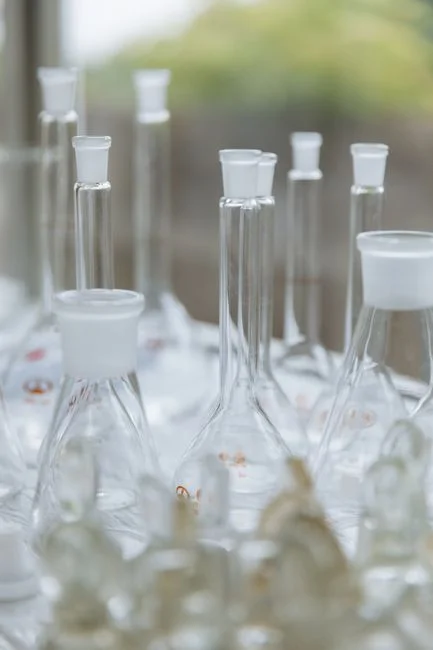
The C-P IPP runs a defined document sequence that any basis-of-design memo has to align with before the engineering work is approved. The four steps are: (1) file the Environmental Recommendation / Pretreatment Approval to [email protected] with a plumbing layout attached; (2) the C-P completes the pretreatment design review against the applicable 40 CFR subpart and proposed feed, then issues the Industrial Wastewater Permit for any industrial or commercial facility discharging industrial waste to the C-P sanitary sewer; (3) operate under the permit while the C-P runs the six IPP operational elements — design review, permit issuance, inspections, compliance sampling, SMR review, and enforcement; (4) maintain an SMR cadence driven by SIU classification, with site-specific parameters added by the permit (per S2 and S3). Program authority is documented on the C-P Industrial Pretreatment Program page, which states that the IPP ensures wastewater discharged from industrial users into the C-P's collection system meets local, state, and federal water quality regulations (per S3). Engineers filing an Environmental Recommendation should not assume the federal floor is sufficient; the C-P's local limit is commonly tighter, and the design review will reject a basis-of-design that does not address both.
Categorical Limit Table: 40 CFR Part 414 vs. 40 CFR Part 415 at a Glance
40 CFR Part 414 sets a 100 mg/L daily-maximum oil and grease floor for the organic chemicals category, with categorical bands for COD, BOD, TSS, sulfide, and phenol expressed as daily-maximum and monthly-average values (per S2). 40 CFR Part 415 is structured as subparts by product — chlor-alkali, fertilizer, acid, and others — and the regulated parameters and limits vary by subpart; designers should consult the current 40 CFR Part 415 text for the exact subpart applicable to their SIC and product line rather than borrowing values from a different subpart. The side-by-side table below shows the parameters that appear across both categories, the categorical bands from the 40 CFR Part 414 reference profile, and the C-P local-limit posture, because the local limit is commonly stricter and the design must hit the stricter of the two at every parameter (per S2).
| Parameter | 40 CFR Part 414 (Organic, SIC 2869) categorical band | 40 CFR Part 415 (Inorganic) subpart-dependent | C-P local limit posture | Design basis (min of the two) |
|---|---|---|---|---|
| Oil & grease | 100 mg/L daily max | Subpart-specific | Often lower | C-P local limit |
| COD | Several-hundred mg/L daily max | Subpart-specific | Locally tighter | C-P local limit |
| BOD | 150–200 mg/L daily max typical | Subpart-specific | Locally tighter | C-P local limit |
| TSS | ~250–400 mg/L categorical band | Subpart-specific | Locally tighter; MBR polish drives well below | C-P local limit |
| Sulfide | Low mg/L range; spikes trips corrosion | Subpart-specific | Locally tighter | C-P local limit |
| Phenol | mg/L range; carbon polish standard | Generally not regulated | Locally tighter where applicable | C-P local limit |
| pH | 6.0–9.0 standard band | 6.0–9.0 standard band | Same band, enforced continuously | 6.0–9.0 |
| Category-specific metals | Generally not the binding set | Subpart-specific (e.g., mercury, lead) | Locally tighter; POTW haul-off risk | C-P local limit |
The explicit design rule is design basis = min(federal categorical, C-P local) at each parameter (per S2). For inorganic streams, the engineer must read the applicable 40 CFR Part 415 subpart and not assume the values carry across subparts.
The 2026 Treatment Train, Unit Operation by Unit Operation
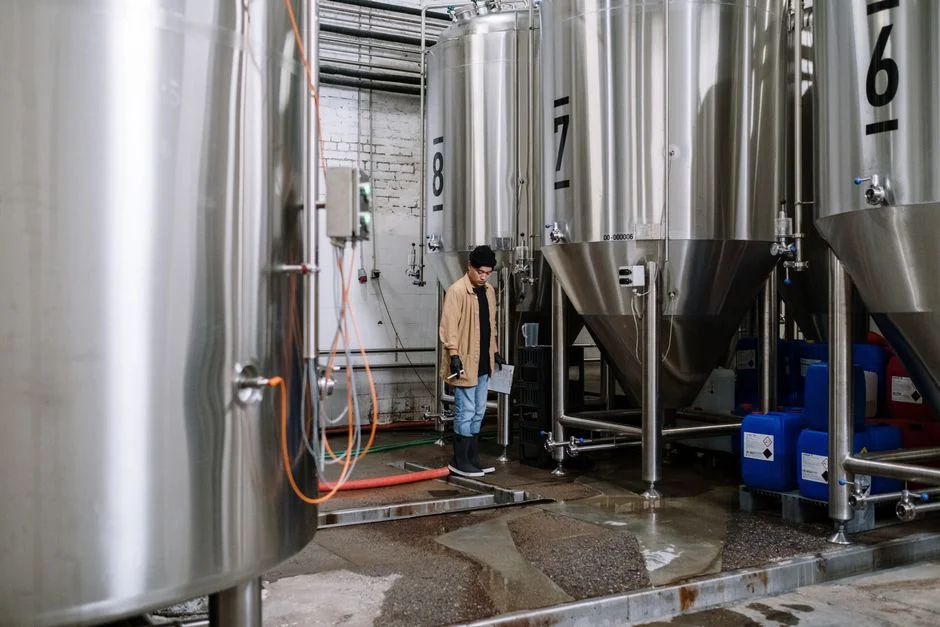
The defensible 2026 train for the Geismar–Plaquemine–St. Gabriel corridor runs in a fixed sequential order. Equalization comes first: 24–48 h HRT with peak-to-average ratio damped to below 2:1, which is a regulatory expectation in the C-P pretreatment review (per S2). pH trim follows, with a PLC-controlled coagulant, polymer, and pH dosing skid holding within ±0.3 units of the 6.0–9.0 standard categorical band, because feed pH can swing from 2 to 12 during acid/alkaline washouts (per S2). Coagulant/polymer-conditioned DAF is the standard first polishing step, delivering 90–95% oil and grease removal and 60–85% TSS removal in petrochemical service, and a coagulant/polymer-conditioned DAF unit is the conventional selection (HydropureWater field data, 2026; per S2). For operators planning reliability around the DAF step, the DAF maintenance checklist for petrochemical service covers the daily, weekly, and monthly cadence.
Sulfide control sits upstream of the biological train: iron-salt precipitation or air/oxidation stripping, because dissolved sulfide can push past 50 mg/L within minutes during a sulfur-bearing batch drop and will corrode downstream piping, strip into the gas phase, and trip the categorical limit within hours if uncontrolled (per S2). Biological treatment then does the bulk of the organic load reduction — aerobic activated sludge at 85–95% removal, or an anaerobic + aerobic hybrid at 75–90% removal on the biodegradable COD fraction (per S2) — with an MBR membrane bioreactor for biological polishing driving TSS well below the categorical band. For plants weighing MBR against conventional activated sludge, the MBR vs conventional activated sludge ROI comparison lays out the 2026 economics. Polishing with carbon adsorption removes residual phenols and any non-biodegradable COD that would otherwise pass through to the Mississippi River (per S2). Sludge from the DAF float and biological waste is routed to a plate-and-frame filter press for dewatering before disposal.
| Unit operation | Design point / operating parameter | Removal efficiency | Limit it protects |
|---|---|---|---|
| Equalization basin | 24–48 h HRT; peak/average < 2:1 | Dampens slug loads | All daily-max and monthly-average parameters |
| pH trim | ±0.3 within 6.0–9.0 | n/a (conditioning) | pH categorical band |
| Coagulant/polymer DAF | 30–50 mg/L polymer; recycle ratio 20–40% | 90–95% O&G; 60–85% TSS | O&G daily max and TSS categorical band |
| Sulfide control | Iron-salt dose or oxidation stripper | Drives sulfide below categorical mg/L range | Sulfide categorical limit and corrosion |
| Aerobic / anaerobic + aerobic | MLVSS and HRT sized for monthly average | 85–95% aerobic; 75–90% anaerobic on biodegradable COD | COD/BOD daily max and monthly average |
| MBR polish | Membrane flux per vendor; low mg/L TSS effluent | Drives TSS well below categorical | TSS categorical band |
| Carbon adsorption polish | Site-specific bed sizing | Residual phenols and non-biodegradable COD | Phenol and pass-through to Mississippi River |
| Plate-and-frame filter press | Cake dryness target per disposal route | Dewaters DAF float and bio-waste | Sludge volume for disposal |
Failure Modes That Cause Categorical Excursions on This Corridor
Four failure modes account for most categorical excursions on this corridor, and each one has a design fix that should be locked in at the basis-of-design stage. Undersized equalization: a slug from a campaign changeover pushes past the daily-maximum COD or sulfide limit in a single sample window, and the operator cannot recover within the calendar day — the fix is 24–48 h HRT with peak-to-average damped below 2:1 (per S2). DAF without proper coagulant and polymer conditioning: emulsified oil passes through to the POTW and shows up on the C-P compliance sample — the fix is conditioning the DAF feed with the right coagulant/polymer pair for the specific O&G signature (per S2). Biological reactor operated at low MLVSS or short HRT: the unit clears daily maxes but fails the monthly average, which is the more common enforcement trigger — the fix is to size for monthly-average loading, not just daily-max capacity (per S2). Neglected sulfide control: high dissolved sulfide corrodes downstream piping, strips into the gas phase, and trips the categorical limit within hours — the fix is iron-salt precipitation or oxidation stripping upstream of the biological train (per S2). Each of these is a design-stage decision, not an operational recovery.
When Anaerobic Makes Sense — and When It Does Not
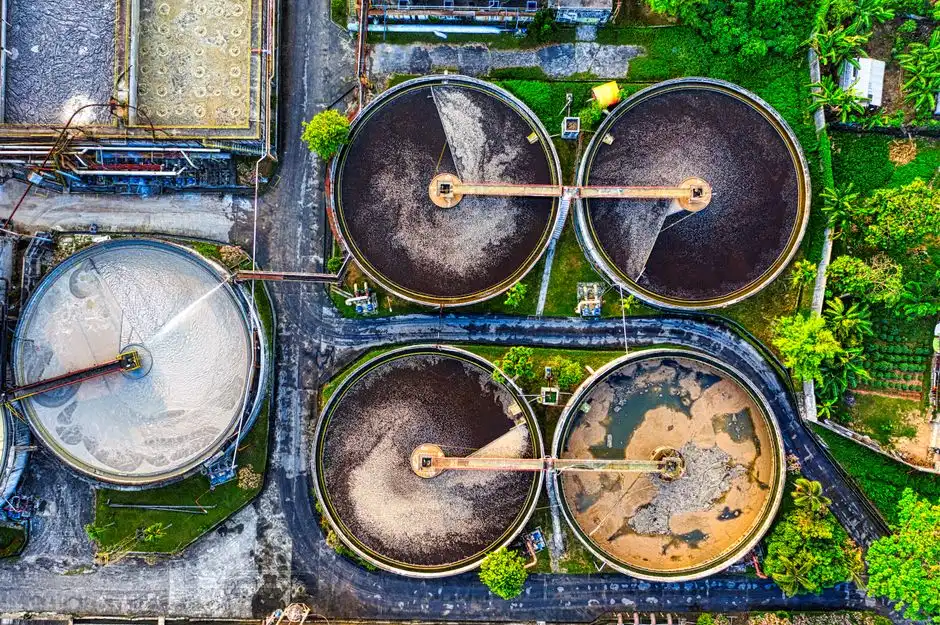
Anaerobic is defensible for high-strength organic chemicals streams where biogas recovery offsets aeration energy, with the autohydrolysis / heat-treatment approach documented as a pretreatment to increase anaerobic biodegradability of high-strength organics (per OSTI, 1980, as cited in S2). The defensibility window is roughly COD above 10,000 mg/L with a biodegradable fraction high enough to support a methane-yielding reactor (per S2). The boundary cases where anaerobic is the wrong choice are streams with high sulfide, high chloride from inorganic carryover, or inhibitory metals — these should stay aerobic, or use anaerobic only with iron-salt precipitation and acclimated biomass (per S2 sulfide-control section). On the corridor, the most common hybrid is anaerobic + aerobic, deployed when both high-strength reduction and tight discharge limits are required simultaneously (per S2). The historical context from the 1968 EPA profile — average capital cost $223/1,000 gpd and operating cost $58.49/year/1,000 gpd across 59 surveyed inorganic plants — is 1968 baseline data and must not be carried forward as current OPEX; benchmark against vendor quotes and current C-P utility rates for any 2026 cost model (per S4).
Frequently Asked Questions
Which 40 CFR category applies to a co-located plant with both SIC 2869 and SIC 2812 product lines?
Both apply. 40 CFR Part 414 governs the organic chemicals (SIC 2869) streams and 40 CFR Part 415 governs the inorganic chemicals (SIC 2812 chlor-alkali, 2813 industrial gases, 2816 inorganic pigments, 2819 industrial inorganic chemicals n.e.c.) streams, and the C-P design review checks each applicable subpart against its feed stream, with the permit potentially carrying separate limits for each line (per S2 and S4).
How does the C-P local limit move over time, and how should the design basis be set?
The C-P local limit is set in the Industrial Wastewater Permit and is commonly stricter than the federal categorical floor; the design basis must hit the more stringent of the two at every parameter, and the basis should be re-baselined at each permit renewal to track any tightening (per S2).
What SMR cadence should an SIU expect, and what parameters are typically self-monitored?
SMR cadence is driven by SIU classification and site-specific permit conditions, and the typical self-monitored parameter set mirrors the categorical table — O&G, COD, BOD, TSS, sulfide, phenol, pH, flow — plus any site-specific metals or TDS limits added by the permit (per S2).
Is a packaged DAF enough, or is biological treatment required for the corridor?
DAF alone will not meet categorical COD/BOD daily-maximum or monthly-average limits; biological treatment — aerobic activated sludge or an anaerobic + aerobic hybrid, often with MBR polish — is the standard finishing step on the corridor, with DAF as upstream O&G and TSS reduction (per S2).
How is sulfide typically controlled on the Geismar–Plaquemine corridor?
Iron-salt precipitation or air/oxidation stripping is placed upstream of the biological train; sulfide spikes during sulfur-bearing batches can hit 50+ mg/L within minutes, and uncontrolled sulfide will corrode piping, strip into the gas phase, and trip the categorical limit within hours (per S2).
Related Equipment
- plate-and-frame filter press for sludge dewatering — specifications, capacity range, and technical data