
Why the Baton Rouge POTW Enforces Pretreatment for Organic Chemicals
The City-Parish of East Baton Rouge (C-P) Industrial Pretreatment Program (IPP) serves as the regulatory gate for organic chemicals plants discharging to the C-P sanitary sewer. The IPP ensures that wastewater meets local, state, and federal water quality regulations to protect the collection system, the POTW treatment process, and downstream receiving waters from pollutants that damage infrastructure, upset biological units, or pass through to the Mississippi River (per BRLA Industrial Pretreatment Program).
Two regulatory layers bind the same discharge. The first is the federal floor: EPA Categorical Pretreatment Standards under 40 CFR Part 414 for the Organic Chemicals point source category, which sets daily maximums and monthly averages for parameters such as COD, BOD, TSS, oil and grease, sulfides, phenols, and pH. The second is the C-P's local Industrial Wastewater Permit limits, which are commonly stricter than the federal floor and include site-specific conditions tied to the plant's SIU classification. The design basis must satisfy the more stringent of these two values.
The C-P exercises its authority through six operational elements: reviewing pretreatment designs, issuing Industrial Wastewater Permits, performing inspections, collecting compliance samples, reviewing self-monitoring reports (SMRs), and enforcing both the federal standards and the local ordinance (per BRLA). Any industrial or commercial facility planning to discharge industrial waste to the C-P's sanitary sewer may be required to obtain an Industrial Wastewater Permit — and the Environmental Recommendation / Pretreatment Approval is the first document on the path, filed to [email protected] with a plumbing layout attached.
What Organic Chemicals Wastewater Actually Looks Like in the Baton Rouge Corridor
Organic chemicals wastewater on the Geismar–Plaquemine–St. Gabriel corridor typically presents as a high-strength, highly variable stream. A typical envelope runs COD 5,000–50,000 mg/L, BOD 2,000–25,000 mg/L, oil and grease 100–5,000 mg/L, total suspended solids from a few hundred up to several thousand mg/L, and sulfide and phenol concentrations in the 10s to several hundred mg/L depending on the campaign. pH swings from 2 to 12 are common during acid/alkaline washouts and product-changeover events, and dissolved sulfide spikes can push past 50 mg/L within minutes when a sulfur-bearing batch is dropped.
This variability necessitates robust design, as batch reactors, campaign changes, and equipment cleaning events create slug loads that exceed POTW hydraulic and biological tolerances. Flow equalization is a regulatory expectation in the C-P's pretreatment review to manage these spikes (per BRLA). The corridor's load is sustained by a deep technical base: the Cain Department of Chemical Engineering at LSU and a long-standing petrochemical workforce that has been operating these streams for decades. The Baton Rouge industrial corridor is one of the densest concentrations of organic chemicals capacity in the United States, with SIC 2869 (Industrial Organic Chemicals, Not Elsewhere Classified) plants feeding the C-P's POTW load (per LSU faculty record, Valsaraj CV).
The unit operations that generate the load are familiar to anyone who has walked a plant: reactors, distillation columns, extraction trains, product washing, and equipment cleaning (CIP) events. Each contributes a distinct signature — sulfidic spent caustic from olefin processing, phenolic water from resin manufacture, oily condensate from product finishing — and the pretreatment train must be sized against the worst credible composite of these streams.
The Pretreatment Process Train: Equalization, DAF, pH Control, Biology, and Polishing
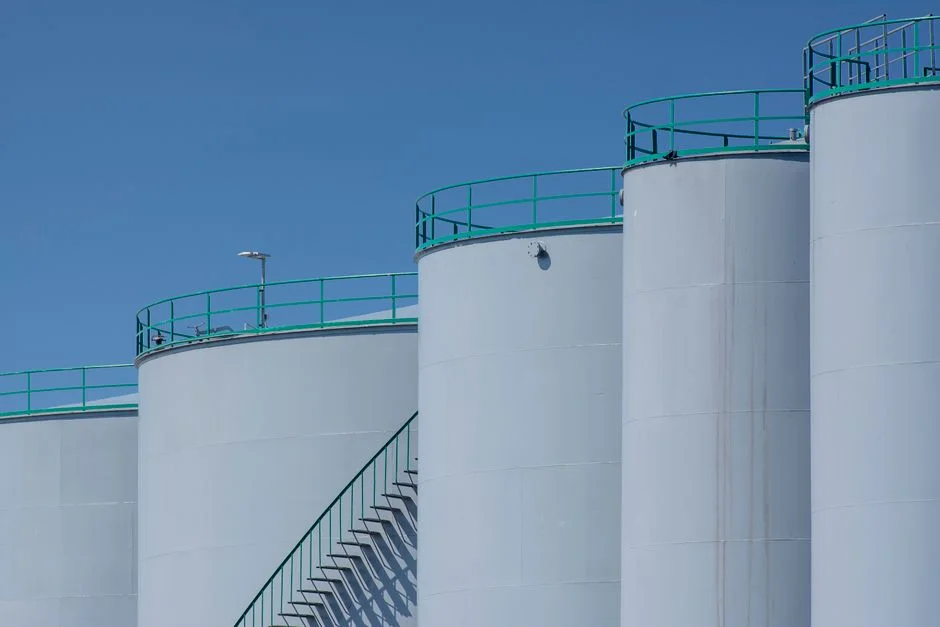
Unit operations that reliably clear 40 CFR Part 414 and the C-P's local limits for organic chemicals streams follow a fixed, sequential order.
- Equalization basin — 24 to 48 hours of residence, sized off a mass balance of the highest-batch event. The tank's job is to dampen flow, pH, and concentration swings so downstream units receive a consistent feed. Without it, a 30-minute slug from a campaign changeover will exceed a daily-maximum limit before the operator can respond.
- Dissolved air flotation (DAF) — micro-bubbles (typically 30–50 µm) attach to free and emulsified oil droplets and float them to the surface for skimming. With proper coagulant and polymer conditioning, a DAF delivers 90–95% oil and grease removal and 60–85% TSS removal in petrochemical service (HydropureWater field data, 2026). The dissolved air flotation system covers 4–300 m³/h and is a reference configuration for this duty.
- pH neutralization — sulfuric acid or caustic on a PLC-controlled chemical dosing system, with the control loop trimming to a target band of pH 6–9 before biological polishing. The dosing skid typically pairs in-line pH probes with a redundant sample cooler to handle the high-temperature effluent common from reactor blowdowns.
- Biological treatment — aerobic activated sludge is the standard for most organic chemicals streams, delivering 85–95% COD removal at HRT of 12–36 hours and MLVSS of 2,500–4,000 mg/L. For very high-strength streams (COD >10,000 mg/L), anaerobic options such as the autohydrolysis / heat-treatment approach documented in the Stanford anaerobic biodegradability work (per OSTI annual progress report, 1980) can precondition the feed to lift biodegradability and recover biogas. The warm Gulf climate is a kinetic advantage for both configurations — basin temperatures stay in the 25–32 °C range year-round, which keeps mesophilic biology near peak activity without heating.
- Polishing — an MBR membrane bioreactor system or multi-media filtration drops TSS below the categorical and local limits and tightens the effluent ahead of discharge. MBR is increasingly the default because it delivers near-reuse-quality effluent in a single compact unit, eliminating the secondary clarifier and the TSS excursions that clarifier upsets cause.
For plants considering anaerobic digestion, the autohydrolysis / heat-treatment approach is a documented pretreatment to increase anaerobic biodegradability of high-strength organics (per OSTI, 1980) and remains a defensible reference for COD >10,000 mg/L streams where biogas recovery offsets aeration energy.
Parameter Targets: Pollutant, Limit, Unit Operation, and Expected Removal
The table below serves as a working reference for a basis-of-design memo. Categorical daily maximums and monthly averages under 40 CFR Part 414 are the federal floor; the C-P's Industrial Wastewater Permit limits frequently run tighter, so the design must hit the stricter of the two (per BRLA). Pretreatment is achieved by physical, chemical, or biological processes, and the most defensible trains use more than one (per BRLA).
| Pollutant | Typical Categorical / Local Limit | Target Unit Operation | Expected Removal |
|---|---|---|---|
| Oil & Grease | 100 mg/L daily max (40 CFR 414); C-P local limit often lower | Coagulant/polymer-conditioned DAF | 90–95% (HydropureWater field data, 2026) |
| TSS | ~250–400 mg/L range categorical; MBR polishing drives this well below | Equalization → DAF → MBR | 60–85% DAF; >99% MBR |
| COD | Categorical daily max in the several-hundred mg/L band; local limits stricter | Activated sludge (aerobic) or anaerobic + aerobic | 85–95% aerobic; 75–90% anaerobic on biodegradable fraction |
| BOD | Categorical daily max typically 150–200 mg/L | Activated sludge with MBR polish | 90–98% |
| Sulfides | Low mg/L range; dissolved sulfide trips corrosion and categorical | Iron-salt precipitation or air/oxidation stripping upstream of biology | Residual <1 mg/L achievable |
| Phenols | Categorical limit in the mg/L range; often locally tighter | Biological oxidation (acclimated biomass) + carbon adsorption polish | ~99% with acclimated culture |
| pH | 6.0–9.0 standard categorical band | PLC-controlled acid/caustic dosing | Inline trim to within ±0.3 units |
| Flow | Site-specific in the permit; SIU classification drives SMR cadence | Equalization basin (24–48 h HRT) | Peak-to-average ratio typically damped to <2:1 |
How the C-P Permitting Workflow Actually Runs
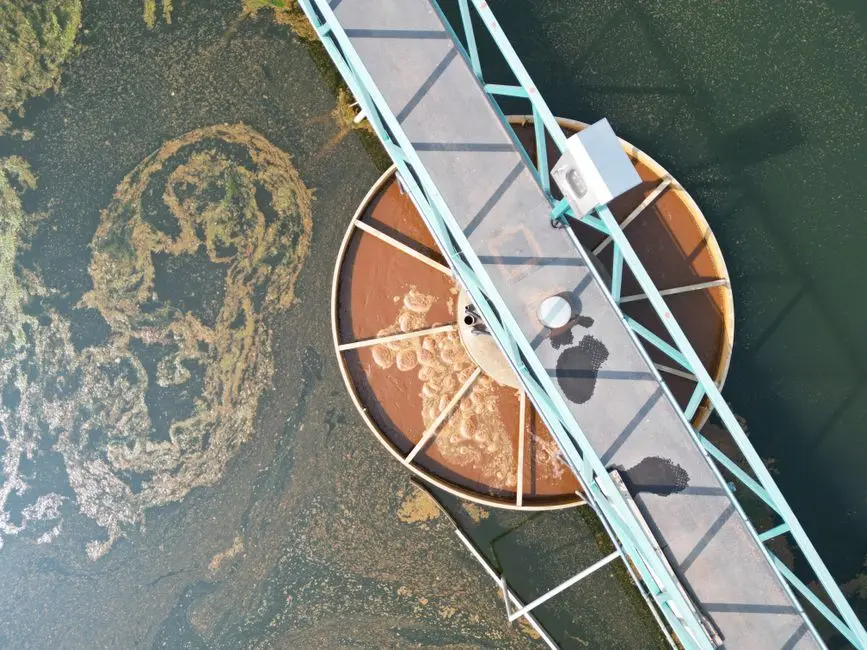
The permitting path consists of four steps and a defined cadence for all SIUs discharging to the C-P POTW.
- Environmental Recommendation / Pretreatment Approval. Submit the form to [email protected] along with a plumbing layout (per BRLA). This is the design-review trigger; the IPP will not issue a permit until this is on file.
- Design review. The IPP evaluates the proposed pretreatment against 40 CFR 414 categorical standards, the C-P local ordinance, and site-specific discharge limits. Expect at least one round of comments on hydraulic profile, sampling access, and bypass prevention.
- Industrial Wastewater Permit issuance. The permit specifies self-monitoring requirements — typically BOD, TSS, O&G, pH, flow, and any categorical pollutants on a defined sampling frequency. The permit also names the responsible corporate signatory and the reporting format.
- Ongoing compliance. Scheduled inspections, C-P-collected compliance samples, SMR review, and enforcement for excursions. A non-compliance event (daily-maximum exceedance, missed SMR, or unpermitted discharge) typically triggers a Notice of Violation, a corrective-action deadline, and — if uncorrected — formal enforcement under the local ordinance, which can include administrative orders, civil penalties, and permit revocation.
Common Mistakes That Cause Permit Excursions
Four failure modes account for most excursions on this corridor. Undersized equalization is the most expensive mistake: a slug from a campaign changeover pushes past the daily-maximum COD or sulfide limit in a single sample window and the operator cannot recover within the calendar day. DAF without proper coagulant and polymer conditioning leaves emulsified oil that passes through to the POTW and shows up on the C-P's compliance sample. Biological reactors operated at low MLVSS or short HRT clear daily maxes but fail the monthly average — the more common enforcement trigger. Neglecting sulfide control is a significant risk: high dissolved sulfide corrodes downstream piping, strips into the gas phase, and trips the categorical limit within hours; the standard fix is iron-salt precipitation or air/oxidation stripping upstream of the biological train.
Frequently Asked Questions
What permits are required to discharge organic chemicals wastewater to the Baton Rouge POTW?
An Environmental Recommendation / Pretreatment Approval filed to [email protected] with a plumbing layout, followed by an Industrial Wastewater Permit issued by the C-P Industrial Pretreatment Program. The permit is required for any industrial or commercial facility discharging industrial waste to the C-P sanitary sewer (per BRLA).
Which EPA categorical standard applies to organic chemicals plants — 40 CFR 433?
No. 40 CFR Part 414 is the correct federal reference for organic chemicals discharges (SIC 2869); 40 CFR 433 applies to Metal Finishing. The C-P design review checks the applicable categorical subparts against the proposed feed, and local limits in the Industrial Wastewater Permit are commonly stricter than the federal floor.
How is oil and grease removed before sewer discharge at a chemicals plant?
Coagulant- and polymer-conditioned dissolved air flotation (DAF) is the standard unit operation, delivering 90–95% oil and grease removal and 60–85% TSS removal in petrochemical service (HydropureWater field data, 2026). Emulsified oil that escapes the DAF is the most common cause of O&G excursions on the compliance sample.