For new industrial projects requiring <5 mg·L⁻¹ TSS reuse water, MBR beats conventional activated sludge despite 25% higher CAPEX by saving 0.6 m² per m³·d⁻¹ and delivering 60% lower sludge disposal cost—full payback in 3.7 years at ≥2 000 m³·d⁻¹ scale.
Why the MBR vs CAS debate still matters in 2025
Discharge limits in key industrial provinces now frequently mandate COD below 30 mg·L⁻¹ and Total Phosphorus (TP) under 0.3 mg·L⁻¹, effectively ending the era of basic secondary treatment for many facilities. In 2025, the regulatory environment has shifted from simple compliance to mandatory water circularity. For project engineers, the choice between a Membrane Bioreactor (MBR) and Conventional Activated Sludge (CAS) is no longer just about biological efficiency; it is about surviving the 11% annual rise in industrial land costs (CREIS 2024) and the increasing scarcity of qualified plant operators.
The 2025 landscape for industrial wastewater is defined by three pressures. First, the cost of land has made the 60% smaller footprint of an MBR system (per reuseinn.com data) a primary financial driver rather than a secondary benefit. Second, the cost of sludge handling has surged, with disposal fees in tier-1 industrial zones exceeding USD 100 per ton. Third, the "Class IV Surface Water" standard is becoming the de facto requirement for industrial reuse, requiring Total Nitrogen (TN) levels below 10 mg·L⁻¹. While CAS can achieve these levels with extensive tertiary upgrades—such as sand filters, carbon dosing, and ultrafiltration—the complexity of managing a multi-stage "CAS + Tertiary" train often exceeds the operational budget of mid-sized plants.
Procurement managers must now defend technology choices using a 10-year Total Cost of Ownership (TCO) model. While CAS offers a lower initial price point, the hidden costs of land acquisition, chemical consumption for phosphorus precipitation, and the energy required for high-volume sludge recycling often erode the initial savings within the first 48 months of operation.
Side-by-side process fundamentals
Standard Mixed Liquor Suspended Solids (MLSS) concentrations for MBR systems range from 8,000 to 12,000 mg·L⁻¹, allowing for a three-fold reduction in bioreactor volume compared to Conventional Activated Sludge (CAS). The fundamental difference lies in how solids are separated from the treated effluent. CAS relies on gravity clarification, which is limited by the settling velocity of the biomass. This necessitates large clarifiers and keeps MLSS low (3,000–4,500 mg·L⁻¹) to prevent sludge bulking and carryover. In contrast, MBR uses a physical membrane barrier with a pore size of approximately 0.1 μm, decoupling the Hydraulic Retention Time (HRT) from the Sludge Retention Time (SRT).
This decoupling allows MBR to maintain a significantly higher SRT, which is critical for the growth of slow-growing nitrifying bacteria. Consequently, MBR systems can consistently achieve NH₄-N levels <1 mg·L⁻¹ even under fluctuating organic loads. the membrane eliminates the need for secondary clarifiers, which typically operate at overflow rates of 60–80 m³·m⁻²·d⁻¹. By replacing these massive tanks with compact membrane modules, the entire process becomes more resilient to changes in sludge settleability. To maintain efficiency in these high-solids environments, precise dissolved oxygen optimisation is required to ensure that the dense biomass receives adequate oxygen without excessive energy waste.
| Parameter | Conventional Activated Sludge (CAS) | Membrane Bioreactor (MBR) |
|---|---|---|
| MLSS Concentration | 3,000 – 4,500 mg/L | 8,000 – 12,000 mg/L |
| Sludge Retention Time (SRT) | 10 – 20 days | 25 – 50 days |
| Bioreactor Volume | 100% (Baseline) | 30% – 40% of CAS |
| Separation Method | Gravity Clarification | 0.1 μm Membrane Filtration |
| Effluent TSS | 10 – 20 mg/L (without filters) | < 1 mg/L |
CAPEX breakdown: what the 2025 market really looks like
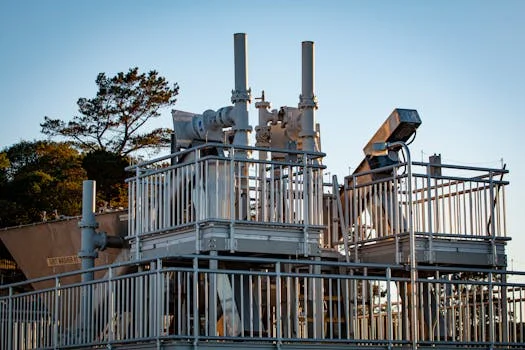
Current 2025 market tenders for industrial wastewater plants at the 2,000 m³·d⁻¹ scale show MBR equipment and civil costs averaging between USD 1,350 and 1,650 per m³·d⁻¹. This represents a 25% to 35% premium over CAS systems, which typically range from USD 950 to 1,100 per m³·d⁻¹ for the same capacity. However, the raw equipment cost only tells part of the story. For a procurement manager, the "all-in" CAPEX must include land costs and the tertiary treatment stages required to make CAS effluent comparable to MBR quality.
An integrated MBR system significantly reduces civil engineering costs by eliminating secondary clarifiers and sand filtration basins. In regions where industrial land exceeds USD 200 per square meter, the footprint savings alone can offset 50% of the membrane equipment cost. the 2025 market has seen a stabilization in PVDF (Polyvinylidene Fluoride) membrane pricing. High-quality flat-sheet membranes now have an expected life-cycle of 7 years. Financial models should include a membrane replacement reserve of approximately USD 0.04 per m³ treated to ensure that the eventual capital outlay for new modules at year seven is fully funded by the operating budget.
| Cost Component (USD/m³·d⁻¹) | CAS (Standard) | CAS (+ Tertiary Filtration) | MBR (Integrated) |
|---|---|---|---|
| Civil Works | $550 | $650 | $350 |
| Equipment & Piping | $400 | $500 | $1,100 |
| Land Cost (Assumed $200/m²) | $160 | $180 | $60 |
| Total Initial CAPEX | $1,110 | $1,330 | $1,510 |
OPEX and 10-year NPV model
While MBR systems consume approximately 0.4 to 0.6 kWh·m⁻³ more energy than CAS, the 30% reduction in sludge disposal costs and the elimination of tertiary filtration chemicals often yield a superior Net Present Value (NPV) over a 10-year horizon. The energy penalty in MBR is primarily due to membrane scouring—the process of using air bubbles to prevent solids from fouling the membrane surface. In 2025, MBR energy consumption typically sits at 0.9–1.1 kWh·m⁻³, compared to 0.5 kWh·m⁻³ for CAS. However, if the CAS system requires tertiary filtration and pumping for reuse, its energy profile rises to 0.7 kWh·m⁻³, narrowing the gap.
The financial "tipping point" for MBR occurs when considering sludge management and water reuse revenue. Because MBR operates at a higher SRT, the biomass undergoes more endogenous respiration, resulting in roughly 25% less waste activated sludge (WAS) according to AUC Group data. When sludge disposal costs are high, this becomes a dominant OPEX factor. In a 10-year NPV model, if the value of reuse water (avoided municipal purchase cost) exceeds USD 0.28 per m³, MBR becomes the more profitable investment for any plant larger than 1,500 m³·d⁻¹. For help managing the operational side, engineers often refer to an MBR troubleshooting guide to maintain these performance benchmarks and avoid costly downtime.
| 10-Year Lifecycle Factor | CAS + Tertiary | MBR |
|---|---|---|
| Avg. Energy Cost ($0.12/kWh) | $0.084 /m³ | $0.120 /m³ |
| Chemicals (Flocculants/Cleaning) | $0.050 /m³ | $0.045 /m³ |
| Sludge Disposal ($100/ton) | $0.120 /m³ | $0.084 /m³ |
| Membrane Replacement (Year 7) | $0.000 | $0.040 /m³ |
| Total Annual OPEX | $0.254 /m³ | $0.289 /m³ |
| 10-Year NPV (at 2,000 m³/d) | -$2,850,000 | -$2,620,000 |
*Note: NPV includes initial CAPEX and assumes 8% discount rate with USD 0.35/m³ reuse credit.
Effluent quality: reuse-ready or not?
Direct membrane filtration achieves a turbidity of less than 0.2 NTU and a 2.5-log virus removal credit under GB 18918-2002, meeting most industrial reuse standards without additional treatment stages. For industries such as textiles, food processing, or electronics manufacturing, the consistency of effluent quality is more important than the average value. CAS systems are prone to "slug loads" or changes in temperature that cause sludge to settle poorly, leading to TSS spikes that can foul downstream RO membranes or cooling towers. MBR provides a physical barrier that ensures TSS remains below 5 mg·L⁻¹ regardless of biological settling characteristics.
In textile applications specifically, color removal is a critical metric. While the biological process in both CAS and MBR handles the majority of the BOD, the MBR’s ability to retain high molecular weight dyes longer in the high-MLSS environment results in superior color reduction. For the remaining concentrated sludge stream, a plate filter press is often employed to reach the 20-30% cake dryness required for economical disposal. This combination of high-quality liquid effluent and minimized, dry sludge cakes makes MBR the standard for modern "Zero Liquid Discharge" (ZLD) pretreatments.
Decision framework: choose in five minutes
Industrial facilities with a footprint constraint of less than 0.15 m² per m³·d⁻¹ or sludge disposal costs exceeding USD 80 per ton of dry solids (tDS) should prioritize MBR technology regardless of the initial capital premium. The decision is rarely about which technology is "better" in a vacuum, but which one aligns with the site-specific constraints of the project. A plant located in an industrial park with strictly enforced TN limits and high water purchase costs will find CAS to be a liability due to the risk of non-compliance fines and the cost of the additional land required for tertiary filters.
Conversely, for large-scale municipal-style industrial plants where land is abundant and the effluent is discharged to a large water body with moderate limits (e.g., COD < 60 mg·L⁻¹), CAS remains the most cost-effective solution. The following matrix provides a rapid assessment for procurement teams to justify their recommendation to the board.
| If your project has... | Recommended Tech | Primary Justification |
|---|---|---|
| Land availability < 0.2 m²/m³·d | MBR | CAS footprint is physically impossible |
| Reuse for cooling/process water | MBR | Direct reuse-ready; no tertiary CAPEX |
| Sludge disposal > $100/ton | MBR | 25% lower WAS production saves OPEX |
| CAPEX budget < $1,000/m³·d | CAS | MBR membrane costs will exceed budget |
| Unskilled/Remote Operation | CAS | Simpler mechanical maintenance profile |
| Strict TN (<10) and TP (<0.3) limits | MBR | Superior nutrient removal stability |
Frequently Asked Questions
What is the main difference between MBR and conventional activated sludge? The primary difference is the method of solids separation. CAS uses gravity in large settling tanks (clarifiers), while MBR uses a physical membrane barrier (typically 0.1 micron). This allows MBR to operate at much higher biomass concentrations (MLSS), resulting in a smaller footprint and cleaner water.
What are the biggest disadvantages of MBRs? The two main drawbacks are higher capital cost (CAPEX) due to the price of membrane modules and higher energy consumption. MBRs require constant air scouring to keep membranes clean, which adds 0.4–0.6 kWh per cubic meter of treated water compared to a basic CAS system.
What is the biggest problem with conventional activated sludge treatment? CAS is highly sensitive to sludge settleability. If "sludge bulking" occurs due to changes in wastewater chemistry or temperature, the clarifier fails, and solids carry over into the effluent. This makes CAS less reliable for meeting strict reuse standards without expensive tertiary upgrades.
What are the top two types of usage of sludge? In 2025, the primary routes for industrial sludge are incineration (often for energy recovery in cement kilns) and landfilling. Because MBR sludge is more highly stabilized due to long SRTs, it often has lower organic content, making it more suitable for certain co-processing applications.
How often do MBR membranes need to be replaced? With proper automated chemical cleaning (CIP) and grit removal, modern PVDF flat-sheet membranes typically last 7 to 10 years. Hollow-fiber membranes may require replacement every 5 to 7 years depending on the abrasiveness of the industrial wastewater.