Why Industrial Lead Wastewater Demands a Designed Treatment Train
A mid-sized lead-acid battery recycler in the Midwest failed its quarterly discharge test in Q4 2025 with an effluent total-Pb of 1.8 mg/L against a 0.6 mg/L pretreatment limit (per EPA 40 CFR 403 categorical standards for battery manufacturing, point source category 40 CFR 461). The plant was running a single-stage hydroxide precipitation unit that had been acceptable in 2015 but could not absorb a 30% rise in production throughput. That scenario repeats across the 2026 industrial landscape: lead-acid battery manufacturing and recycling, electroplating, metal finishing, mining, and e-waste processing are the dominant lead-bearing wastewater sources, and each generates a different matrix of co-contaminants (S3). The International Agency for Research on Cancer classifies inorganic lead compounds as Group 2A (probably carcinogenic to humans), and the U.S. Department of Health and Human Services 14th Report on Carcinogens lists lead and lead compounds as "reasonably anticipated to be human carcinogens" (S3). The chemistry is unforgiving: a battery wastewater profile of 95.4 mg/L Pb at pH 4.0 (S1) is a realistic design benchmark, and precipitation chemistry alone cannot drive that stream to a sub-ppm effluent without a polishing stage. 2026 pretreatment programs under the 40 CFR 403 framework in the U.S. and EU IED 2010/75/EU elsewhere now require continuous lead monitoring at the discharge point rather than daily composite grabs, which is covered in detail in the lead online monitoring engineering guide.
Lead Chemistry in Water: Why pH Is the Master Variable
Lead occurs in wastewater primarily as Pb(II), with the +2 and +4 oxidation states the most common in solution (S3). Its solubility is steeply pH-dependent: Pb(OH)₂ reaches its minimum solubility in the pH 9–10 band for typical industrial streams, which is why hydroxide precipitation dosing targets that window. At pH 4.0, the operating pH of the battery wastewater in the S1 study, lead is fully dissolved as Pb²⁺ and cannot be removed by hydroxide precipitation without first raising pH — a fact that drives both chemical cost and sludge volume in any lead removal train. Sulfide precipitation with Na₂S is the alternative when co-contaminants (e.g., amphoteric metals that re-dissolve at high pH) or pH constraints prevent hydroxide dosing: PbS has a solubility product around 10⁻²⁸, roughly nine orders of magnitude lower than Pb(OH)₂, which means sulfide precipitation can drive residual Pb below 0.05 mg/L even at near-neutral pH. The trade-off is sulfide handling, residual sulfide in effluent, and potential H₂S release if the stream acidifies downstream — all of which must be controlled with a properly tuned HydropureWater automatic chemical dosing system and ORP monitoring.
The Four Conventional Lead Removal Technologies
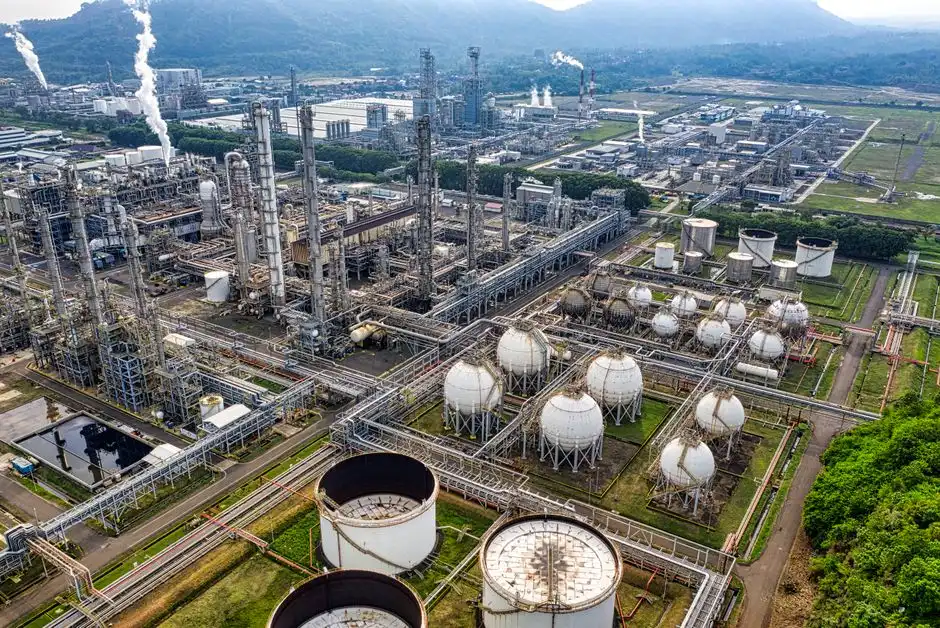
Four unit operations dominate the conventional lead removal toolbox, and each belongs in a different position in a treatment train (S4).
Chemical precipitation adds caustic — NaOH, lime (Ca(OH)₂), or Na₂S — to raise pH and drop lead as metal hydroxide or sulfide sludge. It is the lowest-CAPEX option, handles influent Pb from roughly 50 to several thousand mg/L, and achieves 90–99% bulk removal in a well-tuned reactor. Two practical limitations: it cannot by itself meet a sub-ppm discharge limit, and the sludge produced has a high water content (typically 2–4% dry solids after a clarifier) that must be dewatered before disposal — a plate and frame filter press is the standard 2026 solution, lifting cake solids to 30–40% and reducing disposal tonnage by an order of magnitude (HydropureWater field data, 2026).
Adsorption passes the stream through a granular or porous medium — activated carbon, zeolite, or biomass — to pull dissolved Pb onto the surface. It is cost-effective in the 1 ppb–100 ppm band, generates no sludge, and offers good selectivity for heavy metals. Media replacement frequency rises with influent concentration, so adsorption is most often deployed as a polishing step downstream of precipitation rather than as a primary barrier (S4).
Ion exchange (IX) uses a strong acid cation (SAC) or weak acid cation (WAC) resin to selectively capture Pb²⁺. It can reach sub-ppb effluent with specialty chelating resins, scales to large volumes, and is widely used for discharge polishing. The operational cost drivers are regeneration frequency, brine handling, and disposal of lead-laden resin — all of which are higher when IX is fed an untreated, high-Pb stream (S4).
Membrane separation uses nanofiltration (NF) or reverse osmosis (RO) to remove divalent Pb²⁺ by size exclusion, with >90% rejection achievable. Ultrafiltration (UF) is normally paired as pre-treatment to protect the RO/NF membrane and extend its service life. The reject stream is a smaller-volume, higher-Pb concentrate that must itself be treated, and energy consumption is the dominant OPEX line item (S4).
Technology Comparison: Matching the Method to Your Stream
The selection of a primary lead removal technology is driven by three inputs: influent Pb concentration, influent pH, and the discharge or reuse target. The matrix below lets an engineer match the stream to the method without rereading the prose sections.
| Technology | Typical influent Pb | Operating pH window | Expected removal | Main secondary waste | CAPEX driver | OPEX driver |
|---|---|---|---|---|---|---|
| Chemical precipitation (hydroxide) | 50–500+ mg/L | 8.5–10.5 | 90–99% bulk | Hydroxide sludge (2–4% DS) | Low | Caustic + sludge disposal |
| Chemical precipitation (sulfide) | 10–500+ mg/L | 5–9 | 95–99.9% | Sulfide sludge, residual S²⁻ | Low–moderate | Na₂S + sulfide control |
| Adsorption (carbon/zeolite/biomass) | 1 ppb–100 ppm | 4–8 | 80–99% | Spent media | Low–moderate | Media replacement |
| Ion exchange (SAC/WAC/chelating) | ppb to low ppm | 5–8 | >99% to sub-ppb | Lead-laden brine + resin | Moderate | Regeneration + resin life |
| NF / RO membrane | ppb to 100s ppm (with UF) | 3–10 | >90% | Concentrate reject (5–25% of feed) | High | Membrane replacement + energy |
For streams above ~100 mg/L Pb, no single technology in the table will meet a modern discharge limit — precipitation is the necessary front end, and the polishing column drives whether you choose adsorption, IX, or RO. For streams already in the low-ppm or ppb band, precipitation can be skipped entirely and the cost equation shifts decisively toward IX or RO.
Designing the Treatment Train for 2026 Compliance
The most common engineering mistake in 2026 is still treating precipitation, adsorption, IX, and RO as competing alternatives. They are sequential unit operations: each stage reduces the load and the matrix complexity of the next, and the train's total cost is usually lower than any single-technology "silver bullet" that is forced to handle a wide Pb range alone.
- Equalization — smooths flow and Pb concentration swings from batch processes (e.g., battery breaking).
- pH adjustment — raises pH into the 9–10 band for hydroxide precipitation, or sets 5–7 for sulfide precipitation; a properly sized automatic chemical dosing system with closed-loop pH control is non-optional for stable Pb removal.
- Chemical precipitation reactor — adds NaOH, lime, or Na₂S; provides 5–15 minutes of mixing time for floc growth.
- Solid–liquid separation — a DAF system or a high-efficiency sedimentation tank removes the bulk of the floc; DAF is preferred when fine or low-density floc is present, as detailed in the pressure flotation system engineering guide.
- Multi-media filtration — a multi-media filter catches the carry-over solids and protects downstream IX or RO from fouling.
- Polishing — IX (chelating resin for sub-ppb) or RO (for reuse) as the final barrier.
- Sludge handling — clarifier underflow and DAF float go to a plate and frame filter press for dewatering to 30–40% DS before landfill or smelter recycling.
- Online monitoring — a continuous Pb analyzer at the effluent weir, replacing daily composite sampling in most US pretreatment programs (per EPA 40 CFR 403 general pretreatment requirements, 2024 revision).
Emerging Option: Algal Biosorption as Pre-Treatment
Biosorption using algal biomass has moved from bench-scale curiosity to pilot-stage evaluation in 2026, particularly for battery recycling streams where pH is already in the 4–5 band. In the S1 study, a pure Raphidocelis subcapitata culture achieved 72% Pb removal with a sorption capacity of 14.8 mg/g dry mass from battery wastewater at pH 4.0 in 1 hour; a mixed chlorophyta population reached 61% Pb removal (7.0 mg/g dry mass) under the same conditions. Kinetic modelling (Langergren pseudo-first and pseudo-second order fits) showed that chemisorption is the dominant mechanism, with most biomass saturated within 60 minutes — a residence time compatible with a continuous-flow polishing or pre-treatment stage.
| Algal biosorbent | Influent Pb | pH | Contact time | Sorption capacity | Pb removal |
|---|---|---|---|---|---|
| Raphidocelis subcapitata (pure) | 95.4 mg/L | 4.0 | 1 h | 14.8 mg/g d.m. | 72% |
| Mixed chlorophyta | 95.4 mg/L | 4.0 | 1 h | 7.0 mg/g d.m. | 61% |
Algal biosorption is best positioned as a pre-treatment that cuts chemical demand and sludge volume, not as a stand-alone solution for 2026 discharge compliance. Its value compounds in a Zero Liquid Discharge (ZLD) loop, where every ppm of Pb recovered upstream reduces downstream brine volumes — a design pattern covered in the ZLD train design for battery materials plants guide.
Decision Framework: Choosing the Right Lead Removal Train
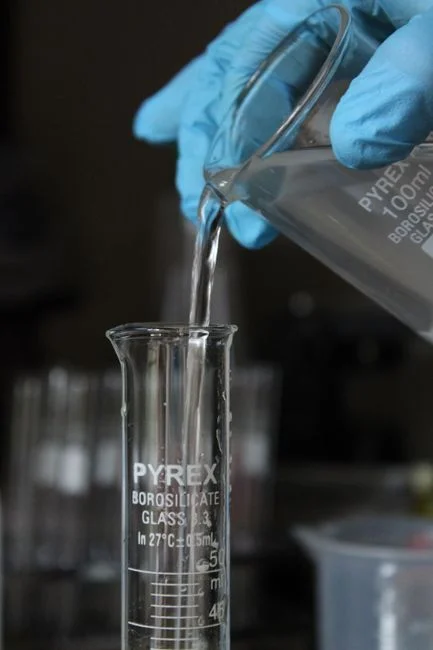
Influent Pb concentration drives roughly 80% of the technology selection, with pH and discharge goal acting as the secondary levers. The branching logic below is the version an engineer can apply in a one-page memo.
- Influent Pb > 100 mg/L: start with chemical precipitation (hydroxide for high-pH tolerance, sulfide for low-pH or co-contaminant constraints), then polish with IX or RO.
- Influent Pb 1–100 mg/L: skip precipitation; send the stream to IX or adsorption, and add RO if reuse is the discharge goal.
- Influent Pb < 1 mg/L but discharge limit is sub-ppb: RO or specialty chelating IX resin as the primary barrier — precipitation is uneconomic at this load.
- Battery recycling stream with pH < 5: front-end pH correction plus sulfide precipitation is usually cheaper than forcing the pH into the hydroxide band, especially if Cu and Ni are present at comparable concentrations.
Across all four branches, online monitoring at the discharge point is now the default rather than the exception, and sludge dewatering with a plate and frame filter press is the standard closing step before disposal.
Frequently Asked Questions
What is the most common technology for removing lead from industrial wastewater?
Chemical precipitation with hydroxide or sulfide is the most widely deployed primary step, used on streams with 50 to several thousand mg/L Pb at 90–99% bulk removal. It is almost always paired with a polishing step — IX or RO — to meet sub-ppm or sub-ppb discharge limits in 2026 (S4).
What pH is needed to precipitate lead from wastewater?
For hydroxide precipitation, pH 9–10 gives the minimum Pb(OH)₂ solubility in typical industrial streams. Sulfide precipitation works in a wider pH window (5–9) and can drive residual Pb below 0.05 mg/L because PbS has a solubility product roughly nine orders of magnitude lower than Pb(OH)₂ (S3, S4).
Can lead be removed from wastewater to below 1 ppb?
Yes. Specialty chelating ion exchange resins and RO membranes in series can both reach sub-ppb effluent Pb. RO typically achieves >90% Pb rejection in a single pass, and a two-pass RO with IX polishing is the standard 2026 configuration for battery and semiconductor plants targeting reuse-quality effluent (S4).
How much sludge does chemical lead precipitation produce?
A clarifier underflow from hydroxide precipitation typically runs 2–4% dry solids. Dewatering with a plate and frame filter press lifts that to 30–40% dry solids, reducing sludge mass for disposal by roughly an order of magnitude (HydropureWater field data, 2026).
What influent Pb concentration requires a polishing step after precipitation?
When the discharge limit is below roughly 0.5–1 mg/L and the influent is above 10 mg/L, precipitation alone is not enough — a polishing step (IX, adsorption, or RO) is required to bridge the gap. The 2026 standard for battery and electroplating facilities is continuous online Pb monitoring at the effluent weir, with most US pretreatment programs now operating at sub-ppm effluent targets (per EPA 40 CFR 403, 2024 revision).
Related Equipment
- HydropureWater industrial RO system — specifications, capacity range, and technical data