Why Continuous Lead Monitoring Is No Longer Optional
A single undetected lead excursion can release hundreds of grams of unauthorized Pb in one shift and trigger a Notice of Violation that costs more than a decade of analyzer maintenance. Per the EPA, "lead lingers in the environment and does not break down or disappear from the environment over time" (EPA, 2026), which means the liability from a discharge event does not fade with dilution — it accumulates in biosolids, sediments, and downstream agricultural soil. Zhang et al. (2012, Environ. Monit. Assess. 184(4):2261-73) documented exactly this accumulation pathway around Chinese Pb/Zn mining and smelting operations, and the same mechanism applies to any battery, electroplating, or metal-finishing plant that runs an under-instrumented effluent line.
The structural problem is the gap between grab sampling and discharge. A laboratory ICP-MS result typically returns 3-7 days after the sample is pulled, during which an entire batch of non-conforming effluent can leave the site. A concrete example: a 0.5 mg/L Pb exceedance against a 0.1 mg/L daily limit on a 1,000 m³/day discharge equals 400 g/day of unauthorized Pb release — easily above the threshold for an EPA NOV or a China EIA enforcement action. Air monitoring is part of the same exposure picture: OSHA classifies airborne Pb at 100 mg/m³ as immediately dangerous to life and health, and the NIOSH ABLES program tracks adult blood lead in 30 U.S. states to flag exactly these workplaces. Continuous water monitoring closes the only pathway the grab-sampling schedule leaves open.
How a Lead Online Monitoring System Works
A modern lead online monitoring system is a four-stage measurement chain: inline filtration, reagent dosing (for ASV and colorimetric methods), electrochemical or optical measurement, and signal output via 4-20 mA, Modbus, or 4G uplink to the plant SCADA. The architecture mirrors the modular real-time pattern Cheng et al. (2021) validated for mixed radiation-field monitors — a sensor front end, a data acquisition layer, and a networkable back end that can scale from a single analyzer to a multi-stream plant network. Zhao et al. (2012) and subsequent Chinese environmental monitoring literature confirm that online Pb analyzers have largely replaced manual sampling in regulated non-ferrous and battery industries, with the same architecture pattern documented for Cd, Hg, and As.
Three sensor principles dominate the industrial wastewater market. Anodic stripping voltammetry (ASV) delivers the lowest detection limit, down to 0.01 mg/L (10 µg/L), by preconcentrating Pb²⁺ on a mercury-film or bismuth-film working electrode and stripping it off under a voltage ramp; cycle time is 2-5 minutes and most units auto-calibrate every 6-12 hours against an internal standard. Colorimetric analyzers use Xylenol Orange or dithizone reagents that complex with Pb²⁺ to produce a measurable absorbance change; detection range is typically 0.05-2 mg/L and cycle time runs 5-15 minutes, with reagent cartridges changed weekly to monthly. ICP-OES provides the highest precision at 1-1,000 µg/L but carries $40,000+ CAPEX and is best deployed where a full metal panel (Pb, Cd, Hg, As, Cr) is required rather than Pb alone.
Sample conditioning is the unglamorous half of reliability. A Y-strainer or auto-backflush filter on the inlet, a fast-loop bypass delivering 1-2 L/min to the analyzer, and an air-conditioned analyzer enclosure (10-35 °C) prevent the three failure modes that kill most field installations: filter clogging, air bubble artifacts in the optical cell, and temperature drift of the working electrode. For plant-wide sensor network design, the broader architecture in this IoT sensor for electroplating wastewater plant guide applies the same conditioning rules across pH, ORP, TSS, and heavy-metal streams.
Sensor Types Compared: Detection Limit, Cost, and Best-Fit Application
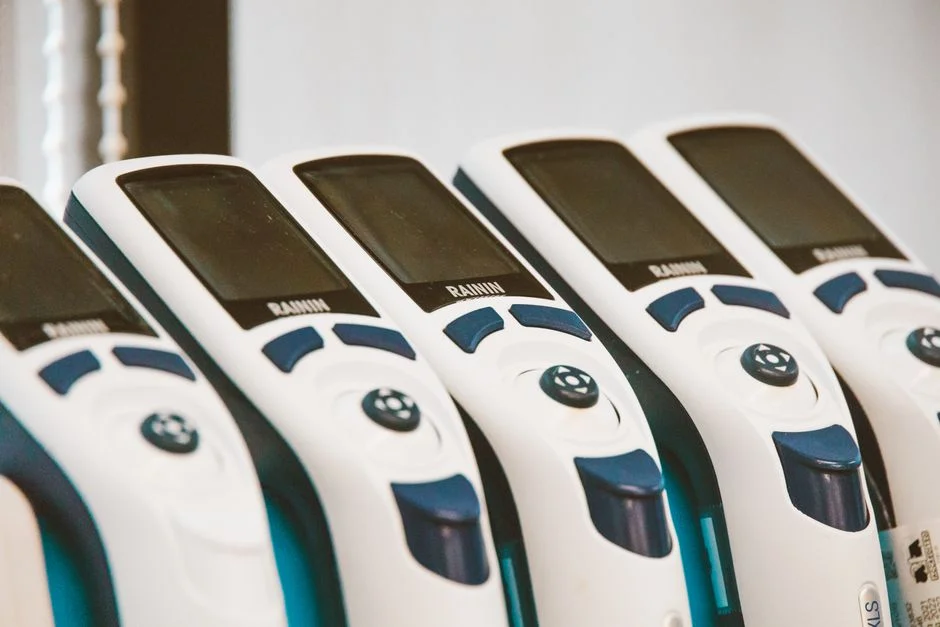
ASV is the workhorse for electroplating rinse water, where influent Pb typically runs 0.1-10 mg/L and the discharge limit is 0.1 mg/L — the 10 µg/L detection floor provides the resolution needed to alarm at 80% of permit before an excursion. Colorimetric is the better fit for lead-acid battery manufacturing, where influent Pb can exceed 50 mg/L and lower detection limit is wasted dynamic range; the colorimetric method also tolerates the higher total dissolved solids and chloride background common in plate-forming operations. ICP-OES earns its CAPEX in semiconductor and pharmaceutical plants that must report a full toxic metal panel (Pb, Cd, Hg, As, Cr⁶⁺) under the same instrument, with documented multi-element precision below 5 µg/L. Portable XRF is best reserved for sludge spot-checking and inventory verification, not continuous effluent monitoring — its 30-60 second read time and solid-sample geometry are mismatched to a flowing aqueous stream.
| Sensor Principle | Detection Limit | Response Time | CAPEX Range (USD) | Annual OPEX (USD) | Maintenance Interval | Best-Fit Industry |
|---|---|---|---|---|---|---|
| Anodic Stripping Voltammetry (ASV) | 0.01 mg/L (10 µg/L) | 2-5 min/cycle | $8,000-$15,000 | $2,500-$5,000 | Electrode replace 6-12 mo ($300-$800) | Electroplating, metal finishing, printed circuit board |
| Colorimetric (Xylenol Orange / dithizone) | 0.05 mg/L (50 µg/L) | 5-15 min/cycle | $12,000-$25,000 | $3,000-$6,000 (reagents) | Reagent cartridge 2-4 weeks ($200-$500/mo) | Lead-acid battery, lead-zinc smelting |
| ICP-OES (multi-metal) | 1-1,000 µg/L | 1-3 min/element | $40,000-$80,000 | $4,000-$8,000 (argon, consumables) | Torch/ nebulizer 6-12 mo | Semiconductor, pharmaceutical, e-waste refining |
| Portable XRF | 5-50 mg/L (aqueous limited) | 30-60 s/read | $25,000-$45,000 | $1,000-$2,000 | Annual X-ray source cert. | Sludge spot-check, alloy verification (not continuous) |
Maintenance drives the total cost of ownership more than purchase price. ASV electrode replacement at 6-12 months and colorimetric reagent cartridge changes at 2-4 weeks are the two line items that determine whether the analyzer is online or in the repair queue. For a plant already running reverse osmosis on the polishing loop, the RO system process stages guide shows how online Pb monitoring slots in after the RO permeate to verify rejection performance in real time.
Compliance Thresholds for Industrial Lead Discharge
The number a sensor has to hit is set by the regulator, and it varies by sector and region. The table below summarizes the binding limits a process engineer must design against. In China, GB 39731-2020 sets total Pb at ≤0.1 mg/L for most industrial discharges, with the older sector-specific GB 25466-2010 allowing ≤0.5 mg/L for lead-zinc smelting effluent after treatment. The EU Industrial Emissions Directive 2010/75/EU BAT-AEL for the non-ferrous metals sector tightens the range to 0.05-0.1 mg/L Pb depending on the water reuse fraction. In the U.S., EPA 40 CFR Part 433 (metal finishing) allows a 0.69 mg/L monthly average and a 1.61 mg/L daily maximum, while 40 CFR Part 461 (battery manufacturing) sets a 0.69 mg/L monthly average — looser numerically than China or the EU, but enforced through the same multi-sample composite framework.
| Region / Standard | Sector | Total Pb Limit | Averaging Period |
|---|---|---|---|
| China GB 39731-2020 | General industrial discharge | ≤ 0.1 mg/L | Instantaneous / daily |
| China GB 25466-2010 | Lead-zinc smelting | ≤ 0.5 mg/L (post-treatment) | Daily |
| EU IED 2010/75/EU BAT-AEL | Non-ferrous metals | 0.05-0.1 mg/L | Daily / monthly |
| U.S. EPA 40 CFR 433 | Metal finishing | 0.69 mg/L monthly avg; 1.61 mg/L daily max | Monthly composite |
| U.S. EPA 40 CFR 461 | Battery manufacturing | 0.69 mg/L monthly avg | Monthly composite |
Online monitoring matters because a 24-hour composite sample averages over the entire window, so a 2-hour excursion of 2 mg/L can still pass the daily average while exceeding the hourly permit triggers now common in China and the EU. The NIOSH ABLES program (30 U.S. states) is the parallel workforce monitoring standard — same Pb, different pathway — and an EHS manager building a unified compliance program typically pairs the wastewater monitor with workplace air and blood lead surveillance under one audit trail.
Integration With SCADA, DCS, and IoT Platforms
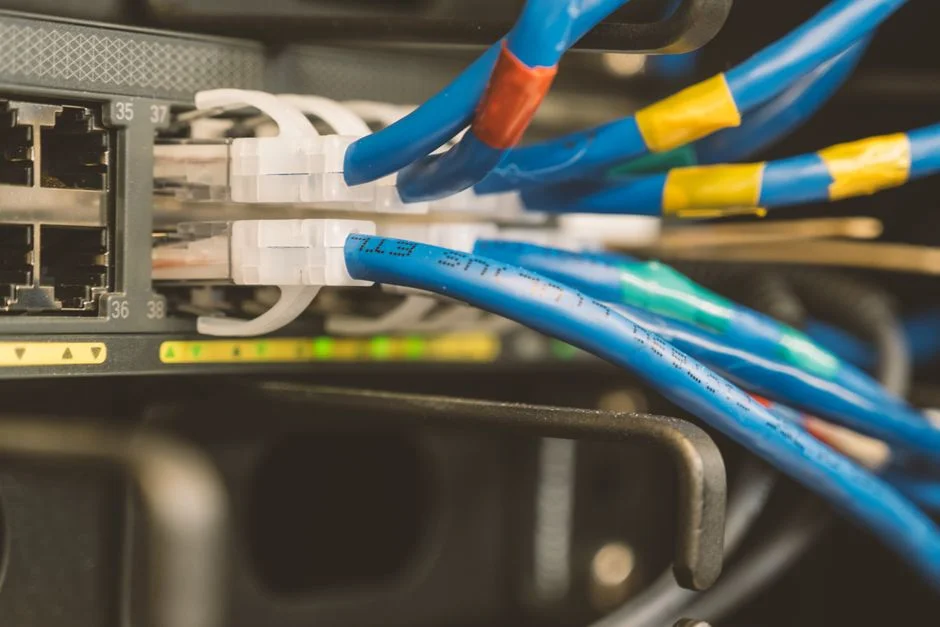
The standard analog output is a single 4-20 mA loop scaled to the sensor's useful range — 0-1 mg/L for ASV at electroplating sites, 0-10 mg/L for colorimetric on battery effluent. The 4 mA zero and 20 mA span should be set to the sensor's linear range, not the regulatory limit, so the analog signal remains useful for trending and not just for alarm logic. Modbus RTU over RS-485 is the most common digital protocol for multi-sensor networks carrying Pb, pH, ORP, TSS, and conductivity on a single twisted-pair trunk, with each analyzer mapped to a unique slave address and a register map defined in the engineering phase, not at commissioning.
Alarm and shutdown logic should be a two-stage setpoint: warning at 80% of the permit limit to give operators a chance to investigate, and automatic effluent divert to the equalization basin at 100% to prevent a non-compliant batch from reaching the outfall. The valve, pump, and equalization basin transfer logic should be hardwired through the DCS with a manual override — do not rely solely on the analyzer's onboard relay contacts, which are typically rated for only 2 A at 250 VAC and will fail before the PLC does in a humid analyzer enclosure.
The IoT extension path is a 4G or LoRaWAN uplink to a cloud dashboard, enabling remote EHS oversight across multi-site operations and automated email or SMS exceedance alerts to the on-call environmental engineer. The full sensor-network pattern for an electroplating plant — including cloud tag mapping, historian retention, and alarm escalation — is detailed in the IoT sensor for electroplating wastewater plant reference architecture. Cybersecurity should not be an afterthought: isolate the analyzer VLAN from the business network with a dedicated firewall, require authenticated Modbus TCP if data leaves the DCS, and disable any unused remote-management ports on the analyzer's embedded web server.
CAPEX, OPEX, and ROI for an Online Lead Analyzer
The business case for an online lead analyzer reduces to a four-line comparison: purchase price, consumables, displaced lab cost, and avoided penalty risk. The CAPEX range by sensor type is $8,000-$15,000 for ASV, $12,000-$25,000 for colorimetric with auto-cleaning, and $40,000-$80,000 for ICP-OES multi-metal units. Annual OPEX lands at $2,500-$5,000 for ASV (reagents, electrodes, calibration standards), $3,000-$6,000 for colorimetric (dominated by reagent cartridges), and $4,000-$8,000 for ICP-OES (argon gas and torch consumables).
| Cost Category | ASV | Colorimetric | ICP-OES |
|---|---|---|---|
| CAPEX (instrument + install) | $8,000-$15,000 | $12,000-$25,000 | $40,000-$80,000 |
| Annual OPEX | $2,500-$5,000 | $3,000-$6,000 | $4,000-$8,000 |
| Lab samples displaced (per year) | 300-600 | 200-400 | 500-1,000 |
| Lab cost displaced (per year) | $24,000-$90,000 | $16,000-$60,000 | $40,000-$150,000 |
| Typical payback (months) | 6-14 | 10-20 | 18-36 |
A regulated plant typically runs 30-50 Pb samples per month — at $80-$150 per sample for outsourced ICP-MS or $25-$50 per sample in-house, that is $9,000-$90,000 per year in lab cost alone, before factoring in the hidden cost of a 3-7 day result turnaround. An ASV analyzer at $12,000 CAPEX and $4,000/year OPEX typically breaks even in 6-14 months by displacing the lab spend alone, and the case strengthens when one avoided $25,000-$100,000 non-compliance penalty is included. The soft return is harder to quantify but real: continuous data supports ISO 14001 EMS audit trails, ESG disclosure under CSRD, and customer audits from automotive and electronics OEMs that now require documented real-time water-quality monitoring from their tier-1 suppliers.
Implementation Checklist for a Lead Online Monitoring System

- Map the stream and pick the sampling point. The analyzer should sit post-chemical precipitation and pre-final discharge, on a dedicated bypass loop with a fast-loop return to the main line. A common mistake is sampling upstream of the polishing step, where the signal swings too widely for useful alarm setpoints.
- Choose the sensor principle. Match the influent Pb range and required detection limit to the sensor comparison table above. For most electroplating and metal-finishing effluents, ASV at 10 µg/L detection limit is the right answer; for lead-acid battery influents above 10 mg/L, colorimetric saves CAPEX.
- Specify sample conditioning. Y-strainer or auto-backflush filter on the inlet, 1-2 L/min fast-loop bypass to the analyzer, and an air-conditioned enclosure (10-35 °C). The automatic chemical dosing system for lead precipitation upstream should be specified to deliver pH 9-10 stable on the equalization basin feed before the analyzer sees the stream.
- Define SCADA tags, alarm setpoints, and shutdown interlocks during the engineering phase. Tag naming, Modbus register map, and the two-stage 80%/100% alarm-and-divert logic should be in the P&ID and control narrative before the analyzer arrives on site, not after.
- Plan a 30-day parallel run against the existing lab. Pull daily composite samples at the analyzer's sample tap and run them on the lab's reference method; a correlation coefficient above 0.9 with slope 0.9-1.1 is the typical acceptance criterion before switching to online-only reporting.
- Train operators on reagent change, electrode cleaning, and calibration verification. Most online system failures are maintenance failures, not instrument failures — a 2-hour operator training session on electrode polishing and reagent cartridge swap is the single highest-ROI activity in the rollout.
Frequently Asked Questions
What detection limit does a lead online monitoring system need to meet a 0.1 mg/L discharge limit? A sensor with a detection limit of 0.01 mg/L (10 µg/L) — typically anodic stripping voltammetry — provides an order-of-magnitude resolution below the 0.1 mg/L China GB 39731-2020 limit, which is sufficient to set a stable 80% warning setpoint at 0.08 mg/L and a 100% shutoff at 0.1 mg/L.
How much does an online lead analyzer cost compared with manual lab sampling? An ASV analyzer runs $8,000-$15,000 CAPEX with $2,500-$5,000 annual OPEX, while a regulated plant typically spends $24,000-$90,000 per year on outsourced ICP-MS Pb samples, giving a payback of 6-14 months from lab cost displacement alone.
Which sensor type is best for electroplating rinse water monitoring? Anodic stripping voltammetry is best for electroplating rinse water where influent Pb runs 0.1-10 mg/L against a 0.1 mg/L discharge limit, because the 10 µg/L detection floor resolves the alarm band cleanly and the 2-5 minute cycle time catches excursion within one shift.
How does the analyzer signal reach the plant SCADA? A standard 4-20 mA analog loop scaled to the sensor range (typically 0-1 mg/L or 0-10 mg/L) feeds the DCS, with Modbus RTU over RS-485 as the most common digital protocol for multi-sensor networks; IoT extension to a cloud dashboard is via 4G or LoRaWAN uplink.
Are 24-hour composite samples still acceptable under China's GB 39731-2020? GB 39731-2020 sets a 0.1 mg/L total Pb limit for general industrial discharge, but provincial enforcement increasingly requires online continuous monitoring with hourly exceedance logging — a 24-hour composite can mask a 2-hour excursion that online monitoring catches immediately.
Which industries face the highest Pb discharge compliance risk in 2026? Lead-acid battery manufacturing, electroplating, printed circuit board production, non-ferrous metal smelting, and e-waste refining are the highest-risk sectors because influent Pb routinely exceeds 10 mg/L and any process upset can push effluent above the 0.1 mg/L discharge limit within minutes.
Related Equipment
- WSZ integrated sewage treatment plant — specifications, capacity range, and technical data
- high-efficiency sedimentation tank for lead-bearing wastewater — specifications, capacity range, and technical data