Why PLC Control Defines Modern Industrial Wastewater Plants
PLC control for an industrial wastewater plant in 2026 centers on a redundant PLC pair (typically Siemens S7-1500 or Allen-Bradley ControlLogix) running PID loops across pre-treatment, biological, and tertiary stages, networked to a SCADA HMI over Profinet or EtherNet/IP. Typical mid-sized plants of 50 m³/h require 350–600 I/O, 6–12 VFD-driven pumps/blowers, and 8–14 analog quality loops, with installed panel CAPEX of USD 45,000–120,000 in 2026.
Every serious "PLC in wastewater" reference on the current SERP is either an unrelated .NET class page, a 2000s-era Chinese academic translation built around Schneider's Concept 2.2XL and MB+ fieldbus, or a generic automation brochure. None of them reflects 2026 hardware, 2026 protocols, or 2026 cybersecurity requirements. This article fills that gap with a working engineer's reference: architecture diagrams in prose, stage-by-stage I/O lists, a PLC-vs-SCADA-vs-DCS decision matrix, and 2026 CAPEX benchmarks a project manager can hand to finance.
The 2000s distributed-control translation from the top results is still useful as a starting point: a PLC at each process station, MB+ (or its modern equivalent, Profinet/EtherNet/IP) for station-to-station comms, and a supervisory PC for monitoring. What has changed is the network layer — MB+ ran at 1 Mbit/s on shielded twisted pair; modern Profinet and EtherNet/IP run at 100 Mbit/s on managed industrial Ethernet rings with sub-millisecond cycle times. Equally, the "miniaturization, PC-based PLC, networking, openness" trend that translation noted has matured: in 2026, a 16-I/O micro-PLC is a USD 250 commodity, and a soft-PLC on an industrial PC shares the same OPC UA namespace as a hard-PLC.
Quantify the business case. A 2024–2026 PLC + SCADA retrofit on a previously manually operated 50 m³/h plant typically cuts operator labor 30–45% (one operator covers 2–3 shifts of a single screen instead of walking the plant), and reduces effluent excursion events by roughly 50% because PID loops on dissolved oxygen, pH, and chlorine close in seconds rather than at the next operator round (industry benchmark — confirm with your integrator against their own reference plant). That is the number to put in front of a CFO before discussing hardware specifics.
PLC Hardware Architecture for a 2026 Wastewater Plant
A 2026 industrial WWTP control panel is built around a redundant CPU pair on a Profinet or EtherNet/IP ring, with remote I/O drops at each treatment stage and a managed industrial Ethernet backbone to the SCADA server. The two platforms that dominate RFPs in 2026 are the Siemens S7-1500 (preferred in EU, Middle East, and most of Asia) and Allen-Bradley ControlLogix (preferred in North America and the US-owned chemical and food sectors). Both support Profinet and EtherNet/IP natively in 2026 firmware, and both expose OPC UA servers without an add-on gateway.
The recommended topology for a 50 m³/h plant is: a redundant CPU rack (S7-1515R or 1756-L82E with redundancy module) in the main control room; remote I/O stations — ET200SP on Profinet or FLEX 5000 on EtherNet/IP — at the influent screening, pre-treatment, biological, and tertiary skids; a Profinet/EtherNet/IP ring (managed switches with MRP or DLR) so a single cable break does not drop a station; and a 24 VDC UPS-backed power supply sized for 1.5× the actual I/O load to leave headroom for future transmitters.
Power quality is where the 2009 anti-interference study still applies. VFD-driven blowers and pumps inject harmonic noise onto the same 400 VAC bus that feeds the PLC cabinet. The 2026 mitigation: a dedicated isolation transformer or line filter for the control panel, shielded twisted-pair signal cables grounded at one end only, and a 1.5×-rated 24 VDC supply with a discrete analog ground bar. PLC-controlled automatic chemical dosing skids should be fed from a separate breaker so a dosing-pump short cannot brown-out the CPU.
For cloud and historian integration, add an edge gateway — Siemens IoT2050, Stratix 5400, or a generic industrial PC running Kepware — that publishes OPC UA tags to MQTT for push to AWS IoT, Azure, or an on-prem historian. This is now standard on every 2026 RFP: no cloud push, no award.
I/O Sizing and Instrumentation List by Treatment Stage
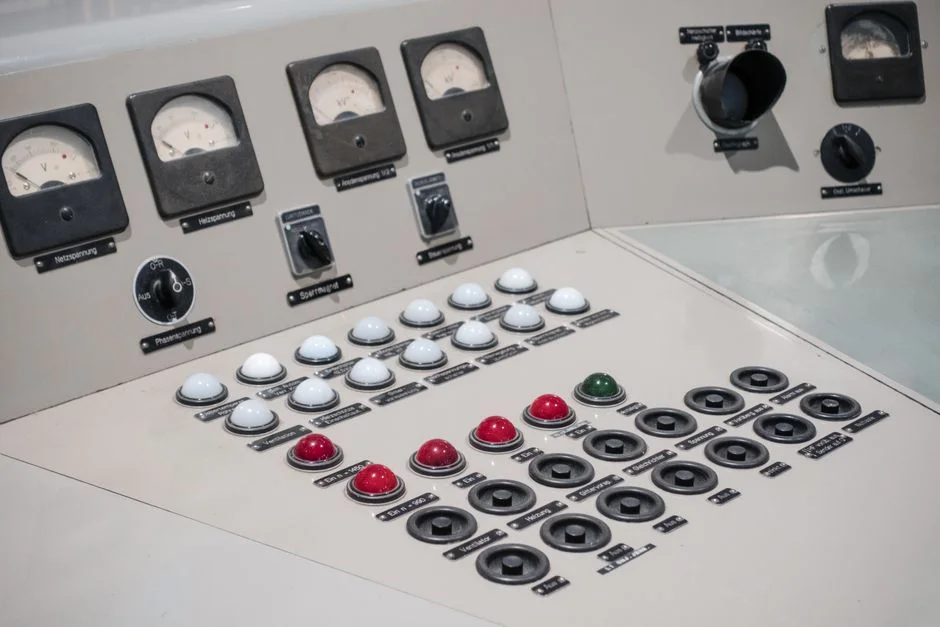
The single most useful artifact in this article is the I/O checklist below. Hand it to an integrator and ask them to mark up the deviation from your actual P&ID; the markup will tell you whether their proposal is under-scoped or padded. The split for a 50 m³/h industrial plant (typical food, chemical, or textile duty) is approximately 60% discrete, 30% analog 4–20 mA, and 10% communication (smart instruments over Profinet/EtherNet/IP or HART).
| Treatment stage | Key instruments | Discrete DI/DO | Analog AI/AO | Comm / smart |
|---|---|---|---|---|
| Influent / screening | Magnetic flowmeter, pH, conductivity, TSS, level switches, screen rake | 18–28 | 6–10 | 2–4 |
| Pre-treatment (equalization, DAF, chemical dosing) | DAF recycle pump VFD, dosing pump speed, pH, TSS, FOG probe | 30–50 | 10–16 | 4–6 |
| Biological (A/O, SBR, or MBR) | DO probe, MLSS, temperature, basin level, aeration valve position, return/waste sludge VFDs | 60–110 | 20–32 | 6–10 |
| Tertiary / disinfection / reuse (RO) | Turbidity, free chlorine, RO high-pressure pump VFD, permeate flow, CIP valves | 40–70 | 14–22 | 6–10 |
| Sludge handling & utilities | Sludge press, polymer dosing, polymer line level, compressed air, HVAC | 30–50 | 6–10 | 2–4 |
| Total (typical 50 m³/h) | 180–310 | 56–90 | 20–34 |
VFD count for the same plant runs 8–12: two raw-water influent pumps, two transfer pumps between equalization and biological, two to four blowers for the aerobic basin, one to two sludge transfer pumps, and one to two chemical dosing pumps. Each VFD needs one Profinet/EtherNet/IP node, one run/stop DI, one fault DO, and one speed reference AO — confirm the integrator has reserved these in the I/O list rather than treating VFDs as "free" field devices.
Safety I/O is a separate layer. Emergency stops in the aeration blower room and chemical dosing area must be hardwired to a safety PLC — S7-1500F with F-CPU or GuardLogix — rated to IEC 61508 SIL 2. This is non-negotiable in 2026 RFPs; an integrator who lumps safety into the standard DI budget has mis-scoped the panel by 20–30%.
For the equipment itself, the DAF pre-treatment stage typically arrives with 12–18 pre-wired I/O points ready to land on the remote I/O drop, and the MBR biological stage adds another 40–70 points (suited for a Profinet/EtherNet/IP ring with its own cabinet). Get the equipment I/O maps from the supplier and fold them into the table before issuing the PLC tender.
PLC vs SCADA vs DCS: Which Architecture Fits Your Plant?
The 2000s Chinese industrial-control translation framed the choice as PLC, DCS, or industrial PC — a "three-way" architecture that still anchors how many senior engineers think. In 2026, the choice is sharper and tied to plant capacity, regulatory load, and redundancy requirements.
| Architecture | Typical plant size | CAPEX (2026, panel + SCADA + engineering) | Best fit | Limitations |
|---|---|---|---|---|
| PLC + remote HMI/SCADA | < 500 m³/h, < 1,000 I/O | USD 45,000–150,000 | Most industrial WWTP, food, textile, metal finishing | Limited bumpless transfer; engineering effort for > 80 PID loops |
| Hybrid: PLC at field + DCS for control room | 500–5,000 m³/h, > 40% regulatory loops | USD 250,000–900,000 | Pharma, large chemical, large food, pulp & paper | Two vendor stacks; integration cost is real |
| Full DCS | > 5,000 m³/h or > 100 PID loops with bumpless transfer | USD 1.2M–5M+ | Municipal-scale, petrochemical WWTP | Overkill for most industrial plants; 18–30 month delivery |
For a 50 m³/h industrial plant, the answer is almost always the first row: PLC + SCADA. The CAPEX range above assumes a redundant CPU pair, 400–500 I/O, a WinCC Unified or FactoryTalk View SCADA server with 2 HMI clients, and integrator engineering at 35–55% of hardware cost. Anything above that tier needs a written justification that names the loops requiring SIL 2 or bumpless transfer — not a vendor preference.
If the proposal is for a DCS, the integrator should be able to quantify why: typically a regulatory loop count above ~80, continuous batch sequencing, or mandated redundant controllers in a hazardous-area zone. Without that justification, a DCS is paying for capability the plant will never use. The full SCADA system architecture for sewage treatment is covered in a companion article.
Programming, Protocols, and Cybersecurity in 2026
Programming in 2026 is structured text (IEC 61131-3) for PID and math, ladder for interlocks, and function blocks for reusable equipment modules. Any integrator still proposing Concept 2.2XL, Modsoft, or the original STEP 7 Classic for a new build is asking for a support liability — all three programming environments are end-of-life, and the engineering bench to maintain them is shrinking fast. The S7-1500 uses TIA Portal; ControlLogix uses Studio 5000; both are the 2026 standard.
The protocol stack is layered. At the field level, Profinet (Siemens sites) or EtherNet/IP (Rockwell sites) on a managed ring, cycle time 1–4 ms for VFD and safety traffic. From PLC to SCADA, OPC UA — native on both S7-1500 and ControlLogix since firmware V2.9 / v33 respectively — replaces legacy OPC DA and S7 MPI. From SCADA to cloud, MQTT-SN or MQTT over TLS, typically published by an edge gateway at 10–60 s intervals for historian and analytics. Modbus TCP and Modbus RTU still appear on legacy VFDs and third-party instruments, but no new 2026 architecture uses them as the primary backbone — they are translation targets inside the gateway.
Cybersecurity is where 2026 RFPs have tightened most visibly. The baseline most European and US plant owners now require is IEC 62443-3-3 System Security Level 2: network segmentation between the OT ring and the corporate LAN via a firewall or DMZ, role-based access on the HMI (operator, supervisor, engineer, admin), signed firmware on the PLC, and a managed switch with port security and MAC allow-listing. The 2000s translations had nothing on this — the 2026 RFPs that miss it are getting bounced at the procurement gate.
Worked example for a dissolved-oxygen loop, translated from the boiler-drum PID architecture in the older academic material. A single FBs-PLC equivalent — in 2026, an S7-1500 CPU with an AI8 module — reads a 4–20 mA DO probe, runs a PID function block with default Kp = 2.0, Ti = 120 s, Td = 0 s, and outputs a 4–20 mA speed reference to a blower VFD on Profinet. Cycle time 100 ms, setpoint 2.0 mg/L, deadband ±0.1 mg/L. The same pattern scales to pH, free chlorine, and MLSS — the four loops a 50 m³/h plant will actually close on PID. The remote monitoring and cloud connectivity side of this stack is documented in a companion engineering guide.
2026 Cost Benchmarks and Vendor Selection Checklist
Realistic 2026 CAPEX for a mid-sized industrial WWTP control panel, fully redundant 500-I/O architecture, programming, FAT, and on-site installation: USD 45,000–120,000 for a 50 m³/h plant. That number excludes the field instruments, the VFDs themselves, and the SCADA server hardware, which together can add another 30–60%. The integrator's engineering effort — panel design, PLC programming, SCADA graphics, FAT, commissioning — is typically 35–55% of the hardware cost, and is where most under-scoped proposals are revealed.
| Cost line | 2026 range (USD) | Notes |
|---|---|---|
| PLC hardware (redundant CPU + remote I/O) | 12,000–28,000 | S7-1500 or ControlLogix, Profinet/EtherNet/IP ring |
| SCADA server + 2 HMI clients + licensing | 8,000–22,000 | WinCC Unified, FactoryTalk View, or Ignition |
| Panel build + UPS + network gear | 10,000–25,000 | Stainless or painted steel, 24 VDC UPS, managed switches |
| Engineering (design, PLC code, SCADA graphics, FAT, commissioning) | 15,000–45,000 | 35–55% of hardware cost; the line item to watch |
| Total installed panel CAPEX | 45,000–120,000 | Excluding VFDs, field instruments, and engineering contingency |
| OPEX (software support, cyber patching, spares) | 4,000–14,000 / year | ~8–12% of CAPEX per year |
Vendor selection checklist for 2026: (1) PLC platform lock-in — confirm the integrator is fluent in your chosen platform rather than reselling; (2) local distributor presence within 4 h drive for spare parts; (3) 24/7 support SLA with a 4 h remote response and 48 h on-site; (4) spare-parts lead time under 72 h for CPU, I/O, and power supply; (5) IEC 62443-3-3 SL2 documentation available before contract signing; (6) reference plants of similar capacity, ideally in the same industry. A 2026 hard disqualifier: any proposal that names Concept 2.2, Modsoft, or STEP 7 Classic as the programming environment. Those tools have been out of vendor support for years and any integrator offering them is signalling that they have not refreshed their engineering bench. The evaluating Chinese equipment vendors companion guide covers how to cross-check an unfamiliar panel shop against this checklist.
Frequently Asked Questions
Which PLC brand is the right choice for a 2026 industrial wastewater plant?
Siemens S7-1500 is dominant in EU, Middle East, and most of Asia; Allen-Bradley ControlLogix is preferred in North America and the US chemical/food sector. Both support Profinet, EtherNet/IP, and OPC UA natively in 2026 firmware; the choice is usually driven by corporate standardization and local integrator expertise, not by technical capability.
Does a 50 m³/h wastewater plant need a redundant PLC?
Yes for any plant with continuous discharge consent or 24/7 staffing. A redundant CPU pair adds 15–25% to PLC hardware cost but eliminates the 4–8 h mean-time-to-recovery from a CPU failure, which on a consent-bound discharge line can mean a regulatory excursion event.
How many I/O points does a 50 m³/h industrial WWTP actually need?
Plan for 350–600 I/O total, with the typical split of 60% discrete, 30% analog 4–20 mA, and 10% communication/smart instruments. Plants with MBR or RO reuse add 80–150 points above a basic DAF + biological layout, and safety I/O on a separate F-CPU adds another 20–40 points.
Why is Modbus being replaced in 2026 wastewater plants?
Modbus TCP and RTU lack the deterministic cycle time, multicast, and safety layers that Profinet and EtherNet/IP provide at the same price point. Modbus is still acceptable for legacy VFDs and third-party smart instruments, but new 2026 architectures use it only as a translation target inside an edge gateway, never as the field backbone.
Is IEC 62443 cybersecurity actually required, or just marketing?
It is contractual on most 2026 European and US RFPs for industrial WWTP, particularly any plant discharging to a POTW or a watercourse with an NPDES/IPC permit. IEC 62443-3-3 SL2 means segmentation, role-based HMI access, signed firmware, and managed switches with port security — all of which are auditable.
What does a small industrial WWTP control panel cost in 2026?
A fully redundant 500-I/O panel with PLC, SCADA, engineering, FAT, and commissioning runs USD 45,000–120,000 for a 50 m³/h plant. A non-redundant panel for a 20 m³/h plant starts around USD 25,000; the full SCADA configuration for a paper-mill wastewater plant reference gives a sector-specific benchmark for comparison.
Related Equipment
- PLC-controlled automatic chemical dosing skids — specifications, capacity range, and technical data