Why 'Made in China' No Longer Predicts Equipment Reliability
Country of origin tells a buyer almost nothing about a wastewater manufacturer's reliability in 2026. The 2021 Made-in-China catalog page that still dominates first-page SERP results describes suppliers as if "Made in China" were a single uniform grade — a list of vendors with no engineering filter, no audit data, and no MTBF figures. That model was already outdated in 2021; it is misleading now.
Reliability is documented consistency: ISO 9001:2015 certification covering design and manufacturing (not just sales), EN 1090 weld execution class, MTBF figures in the 20,000+ hour range for rotating skimmers and pumps, and traceable materials certificates. These are the same markers a Turkish OEM like Vortex Engineering cites on its homepage (ISO 9001:2015, AWWA/DIN/BS compliance), and the same markers a tier-1 Chinese OEM operates against. For example, the WSZ series of packaged plants has been shipping 1–80 m³/h units for over a decade with documented capacity, in-house PLC programming, and full FAT packages — the procurement signals a buyer actually needs.
Separating reliability from price is the first analytical step. Price is a one-time CAPEX event. Reliability is the multi-year stream that determines membrane replacement cycles, unplanned downtime hours per year, and warranty claim costs. A 30% CAPEX discount that erodes into a 5-year OPEX penalty from cheap membrane modules is not a discount — it is a deferred cost. Treat reliability as a measurable, auditable attribute, not a brand-country label.
The Five Pillars of Manufacturer Reliability in 2026
Reliability at a wastewater OEM can be decomposed into five auditable pillars. A serious Chinese manufacturer should produce evidence for each, dated within the last 12 months.
Pillar 1 — Quality Management. Demand the actual ISO 9001:2015 certificate PDF, not a screenshot. Check the scope statement: the certificate should list "design, manufacture, and after-sales service of wastewater treatment equipment" — not just "sales of environmental equipment." Scope exclusions are where most failed audits start. Verify the issuing body's accreditation through the IAF CertSearch database (per ISO 9001:2015 §8.5.1 control of production).
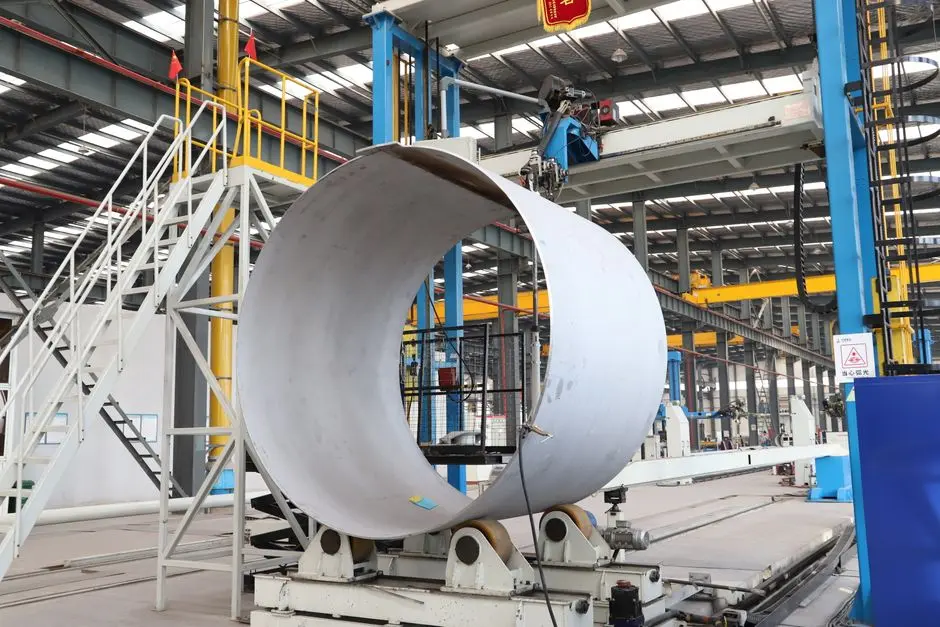
Pillar 2 — Welding & Fabrication. For any stainless process vessel (DAF, MBR tank, chemical skid), EN 1090-1/2 Execution Class 2 minimum is the EU baseline; ASME IX or AWS D1.1 are accepted equivalents. Third-party weld inspection reports should be supplied per batch, not per project. The 3.1 mill certificate for the SS304/SS316 plate must accompany the vessel.
Pillar 3 — Materials Traceability. Ask for the OEM name on the membrane module (Toray, Asahi KASEI, or a documented Chinese supplier with published pore size and material spec), the pump brand (Grundfos, Xylem, or domestic), and the chemical dosing pump OEM. Generic "PVDF hollow fiber" is a red flag — specify 0.1 μm nominal pore size and supplier.
Pillar 4 — Electrical & Controls. Panel certification should be CE (EU) or UL (North America). PLC brand matters: Siemens S7-1200/1500 or Allen-Bradley CompactLogix cost more but integrate cleanly with plant SCADA. Domestic PLCs (e.g., Xinje, Delta) are acceptable when the supplier owns the source code and provides OPC-UA or Modbus TCP tag lists.
Pillar 5 — Documentation & Service. "Good" means: English-language O&M manual (≥80 pages), pre-FAT checklist, witnessed FAT video (≥15 minutes covering running test, alarm simulation, and shutdown sequence), on-site commissioning with signed SAT, and a documented 24/7 remote support SLA. Vague promises of "lifetime service" without response-time clauses are non-binding.
Reliability Scorecard: 10-Point Chinese Supplier Audit Checklist
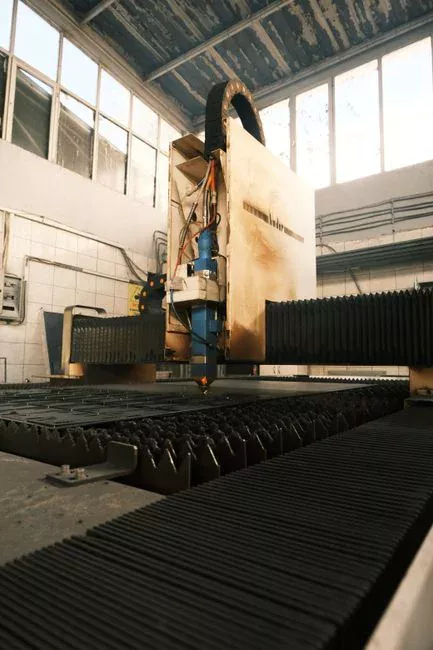
Score each line 0–2 (0 = absent, 1 = partial, 2 = verified). A total ≥16 puts the supplier in tier-1; 10–15 in tier-2 (negotiate hard on gaps); below 10, walk away. Tier-1 Chinese OEMs in 2026 routinely match EU FAT documentation — a differentiator that disappeared around 2018–2020. If a Chinese supplier's FAT package is still thinner than a German equivalent, the supplier is operating at 2015 standards.
| # | Audit Item | Verification Method | Score (0–2) |
|---|---|---|---|
| 1 | ISO 9001:2015 scope covers design + manufacture | Read certificate scope statement | — |
| 2 | EN 1090-1/2 Ex Class 2 or ASME IX weld cert | Certificate scan + 3rd-party NDT report | — |
| 3 | 3.1 mill certs for SS304/SS316 + membrane OEM named | Mill cert PDF + membrane datasheet | — |
| 4 | PLC brand named (Siemens/AB) + source code owned | BOM + PLC project file escrow clause | — |
| 5 | FAT capability with video + test report template | Recent FAT sample ≥15 min, full alarm list | — |
| 6 | English O&M manual ≥80 pages, index + wiring diagrams | Sample chapter PDF | — |
| 7 | ≥3 installed-base references in similar climate (MENA/SEA/Africa) | Reference contact + site photos | — |
| 8 | Warranty ≥24 months mechanical, ≥12 months electrical | Contract clause | — |
| 9 | Spare parts inventory list + 5-year price commitment | Schedule in proposal | — |
| 10 | Commissioning staff ≥3 certified engineers, on-site SAT | CVs + SAT protocol | — |
For sector-specific CAPEX benchmarks, see the 2026 B2B pricing and ROI guide for healthcare and small-municipal projects.
CAPEX vs. OPEX: Modeling a 2026 Sourcing Decision
The 30–50% CAPEX discount Chinese OEMs typically offer against EU suppliers is real — but it only converts to savings if OPEX stays controlled. The two variables that most often break the model are membrane replacement cycles (PVDF MBR modules typically run 5–8 years depending on influent; cheap modules can fail in 2–3 years) and chemical/energy consumption overruns. Model both before you defend the China decision to a CFO who only sees the headline price.
| Plant Size | Source | CAPEX (USD) | 10-yr OPEX (USD) | Lifetime Cost |
|---|---|---|---|---|
| 50 m³/day (small industrial / clinic) | China OEM | $80K–$140K | $220K–$310K | $300K–$450K |
| Turkey OEM | $110K–$180K | $240K–$330K | $350K–$510K | |
| Germany OEM | $180K–$260K | $260K–$340K | $440K–$600K | |
| 500 m³/day (mid industrial / MBR food plant) | China OEM | $450K–$700K | $1.4M–$1.9M | $1.85M–$2.6M |
| Turkey OEM | $600K–$900K | $1.5M–$2.0M | $2.1M–$2.9M | |
| Germany OEM | $900K–$1.3M | $1.6M–$2.1M | $2.5M–$3.4M | |
| 5,000 m³/day (municipal / large industrial) | China OEM | $2.8M–$4.2M | $8.5M–$11.5M | $11.3M–$15.7M |
| Turkey OEM | $3.6M–$5.0M | $9.0M–$12.0M | $12.6M–$17.0M | |
| Germany OEM | $4.8M–$6.5M | $9.5M–$12.5M | $14.3M–$19.0M |
OPEX figures are dominated by energy (aeration blowers, recirculation pumps), membrane replacement, and chemical dosing. Use HydropureWater's published product specs as a sanity check on flow assumptions: the MBR membrane bioreactor system covers 10–2,000 m³/day; the DAF flotation system runs 4–300 m³/h for pre-treatment; the plate and frame filter press handles 1–500 m² for sludge dewatering. For OPEX modeling per cubic meter at your specific scale, the 2026 OPEX breakdown per cubic meter walks through the calculation. For a wider CAPEX comparison including packaged plants, the prefabricated wastewater plant selection guide covers small-to-mid tier projects.
Two Real Sourcing Scenarios: MBR Plant vs. DAF Skid
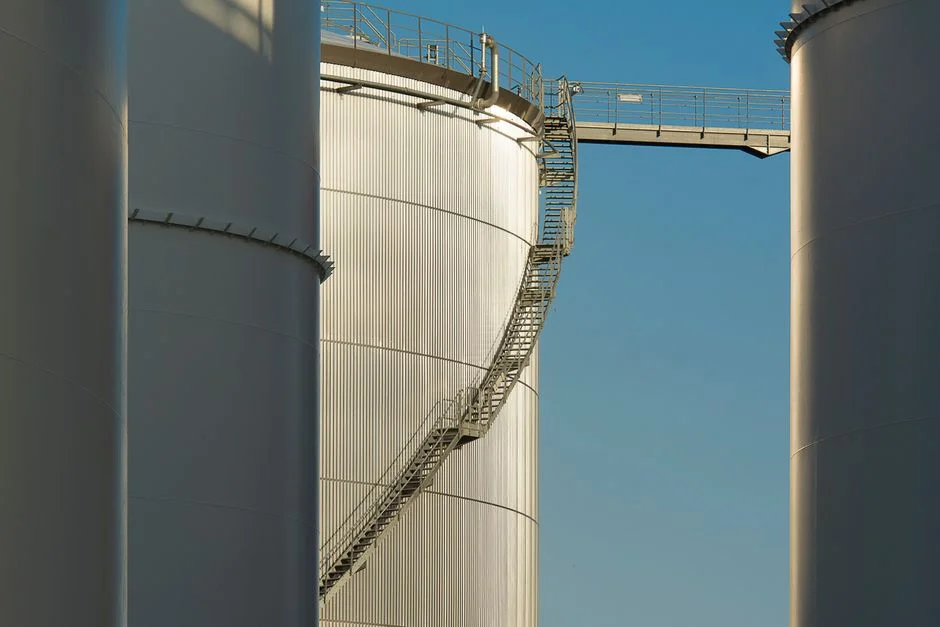
Scenario A — $2M MBR for a 2,000 m³/day food plant. At this CAPEX tier, the framework prioritizes membrane traceability, FAT depth, and commissioning presence. Demand a named PVDF membrane OEM (pore size 0.1 μm), a documented 24-month mechanical warranty, and a witnessed FAT that runs the system at design flux for at least 4 continuous hours. The MBR module DF series datasheet should be matched to your influent F/M ratio and temperature. Tier-1 score ≥16/20 with membrane origin documented.
Scenario B — $400K DAF skid for a tannery pre-treatment. This is a pre-treatment layer where reliability risk shifts to weld quality, skimmer mechanism MTBF, and chemical dosing integration. The skimmer's MTBF should be ≥20,000 hours, with the surface drive coming from a named OEM (Xylem, Grundfos, or domestic with documented bearing life). Integrate the automatic chemical dosing skid at FAT, not on site, to avoid field commissioning errors with coagulant/polymer pumps.
For both scenarios, run a 48-hour pre-payment verification: ISO certificate scan with IAF verification, two recent customer references in similar climate zones (MENA, SE Asia, or sub-Saharan Africa), and a live video factory walk-through of the specific production line for the unit you are buying. No exceptions before wire transfer.
2026 Risk Landscape: Lead Times, Tariffs, and Compliance
The 2021-era buying guides miss three current risk factors that change the sourcing decision.
Lead times have stretched. Post-pandemic supply chains now run 10–14 weeks ex-works plus 4–6 weeks CIF, against 6–8 weeks total pre-2020 (per freight market data, 2026-Q1). Lock production slots at PO, not at RFQ; include a liquidated-damages clause of 0.1–0.3% of contract value per week of delay, capped at 5%.
Tariff exposure is still live. U.S. Section 301 tariffs on certain HS codes remain in force; confirm HTS classification (8421.21 for filtration, 8421.39 for other, 8479 for other machinery) before issuing the RFQ. EU buyers face CBAM reporting on embedded steel for process vessels built with Chinese hot-rolled coil — pass the cost to the supplier or buy EU-grade plate.
Compliance targets have tightened. EU Industrial Emissions Directive 2010/75/EU, EPA NSPS for flue gas streams, and WHO Drinking Water Guidelines (4th ed.) are the three benchmarks a supplier should be able to map its equipment against. The ClO₂ generator is one example where the datasheet explicitly states these standards. The flue gas desulfurization scrubber should carry an EPA NSPS compliance note for SO₂ removal efficiency.
Cyber/control risk is the silent one. Confirm in the contract that the PLC programming source code is owned by the manufacturer, not a freelance integrator who may disappear. Escrow the source code with a neutral third party against final payment.
Frequently Asked Questions
How do I verify a Chinese wastewater manufacturer's ISO 9001:2015 certificate is real? Request the PDF and verify the issuing body's accreditation through the IAF CertSearch database, then check the scope statement covers design and manufacture — not only sales.
What MTBF should I expect from rotating equipment in a wastewater plant? Tier-1 OEMs document ≥20,000 hours MTBF for skimmers, decanter centrifuges, and chemical dosing pumps under design load; any figure below 15,000 hours signals a maintenance problem.
Are Chinese wastewater OEMs affected by Section 301 tariffs in 2026? Yes, on certain HS codes including 8421.21, 8421.39, and parts of 8479; confirm classification with a customs broker before RFQ and price the duty in.
What is the typical lead time for a Chinese OEM wastewater plant in 2026? 10–14 weeks ex-works plus 4–6 weeks CIF for packaged skid units; containerized MBR modules add 2–3 weeks for FAT scheduling.
Do Chinese MBR suppliers use Toray or Asahi KASEI membranes? Tier-1 suppliers source from named membrane OEMs or use in-house PVDF with documented 0.1 μm pore size, tensile strength, and chemical resistance data; generic "PVDF hollow fiber" without supplier name is a red flag.