What Braintree Petroleum Bulk Operators Are Actually Discharging
Braintree, MA petroleum bulk terminals in 2026 are not refineries. The influent stream is dominated by stormwater runoff from tank farms and truck loading racks, periodic tank draw-down water, and truck-rack wash water generated during hose and manifold cleaning — not process condensate or desalter effluent. That distinction governs which federal category applies: 40 CFR 435 Subpart D (Bulk Terminals), not Subpart A (Refining). Subpart A guidance circulating in the scraped sources is only partially applicable to a Braintree terminal because Subpart A assumes continuous API separator overflow from a refining process; Subpart D benchmarks a bulk terminal on its API separator effluent quality and best conventional pollutant control technology (BCT/BPT) for stormwater-driven flows. Treating the two as interchangeable is the first procurement mistake.
Typical Braintree bulk terminal influent bands sit at free oil 200–2,000 mg/L, emulsified oil 50–500 mg/L, and TSS 100–1,500 mg/L — bracketing the 2,000 ppm suspended-solids loading reference that DAF Corporation uses to size its FC Maximizer and the "high organic loading" framing Spectrum Water applies to wash-down streams. Free oil is the easy fraction; emulsified oil and colloidal TSS are the fractions that decide equipment selection. All terminal discharge is routed to the MWRA interceptor system tributary to Deer Island, where the MWRA Sewer Use Ordinance (current 2026 schedule) applies oil & grease and TSS surcharge thresholds above published headworks limits, and where MassDEP 314 CMR 3.00 governs any site with an active NPDES stormwater permit or surface water pathway. A "generic oil/water separator" answer that ignores this three-layer compliance stack — federal categorical, MWRA local, MassDEP state — fails at the procurement gate.
How a DAF Removes What a Clarifier Cannot
Dissolved air flotation works by pressurizing a side-stream recycle at 60–80 psig, saturating it with air, then releasing the pressure at the inlet of a flotation cell. The dissolved air comes out of solution as a cloud of 20–40 micron micro-bubbles — DAF Corporation specifies that size band for both the FC Maximizer and the RC UniMax, with a 24/7 micro-bubble generator that holds the size range without coarse bubbles. Those micro-bubbles attach to oil droplets, FOG, and chemically conditioned suspended solids and float them to the surface, where a rotating skimmer sweeps the float into a sludge hopper. Residence time in the cell is on the order of 3–5 minutes, not hours.
A gravity or lamella clarifier works by Stokes' law settling. Heavier settleable solids drop to the bottom cone; free oil rises to the surface under quiescent conditions; the clarified middle layer decants over a weir. Residence time is 2–4 hours. The mechanism works cleanly on grit, heavy sludge, and free oil that has not been mechanically or chemically emulsified. It does not work on emulsified oil from surfactant-based tank cleaners, on FOG stabilized by detergents in the truck-rack wash stream, or on colloidal TSS below roughly 10 microns. As Spectrum puts it, DAF is the right tool for "exactly the material a clarifier struggles with — free and emulsified oil, grease, fiber and low-density solids that will not fall out of suspension under gravity." That sentence is the engineering justification for choosing DAF on any Braintree stream where the wash-down water carries detergents or where the tank draw-down water has seen any mechanical shear.
Chemical conditioning is the second leg of DAF performance. Spectrum runs every project through jar testing in its in-house lab to pick the coagulant, flocculant, and dose, and ships the chemistry with the unit; WesTech notes that DAF can run chemical-free but performance is materially worse on fine emulsions, and recommends coagulant or flocculant wherever float quality or TSS target matters. A HydropureWater automatic chemical dosing skid pairs with any DAF for this duty and is typically shipped factory-integrated.
DAF vs Clarifier for Braintree Bulk Terminals: Engineering Comparison
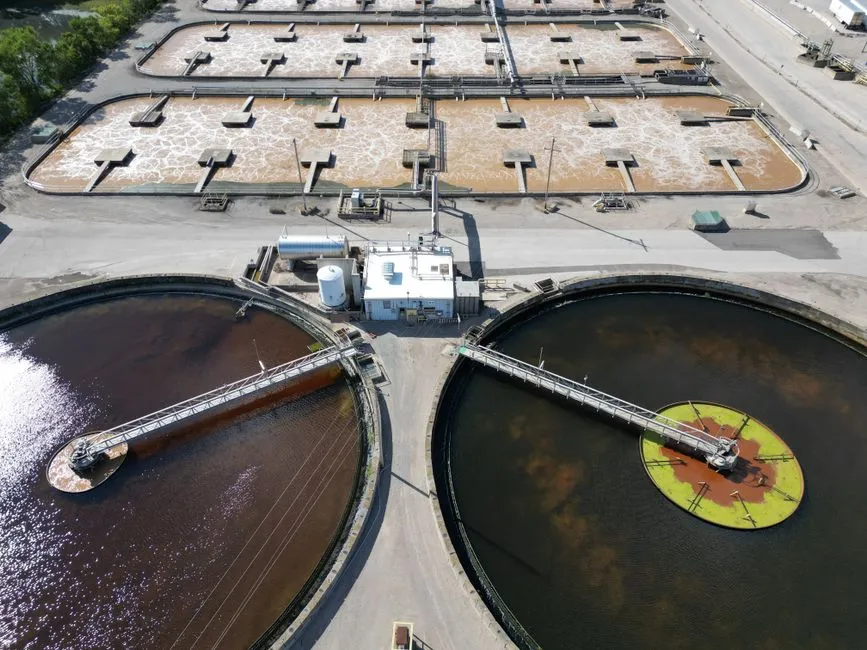
The single matrix a procurement manager in Braintree will screenshot and forward to a regional director.
| Parameter | DAF (FC Maximizer / RC UniMax) | Gravity / Lamella Clarifier |
|---|---|---|
| TSS removal | 92–98% (FC Maximizer); 85–90% (RC UniMax) on 2,000 ppm feed (DAF Corp) | 50–70% on the same oily feed; degrades sharply on emulsified streams |
| Free oil capture | >90% with chemical aid; >80% chemical-free | 60–80% on free oil only; near 0% on emulsified oil |
| Effluent TSS, typical | <50 ppm achievable; <20 ppm on polished applications (DAF Corp) | 100–300 ppm on free-oil feed; rarely <100 ppm on emulsified feed |
| Footprint per gpm | 0.5–1.0 ft²/gpm (circular FC Maximizer; rectangular RC UniMax) | 0.3–0.6 ft²/gpm (lamella); 1.0+ ft²/gpm (conventional API) |
| CAPEX band, 2026 (50–500 gpm packaged) | $80k–$400k depending on size, materials (304L SS), and chemical skid integration | $40k–$150k at the same flow; conventional API separator on the low end |
| OPEX drivers | Saturated recycle pump (1–2 kWh/1,000 gal), air compressor, polymer ($0.02–$0.08 per kg TSS removed), 5–10% recycle stream | Periodic sludge pumping; no compressed air or polymer; lower energy intensity |
| Sludge output | 2–4% thickened float, skimmed directly to a sludge hopper | 1–2% bottom sludge, requires downstream thickening via a plate and frame filter press or equivalent |
| Startup time, mobile | 1 day from delivery to clarified water (WesTech mobile DAF) | Not applicable; clarifiers are permanent civil installations |
| Residence time | 3–5 minutes in the flotation cell | 2–4 hours in the settling zone |
The footprint column is the one most often misread. A lamella clarifier has a smaller raw footprint than a DAF, but on a Braintree emulsified-oil stream the lamella cannot reach the <100 mg/L oil target without a downstream polish — which means the clarifier + DAF polish train ends up larger than a standalone DAF on the same flow. That is the procurement case for picking DAF first when influent is variable.
Braintree Compliance Targets You Must Hit in 2026
Three regulatory layers sit on top of every bulk terminal discharge in Braintree. The federal layer is 40 CFR 435 Subpart D, which sets BPT/BAT effluent limitations for bulk terminal wastewater; historically that has required an API separator as the baseline oil/water unit, with secondary treatment where local limits demand it. The local layer is the MWRA Sewer Use Ordinance, which applies oil & grease and TSS surcharge thresholds above published headworks limits to any industrial discharger tributary to Deer Island. The state layer is MassDEP 314 CMR 3.00, which applies to any terminal with a surface water pathway or an active NPDES stormwater permit, and which is more restrictive than MWRA on receiving-water-quality parameters.
| Layer | Rule | What it controls | Action for the equipment spec |
|---|---|---|---|
| Federal categorical | 40 CFR 435 Subpart D (Bulk Terminals) | BPT/BAT effluent limits for API separator effluent | API or equivalent required as the baseline unit; DAF acceptable as a substitute where performance is demonstrated |
| Local sewer | MWRA Sewer Use Ordinance (2026 schedule) | Oil & grease and TSS surcharge thresholds; headworks limits | Specify <100 mg/L oil and <200 mg/L TSS to stay below the surcharge curve |
| State surface water | MassDEP 314 CMR 3.00 | Receiving-water quality for stormwater discharges | Apply where the terminal has any surface water outfall; tighter than MWRA on TSS and oil sheen |
| EPA reference | Federal Remediation Technologies Roundtable (1991; cited 2026-01) | Documents mobile and packaged biological/clarifier systems on refinery and oily wastewater | Validates the integrated DAF + downstream train as a proven path, not an experimental one |
The MWRA surcharge schedule is the line item that drives CAPEX urgency. Above the headworks limit, oil & grease and TSS each carry per-pound surcharges that compound quickly at bulk-terminal flows. The only way to keep a 200–500 gpm terminal under the surcharge curve is to hit <100 mg/L oil and <200 mg/L TSS consistently, which a clarifier alone cannot do on an emulsified feed.
Which One Should Your Braintree Terminal Choose? A Decision Framework
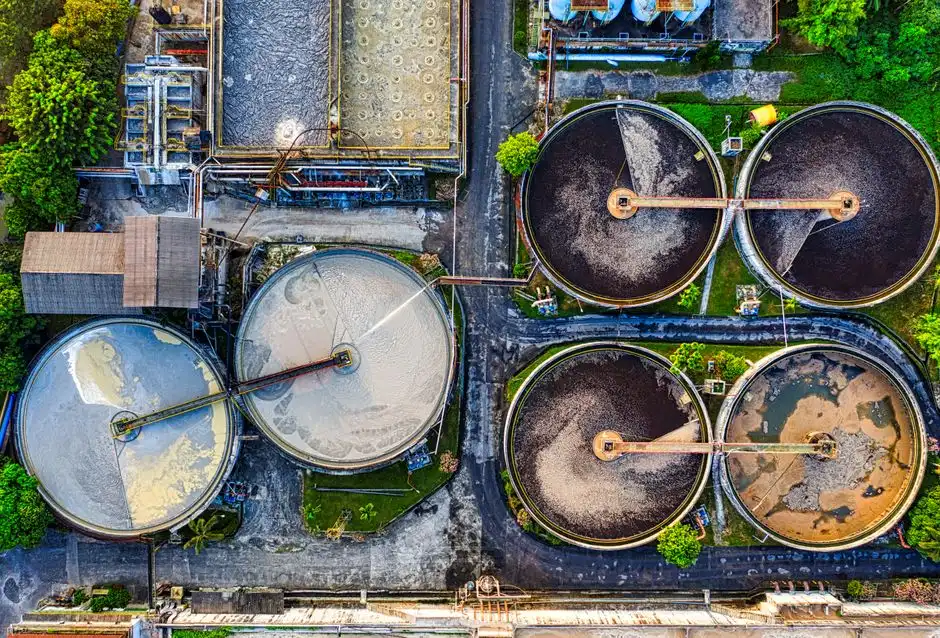
Pick a clarifier (lamella or API) when all four of the following hold: flow is under 100 gpm; free oil is the dominant contaminant with no measurable emulsified fraction; TSS is consistently below 300 mg/L; and the receiving authority will accept a downstream DAF polish step. A HydropureWater lamella clarifier sized for grit and free oil on a truck-rack wash stream is the right answer in that narrow case, and it wins on CAPEX and simplicity.
Pick a DAF when any of the following hold: TSS exceeds 500 mg/L on a routine basis; any emulsified oil is present in the influent (verify with a jar test, not visual sheen alone); the site is space-constrained and a WesTech 47'-6" x 8'-6" mobile trailer (or equivalent packaged skid) can be dropped into a Braintree marine-terminal loading bay without civil work; or a permanent unit is offline for maintenance and a mobile DAF must keep discharge compliant. A DAF system at 4–300 m³/h covers the entire 200–500 gpm bulk-terminal flow band with a single packaged unit.
The hybrid train is where most Braintree bulk terminals end up. The configuration that has held up across multiple 2024–2025 retrofits is API or lamella pre-separator for grit and free oil → DAF for emulsified oil and colloidal TSS → optional MBR or biological polish for BOD if the receiving authority requires it. Spectrum's published guidance reinforces a pilot-first rule: jar-test in the lab, then run a 4–8 week on-site pilot (typically a rental trailer DAF) before committing to a permanent unit. In 2026, that pilot-first path is the standard procurement sequence at every regional bulk terminal that has avoided an MWRA violation in the last 24 months.
2026 Equipment Sizing and ROI Snapshot for a 200–500 gpm Braintree Bulk Terminal
Reference case: 300 gpm combined flow with 1,000 mg/L TSS and 500 mg/L oil, drawn from stormwater + tank draw-down + truck-rack wash at a Braintree petroleum bulk terminal. A packaged DAF in the DAF Corp FC Maximizer 12–15 ft diameter band handles the duty in a single pass to under 50 ppm TSS and under 50 ppm oil (DAF Corp published performance on a 2,000 ppm feed). A lamella clarifier on the same stream would need an oversized footprint and still would not reach <100 mg/L oil on the emulsified fraction without a downstream DAF polish — the hybrid ends up costing more in total than a properly sized standalone DAF with chemical conditioning.
CAPEX comparison, 2026: a 300 gpm skid DAF with integrated chemical dosing skid, and a 300 gpm lamella clarifier followed by a polish DAF, both fall in the same broad band once civil work, polymer system, and sludge dewatering are included. The DAF-first configuration typically wins on installation labor because it is a single packaged unit. OPEX is where DAF carries higher ongoing cost: polymer at roughly $0.02–$0.08 per kg of TSS removed, saturated recycle pump energy at ~1–2 kWh per 1,000 gallons treated, and routine air-compressor maintenance. The clarifier side has lower energy intensity but pays for it in larger footprint and the cost of a downstream polish step.
The ROI calculation closes when MWRA oil & grease and TSS surcharges are included. Above the headworks limit, surcharges run several hundred dollars per 1,000 lb of pollutant, and a 300 gpm terminal at 1,000 mg/L TSS that misses its target for one quarter can absorb surcharges larger than the annual polymer cost of a properly run DAF. The decision is rarely about DAF vs clarifier OPEX in isolation; it is about avoided surcharges net of polymer and energy. For a Braintree petroleum bulk terminal, the DAF-first configuration with chemical conditioning and downstream plate and frame filter press sludge dewatering is the configuration that holds up under both the compliance stack and a procurement director's 3-year payback review. For context on how the same decision plays out in adjacent Gulf Coast markets, see the Beaumont petroleum bulk DAF vs clarifier guide and the Brazoria petroleum bulk buyer's guide; for a refining comparison under Subpart A, the Chalmette refining DAF vs clarifier guide is the relevant reference.
Frequently Asked Questions
What TSS removal can a DAF actually hit on a Braintree bulk terminal feed?
On a 2,000 ppm suspended-solids feed, a DAF Corporation FC Maximizer delivers 92–98% TSS removal, and an RC UniMax delivers 85–90%; both routinely produce effluent below 50 ppm TSS and, in polished applications, below 20 ppm (per DAF Corp published performance).
How fast can a mobile DAF be deployed to a Braintree site?
WesTech's mobile DAF clarifier is delivered and brought online within a single day on a prepared site; the standard trailer footprint is approximately 47'-6" x 8'-6", which fits a Braintree marine-terminal loading bay without permanent foundation work (per WesTech product documentation).
Which federal rule applies to a Braintree bulk terminal, and is DAF an acceptable substitute for an API separator?
40 CFR 435 Subpart D (Bulk Terminals) applies; Subpart A covers petroleum refining and is not the right benchmark for a bulk terminal. DAF is acceptable where the equipment spec demonstrates equivalent or better oil and TSS removal than the baseline API separator, which a properly sized and chemically conditioned DAF does on emulsified feeds.
What are the local MWRA limits a Braintree terminal must hit to avoid surcharges?
The MWRA Sewer Use Ordinance (2026 schedule) applies oil & grease and TSS surcharge thresholds above published headworks limits; the operational target that keeps a 200–500 gpm bulk terminal under the surcharge curve is <100 mg/L oil and <200 mg/L TSS — verify the current ordinance schedule with MWRA before final equipment selection.