Why Brazoria Petroleum Bulk Operators Are Re-Evaluating Clarifier Choice in 2026
Brazoria County, TX sits inside the Brazos River basin and within a short haul of the Houston Ship Channel, giving it one of the densest clusters of refineries, tank farms, and petrochemical bulk terminals in the United States. In 2026 those facilities are being squeezed on two fronts: tightening TCEQ pretreatment expectations under 30 TAC Chapter 305, and EPA Region 6 enforcement of oil & grease and TSS limits for industrial discharges to publicly owned treatment works (POTWs) and NPDES-permitted outfalls (per TCEQ 30 TAC Chapter 305). Several POTWs that accept petroleum bulk wastewater have already raised pretreatment surcharges on high-FOG and high-TSS loads, so a single quarter of excursions can erase the savings from a "cheaper" clarifier.
The core decision a 2026 CAPEX review has to answer is binary: does a dissolved air flotation (DAF) system outperform a conventional gravity clarifier — including high-rate lamella designs — for the specific emulsified-oil and TSS profile a Brazoria terminal actually produces? For most bulk petroleum streams the answer is yes, because DAF micro-bubbles (20–50 µm) attach to oil droplets and fine solids that gravity simply cannot settle in a reasonable footprint. A lamella clarifier still has a place on this site, but only when the influent has already been conditioned to low free oil and settleable solids.
Petroleum Bulk Wastewater Characteristics That Decide the DAF-vs-Clarifier Question
Petroleum bulk wastewater in Brazoria typically runs 100–2,000 mg/L TSS, 50–1,000 mg/L free oil, and 20–500 mg/L emulsified oil — these are engineering-typical bands for tank-farm draw-off, ballast, and product-changeover streams rather than refined numbers from a single source. What matters for technology selection is the emulsified fraction. Droplets below about 20 µm do not coalesce in a gravity clarifier; they ride straight through the lamella pack and end up in the effluent or re-emulsify further in biological treatment downstream. Micro-bubble flotation solves this because the bubble itself (30–50 µm per SigmaDAF, or 20–40 µm per DAF Corp's Micro Bubbler) is smaller than the oil droplet it attaches to, so the combined particle has positive buoyancy even when the droplet is far too small to settle.
Two site-specific conditions push the decision further toward DAF on the Gulf Coast. First, influent temperatures of 30–60°C reduce oil viscosity just enough to favor fine droplet formation over coalescence. Second, salinity from Gulf-coast makeup water suppresses droplet coalescence and lowers the practical settling velocity of emulsified streams below 2 m/h, which is well under the 20–40 m/h surface loading that a lamella clarifier is rated for (per the HydropureWater high-efficiency lamella clarifier product line). The dominant failure mode for a clarifier on petroleum streams is FOG accumulation at the skim weir, which then re-entrains downstream — the exact weakness WesTech calls out when recommending DAF for oil and grease streams.
| Parameter | Typical Brazoria Bulk Range | DAF Capability | Lamella Clarifier Capability |
|---|---|---|---|
| TSS | 100–2,000 mg/L | 85–98% removal (per DAF Corp) | 50–70% on settleable fraction only |
| Free oil | 50–1,000 mg/L | Captured by float | Skimmed, but FOG re-entrains at weir |
| Emulsified oil | 20–500 mg/L (droplets <20 µm) | Removed via 20–50 µm micro-bubbles | Passes through; not settleable |
| Temperature | 30–60°C | Tolerant | Reduces settling efficiency |
| Salinity (Gulf water) | Elevated chlorides | Requires 316SS option (per SigmaDAF) | Material compatibility per spec |
| Settleable solids | <2 m/h equivalent | N/A (floated, not settled) | Below 20–40 m/h lamella design point |
DAF vs. Clarifier: Head-to-Head Engineering Comparison
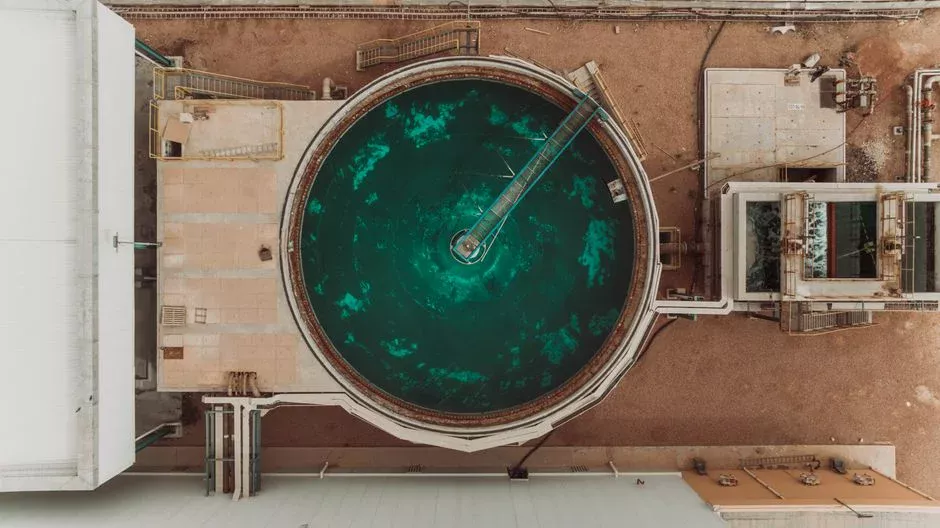
The honest head-to-head is not "DAF always wins" — it is "DAF wins on the parameters Brazoria bulk terminals actually have." DAF Corp's FC Maximizer delivers 92–98% TSS removal in a shallow circular tank using the zero-velocity concept, while the rectangular RC UniMax runs 85–90% on flows of 10–1,000 GPM. Both produce effluent below 20 ppm filterable solids and a thickened float of 2–4% consistency (per DAF Corp), which means downstream sludge handling is concentrated rather than dilute. The SigmaDAF FPAC, FPBC, and FPHF models cover small-to-medium flow with very high solids loads, low-to-medium loads with low-buoyancy particles, and high flow with low-to-large loads respectively; the FPHF specifically improves on lamella plate technology by combining cross-flow and countercurrent flow.
A conventional or lamella clarifier relies on gravity alone, which is why it can only remove the settleable fraction. WesTech notes that DAF's effectiveness for oil and grease streams depends on the bubble-particle attachment mechanism, and that coagulant or flocculant is often recommended to improve float separation. That same chemistry, applied to a lamella clarifier, gives a slightly clearer overflow but does not solve the emulsified-oil carryover problem. The real-world consequence is that a lamella clarifier on a Brazoria bulk stream typically needs a downstream polishing step (sand filter, cartridge, or a second-stage DAF) to hit a 100 mg/L oil or 200 mg/L TSS discharge target — and that second stage erases the CAPEX advantage the clarifier started with.
| Parameter | DAF (FC Maximizer / SigmaDAF COMPACT) | Lamella / Conventional Clarifier |
|---|---|---|
| Mechanism | 20–50 µm micro-bubble flotation (per SigmaDAF, DAF Corp) | Gravity settling on inclined plates |
| TSS removal | 92–98% (FC Maximizer); 85–90% (RC UniMax) | 50–70% on settleable solids only |
| Emulsified oil removal | Effective on droplets <20 µm | Poor; droplets pass through |
| FOG handling | Skimmed as float, 2–4% thickened sludge | Re-entrains at weir, dilute sludge |
| Footprint per 100 GPM | Compact skid; ~1/3 area of lamella | 1.5–2x larger tank area at 20–40 m/h loading |
| CAPEX band | Skid-mounted DAF; lower civil cost | Civil-built basin; higher civil cost |
| OPEX band | Saturator pump + coagulant/polymer | Lower power, higher downstream sludge cost |
| Flow surge tolerance | Good (mixing zone buffers) | Poor; clarifier upsets on loadout surges |
| Typical effluent | <20 ppm TSS, <50 ppm oil | 30–80 ppm TSS, FOG carryover common |
Sizing a DAF or Clarifier for a Brazoria Bulk Terminal: 2026 Specs
For a typical 200–500 GPM Brazoria bulk-terminal stream, the reference DAF configuration is DAF Corp's FC-150 Maximizer, rated for 500 GPM at 2,000 ppm TSS down to 50 ppm — a single skid that arrives preassembled with all ancillary piping, valves, controls, and wiring (per DAF Corp). Skid-mounted FC Maximizers span 48 GPM (6 ft diameter) to 450 GPM (15 ft diameter); above that you step to the full FC Maximizer line, which covers 10–11,000 GPM in 6–70 ft diameter tanks. The rectangular RC UniMax covers 10–1,000 GPM at 85–90% TSS removal where a circular layout is not practical.
For smaller or modular 2026 deployments, SigmaDAF's COMPACT DAF is a turnkey skid that ships with chemical conditioning, DAF clarifier, sensors, instruments, and a PLC panel: a single skid handles flows up to 66 GPM, and a modular two-skid configuration handles anything above that. For short-term or pilot work, WesTech's mobile DAF can be delivered and brought online within a single day on a 47'6"–51'7" x 8'6" trailer — a useful 2026 option for brownfield retrofits where the operator wants to validate performance before committing CAPEX. The equivalent lamella clarifier needs 1.5–2x the tank area to match DAF throughput at the same 20–40 m/h surface loading, which is often the deciding factor on space-constrained tank-farm pads.
| Model / Configuration | Flow Range | Footprint / Tank Size | Use Case |
|---|---|---|---|
| DAF Corp FC Maximizer (skid) | 48–450 GPM | 6–15 ft diameter skid | Preassembled bulk-terminal install |
| DAF Corp FC-150 reference | 500 GPM @ 2,000 → 50 ppm | Single skid, wired and piped | Typical 200–500 GPM Brazoria stream |
| DAF Corp FC Maximizer (full) | 10–11,000 GPM | 6–70 ft diameter tanks | Large refinery or terminal |
| DAF Corp RC UniMax | 10–1,000 GPM | Rectangular | Where circular layout is constrained |
| SigmaDAF COMPACT (single skid) | ≤66 GPM | Plug-and-play skid, PLC | Small bulk terminal or pilot |
| SigmaDAF COMPACT (two-skid) | >66 GPM modular | Two skids | Mid-scale, fast deployment |
| WesTech mobile DAF | Site-specific | 47'6"–51'7" x 8'6" trailer | Pilot, emergency, or short-term 2026 deployment |
| Lamella clarifier (equivalent) | Same GPM | 1.5–2x DAF tank area at 20–40 m/h | Only if oil <50 mg/L and solids settleable |
2026 Cost and Footprint Reality for Brazoria Projects
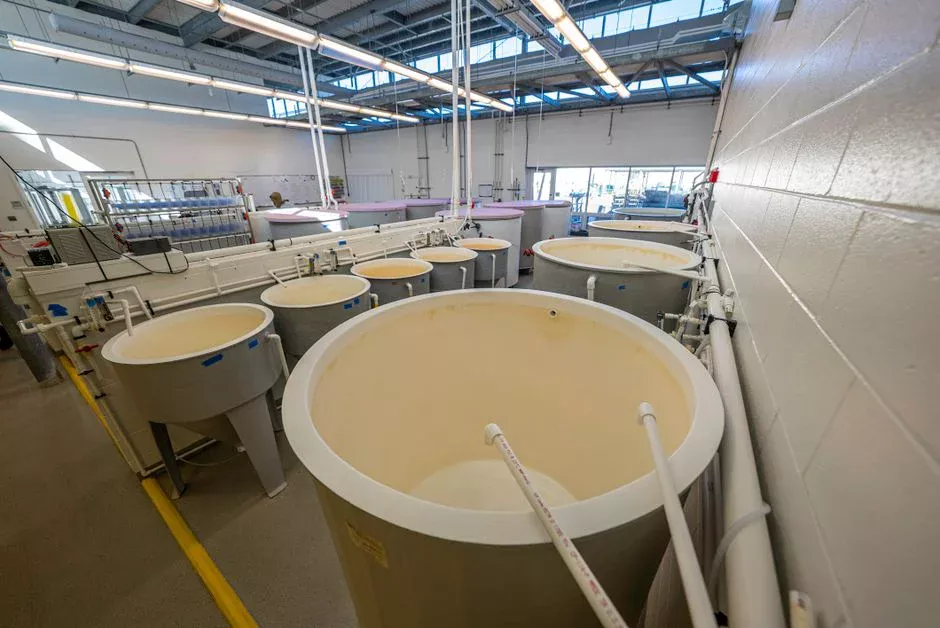
CAPEX bands in 2026 favor skid-mounted DAF over a civil-built lamella clarifier of equal capacity, because the DAF arrives preassembled with piping, valves, controls, and wiring, and the tank area is roughly one-third of an equivalent clarifier (per DAF Corp's skid-mounted FC Maximizer spec). A skid-mounted DAF also shortens the civil works schedule, which matters when a tank farm is trying to avoid a prolonged outage. OPEX is a real trade-off, not a free win: DAF uses saturator pump power plus coagulant and polymer, while a lamella clarifier uses less energy but pushes more dilute sludge downstream, which then costs more to thicken and haul. VanAire frames the DAF OPEX profile as lower chemical usage and better energy efficiency than biological treatment, with reduction in wastewater surcharges as the primary payback driver.
For short-term or pilot needs, a 2026 mobile DAF (WesTech) avoids CAPEX entirely and can be on-site within a day. The hidden cost to plan for on the Gulf Coast is chloride exposure: Brazoria sites that draw from saline makeup water or handle brackish ballast should specify 316 stainless steel construction, which SigmaDAF offers as an option and which raises material cost versus standard 304SS. The decision matrix for budget is straightforward — CAPEX per GPM of treatment capacity is lower for skid DAF; OPEX per pound of TSS removed is roughly comparable; footprint-driven civil savings usually tip the total installed cost in DAF's favor for any stream with more than 30 mg/L of emulsified oil. See the HydropureWater dissolved air flotation system for a representative 2026 skid-mounted DAF configuration.
| Cost Driver | Skid-Mounted DAF | Lamella / Conventional Clarifier |
|---|---|---|
| CAPEX (installed, equal capacity) | Lower — skid arrives preassembled | Higher — civil basin + plates + sludge scrapers |
| Civil works duration | Short | Long |
| Footprint | ~1/3 of clarifier area | 1.5–2x DAF area |
| OPEX — power | Saturator pump, recycle pump | Minimal (gravity) |
| OPEX — chemistry | Coagulant + polymer (per WesTech) | Polymer only, if any |
| OPEX — sludge handling | 2–4% thickened float, less volume | Dilute sludge, higher hauling cost |
| Surcharge exposure | Reduced (per VanAire) | Higher FOG carryover risk |
| Material upgrade (chloride sites) | 316SS option (per SigmaDAF) | Per clarifier spec |
| Pilot / short-term option | WesTech mobile DAF, deployed in a day | Not available |
How to Choose in 2026: A Brazoria Decision Framework
Use this six-step rule in your next capital meeting. Step 1: pull at least three representative influent samples and measure emulsified oil, not just total oil & grease. If emulsified oil is above 30 mg/L or the droplet size distribution sits below 20 µm, the answer is DAF — no clarifier, lamella or otherwise, will hit discharge targets without a polishing step. Step 2: review flow data from the last 12 months. Brazoria bulk terminals cycle hard between loadout, receipt, and idle, and a lamella clarifier upsets badly on surge while a DAF mixing zone buffers the swing. Step 3: confirm available pad space; a greenfield with a tight envelope almost always picks a skid-mounted DAF over a civil basin.
Step 4: check the discharge target. For TCEQ/POTW limits of 100 mg/L oil and 200 mg/L TSS, a properly sized DAF meets them directly; a lamella clarifier rarely does without polymer plus a polishing stage. Step 5: if the project is a brownfield retrofit, run a WesTech mobile DAF pilot in 2026 before committing CAPEX — you get real emulsified-oil removal data on your actual stream, not vendor projections. Step 6: plan the downstream train. Pair DAF with an API separator or corrugated plate interceptor (CPI) only when free oil exceeds 200 mg/L; below that, DAF is standalone and you avoid a second civil structure. For a 2026 CAPEX that has to hold up to TCEQ and EPA Region 6 scrutiny, the HydropureWater dissolved air flotation system covers the typical 100–500 GPM Brazoria terminal envelope. Operators already running a clarifier who are seeing FOG carryover should also review the 2026 petrochemical wastewater plant maintenance guide for retrofit sequencing, and compare against the 2026 DAF vs clarifier buyer's guide for chemicals plants if the site has a mixed chemical/petroleum feed.
Frequently Asked Questions
When does a lamella clarifier make sense over a DAF for Brazoria petroleum bulk wastewater?
A lamella clarifier is the right call only when free oil is already below 50 mg/L, solids are settleable, and the discharge target is modest. For any stream with more than 30 mg/L of emulsified oil or droplets under 20 µm, the 20–40 m/h surface loading of a lamella pack will not retain the fines and the unit will carry FOG to downstream biological treatment.
What removal efficiency can a DAF realistically hit on TSS for a petroleum bulk stream?
DAF Corp's FC Maximizer is rated at 92–98% TSS removal using the zero-velocity concept in a shallow circular tank, with effluent below 20 ppm of filterable solids and a thickened float at 2–4% consistency. The rectangular RC UniMax delivers 85–90% on flows of 10–1,000 GPM and is the right pick when a circular layout is not feasible.
What bubble size should the DAF system produce to capture emulsified oil?
SigmaDAF specifies 30–50 µm bubbles generated inside the DAF clarifier, while DAF Corp's Micro Bubbler generator produces consistent 20–40 µm bubbles with no coarse air. Both ranges sit below the typical 20 µm emulsified-oil droplet threshold, which is the physical reason micro-bubble flotation outperforms gravity on petroleum streams.
Can a mobile DAF be deployed on a Brazoria tank farm in 2026 without committing CAPEX?
Yes. WesTech's mobile DAF is built on a frac-tank-style trailer, measures 47'6"–51'7" x 8'6", and is typically delivered and brought online within a single day. It runs on plant power and standard piping connections with no permanent foundation, which makes it a clean 2026 pilot option before a CAPEX commitment.
How does TCEQ Chapter 305 factor into the DAF vs clarifier decision?
TCEQ 30 TAC Chapter 305 sets the consolidated pretreatment and effluent limits that drive oil & grease and TSS targets for industrial discharges in Texas, and EPA Region 6 enforces them. POTWs accepting petroleum bulk wastewater are raising pretreatment surcharges on high-FOG and high-TSS loads in 2026, so a technology that cannot reliably hit 100 mg/L oil or 200 mg/L TSS will cost more in surcharges than it saves in CAPEX.
Related Equipment
- HydropureWater high-efficiency lamella clarifier — specifications, capacity range, and technical data