
Why Dallas Chemical Factories Are Rethinking Primary Clarification in 2026
For Dallas-area chemical plants, 2026 is the year the primary-clarification question stops being theoretical. TCEQ Chapter 305 industrial pretreatment rules, enforced through TPDES permits and delegated to the Trinity River Authority and Dallas Water Utilities POTWs, now drive oil & grease daily-max limits as low as 100 mg/L, TSS 30-day averages in the 30–50 mg/L range, and a hard pH band of 6.0–9.0 standard units for any stream routed to a municipal sewer. Plants running resin reactors, solvent recovery, or coating lines produce exactly the contaminant profile these limits target: emulsified oils at 200–1,500 mg/L, FOG carryover from washwater, and heavy but settleable catalyst fines from specialty-chemical reactors.
Three stream profiles force the DAF-vs-clarifier conversation in 2026. (1) Resin and coating plants generate stable oil-in-water emulsions where droplet size sits below 50 µm — a regime where gravity settling is mechanically incapable of meeting discharge limits. (2) Specialty-chemical operators see heavy, settleable catalyst fines that respond to flocculation and gravity but foul a DAF float bed if sent there first. (3) High-TDS washwater with FOG carryover is the worst case: it has both fractions, and a single unit will underperform on whichever fraction it isn't designed for.
The premise of this guide: "clarifier versus DAF" is the wrong binary. The defensible 2026 answer for most Dallas chemical plants is both units, sequenced by contaminant fraction — clarifier for bulk settleables, DAF for emulsions and FOG, polymer conditioning between them.
How a DAF System Actually Treats Chemical Wastewater
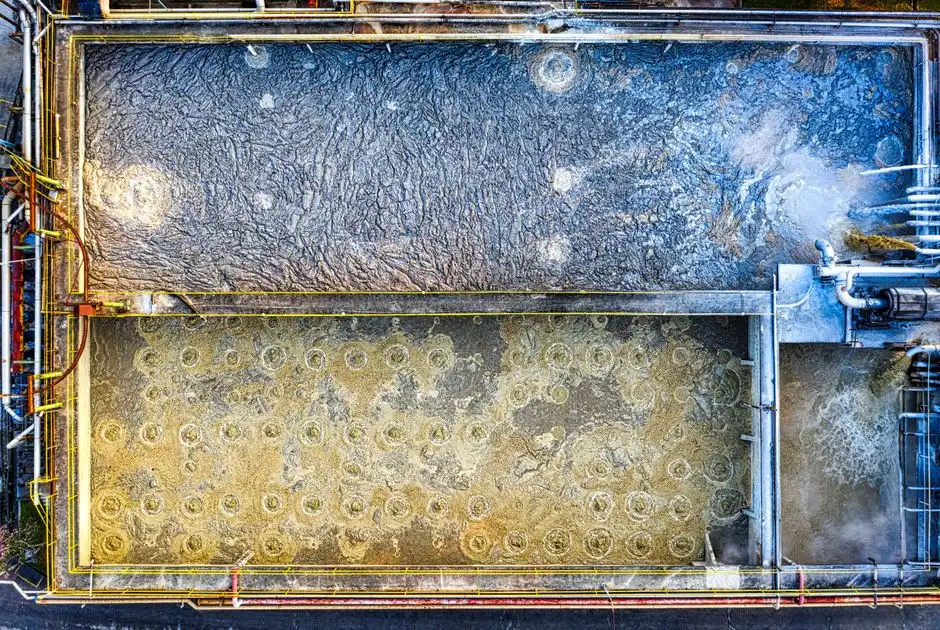
A DAF unit removes contaminants by attaching fine air bubbles to hydrophobic particles and floating the resulting agglomerate to the surface, where a skimmer sweeps it off. The standard configuration pressurizes a recycle stream at 60–80 psi (4–5.5 bar) and then depressurizes it through a needle valve back into the flotation cell, releasing dissolved air as micro-bubbles. PEWE's published specification puts bubble size at 20–30 µm using the Rogue RGT regenerative turbine, while SigmaDAF USA documents 30–50 µm bubbles in its standard DAF clarifiers — both ranges fall inside the 20–50 µm band that maximizes attachment efficiency for sub-100 µm oil droplets (per PEWE USA product literature, accessed 2026; SigmaDAF USA via Clearwater Industries, 2026-04).
The Rogue RGT design is worth noting for chemical plants specifically because it eliminates the compressed-air system entirely. On hazardous-area sites — where solvent vapors or Class I Division 1 boundaries complicate air-compressor placement — aspirating atmospheric air through a regenerative turbine sidesteps a real permit issue. Plants running acetone, MEK, or xylene wash streams should weigh this when reviewing DAF bids.
Quantified performance: DAF achieves 90% oil removal on chemical emulsions ("Fundamentals of Wastewater Flotation," Flotation Technology, 2010), 80–95% TSS removal when paired with polymer conditioning, and 60–85% FOG capture on industrial streams. The mechanism beats gravity settling on emulsions because bubble attachment bypasses Stokes' Law entirely — a 30 µm bubble rising at roughly 0.5 mm/s drags an attached oil droplet with it, regardless of the droplet's own settling velocity. A 10 µm oil droplet in water has a settling velocity so low that a clarifier would need many hours of HRT to capture it; a DAF does the same job in 15–30 minutes. The dissolved air flotation system is built around exactly this principle.
How a Lamella Clarifier Handles Chemical Plant Wastewater
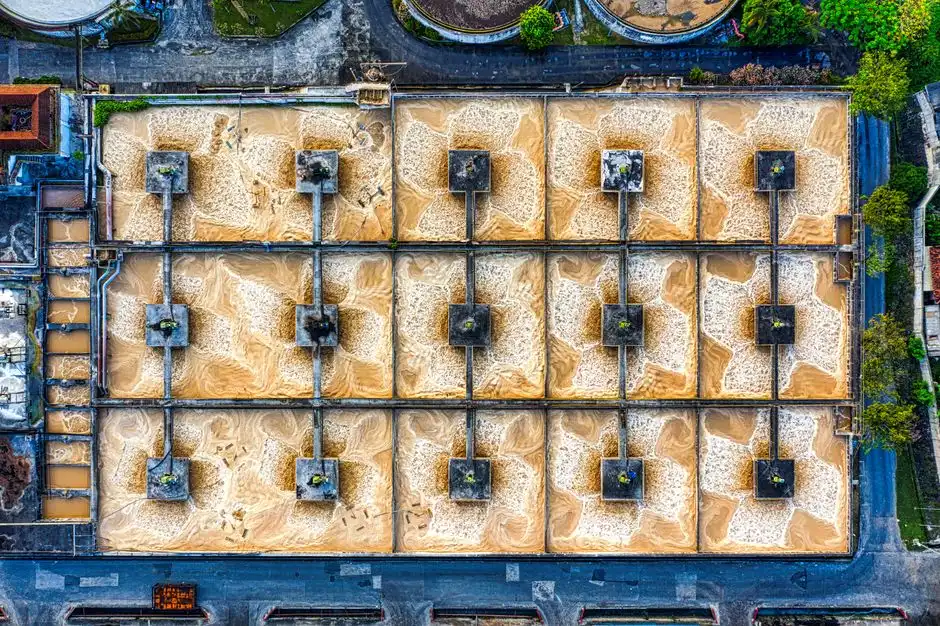
A lamella clarifier is a gravity settler with inclined plates stacked inside the tank. Wastewater flows upward between plates inclined at 55–60°, and particles slide down the plate face into a sludge hopper while clarified water exits over the top weirs. Effective settling area is the projected horizontal area of all plates combined, which is why a lamella unit achieves the same separation in a footprint 5–10× smaller than a conventional rectangular clarifier.
HydropureWater's high-efficiency sedimentation tank runs at 20–40 m³/m²·h surface loading rate and typically consumes 30% less polymer than a conventional clarifier treating the same stream, because the inclined plates provide quiescent settling zones that improve floc-bead formation (HydropureWater engineering data, 2026). HRT sits in the 1.5–3 hour range — long enough for settleable solids, short enough to be economically attractive.
Clarifiers excel where the contaminant is heavy, dense, and settleable. Metal hydroxide precipitates from pH-neutralization steps, calcium carbonate from caustic neutralization of acidic wastewater, sand and grit from process-floor washdown, and catalyst fines from specialty reactors all settle readily. Clarifiers fail on emulsified oils, low-density FOG, and light plastic or polymer fines — any stream where the particle's settling velocity is below the hydraulic overflow rate of the plate pack. For those streams, the math simply doesn't close. The high-efficiency lamella clarifier is the right call when the stream is settleable and the budget is tight; it's the wrong call when the discharge limit is driven by oil and grease.
DAF vs Clarifier: Side-by-Side Comparison for Chemical Applications
The table below is the single artifact to circulate to procurement, plant management, and TCEQ reviewers. Every number is a typical operating value, not a guaranteed bid figure — use it to frame vendor questions, not to replace them.
| Parameter | DAF | Lamella Clarifier |
|---|---|---|
| Removal mechanism | Micro-bubble flotation (20–50 µm bubbles) | Gravity settling on inclined plates (55–60°) |
| Typical TSS removal | 80–95% (with polymer) | 50–85% (depends on settleability) |
| FOG / oil removal | 60–85% FOG, 90%+ oil | 20–40% on emulsified streams |
| Footprint per 50 GPM (190 L/min) | 1.5–3 m² | 6–10 m² (incl. plate pack footprint) |
| HRT | 15–30 min | 1.5–3 h |
| Polymer consumption | 5–25 mg/L (cationic or anionic) | 2–10 mg/L (typically lower dose) |
| Sludge consistency | Float: 3–6% DS | Underflow: 1–3% DS |
| CAPEX per m³/h (2026 budgetary) | $25,000–$80,000 (skid, SS) | 40–60% of equivalent-flow DAF + civil works |
| OPEX driver | Recycle-pump power, polymer, pH trim | Polymer, sludge pumping, larger civil footprint |
| Select if… | FOG >100 mg/L, oil-in-water emulsion, TSS that won't settle, variable flow | Settleable TSS >500 mg/L, metal precipitates, steady flow, budget-constrained |
The sludge-consistency row matters for downstream cost. A DAF float at 4% dry solids sent to a plate-and-frame filter press yields 18–25% DS cake; a clarifier underflow at 2% DS yields the same cake but requires roughly twice the volume to be handled. Over a year, that gap shows up as polymer cost, hauling cost, and press runtime.
The 2026 Dallas Decision Rule: When DAF, When Clarifier, When Both
Use the four criteria below in order. Each is a hard yes/no against your influent data — if two criteria disagree, the higher-loaded one wins.
| Criterion | If YES → | If NO → |
|---|---|---|
| 1. FOG >150 mg/L or visible stable emulsion? | DAF first (or only) | Proceed to criterion 2 |
| 2. TSS >1,000 mg/L with heavy/settleable fraction? | Clarifier first for bulk removal, DAF as polish | Proceed to criterion 3 |
| 3. Flow variability >2:1 (peak/avg)? | DAF (15–30 min HRT absorbs shock) | Clarifier economics win on steady flow |
| 4. TCEQ O&G daily-max limit 100 mg/L? | DAF typically required; clarifier alone rarely holds <75 mg/L on chemical streams | Either unit viable against O&G |
For a Dallas-area resin or coating plant running 50–150 GPM with FOG at 300–800 mg/L, emulsion present, and TSS at 600–1,200 mg/L with some settleable catalyst fines, the decision is unambiguous: lamella clarifier for bulk settleables, DAF for the emulsion and FOG fraction, with a polymer-conditioning stage between them. The series configuration costs more in CAPEX than a single oversized DAF but produces a drier, more homogeneous sludge and lets each unit run inside its design window — which is what TCEQ reviewers want to see on a process-flow diagram.
For a steady-flow specialty-chemical plant with no emulsion and TSS dominated by metal hydroxides, criterion 4 may not apply and the lamella clarifier alone is defensible. The skill is reading the influent data, not picking a default unit.
2026 CAPEX and OPEX Reality Check for Dallas Chemical Plants
DAF CAPEX for skid-mounted stainless systems typically runs $25,000–$80,000 per m³/h of design capacity in 2026 — the range is wide because material selection (304SS vs 316SS vs polypropylene), instrumentation level, and aeration package drive most of the variance. Lamella clarifier CAPEX lands at roughly 40–60% of an equivalent-flow DAF, but the civil works and footprint often erase that gap once the concrete pad and structural steel are priced in.
OPEX is where the comparison gets sharper. Polymer cost is in the $2–4 per kg range for cationic polyacrylamide in 2026; DAF doses run 5–25 mg/L while lamella doses run 2–10 mg/L, so the absolute polymer spend is comparable at moderate loads. Sodium hydroxide for pH trim — usually 1–3 kg per m³ on chemical streams — is similar across both units. Power draw diverges: the DAF recycle pump typically pulls 2–5 kW per m³/h treated, while the clarifier's sludge recirculation pump pulls less but runs longer. Sludge hauling is the line item most often underestimated: DAF float at 4–5% DS hauled at $80–150 per wet ton is roughly half the annual cost of clarifier underflow at 1.5–2% DS hauled at the same rate, for the same mass of dry solids removed. Dewatering both streams on a plate and frame filter press normalizes them to 18–25% DS cake, but the press runtime halves when fed DAF float. Pair the clarifier or DAF with an automatic polymer and pH dosing skid to keep reagent costs and discharge variance in check.
Sizing a DAF for a Dallas Chemical Plant: What to Send Your Vendor
Before requesting a quote, gather eight data points: design flow (GPM or m³/h), peak hourly flow, influent TSS (mg/L), influent FOG (mg/L), influent oil-in-water (mg/L), pH range, operating temperature (°C), and available footprint (m²). Add discharge limits — both your POTW's local limits and any TCEQ-specific conditions on your TPDES permit — and you've got the minimum dataset a vendor needs to size the unit and select materials.
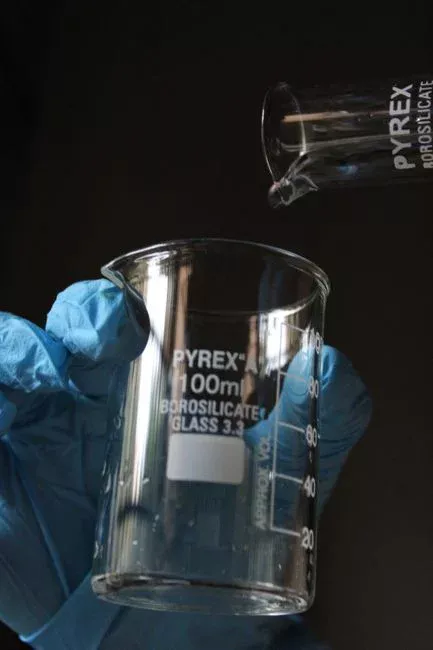
The dissolved air flotation system covers 4–300 m³/h across 13 standard models; most Dallas chemical plants fall in the DAF-5 to DAF-50 range. Material selection matters on corrosive streams: 304SS handles most coating and resin washwater, 316SS is appropriate for chloride-laden or solvent-rich streams, and polypropylene is the right call on aggressive pH swings or HF-trace streams. Vendors with laboratory capability — including the joint-test approach used by established U.S. flotation suppliers — can run a jar test on your actual wastewater and return a measured removal curve, which is a stronger basis for sizing than a generic loading-rate assumption. Send the data, ask for the test report, and compare it against your discharge limits before signing a PO.
Frequently Asked Questions
Can a DAF replace a clarifier entirely in a chemical plant?
Only if the influent has no settleable heavy solids. When TSS includes metal hydroxide precipitates, sand, or dense catalyst fines above roughly 500 mg/L, sending everything to a DAF overloads the float bed, drives sludge consistency below 2% DS, and pushes downstream dewatering costs up sharply. The defensible 2026 configuration for mixed streams is series, not substitution.
What bubble size works best for chemical emulsions?
20–50 µm, based on published data from PEWE USA (20–30 µm with the Rogue RGT regenerative turbine) and SigmaDAF USA (30–50 µm in standard DAF clarifiers). Bubbles in this range attach efficiently to sub-100 µm oil droplets and rise fast enough to keep HRT in the 15–30 minute window.
How does TCEQ regulate chemical plant DAF effluent in 2026?
Under TPDES industrial pretreatment rules (30 TAC Chapter 305, Subchapter F), chemical plants discharging to a POTW must meet the local limits set by their receiving utility — typically Trinity River Authority or Dallas Water Utilities — including TSS 30-day average, oil & grease daily max (commonly 100 mg/L), and pH 6.0–9.0. The DAF effluent itself isn't separately regulated; what matters is whether it lets the combined discharge stream meet the POTW's local limits. TCEQ reviews the process flow diagram and the unit's design basis when the permit comes up for renewal.
Is DAF sludge hazardous for chemical plants?
It depends on the influent. If the wastewater contains listed solvents, heavy metals, or RCRA-characteristic constituents, the float typically fails TCLP and must be handled as hazardous waste. Most resin and coating plants route the float through a plate-and-frame press for dewatering, then send the cake to a Class I industrial landfill or a fuel-blending program depending on the TCLP result. Testing on your actual stream beats assuming.
How often does a chemical-plant DAF need maintenance?
Daily: skimmer blade and weir inspection, surface observation for breakthrough. Quarterly: recycle pump seal and bearing service, pressure-gauge calibration, polymer pump tubing replacement. Annual: aeration manifold decalcification (especially on hard-water supplies), whitewater-saturation verification, and a full skimmer-drive service. Plants running 24/7 typically budget 8–12 hours of monthly maintenance labor per DAF unit.