Why a Wilmerding Petroleum Plant Cannot Afford a Pretreatment Miss in 2026
A Wilmerding-area petroleum plant lives one sulfide slug away from a 30-day cure letter, and in 2026 the distance is shorter than it has been in a decade. Three pressures are converging on the Turtle Creek → ALCOSAN → Monongahela receiving chain: the EPA's 2024–2026 National Pretreatment Program (NPPP) review cycle, which has lifted the audit tempo at Significant Industrial User (SIU) accounts; ALCOSAN's headworks capacity constraints, which are forcing Allegheny County control authorities to tighten locally-issued numerical limits rather than relax them; and the broader U.S. industrial water-scarcity pressure documented in the ACS ES&T Engineering 2021 review, which means refineries are now expected to maximize reuse while still clearing the sewer bar. The legal pivot is the receiving POTW's effluent quality, not what the plant thinks it is sending. Under 40 CFR 403.8(b)(4) and the SIU permit language, a single missed report or a slug of high-pH spent caustic that disturbs the POTW's biomass escalates through a predictable chain: Notice of Violation → 30-day cure window → Significant Noncompliance (SNC) finding → administrative order, surcharge, or permit termination. The 24-hour interference reporting window is short, the documentation standard is unforgiving, and the categorical anchor sitting on top of the federal floor is 40 CFR Part 419 (petroleum refining). Compliance is won or lost at the basis-of-design step, not after the equipment is on the pad.
The Regulatory Stack a Wilmerding Refinery Actually Discharges Under
The rule stack a Wilmerding discharger is measured against runs in a fixed order, and each layer can be the binding constraint. The Clean Water Act of 1972 (33 U.S.C. § 1251 et seq.) is the statutory ceiling. Under it, EPA's General Pretreatment Regulations at 40 CFR Part 403 impose the floor: 40 CFR 403.5(a) is the general prohibition against any discharge that causes pass-through or interference, and it applies whether or not a local control mechanism has been issued (per S1). On top of the general prohibition sit numerical categorical standards; for a petroleum refinery that is 40 CFR Part 419, which sets technology-based effluent limits for refinery process wastewater. Pass-through, defined at 40 CFR 403.3(p), is a discharge that exits the POTW into waters of the U.S. and, alone or with other sources, is a cause of a violation of the POTW's NPDES permit. Interference, defined at 40 CFR 403.3(k), is a discharge that inhibits or disrupts the POTW, its treatment processes, or its sludge use/disposal and therefore is a cause of an NPDES or biosolids violation (per S4). Pennsylvania DEP Chapter 92a (industrial waste management) is the state overlay, and ALCOSAN's control mechanism — the SIU discharge permit — is the local layer that is routinely more stringent than the federal categorical numbers because the control authority has to protect its own NPDES permit and biosolids program (per S1). The local numerical limit printed on a Wilmerding SIU permit is derived using EPA's Maximum Allowable Headworks Loading (MAHL) method, which converts NPDES limits, state water quality standards, Part 503 biosolids criteria, and worker/ecosystem protection factors into a Maximum Allowable Industrial Loading (MAIL) allocated to each IU (per the 2020 St. Joseph, MO TBLL evaluation by Black & Veatch). When in doubt, the lowest of the four bars — federal prohibition, federal categorical, state Chapter 92a, ALCOSAN local limit — is the one the plant must clear.
What a Wilmerding Refinery Sends Down the Sewer — Streams and Pollutants
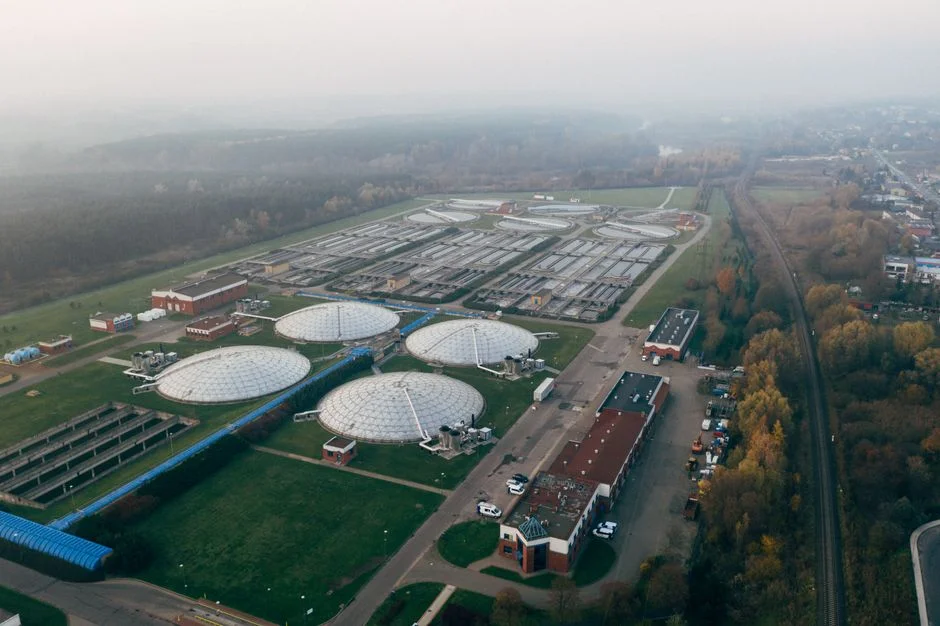
Refinery process wastewater is a blend of six streams, each with a different dominant pollutant (per S1). Desalter brine carries emulsified oil, salts, and trace metals. Spent caustic carries sulfides and phenols at high pH — the textbook interference trigger. Sour-water stripper bottoms carry dissolved H₂S and ammonia. Tank-draw contributes free oil and bottom sludge. Loading-rack and ballast water contribute intermittent slugs of free and emulsified oil. Oily utility water (cooler blowdown, sample-station drains) rounds out the list. The pollutant mix the POTW actually sees is set by how these streams are sewered — segregated, combined, or batched — and by the slug-prevention discipline at the unit. The slug sources that drive the 24-hour reporting obligation are predictable: spent-caustic pushes, desalter upsets, tank transitions, and coalescer dumps. Sulfides and phenols are the most common interference triggers because both are toxic to nitrifying bacteria and to the heterotrophs running a POTW's activated-sludge basin; a slug of either can knock a municipal biobasin off its perch in hours (per S1). A single-technology approach fails because the droplet-size distribution and the pollutant speciation are not uniform — free oil, emulsified oil, dissolved H₂S, and high-pH phenol liquor each need a different unit operation to come out.
The Five-Stage Treatment Train for 40 CFR 403 Compliance
US refiners run a five-stage train between the process sewer and the POTW's manhole; the order is non-negotiable. Stage 1 — API separator or corrugated-plate interceptor (CPI). Free oil is removed by gravity because it is the cheapest and most forgiving operation, and because everything downstream (pumps, membranes, sensors) suffers if free oil is not taken out first. A well-operated API typically leaves 100–200 mg/L oil & grease in the water phase; a CPI hits a similar band in a much smaller footprint, with plate spacing in the 1–2 inch range, ~45° corrugation, and ≥30 min residence at peak flow (per S1, S3). Stage 2 — Dissolved air flotation (DAF). Micro-bubble flotation strips the emulsified oil, FOG, and colloidal TSS that the API cannot catch, and brings oil & grease down to roughly 15–30 mg/L. Operating air-to-solids ratios sit in the 0.02–0.06 range, hydraulic retention is 15–30 minutes, and saturator recycle rates run 20–50% of forward flow (per S1). A refinery-grade DAF unit (4–300 m³/h) is typically specified in this duty with a 20–30% safety margin on hydraulic and air-to-solids loading. The DAF outlet has to clear the 50–100 mg/L POTW oil & grease ceiling on its own, with margin, before the biological stage is asked to clean up oil. Stage 3 — equalization and neutralization. Flow and pH swings from spent-caustic pushes, desalter upsets, and tank transitions are smoothed in an EQ basin sized for 8–24 hours of hydraulic retention, and pH is adjusted to 6–9 via a PLC-controlled coagulant and pH dosing skid before the biological stage. This is the single most important control point for preventing interference events (per S1). Stage 4 — biological polishing. An MBBR or MBR reduces phenols, sulfides, benzene, and ammonia-nitrogen. MBBRs are robust to load swings and tolerate the 200–800 mg/L COD that survives the front of the train; MBRs add a 0.1 μm PVDF MBR flat-sheet module that holds biomass at 8,000–12,000 mg/L and produces a polished effluent with <5 mg/L TSS and <1 NTU turbidity, in roughly 60% of the footprint an equivalent CAS basin would need — which is why MBR is the default for space-constrained Wilmerding retrofits (per S1). The full biological reactor package is documented in the MBR integrated wastewater treatment skid. Stage 5 — polishing and monitoring. A multimedia filter on the polishing step catches any TSS breakthrough, a fluorescence-based online oil-in-water analyzer alarms on a 10–20 mg/L setpoint, and pH/conductivity probes feed the control room. Every stage maps to either a pass-through risk (oil, TSS, BTEX, ammonia) or an interference risk (sulfides, phenols, pH swings, slug flows) defined in 40 CFR Part 403.
Wilmerding Pretreatment Limits vs. Train Performance — Integrated Parameter Table

The table below puts every number a Wilmerding compliance engineer needs on one screen: the refinery-side influent band, the ALCOSAN-typical local limit a Wilmerding plant will see, the stage that does the primary removal, and the analytical method that proves compliance on the DMR.
| Pollutant | Refinery influent band | Wilmerding / ALCOSAN-typical local limit | Primary removal stage | Analytical method |
|---|---|---|---|---|
| Oil & Grease (HEM) | 50–500 mg/L | 50–100 mg/L daily max | DAF + multimedia filter | EPA Method 1664A (HEM, n-hexane) |
| Total Suspended Solids | 100–500 mg/L | ~250 mg/L daily max | DAF + multimedia filter | SM 2540D |
| Sulfides (total / dissolved) | 5–50 mg/L | 1–10 mg/L daily max | Equalization + biological (sulfide oxidation) | Methylene Blue (SM 4500-S²⁻ D) |
| Phenols | 5–50 mg/L | 0.5–5 mg/L daily max | Biological oxidation (MBBR/MBR) | EPA Method 420.1 |
| Ammonia-N | 10–100 mg/L | 10–30 mg/L daily max | MBBR / MBR nitrification | EPA Method 350.1 |
| BTEX | 0.1–1 mg/L | Quarterly compliance, site-specific | Air stripping / biological oxidation / GAC | EPA Method 624 (GC/MS) |
| pH | 2–12 (swing) | 6–9 (instantaneous) | Equalization + online trim, sewer shutoff interlock | Online probe, calibrated daily |
| Hexavalent Chromium | 0.05–1 mg/L | Quarterly metals, site-specific | Reduction to Cr(III) + chemical precipitation | EPA Method 218.7 |
Engineering note (per S1): for tight-footprint Wilmerding retrofits, the polishing step in the last four rows is increasingly the MBR flat-sheet module (0.1 μm PVDF), used as the final barrier before the sewer rather than as the sole biological stage. The role of the MBR here is containment of biomass and solids, not a free-standing removal claim. The specific number on any permit is set by the local control authority and can be more stringent than 40 CFR Part 403 alone — treat the values above as engineering bands, not permit language.
The Documentation Defense — How a Wilmerding Plant Wins a 40 CFR 403 Audit
Equipment decisions close the permit, but documentation wins the audit. A refinery's pass-through/interference defense runs through five repeatable steps (per S1, S3). Step 1 — secure SIU classification and the ALCOSAN control mechanism. The control mechanism lists the local numerical limits, the monitoring schedule, and the reporting cadence the refinery will be measured against. Until that document is in hand, the refinery is still on the hook under 40 CFR 403.5(a) but without a defined sampling schedule. Step 2 — run the self-monitoring cadence most ALCOSAN SIU permits expect: daily free-oil inspection at the outlet weir, weekly TSS grab, monthly HEM composite by EPA Method 1664A, and a 24-hour flow-proportional composite for BTEX/TPH where the local limit is non-zero. Step 3 — keep a written, current, and trained-out slug-control plan per 40 CFR 403.8(b)(4) covering loading racks, tank transitions, and batch discharges; the plan must define what counts as a slug, what the refinery will do to contain it, and how it will notify the POTW. As a rule of thumb, any discharge that could cause interference must be reported within 24 hours. Step 4 — when a slug escapes, notify the POTW, PaDEP, and the relevant hazardous-waste authorities inside the EPA-prescribed window and follow up with a written report describing the cause, the corrective action, and the revised prevention measures; the most common root cause in consent decrees is a slug-control plan that existed on paper but was not followed. Step 5 — keep auditable BMPs, the SIU-restricted chemical inventory, operator training records, chain-of-custody for every composite sample, and calibration logs for the online analyzers. The paper trail is what turns a "no pass-through" claim into a defensible one — and it is what a Wilmerding pretreatment coordinator will be asked to produce first when ALCOSAN or PaDEP walks in. Engineers building the basis-of-design for a new train can compare the equipment trade-offs in the DAF vs clarifier buyer's guide, and the regional pretreatment context for adjacent basins in the Trapper Creek mining pretreatment guide and the Saint Clair EV/auto pretreatment guide.
Frequently Asked Questions
What local limits does ALCOSAN typically set for a Wilmerding-area petroleum SIU?
ALCOSAN-issued local limits on a Wilmerding SIU permit are derived using EPA's MAHL method and are routinely tighter than the 40 CFR Part 419 categorical numbers. Typical 2026 ceilings fall at 50–100 mg/L for oil & grease (HEM by Method 1664A), ~250 mg/L for TSS, 1–10 mg/L for sulfides, 0.5–5 mg/L for phenols, and 10–30 mg/L for ammonia-N, with BTEX, hexavalent chromium, and pH added as site-specific parameters (per S1, S3).
Is a DAF alone enough to meet 40 CFR 403 pretreatment limits at a refinery?
No, in most cases. Free oil from coalescer dumps and tank drops blankets DAF micro-bubbles and crashes the air-to-solids ratio; a DAF alone fails under slug loads. A CPI or API primary stage ahead of the DAF, plus equalization and biological polishing, is the standard refining train (per S1, S3).
What triggers Significant Noncompliance (SNC) under EPA's National Pretreatment Program?
SNC is triggered by any of the following: violation of a numerical limit by ≥1.5× for any single day, violation of a numerical limit for more than 5% of measurement days in a six-month period, or failure to provide required reports within 30 days of the due date. An SNC finding can lead to enforcement action, surcharges, or permit termination (per S3).
What is the difference between HEM and standard oil & grease on a refinery permit?
EPA Method 1664A uses n-hexane extraction and is reported as Hexane Extractable Material (HEM), which is the federally used surrogate for fats, oils, and grease under 40 CFR § 401.16. HEM is the parameter most U.S. POTW permits cite as "O&G," and it is the number that appears on the DMR (per S3).
What is the 24-hour interference reporting obligation under 40 CFR 403?
Under 40 CFR 403.8(b)(4) and the SIU permit, any discharge that could cause interference at the POTW must be reported within 24 hours, followed by a written report describing the cause, the corrective action, and the prevention measures. Slug plans that exist on paper but were not followed are the most common root cause in consent decrees (per S1).