The Three-Layer Federal Framework That Governs Every EV/Auto Discharge Near Saint Clair
EV and auto assembly plants near Saint Clair meet sewer pretreatment limits by running a five-stage on-site train — rotary bar screen, equalization (4–8 h design flow), oil/water separation with DAF (FOG <25 mg/L, TSS <60 mg/L), PLC-controlled chemical precipitation for dissolved metals, and a lamella clarifier with multi-media polish — designed to beat the stricter of 40 CFR Part 433 (metal finishing) and 40 CFR Part 467 (battery manufacturing) daily maximums, plus the St. Clair WWTF local cap of 1–3 mg/L total metals and 150 mg/L FOG under 40 CFR Part 403.
40 CFR Part 403, the General Pretreatment Regulations, is the federal umbrella that authorizes a publicly owned treatment works (POTW) to reject any industrial waste stream strong enough to damage the plant, the receiving waters, the workforce, or the biosolids market. Per the ACWA fact sheet (2026-08), Part 403 has four statutory objectives — protect the POTW from interference, protect the nation's waters from pass-through pollutants, protect collection-system and POTW workers from hazardous exposure, and protect the beneficial reuse of biosolids. Any one of those four can drive a categorical limit, which is why a single number on a discharge report is often backed by three or four independent regulatory hooks.
On top of Part 403 sit the categorical standards. 40 CFR Part 433 (Metal Finishing) governs body-in-white phosphating, zinc-nickel plating, and any line that rinses or drags out heavy metals — the workhorse rule for the conventional assembly plant. Part 433 is subcategorized (three-stage phosphate, zinc phosphate, zinc-nickel, electroless nickel), and each subcategory reports different daily maximums and monthly averages on the categorical tables. 40 CFR Part 467 (Battery Manufacturing) governs the EV side: cell coating, electrode rinse, and electrolyte washwater that carry cobalt, nickel, and lithium residues. Because the gigafactory floor typically sits next to the body shop, most EV plants in 2026 are subject to both sets of limits and design to the stricter of the two on every parameter.
Why the Saint Clair Local Control Authority Sets the Real Design Numbers
Categorical daily maximums are not the binding number on the discharge report — the local cap is — and the City of St. Clair WWTF is the proof. Missouri State Operating Permit MO-0099465 (St. Clair WWTF, Happy Sock Creek, HUC 07140103-0404, direct discharge) carries a fact-sheet addendum documenting that the City's pretreatment program modification ended May 30, 2022, with the City authorized to implement updated local limits, an enforcement response plan, and Division 2, Wastewater Pretreatment Regulations (per MO-0099465 fact sheet, 2022).
Two changes in that modification drive design more than the categorical numbers do. First, Section 24-134(a)(17) moved the FOG local limit from 100 mg/L to 150 mg/L measured as total hexane extractable materials (HEM) by EPA-approved methods — looser on oil and grease, but still tight enough that an OWS and DAF are mandatory upstream of any sewer connection. Second, the City eliminated uniform concentration-based local limits in Section 24-137 and replaced them with prohibited mass limits — i.e., maximum allowable industrial loadings (MAILs) in Section 24-134(c). Metals caps are therefore set on a mass basis, and the design must hold both the local mass ceiling and the categorical daily-maximum concentration simultaneously.
Biosolids reuse drives the strictest local numbers. The fourth statutory objective of 40 CFR Part 403 is to protect the beneficial reuse of biosolids as soil conditioner and fertilizer, and that objective routinely pulls total-metals caps down to 1–3 mg/L at the discharge sampling point — tighter than most 40 CFR Part 433 daily maximums on individual metals like zinc or nickel. The Saint Clair DMR record confirms why the local cap matters: the MO-0099465 inspection cited ammonia exceedances in 4/18, 10/18, 5/19, and 10/19, oil and grease in 5/19, and copper in 3rd/4th Quarter 2017, 3rd Quarter 2018, and 1st/3rd Quarter 2019. A categorical-compliant plant that misses the local MAIL still triggers a Notice of Violation.
Mapping Each Process Stream to Its Rule and Its Pollutant Load
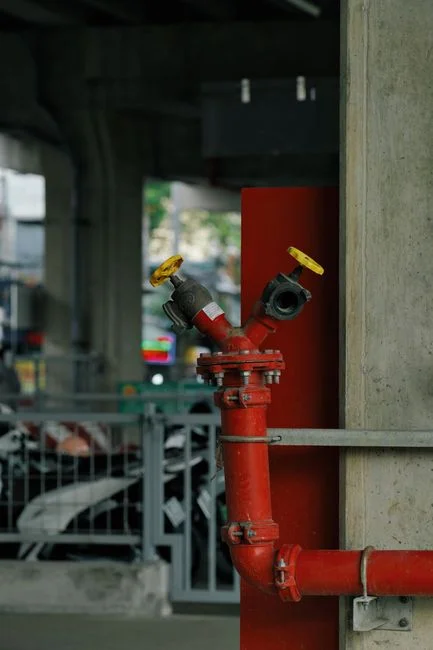
Trace any line on the plant floor back to the right rule before scoping the unit operation. Stamping and body-in-white generate lubricating oils, drawing compounds, tramp grease, and iron fines from blanking. The stream is high in FOG and TSS but low in dissolved metals; it routes first through a rotary mechanical bar screen for headworks protection and then to oil/water separation, and discharge from this line rarely drives a categorical limit on its own. Slug flows from stamping will, however, overwhelm downstream equalization if the screen and OWS are undersized.
Phosphate and nickel pretreatment (immersion and spray) drives the 40 CFR Part 433 daily maximums. Zinc-phosphate, zinc-nickel, and electroless nickel baths drag out zinc, nickel, phosphate, and TSS at concentrations the categorical tables were written to address. Because the same line may switch between subcategories depending on model mix, the active subcategory — and the applicable number — can change shift-to-shift, and the operating record must reflect that.
E-coat and paint shop generates an ultrafiltrate recirculation loop plus rinse water carrying paint solids and solvents. Flow is intermittent — tied to rack entry and exit — and pH swings 9–12 inside a single batch, which is why this line must feed the equalization basin first. Solvent-bearing washwater from spray guns and booth purge is segregated as hazardous waste unless the POTW has a specific solvent-bearing waste acceptance program. Machining and battery cell assembly produces water-based coolant emulsions plus electrode-coating rinses carrying cobalt, nickel, and lithium residues — the pollutant set 40 CFR Part 467 was written to address. The two streams are often blended at the plant boundary for treatment, but their metals profiles are different, so they should be metered separately and dosed independently at the chemistry step.
Categorical Daily Max vs Saint Clair Local Limit: A Parameter Table
The table below contrasts the typical categorical numbers against the Saint Clair local cap so the design engineer can argue which value actually drives sizing in a permit meeting. The "Governing Rule" column tells the operating-record owner which subcategory to cite on the day of each sample.
| Parameter | Typical Influent Range (mg/L unless noted) | 40 CFR Part 433 Daily Max (Metal Finishing) | 40 CFR Part 467 / Local | St. Clair POTW Local Cap |
|---|---|---|---|---|
| Zinc (Zn) | 10–80 | 1.48–2.61 (subcategory-dependent) | Local site-specific | 1–3 mg/L total metals ceiling |
| Nickel (Ni) | 5–40 | 2.38–3.98 | Local site-specific | 1–3 mg/L total metals ceiling |
| Lead (Pb) | 1–10 | 0.43–0.69 | Local site-specific | 1–3 mg/L total metals ceiling |
| Copper (Cu) | 1–15 | 2.07–3.38 | Local site-specific | 1–3 mg/L total metals ceiling (per MO-0099465 DMR exceedances Q3/Q4 2017, Q3 2018, Q1/Q3 2019) |
| Total Chromium | 1–20 | 0.65–2.77 | Local site-specific | 1–3 mg/L total metals ceiling |
| TSS | 100–800 | 31–60 (monthly avg) | Local site-specific | Site-specific POTW cap |
| O&G / FOG | 50–500 | Categorical per subcategory | Local site-specific | 150 mg/L (per Section 24-134(a)(17), HEM method) |
| pH | 1–13 (by stream) | 6.0–9.0 standard range | 6.0–9.0 standard range | 6.0–9.0 standard range |
Two points on this table. First, the local Saint Clair cap on total metals — typically 1–3 mg/L — routinely beats the Part 433 daily maximum on individual parameters, and a categorical-compliant plant that exceeds the local MAIL still receives a Notice of Violation. Second, Part 433 is subcategorized: a three-stage phosphate line and a zinc-nickel line report different daily maximums and monthly averages, so the operating record must reflect the active subcategory on the day of each sample.
The Five-Stage Treatment Train, in Hydraulic Order
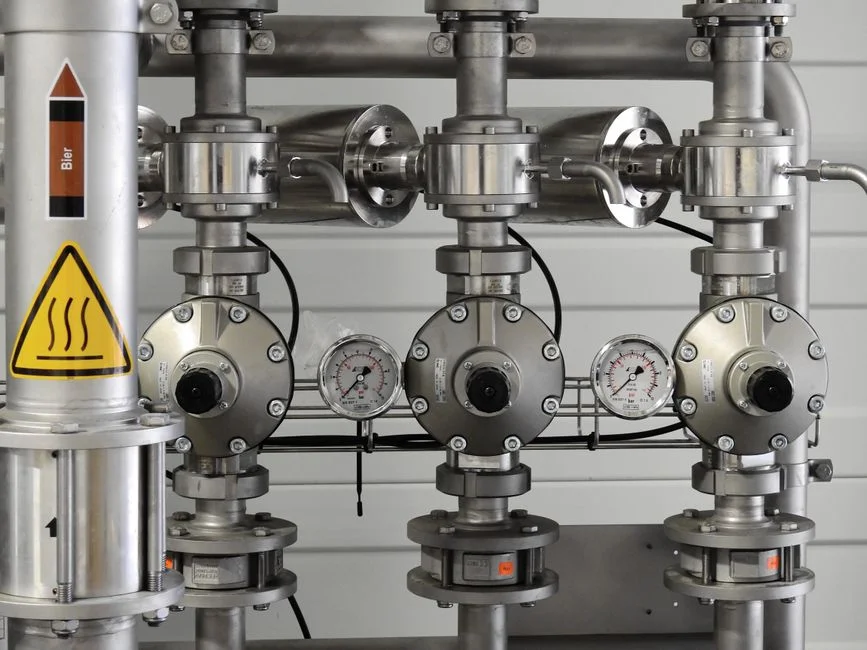
Equipment selection and sizing vary with flow, but the sequence does not — each step depends on the prior step's effluent quality. The five stages below are listed in the order water actually moves through the plant.
| Stage | Unit Operation | Target | Design Notes |
|---|---|---|---|
| 1 | Rotary bar screen + equalization basin | Remove rags, weld wire, large solids; absorb e-coat slug | EQ sized 4–8 h at design flow; 2–3 basin mixers sized for 1.0–1.5 ft/s floor velocity |
| 2 | Corrugated-plate OWS + DAF system for emulsified oil and TSS removal | FOG <25 mg/L; TSS <60 mg/L | DAF air-to-solids ratio 0.005–0.015 lb air/lb TSS; float to sludge holding |
| 3 | Chemical precipitation with PLC-controlled chemical dosing skid | Dissolved Zn, Ni, Cr, Pb, Co to local cap (1–3 mg/L total metals) | Caustic/acid plus coagulant; tied to flow signal; sulfide or hydroxide precipitation per metal |
| 4 | Lamella clarifier for metals precipitation polishing + multi-media filter for residual TSS polishing; optional on-site chlorine dioxide generator | TSS <30 mg/L; meet residual disinfection if required | Lamella plate spacing 50–80 mm; multimedia sand/anthracite/garnet 1.0–1.5 m bed depth |
| 5 | Sludge holding tank + plate-and-frame filter press for sludge dewatering | Cake at 30–40% dry solids; filtrate returned to head of plant | Press cycle 60–120 min; off-site disposal as non-hazardous where metal contamination allows |
Stage 1 is a rotary mechanical bar screen for headworks protection followed by an equalization basin sized to at least one full shift's slug — typically 4–8 hours of design flow — to absorb the e-coat rack cycle and the alkaline/acid rinse swings before precipitation chemistry sees the water. Stage 2 pulls free oil in a corrugated-plate OWS and floats the emulsified fraction in a DAF; the DAF underflow is clarified enough to feed chemical precipitation without blinding the clarifier. Stage 3 is automatic for a reason: operators over-dose by hand on day shift, under-dose on nights, and the metals profile on the discharge report moves with the clock. Stage 4 is a lamella clarifier plus a multi-media filter; if the POTW requires residual disinfection, an on-site chlorine dioxide generator avoids the THM formation risk of straight chlorination. Stage 5 dewaters the DAF float and clarifier underflow to a 30–40% dry-solids cake — the single largest controllable cost on the wastewater side of the plant, and a well-sized press typically pays back inside three years on hauling alone.
The Four Failure Modes That Drive Saint Clair Enforcement Actions
Categorical violations in this sector are not random; they cluster around four failure modes that show up in nearly every audit report a compliance manager will see in 2026.
Slug discharge from e-coat bypassing the equalization basin. When a maintenance crew ties a new e-coat rinse line into the discharge header without a tie-in to the EQ basin, the next pH excursion shows up at the sampling point. This is the single most common Part 433 violation cited at body shops and is almost always traced to a piping change that was not reviewed by the environmental team.
pH excursions in the common header. The alkaline cleaning rinse (pH 11–13) and the acid pickle rinse (pH 1–3) feed the same sewer in many plants. If equalization is undersized or the mixers are out of service, the pH swings through the chemistry step's effective range, metals stay in solution, and the next day's report shows a zinc or nickel exceedance — directly relevant to the Saint Clair DMR ammonia and copper exceedances logged in 2018 and 2019.
Metals creep on the back end. Clarifier sludge that is not bled off at the right rate releases dissolved metals back into the overflow during high-flow events. The 24-hour composite sample averages the spike out, but the daily grab on the day of the event trips the local cap and the categorical monthly average simultaneously.
Manual chemical dosing. When operators hand-dose caustic and polymer against a sight glass, the dose tracks the operator, not the flow. Pairing an online COD analyzer with a PLC-controlled chemical dosing skid closes the loop and removes the shift-to-shift variability that drives the monthly average up. The six-figure-per-quarter penalty exposure on a recurring zinc or nickel exceedance pays for the dosing upgrade inside the first enforcement cycle. For a related decision framework on equipment selection, see our comparison of DAF vs clarifier for EV/auto wastewater; for a peer-region compliance picture, see pretreatment compliance near Kansas City in 2026; and for a similar plant profile in a different receiving-stream context, see pretreatment limits near Fernley.
Frequently Asked Questions
What federal rules govern an EV or auto assembly plant discharging to the Saint Clair POTW?
Three rules layer. 40 CFR Part 403 is the General Pretreatment Regulations authorizing the POTW to set local limits and MAILs. 40 CFR Part 433 (Metal Finishing) applies to body-in-white, phosphate, and nickel pretreatment lines. 40 CFR Part 467 (Battery Manufacturing) applies to cell coating, electrode rinse, and electrolyte washwater on the EV side. Plants subject to more than one categorical standard must meet the strictest limit on each parameter (per ACWA fact sheet, 2026-08).
Which is more restrictive — the categorical daily maximum or the Saint Clair local cap?
For most dissolved metals, the Saint Clair local cap is more restrictive. Total-metals ceilings at 1–3 mg/L and FOG at 150 mg/L (Section 24-134(a)(17), HEM method) are tied to the biosolids-reuse objective of 40 CFR Part 403, and that objective routinely drives local numbers tighter than the individual 40 CFR Part 433 daily maximums for zinc, nickel, lead, copper, and total chromium (per MO-0099465 fact sheet, 2022).
What is the minimum treatment train for a 40 CFR Part 433 line near Saint Clair?
Equalization, oil/water separation, dissolved air flotation (DAF), chemical precipitation for dissolved metals with automatic pH/coagulant dosing, and a clarifier. A multi-media filter and on-site chlorine dioxide disinfection are added when the local POTW requires them. Sludge dewatering with a plate-and-frame filter press is standard for keeping waste-hauling cost off the operating budget (HydropureWater field data, 2026).
What happens if the Saint Clair POTW finds a categorical violation on a DMR?
The POTW can revoke the Significant Industrial User (SIU) discharge authorization, issue a Notice of Violation, and pursue civil penalties under the Clean Water Act. The plant also loses the protection of an NPDES-permitted discharge envelope and becomes directly liable for pass-through and biosolids contamination — the third and fourth statutory objectives under 40 CFR Part 403. For a 40 CFR Part 433 violation of zinc or nickel, penalties routinely reach six figures per quarter before corrective action is complete (per EPA enforcement guidance, 2025-Q4).
How often does the categorical standard require monitoring?
Categorical standards under 40 CFR Part 433 require sampling at least once per month for total metals, TSS, O&G, and pH, with frequency rising if the plant approaches its monthly average. Most POTW pretreatment permits add daily or continuous monitoring for pH and flow, and quarterly monitoring for parameters not on the categorical list. Continuous monitoring with an online analyzer is increasingly required for SIUs as POTW pretreatment programs tighten through 2026 (per EPA pretreatment guidance, 2025-11).