
Why EV and Auto Plants Are Asking the DAF-vs-Clarifier Question in 2026
For EV and automotive parts wastewater in 2026, choose a DAF when oil, grease, and coolant emulsions dominate the stream; choose a lamella clarifier when settleable paint solids, sludges, and phosphates dominate. DAF units generate 30-50 micron micro-bubbles that lift FOG to the surface for skimming, while clarifiers rely on gravity settling. Many high-volume auto plants now specify a DAF + lamella hybrid to capture both floatables and settleables in one train.
No single wastewater source at an EV or auto-parts plant behaves like a textbook municipal stream. A typical Tier-1 facility blends four distinct streams: stamping oils and tramp oil from press shops; water-soluble metalworking coolants from machining cells; e-coat and phosphate-bearing rinse water from paint lines; and, on battery lines, black-mass leachate and formation wash water with elevated sulfate and trace lithium. Each stream has its own surfactant chemistry, particle-size distribution, and shock-loading pattern. That is why the "DAF or clarifier" question is sharper in 2026 than it was five years ago — most plants are no longer picking one unit, they are picking the right sequence.
Typical 2026 influent envelopes for an auto-parts plant: O&G 500-3,000 mg/L, TSS 200-1,500 mg/L, COD 1,000-8,000 mg/L, pH 6-9, with intermittent coolant surfactant spikes that can push free-oil readings above 4,000 mg/L during a sump dump. Three forces have made the decision more urgent in 2026: rising POTW FOG surcharges (often priced per pound above 100 mg/L), aggressive water-reuse targets on paint-shop rinse, and tighter local NPDES limits on zinc, nickel, and total phosphorus. The federal anchor is 40 CFR Part 467 (Automotive Parts Subcategory), which sets the O&G daily-max at 100 mg/L and limits lead and zinc in discharge; EV cell lines often also flow into 40 CFR Part 413 for battery-forming waste, and into local POTW FOG ordinances that can surcharge above 200 mg/L.
How a DAF Clarifier Actually Works
A dissolved air flotation unit separates contaminants by attaching micro-bubbles to chemically conditioned floc and floating it to the surface, where a paddle skimmer removes the blanket. The mechanism is a recycle loop: clarified effluent is pulled by a recirculation pump into a pressure vessel, saturated with air at typically 60-80 psig, then released back into the float cell at atmospheric pressure. The pressure drop nucleates 30-50 micron bubbles that adhere to oil droplets and coagulated particles, lifting them to the surface in 3-5 minutes. Heavier settleable solids drop into a bottom hopper and are augered out separately.
Four DAF architectures show up on auto-plant bid sheets. The FPAC is a low-profile cross-flow unit with a large free surface area, built for small-to-medium flows with very high solids or FOG loads — the typical pick for a machining cell. The FPBC is a high-profile unit with integrated lamella plates, used for low-to-medium loads where buoyancy is poor. The FPHF combines cross-flow and counter-current flow for large flows with medium-to-large loads — common at Tier-1 paint-shop headers. The COMPACT is a pre-assembled turnkey skid with chemical conditioning, sensors, and a PLC; flows at or below 66 GPM fit on a single skid, while larger flows are split into a modular two-skid system (per Clearwater Industries, 2026-04-27).
Chemical conditioning is not optional in 2026. A typical auto-plant DAF train uses a coagulant (alum, PAC, or ferric chloride), pH adjustment, and an anionic or cationic polymer flocculant dosed through a serpentine floc-tube at 15-45 seconds of flash mix. Miss the chemistry and the bubbles have nothing to attach to; hit it and the float blanket comes off dry enough that downstream dewatering rarely needs polymer re-dose. The HydropureWater dissolved air flotation system is one of the units spec'd for this duty in 304SS as standard with 316SS or polypropylene options for chloride-bearing coolant streams or acidic e-coat rinse.
How a Conventional (Lamella) Clarifier Handles the Same Stream
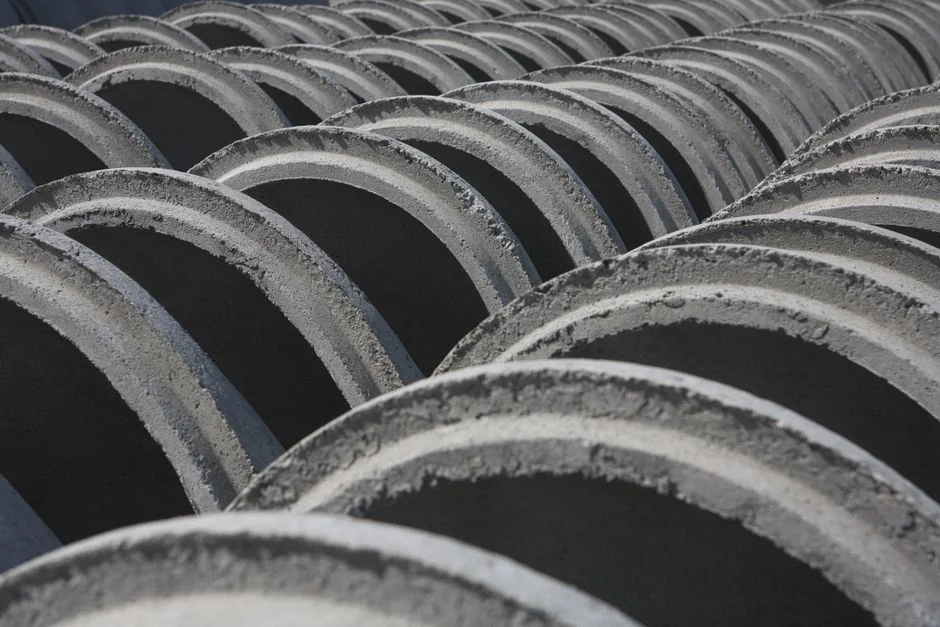
A lamella clarifier is a gravity settler packed with parallel inclined plates at 55-60 degrees. The plates shorten the effective settling distance, so a particle only needs to fall a few centimetres before it slides down a plate into a sludge hopper. That geometry drives surface loading rates of 20-40 m³/m²/h on a well-designed lamella, versus less than 2 m³/m²/h on an old rectangular clarifier basin — which is why lamella units replaced most of the concrete settling tanks at North American auto plants between 2010 and 2020. The HydropureWater lamella clarifier sits in this performance class.
Lamella performance is sensitive to upstream coagulation. Fine paint solids, phosphate precipates, and metal-hydroxide floc settle well when the chemistry is right; raw or under-conditioned colloidal suspensions pass straight through. Jar testing on the actual plant stream is still required, and most lamella spec sheets carry a footnote that says so. The unit is also a passive vessel — no compressed air, no recycle pump, minimal instrumentation — which is part of why it survives in OPEX-sensitive applications.
The honest failure mode: a lamella clarifier does not remove free or emulsified oil. Free oil passes through the plates because its density is lower than water, and emulsified oil droplets are too small to settle in the residence time available. A stand-alone lamella on a machining cell will discharge well above 200 mg/L O&G and trigger any POTW FOG surcharge. Anyone specifying a lamella for an oily stream is buying a TSS polisher, not a primary oil-removal unit.
DAF vs Clarifier: Parameter and Performance Comparison
The table below condenses the spec sheet into the fields a procurement manager actually needs in a vendor meeting. Numbers are anchored to the 30-50 micron bubble size, FPAC/FPBC/FPHF flow envelopes, and the 66 GPM single-skid threshold published for COMPACT DAF units (per Clearwater Industries, 2026-04-27).
| Parameter | DAF Clarifier | Lamella Clarifier |
|---|---|---|
| Removal mechanism | Micro-bubble flotation (30-50 µm bubbles) | Gravity settling on inclined plates (55-60°) |
| Surface hydraulic loading | 10-25 m/h typical float-zone rate | 20-40 m/h on plate area |
| O&G removal | 60-95% (chemistry-dependent) | 10-30% (free oil passes through) |
| TSS removal | 50-85% on oily streams | 60-90% on settleable paint solids |
| Typical influent → effluent O&G | 500-3,000 mg/L → 50-150 mg/L | 500 mg/L → 350-450 mg/L (free oil unchanged) |
| Footprint at equal flow | 1.5-2x larger (float zone + tank) | Compact (plate pack height drives height) |
| Chemical demand | Coagulant + pH + polymer (mandatory) | Coagulant + polymer (mandatory for fines) |
| Energy use | Recycle pump + air saturator + skimmer drive | Essentially passive (sludge pump only) |
| Standard materials | 304SS standard, 316SS or PP for corrosive streams | PP, FRP, or 304SS plate packs |
| CAPEX class | Higher (skid, saturation system, controls) | Lower (vessel + sludge pump) |
| OPEX class | Polymer + air energy dominate | Polymer dominates; energy minimal |
| Best-fit stream | FOG + emulsified coolant | Settleable paint solids + phosphates |
Read the table as a tie on TSS, a DAF win on O&G, and a clarifier win on energy and capital. The "footprint" line is the one most often misread: a DAF replaces both an API oil-water separator and a primary clarifier in the train, so on a flow-for-flow basis against a separator-plus-clarifier combo, the DAF is usually smaller, not larger.
A Four-Question Decision Framework for Specifying the Right Unit
Run these four questions against your plant data before you call a vendor. Each maps to an influent condition, a hydraulic condition, an end-use condition, and a regulatory condition — the four levers that actually drive the spec.
| If your situation looks like… | Then the right call is… |
|---|---|
| FOG > 200 mg/L and > 40% of total organic loading; emulsified coolants present | Specify a DAF as the primary separator |
| Settleable TSS > 60% of loading; FOG < 100 mg/L; low coolant surfactant | Specify a lamella clarifier as the primary |
| Batch / shift-based flow with shock coolant spills; 24/7 swings > 3x | Specify a DAF — the float blanket buffers spikes |
| Steady 24/7 flow, low diurnal swing, settleable solids dominant | Specify a lamella — passive vessel wins on OPEX |
| Effluent going to POTW only, 100 mg/L O&G limit acceptable | Single DAF or single lamella (per fraction above) |
| Effluent reused in paint-shop rinse or scrubber makeup | Hybrid DAF + lamella + filter train |
| Local 2026 limit tighter than 100 mg/L O&G (zinc, TP, FOG surcharge) | DAF + polishing (lamella or multimedia filter) |
| 2026 NPDES limit on zinc < 1 mg/L or total P < 5 mg/L | Hybrid DAF + lamella + chemical precipitation stage |
Use the 100 mg/L O&G benchmark in 40 CFR Part 467 as the screening threshold. Anything tighter — and most 2026 POTW surcharges effectively make it tighter — pushes the decision off a single unit and toward a train.
When a Hybrid DAF + Lamella Train Is the Right 2026 Answer
The dominant 2026 specification at Tier-1 auto and EV cell plants is not "DAF or clarifier" — it is a hybrid train that uses both. The canonical sequence reads: rotary bar screen → flow equalization → chemical dosing (coagulant, pH adjustment, polymer via a PLC-controlled coagulant and polymer dosing skid) → DAF primary → lamella clarifier polishing → multi-media filter → optional RO for paint-shop reuse. Upstream of any DAF in an auto plant, coarse filtration is mandatory — a GX rotary fine bar screen or hydrocyclone strips stamping swarf and shop lint that would otherwise blind the float cell (per Kemco Systems).
The role split is the point. The DAF captures 90%+ of tramp oil and floated floc on the first pass; the lamella polishes residual settleable TSS; the multi-media filter protects any downstream RO from fouling. Stand-alone either unit will leave a compliance gap on the contaminant class it was not designed for. A practical spec for an auto-plant retrofit is a HydropureWater dissolved air flotation system as the DAF stage, a lamella as the polish stage, and a multi-media filter upstream of any reuse loop. The 2026 trend is for skid suppliers to package the screen, DAF, and lamella into one pre-assembled train, which is why turnkey COMPACT skids are now offered with downstream plate-pack modules on the same frame.
Operating Cost and Compliance Levers for 2026
Four OPEX lines drive the 2026 cost of running either unit: polymer dose (usually the largest), compressed-air energy for the DAF saturation system, sludge hauling (dewater float sludge with a plate-and-frame filter press for DAF float sludge to cut hauling volume), and labour for jar-test-driven chemistry tuning. The polymer lever is the most commonly missed: a 5-10 ppm overdose at a 100 m³/h plant costs more annually than the recycle pump electricity bill. Before anyone spec's new equipment, run a chemistry audit on the existing train — the OPEX win is almost always in the dose, not the tank. For a deeper OPEX teardown, this cavitation vs DAF operating cost comparison is useful, and a coarse screening specification guide covers the upstream step most plants undersize.
On the compliance side, the 2026 anchors are 40 CFR Part 467 (O&G daily-max 100 mg/L, plus lead and zinc limits for the Automotive Parts subcategory), 40 CFR Part 413 for sulfate and heavy metals on battery-forming lines, and local POTW FOG surcharges priced per pound above the ordinance threshold (commonly 100-200 mg/L). The single most common compliance trap is invisible on a TSS meter: free oil that breaks through a clarifier is not picked up in a TSS composite sample but is exactly what triggers a POTW FOG surcharge. Make sure the 2026 sampling plan includes O&G grab samples, not just composite TSS. For a site-specific compliance read, the transportation equipment pretreatment compliance guide is a useful reference.
Frequently Asked Questions
Can a DAF replace an API oil-water separator?
Yes, for flows inside the DAF's rated capacity and where emulsified oil is the dominant phase. A DAF handles both free and emulsified oil in a single vessel, which is why most new auto-plant builds in 2026 skip the API separator entirely. Existing API separators are often kept as a grit-removal step upstream of the DAF rather than as the primary oil-removal unit.
How often does a DAF need to be jar-tested?
Quarterly at minimum, and after any coolant, surfactant, or process chemistry change. Polymer demand shifts with seasonal coolant formulations, and a 2-3 ppm drift in optimum dose is enough to push float solids from 90% recovery to 70%. Treat the jar test as a recurring calibration, not a one-time commissioning step.
What influent O&G can a lamella clarifier handle alone?
Below roughly 100 mg/L, and only if the oil is already free-phase and upstream skimmed. A lamella is a TSS polisher, not an oil-removal unit; on emulsified coolant streams it will discharge 300-450 mg/L O&G regardless of how well the plates are sized.
Is a DAF worth the CAPEX premium for a 50 m³/h Tier-2 plant?
Almost always yes. Once POTW FOG surcharges, sludge hauling savings from a drier float, and the option to reuse effluent in scrubber makeup are priced in, payback typically lands under 18 months. The threshold where a lamella-only train starts to win on total cost of ownership is usually a small, very low-FOG shop with no reuse target.
Which 2026 regulation is most likely to drive a DAF retrofit?
Local POTW FOG surcharges and tighter zinc and total phosphorus limits in auto-plant NPDES permits. Federal 40 CFR Part 467 numbers have not moved sharply in 2026, but POTW ordinances and state-level pretreatment programs have, and they are the binding constraint on most permit renewals this year.