
How Inez Mining and Metals Wastewater Is Different from Food or Pulp Streams
Wastewater at plants in and around Inez, Texas, rarely resembles the food, dairy, or pulp streams addressed in generic clarifier marketing literature. Inez sits inside the Carrizo-Wilcox aquifer region of South Texas, where aggregate washing, light metals finishing, and oilfield support operations discharge to local POTWs under the Texas TCEQ TPDES framework. Four influent signatures define the equipment decision: (1) suspended fines and metal oxides from crushing and wash water, (2) emulsified oils and lubricants from equipment washdown, (3) variable pH driven by lime dosing for metals precipitation or acid leaching of ore, and (4) high-density settleables such as sand, scale, and abrasive tailings. Federal discharge rules for most U.S. metals plants fall under 40 CFR Part 437 (Metal Finishing Point Source Category), which sets daily-maximum and monthly-average limits for TSS, total metals, and oil & grease — the same metrics an Inez discharger will negotiate in a local pretreatment permit. Emulsified oil droplets and low-specific-gravity metal-hydroxide floc have a particle density close to water, causing them to rise rather than settle. A clarifier can only skim free oil; it cannot capture emulsified FOG. A dissolved air flotation (DAF) system attaches 30–50 μm micro-bubbles to those particles and lifts them to the surface (per Clearwater/Sigmadaf specifications). That physical asymmetry — rising versus settling — is the primary factor in the decision.
DAF vs Clarifier: How Each Technology Actually Separates Solids
Dissolved air flotation systems pressurize a recycle stream of clarified water at 60–80 psig, saturate it with air, and release it through a needle-valve manifold into the flotation tank. The pressure drop nucleates 30–50 μm micro-bubbles that attach to chemically conditioned floc and float it to the surface, where a paddle skimmer removes the blanket. A bottom auger or scraper removes the small fraction of heavier settleables, which is why a DAF can handle mixed streams, whereas a clarifier cannot capture emulsified oil without separate flotation or CPI separation upstream (per Clearwater/Sigmadaf FPAC and FPBC design notes). A dissolved air flotation system sized to 4–300 m³/h covers most single-site mining and metals flows with a skid that requires less civil work than a basin.
Lamella clarifiers, or inclined-plate settlers, rely on gravity to separate solids. Influent is dosed with coagulant and flocculant, enters a flocculation zone, and flows upward through a stack of inclined plates set at 55–60°. Solids settle onto the plate surfaces and slide into a sludge hopper, while clarified water exits through a top weir. Surface loading rates for a well-designed lamella clarifier run 20–40 m/h on flocculated feed, making the technology effective for heavy, sand-like solids (per HydropureWater JY/HST product class). A circular clarifier performs the same job in a larger footprint with a rotating rake; both rely on settleable, rather than floatable, solids. The difference in separation method is the key to the matrix below.
Side-by-Side Comparison: DAF and Lamella Clarifier for Mining/Metals Effluent
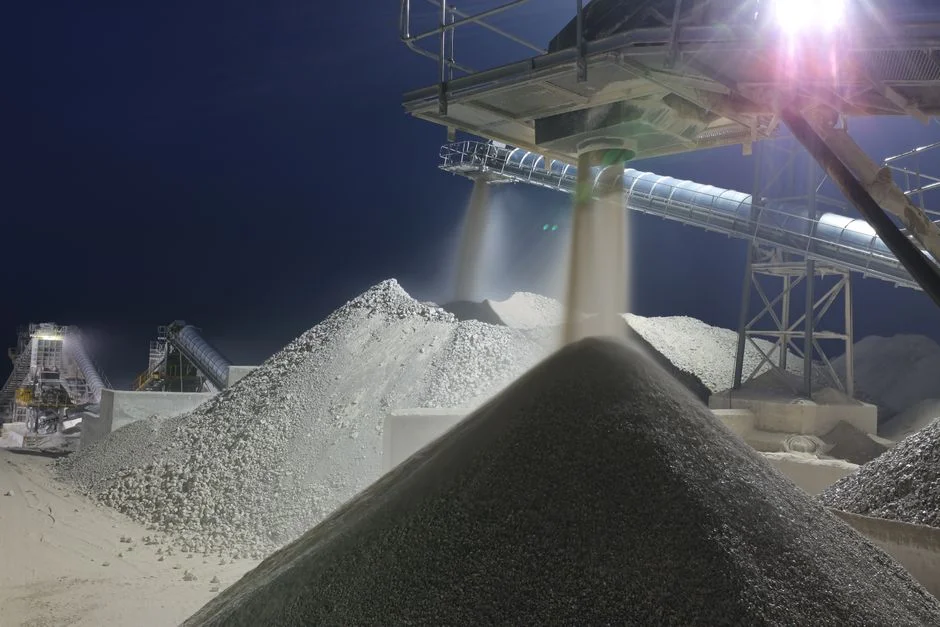
The following table serves as a procurement tool. Numbers are engineering-typical bands; DAF removal figures assume proper chemical conditioning, and lamella removal assumes heavy, floc-friendly solids rather than colloidal or oily streams. Use influent values from your jar-test or pilot data to determine the optimal solution for your plant.
| Parameter | DAF (Dissolved Air Flotation) | Lamella Clarifier (Inclined Plate) | Winner for Mining/Metals |
|---|---|---|---|
| TSS removal (flocculated feed) | 85–95% | 50–80% | DAF for colloidal / hydroxide floc; Lamella for sand-rich |
| Oil & grease / FOG removal | 90–99% with chemical conditioning | 20–60% (only free oil skims) | DAF, decisively |
| Hydraulic loading (m/h) | 5–25 m/h depending on model and TSS | 20–40 m/h on inclined plates | Lamella for raw flow per m²; DAF for removal quality |
| Footprint per m³/h | Compact skid, ≤66 GPM single skid; modular above | Larger floor area + deeper civil basin | DAF for retrofits; Lamella for greenfield with land |
| Relative CAPEX (same flow) | 1.4–1.8× equivalent-flow lamella | Baseline 1.0× | Lamella for budget, DAF for compliance |
| Sludge dry solids (DS) leaving unit | 3–5% DS floated sludge | 1–2% DS dilute sludge | DAF for downstream plate and frame filter press loading |
| Upset tolerance (pH swing, flow spike) | Recovers quickly once floc chemistry restored | Mechanically forgiving but recovers slowly | DAF for variable feed; Lamella for steady-state |
These two technologies converge on coarse TSS reduction but diverge sharply on oil-bearing or colloidal feed. Plants with a settled-solids signature and no FOG burden can capture the benefits of a clarifier at lower capital cost; plants with emulsified oil, low-density hydroxide floc, or strict 40 CFR Part 437 monthly-average limits will find the DAF premium offset by savings in sludge hauling, polymer efficiency, and reuse-quality effluent.
When a DAF Is the Right Choice in 2026
Three concrete factory scenarios consistently point to a DAF rather than a clarifier as the primary solids-removal step.
Scenario A — Metals finishing or machining washdown with cutting fluid carryover. Emulsified oil above ~50 mg/L rules out a clarifier, which only skims free oil. A DAF with chemical conditioning and 304SS or 316SS wetted parts (per Sigmadaf/Clearwater standard materials) handles the FOG load and produces a float sludge that dewaters cleanly. Pair it with an automatic chemical dosing system sized for coagulant, pH adjust, and polymer flocculant.
Scenario B — Pit dewatering or aggregate wash with TSS 1,000–5,000 mg/L and intermittent flow. A modular DAF skid that can idle dry and restart on clean water is a better match than a clarifier basin that may go septic during shutdown. Sigmadaf-style compact units (per Clearwater FPAC design notes) are specified for this high-solids, intermittent duty.
Scenario C — Tight-footprint retrofit inside an existing building. Where civil works are constrained and the discharger must hit 40 CFR Part 437 monthly-average metals and TSS limits on a small pad, a skid-mounted DAF in the 4–300 m³/h range avoids excavation and shortens installation. This configuration also handles downstream polishing ahead of an RO reuse train, which is increasingly common for 2026 ESG programs.
When a Lamella Clarifier Is the Right Choice in 2026
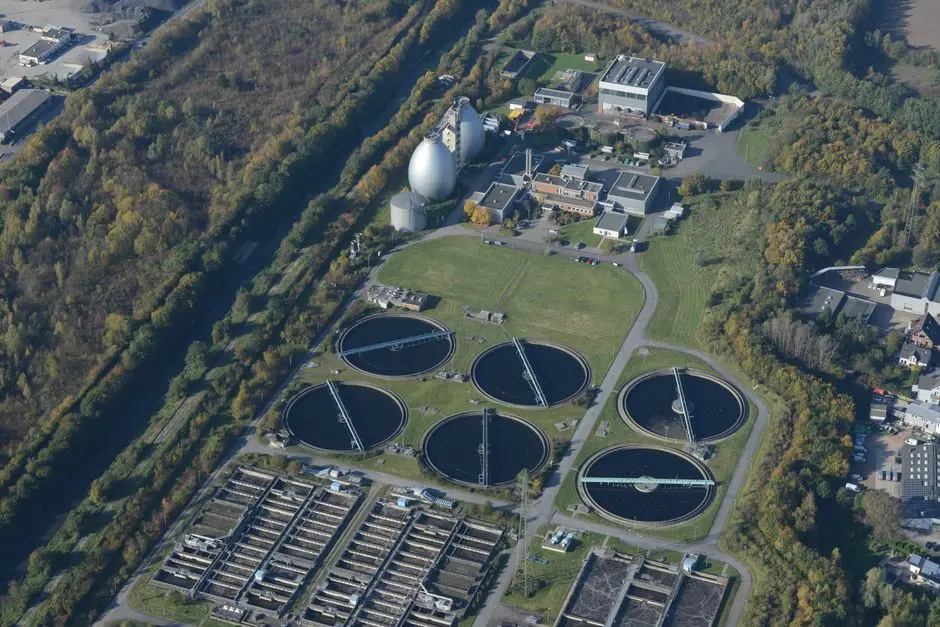
Lamella clarifiers offer distinct advantages for specific mining and metals applications. Three scenarios make a HydropureWater high-efficiency sedimentation tank the smarter procurement.
Scenario A — Settleable, sand-rich washwater with no emulsified oil. Inclined-plate lamella systems at 20–40 m/h surface loading are the most cost-effective primary stage when solids are heavy and floc-friendly. The clarifier pays back the DAF CAPEX premium over long, steady runs.
Scenario B — High-volume, low-TSS mine water destined for surface discharge or dust-suppression reuse. Clarifying pond discharge or clean tailings water at TSS under ~200 mg/L is below the regime where DAF micro-bubbles add value. A lamella clarifier delivers the required gross reduction at the lowest OPEX.
Scenario C — Pre-clarification upstream of a biological or RO step. When the goal is gross TSS reduction ahead of a downstream RO water purification or MBR polishing train, a lamella clarifier reduces membrane fouling without the energy cost of pressurizing recycle water. Note that a clarifier in metals service still requires a separate oil-skimming or DAF polisher if influent FOG exceeds ~30 mg/L.
2026 Cost and Compliance Reality Check for Inez Plants
Compliance is anchored by 40 CFR Part 437, the Metal Finishing Point Source Category, which sets daily-maximum and monthly-average limits for TSS, total metals (Cd, Cr, Cu, Ni, Ag, Zn, Pb), and oil & grease. Texas TCEQ implements these through the TPDES pretreatment program, effectively forcing Inez dischargers to negotiate local limits that mirror the federal ELG. The relevant procurement question is whether a clarifier alone can hit the monthly-average metal-hydroxide TSS number; for colloidal or hydroxide floc, the answer is usually no, necessitating a DAF or a DAF/lamella train.
Regarding capital cost, engineering-typical CAPEX ratios for equal flow put a DAF at 1.4–1.8× the cost of an equivalent lamella clarifier. For a small site at 5–20 m³/h, the dollar difference is modest; for a medium plant at 50–150 m³/h, the DAF premium must be justified by OPEX and compliance. OPEX drivers include polymer dose (typically 1–4 kg/t for DAF versus 2–6 kg/t for clarifiers), compressed-air energy for the saturation pump, and avoided sludge-hauling costs due to the DAF's thicker 3–5% DS float sludge compared to the 1–2% DS clarifier underflow. ESG and water-reuse pressure in 2026 is the primary variable: mining operators are increasingly required to demonstrate greater than 70% water recycle, and a DAF's clarified overflow quality supports downstream RO or MBR reuse trains more reliably than a clarifier alone (HydropureWater field data, 2026). When reuse credit is monetized, the DAF premium is often recovered rapidly.
Frequently Asked Questions
Which is better for TSS removal in mining wastewater, DAF or a lamella clarifier?
A DAF typically removes 85–95% of TSS on flocculated feed, versus 50–80% for a lamella clarifier, but the clarifier is the right choice for sand-rich, settleable solids where floc density is high. Match the unit to the particle characteristics.
Can a lamella clarifier handle emulsified oil or FOG in a metals plant?
Only partially. A clarifier skims free oil at 20–60% removal; emulsified oil droplets pass through with the clarified overflow. If your influent carries more than ~30–50 mg/L emulsified FOG, plan a DAF or a CPI separator upstream of the clarifier.
What 40 CFR Part 437 limits drive the DAF vs clarifier choice?
40 CFR Part 437 sets daily-maximum and monthly-average limits for TSS, oil & grease, and total metals (Cd, Cr, Cu, Ni, Ag, Zn, Pb) for the Metal Finishing Point Source Category. Strict monthly-average TSS and metals limits on colloidal or hydroxide floc generally force a DAF, while sand-rich settleable solids can meet TSS limits with a clarifier alone.
How much does a DAF cost compared to a lamella clarifier in 2026?
Engineering-typical CAPEX for equal flow puts a DAF at roughly 1.4–1.8× a lamella clarifier. OPEX narrows the gap through lower polymer dose per kg TSS removed, thicker float sludge (3–5% DS versus 1–2%), and reuse-quality clarified water that supports downstream RO.